
Motorcycle fairings are more than just decorative add-ons; they are pivotal components that significantly enhance the performance and aesthetics of a bike. Business owners in the motorcycle industry must recognize the value of fairings for improving aerodynamics and enhancing the rider’s experience. The four chapters that follow will explore the diverse types of fairings, their aerodynamic advantages, their impact on motorcycle design, and effective maintenance and customization strategies to boost functionality and appeal. By gaining a comprehensive understanding of these aspects, owners can appreciate how motorcycle fairings contribute to the overall success and differentiation of their product offerings.
The Aerodynamic Armor: How Motorcycle Fairings Shape Speed, Comfort, and Style
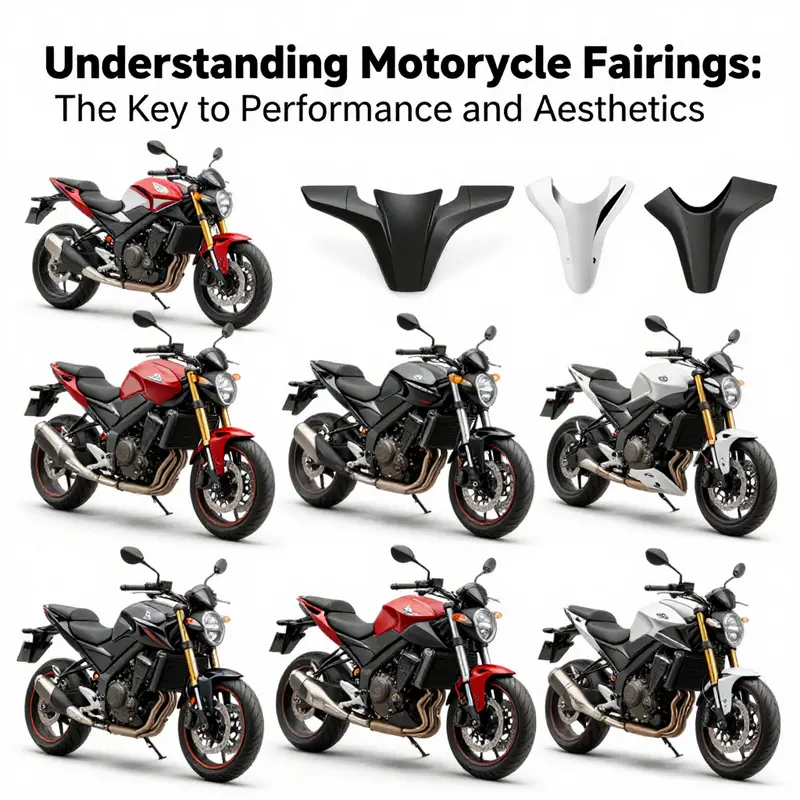
A motorcycle fairing is more than a decorative shell. It is an engineered shield for speed, a conduit for comfort, and an expression of a rider’s relationship with wind. When you watch a motorcycle slice through air at highway or race-track speeds, the clean lines of its bodywork are doing serious work. They guide air around the rider and the machinery, reducing drag, stabilizing the bike, and shaping the experience of riding itself. In its simplest form, a fairing is a collection of panels attached to the frame that smooth the flow of air as it encounters the bike. Yet that simplicity belies a blend of science and craft. The panels must be light enough to avoid impeding performance, strong enough to withstand debris and weather, and precisely shaped to coordinate with the bike’s geometry, radiator, exhaust, and rider position. This chapter tracks that balance, tracing how fairings influence performance and rider experience, why there are different types, and what those choices say about a bike’s intended use and personality.
Central to understanding fairings is the relationship between air and motion. Air, at highway speeds, behaves like a dense, uncooperative medium. It pushes against the bike with a force called drag, which grows with speed and cross-sectional area and is intensified by abrupt shape changes that disrupt smooth airflow. A fairing’s primary job is to tame this force. By smoothing the silhouette of the motorcycle, fairings reduce the wake behind the bike, lower pressure drag, and enable the machine to move with less resistance. The payoff is twofold: higher potential top speeds and improved fuel efficiency, especially on long, fast rides where every extra mile per gallon matters. But the aerodynamic benefits extend beyond outright speed and efficiency. Reducing drag also improves stability. At high speeds, tugging winds can unsettle steering, increase steering effort, and amplify vibrations that wear down rider comfort. When the airflow is well managed, the bike becomes steadier, more predictable, and less punishing on the hands, shoulders, and core.
A fairing also serves practical jobs beyond aerodynamics. It protects intimate mechanical components in the front and underbelly from road spray, debris, and weather. It can shield a radiator and hoses from particulate intrusion, help route cables and wiring, and safeguard the exhaust area from minor impacts. And there is a subtle but important ergonomic consequence: while many sport bikes rely on full fairings to create a continuous, enclosed airfoil, the rider’s exposure to wind is a nuanced matter. Some riders tolerate or even prefer that the rider remains more directly immersed in the airstream when the goal is peak speed and weight reduction. Others value wind shielding for long-distance comfort, and so many modern designs strike a compromise. In the end, the material, geometry, and mounting of a fairing sculpt how wind interacts with rider posture, seat height, and overall biomechanics during a ride.
The most familiar categories of fairings fall into a simple hierarchy: full, half, and quarter fairings. Full fairings are the most extensive form, enveloping the front and sides of the motorcycle and often extending toward the engine compartment. In racing and high-speed touring contexts, full fairings are prized for their drag-reducing geometry and comprehensive weather protection for ancillary components. Their enclosure helps maintain thermal efficiency for the engine and helps keep components out of the worst of the weather and road debris. Yet a notable caveat emerges from this configuration: with the rider’s wind exposure managed differently across bikes, full fairings largely focus on keeping engines and mechanicals secure and streamlined, while rider wind protection may vary with riding posture and windshield design. The result is a set of panels that define a bike’s silhouette, shield critical machinery, and contribute to the bike’s sense of speed even when stationary.
Half fairings occupy a middle ground. They cover the upper front portion of the bike, including a windshield or windscreen, and provide a meaningful aerodynamic improvement over naked bikes while maintaining easier access to the engine and front components. The wind protection offered to the rider is more pronounced than with full fairings, benefiting riders who value comfort on longer journeys or in cooler climates without sacrificing the ease of maintenance or the character of the machine’s frame and throttle response. The ride quality can feel more balanced for everyday use, with less reliance on a large fairing for stability at highway speeds than a full fairing would require. At the same time, half fairings allow more open air around the cockpit, which some riders perceive as more engaging or visually lean, a note that matters in a culture where aesthetics and performance language coexist.
Quarter fairings, sometimes called windshield fairings, are the smallest and simplest of the fairing family. They offer modest wind deflection and are often installed to reduce direct face exposure rather than to transform aerodynamics wholesale. Quarter fairings are popular on bikes that aim for a lean, minimalist stance or during restoration and customization projects where the emphasis is not purely on aero performance. They are light, charge little in terms of weight and cost, and can be swapped with relative ease when the rider’s priorities shift toward styling or budget considerations. The aerodynamic gains from quarter fairings are limited, but the impression of wind management—paired with the bike’s aesthetic and mechanical personality—can be a decisive factor for riders who prize character as much as performance.
Beyond these primary categories, the engineering community distinguishes fairings by how and where they are mounted, as well as what they protect. In racing or long-distance touring, full fairings are standard precisely because of their superior aerodynamic credentials and protective coverage for the machine’s radiators, chain or drive components, and exhaust. In contrast, cruisers or custom builds may lean toward half or quarter fairings for stylistic reasons and maintenance considerations. A cruiser’s relaxed riding posture, often with a lower seat and a longer wheelbase, can pair well with a simpler fairing that frames the bike’s silhouette rather than concealing it. The choices a builder or owner makes about fairing type reflect a balancing act between aerodynamics, protection, weight, cost, weather protection, maintenance access, and the machine’s expressive identity.
Material choices are another axis along which fairings vary. Traditional panels were crafted from fiberglass or lighter composites, but many modern designs rely on high-strength plastics such as ABS or polycarbonate blends. For performance-focused builds, carbon fiber is a coveted option due to its exceptional strength-to-weight ratio, though it comes with higher cost and distinct repair considerations. Each material has consequences for rigidity, impact resistance, and repairability. The shape of the panel—its curvature, edge sharpness, and how it anchors to the frame—must also harmonize with the bike’s radiators, frame rails, and cowl lines. The manufacturing process, whether it is hand-laid fiberglass, vacuum-bagged carbon fiber, or injected ABS panels, determines not only weight and strength but also finish quality and color integrity.
The design dialogue between fairings and the bike’s geometry is a subtle art. A fairing must be coaxed into a form that complements the motorcycle’s angle of attack, wheelbase, and rider stance. If the rider sits forward in a sport position, the fairing’s upper contours can encourage a clean separation of air around the rider’s torso, reducing buffeting and helping the front wheel stay planted at high speed. If the rider sits more upright, the wind’s interaction with the chest and helmet changes, and fairing geometry might emphasize better helmet shielding or a gentler transition from the windshield into the rider’s field of view. Designers must also consider how the panels integrate with headlights, indicators, and instrument panels. A fairing that looks like it was drawn with the wind tunnel and a ruler in mind should also provide practical access to tools, fuses, and maintenance points. When panels don’t align with access routes or cooling intakes, the bike becomes harder to service and less likely to be ridden frequently or long distances.
From the rider’s perspective, fairings contribute to a sense of control and purpose. A well-chosen fairing communicates that the bike is meant to be pushed, yet not so aggressively as to demand sacrifice in comfort. This is why the fairing’s silhouette matters as much as its material, how it interacts with the bike’s mirrors, and how its edge lines catch light in a way that makes the machine feel alive. The aesthetics of fairing design are a language of speed—whether the bike speaks in the taut, sharp lines preferred by a race-ready machine or in the softer, sweeping curves that tell a story of long, wind-swirled journeys. The overall effect is not only about performance; it’s about how a rider experiences the machine’s personality through airflow, sound, and the way wind folds around every contour.
Choosing the right fairing for a given bike involves weighing multiple factors. For riders who crave top-end performance in a sport environment, a full fairing often makes the most sense. The aerodynamic envelope reduces drag, curbs lift, and can sharpen handling in the upper speed ranges. Yet this choice comes with trade-offs. Full fairings can complicate engine access during maintenance, increase repair costs after a spill, and demand careful fitment to avoid radiators or exhaust components colliding with the panels. In touring configurations, where comfort and weather protection are paramount, a half fairing can strike a more practical balance. It offers a degree of wind protection for the rider while keeping maintenance accessible and the bike relatively easy to customize with luggage racks or other touring accessories. Quarter fairings may be most appropriate on bikes built for street style or for riders who want to introduce a touch of wind deflection without changing the bike’s fundamental character. In all cases, the decision hinges on intended use, climate, riding style, and the rider’s willingness to trade ease of service or weight for a more cohesive aero look.
A practical path through this landscape begins with clarity about the machine’s original design intent and the rider’s needs. When a bike is new, the factory fairing often reflects a carefully tuned balance between drag reduction and rider comfort across a broad range of speeds and conditions. If a rider loves speed, aims for track days, or seeks maximum wind management for sustained highway outruns, a full fairing might be the natural next step. For someone who values casual riding, customization, and ease of access to the bike’s heart, a half or quarter fairing can be a more fitting canvas for personalization. It’s worth noting that the availability of after-market fairings has grown into a robust ecosystem. Panels and bodywork kits come in various shapes and finishes, enabling riders to tailor aerodynamic performance as well as aesthetic statements. The compatibility of a kit with a specific model, the alignment with mounting points, and the panel fit with other integrated components are all crucial considerations. This is where a dealership or a dedicated fairing catalog can help map out matches between a particular model year and an available kit, ensuring that the panels align with the bike’s frame geometry and components.
For riders who want to take the next step in customization or replacement, there is a practical path to explore. If you are seeking a compatible set to revitalize a model, a dedicated collection of fairings, such as a brand-specific catalog, can serve as a solid starting point. These collections group panels by model family, enabling a more reliable fit and color matching, and they can simplify the process of selecting the right geometry for the radiator, headlights, and instrument clusters. For riders pursuing a specific aesthetic on a model that blends classic lines with modern performance, this approach can unlock a new life for a beloved machine. It also emphasizes the point that fairings are not merely protective shells; they are integral to how a bike is perceived, how it performs, and how it respects the constraints of its engineering and its rider’s ambitions. In practice, the selection process often begins with a careful assessment of whether to prioritize drag reduction, rider comfort, or maintenance practicality, and then converges toward a configuration that harmonizes those goals with the bike’s existing architecture.
The broader engineering context reinforces a simple truth: fairings are a critical constraint in the design cycle of a motorcycle. They influence the choice of materials, hinge and mounting strategies, mounting points, and even the bike’s weight distribution. Racing programs lean toward highly engineered, aerodynamically optimized full fairings because every gram of drag reduction translates into competitive advantage. Touring-oriented bikes lean toward broader coverage that deflects more wind and allows for longer, more comfortable rides. Cruiser-style machines might opt for more restrained, visually integrated panels that preserve the brand’s silhouette and maintain easier access for maintenance and customization. Across this spectrum, the underlying idea remains consistent: fairings shape the rider’s experience through a combination of drag reduction, wind management, protective coverage, and the aesthetic language the bike communicates.
In terms of maintenance and durability, fairings present both opportunities and challenges. The panels are designed to withstand regular riding conditions, but they are also vulnerable to impacts, road debris, and improper fitment. When a panel is damaged, it can be repaired or replaced, yet the process hinges on the panel material and the manufacturing method. Lightweight plastics may crack or deform and can be repaired with specialized techniques, while carbon fiber requires careful repair considerations to avoid compromising structural integrity. The ease of removal and reattachment varies by design, and some sets are engineered for quick-release or modular assembly to facilitate access to the engine and electrical components. Aesthetics also matter: the finish of a fairing, including paint and decals, must withstand sun exposure, temperature changes, and road grime. A well-kept fairing not only protects the bike but preserves its visual appeal and resale value, creating a more cohesive impression of care and performance.
In sum, fairings perform a trifecta of functions: they optimize aerodynamics, protect mechanicals, and influence rider comfort and machine character. The spectrum from full to half to quarter each satisfies different priorities—drag reduction and high-speed stability, rider protection and comfort, or a lean, minimalist edge. The decision is rarely about one single factor; it is about a holistic sense of what the bike is for and how the rider wants to engage with wind, speed, and the road ahead. The modern marketplace reflects this complexity, offering a range of materials, configurations, and fitments that communities of riders debate and celebrate. As with all aspects of motorcycle design, the best choice is one that aligns with the rider’s goals, the bike’s existing architecture, and the realities of maintenance, repair, and customization.
For those who want a practical touchstone while exploring options, a targeted collection can help. For example, a dedicated Honda fairings catalog offers a structured starting point to compare fit, style, and color compatibility across generations. This kind of resource makes it easier to assess how a particular model’s fairings integrate with its radiators, headlights, and instrument clusters, and it can save time when planning a repaint or upgrade. Such a catalog can be a useful companion as you imagine a bike that looks as purposeful as it feels when you ride it. As you contemplate the next step—whether it is restoring a classic, outfitting a track-ready build, or simply upgrading weather protection—remember that fairings are not a cosmetic afterthought. They are a core element of how a motorcycle responds to air, how it carries its rider along the road, and how its silhouette communicates a deliberate stance toward speed and style.
External resource: Motorcycle Fairing Guide: How to Choose the Right Type — https://www.bikeride.com/motorcycle-fairing-guide/
Riding the Wind: The Subtle Science of Fairings and Motorcycle Performance
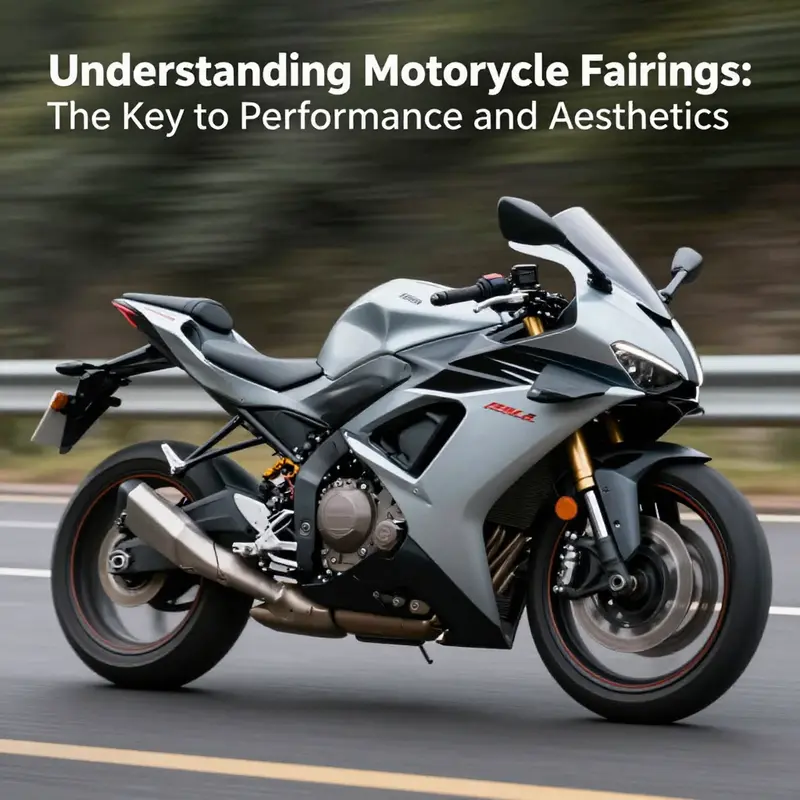
Fairings are often seen as the most visible signature of a motorcycle’s character, yet their importance runs deeper than the eye can see. They are not merely cosmetic armor but a designed interface with air and motion. When a rider leans into a curve or accelerates toward a straight, the air around the bike becomes a dynamic partner. The fairings guide, shape, and sometimes coax air to improve efficiency, stability, and control. They translate theory into real-world performance at speed, across wind, and through fatigue into ride comfort. This chapter treats fairings as a kinetic interface, describing how their geometry and materials affect drag, downforce, cooling, and accessibility for maintenance. It is a story of air, mass, and balance, told through function rather than slogans.
To begin, the central aerodynamic goal is to reduce drag while preserving essential downforce. Drag is the resistance you feel as you move through air; on a motorcycle it is a spectrum: form drag from bodywork, parasitic drag from protrusions, and induced drag from the wake. A well-designed fairing smooths the flow along the bike’s silhouette, encouraging air to follow lines rather than create chaotic eddies. This smoothing makes the engine work less hard and the chassis accelerate more efficiently. The reward is better fuel economy on long rides, improved acceleration, and a higher potential top speed when losses to air are minimized.
The practical benefits extend beyond mileage. A smoother flow reduces buffeting and rider fatigue at highway speeds. The fairing acts like a wind shield, channeling air away from the rider’s torso and arms. The goal is a careful balance: wind protection without obstructing visibility or instrument access. The best fairings shield the rider from gusts while preserving a tactile connection to the front wheel and the bike’s behavior through the bars.
Beyond drag, fairings contribute to front-end stability by shaping the air that meets the front wheel. They can provide a small amount of downforce that helps tire grip in acceleration, hard braking, and cornering. Subtle changes in pressure distribution influence how the tire holds a line. When designed with this in mind, fairings reduce front-end wander in crosswinds and maintain predictability through throttle changes. The rider experiences more precise steering and a steadier line at speed.
Material choice matters: carbon fiber offers high stiffness with low weight; fiberglass balances rigidity and cost; high-grade ABS is durable and easy to mold. Each material brings tradeoffs in cost, weight, and impact resistance. Modern fairings often combine layers to tailor stiffness, impact absorption, and surface finish to the desired aerodynamic profile and the bike’s aesthetic signature.
The geometry of the fairing is where art meets engineering. A well-rounded shape follows the bike’s lines with smooth transitions; sharp edges can help manage wake but must be used with intent to avoid new turbulence or structural weaknesses. The rider’s wind comfort emerges from this geometry: smooth noses, contoured side panels, and integrated tails distribute pressure evenly and keep the rider engaged with the machine rather than fighting the wind. The best designs deliver consistent air behavior, enabling confident cornering and lane positioning at speed.
Designers also consider the operating environment. In wind tunnels or simulations, they study how a silhouette changes the wake behind the bike and how pressure spikes interact with rider posture and suspension. A track-focused design may favor higher front-end downforce and stable laminar flow at high yaw, while touring designs emphasize torso protection and a calmer wind region for long distances. Fairings are not monolithic; they are tuned tools aligned with rider goals and machine philosophy.
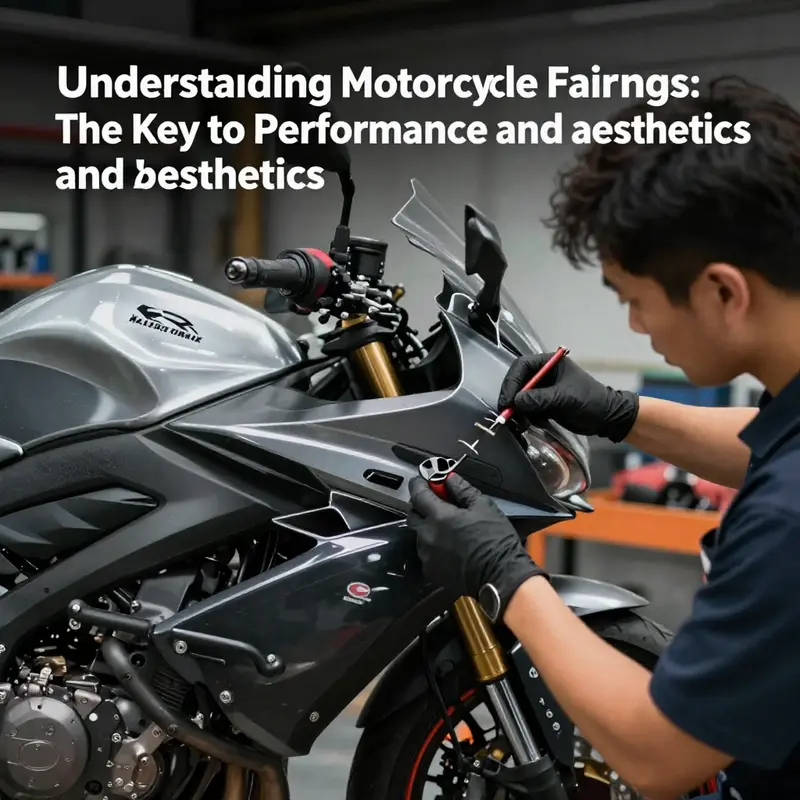
Maintenance and usability matter too. A fairing is a system of mounting points, fasteners, and interfaces with lights and cables. A well-designed fairing uses quick-release panels or modular sections to access critical components without removing large parts of bodywork. This keeps downtime down and wind-testing or track time up, maintaining the airfoil’s integrity and aerodynamic characteristics.
In customization, the silhouette becomes a visual signature as well as a performance tool. The curves, taper, and airflow direction around the bike reflect a rider’s priorities: efficiency, protection, and style. The relationship between function and form is symbiotic: a clean line can imply aerodynamic discipline, while a more aggressive profile can signal higher downforce and sportiness.
For readers curious about model-specific shapes, the Yamaha fairings collection offers configurations illustrating these ideas in practice. The examples show how standard silhouettes adapt to rider position and performance goals while preserving the core aerodynamics that enable speed and stability. Such cases demonstrate how airflow science translates to mounting points and compatibility with lights and instruments, and how a well-chosen fairing set can alter a bike’s balance and handling without changing the engine or chassis.
The broader takeaway is that fairings are a mature, technically informed feature of modern motorcycles. They reduce drag, shape the rider’s experience, aid cooling, and influence maintenance and customization. They are not a single feature but a system that interacts with the engine, suspension, and rider; when combined, they enable faster, more efficient, and more controllable riding. As technology evolves with smarter materials and computational design, fairings are likely to become more adaptive, offering real-time airflow management while preserving the rider’s sense of connection to the machine.
In sum, fairings are an aerodynamic teammate that reduces drag, adds front-end stability, and enables more efficient power use. They affect comfort, protection from the elements, and the machine’s identity, emerging from a blend of materials science, fluid dynamics, and practical maintenance considerations. They are not merely cosmetic; they are a vital interface between rider, machine, and wind, helping riders make the most of every mile.
Streamlining Speed: The Integrated Craft of Motorcycle Fairings

Fairings are more than protective shells on a motorcycle; they are the language by which speed, comfort, and personality are written in metal, plastic, and composite fibers. In the broader arc of motorcycle design, fairings sit at a crucial intersection where engineering, aesthetics, and rider experience converge. They translate the abstract science of aerodynamics into a tangible form that riders feel as a smoother ride, a more confident stance at highway speeds, and a distinct silhouette that communicates intention even when the bike is stationary. To understand fairings is to understand how a machine negotiates air—how it shapes the air that surrounds it to reduce resistance, channel cooling, and protect the rider from the whims of weather and wind while maintaining a coherent visual identity that makes a bike instantly recognizable on the road or the racetrack.
Functionally, fairings are a carefully engineered system rather than a single piece of plastic. Their primary task is to reduce aerodynamic drag by guiding airflow around the bike as a continuous, predictable stream. This streamlining becomes increasingly important at higher speeds, where even small improvements in drag can yield meaningful gains in top-end performance and fuel efficiency. But drag reduction is not a solitary pursuit; it interacts with stability, cooling, and mounting schemes. A well-designed fairing smooths the airstream while preserving the bike’s ability to shed heat from the engine and brakes. Cooling ducts, strategically placed vents, and air intakes are not decorative additions but functional elements. They are calibrated to balance pressure differentials across the surface, ensuring that cooling targets are met without introducing unwanted turbulence that might compromise handling or fuel economy.
Protection, perhaps the most tangible benefit riders experience, follows from the same logic. The fairing acts as a wind shield against the sustained gusts of highway travel and the occasional rain squall. In the seat of a sport bike, where rider posture is forward-leaning and the upper body is exposed to the elements, even modest wind exposure can add up over hundreds of miles. A fairing helps reduce fatigue by calming the wind pressure on the torso and shoulders, which translates into longer riding sessions with less energy spent fighting the air. Debris, small stones, and occasional road spray can also be redirected away from the rider, preserving comfort and focus. Beyond comfort, fairings contribute to safety by shaping the way the bike behaves when air is being forced around its geometry. The distribution of lift and downforce, the way wind leaks along the edges, and the contact between air and surface can influence stability in cornering and lane changes at speed. In track settings, this stability matters for rider confidence and where precision control becomes a matter of milliseconds.
Aesthetic considerations are inseparable from these functional aims. The silhouette a fairing creates is a signature of the motorcycle’s character. Whether the design language is aggressive, streamlined, or minimalist, the fairing defines how the machine presents itself to the world. The evolution of fairing aesthetics tracks broader design sensibilities and technological capabilities. Early iterations tended toward minimal enclosures, with exposed mechanical components and simpler shapes. As engineering tools advanced, designers embraced larger, more integrated skins that could carve complex curves around cylinders, radiators, and exhaust systems. Carbon fiber and other advanced composites arrived as not only performance-improving materials but also as vehicles for a distinctly modern aesthetic: a look that communicates lightness, strength, and speed even before the engine is cranked.
Materials play a central role in shaping the performance and the appearance of fairings. Modern fairings are commonly constructed from thermoplastics or fiberglass composites for mass-market bikes, with carbon fiber-reinforced polymers becoming the standard for high-performance applications. The choice of material influences not just weight but stiffness, impact resistance, and repair strategies. Carbon fiber offers a superior strength-to-weight ratio and a crisp, high-tech look that enthusiasts associate with precision engineering. Yet it comes with higher costs and repair considerations; a carbon fairing can resist flex under load but may crack or suffer surface damage differently than a thermoplastic. The ongoing dialogue between material science and design means fairing shapes are continually refined to optimize stiffness, impact tolerance, and aero performance while keeping weight in check. In this context, the latest iterations often blend materials, using carbon for critical load paths and high-load regions while employing tougher thermoplastics in areas that require impact absorption or cost efficiency. The result is a fairing ecosystem that can be tailored to the rider’s priorities—whether that priority is raw top speed, all-day comfort on a grand tour, or a balanced compromise between the two.
From a manufacturing standpoint, fairings are a textbook case of how form meets function. The shaping of a fairing is rarely a single, monolithic surface; it is a network of panels that must align, mate, and seal with the rest of the bike’s geometry. Modern production often relies on computer-aided design tools and computational fluid dynamics to sculpt the most efficient profiles. Wind tunnel testing remains a reference point for validating CFD results, ensuring that theoretical gains translate into real-world performance. In racing contexts, the iteration cycle is rapid; teams push the limits of airflow and cooling, sometimes shaving fractions of a second through minute geometry refinements. On the street, durability and maintenance become paramount. The panels must resist UV exposure, temperature fluctuations, and road debris while remaining serviceable. Quick-release fasteners, modular panels, and standardized mounting points have become essential features that reduce downtime when repairs or replacement are necessary after a mishap or routine service.
The design of fairings also has to negotiate practical constraints like rider ergonomics and instrument visibility. A front fairing must accommodate headlights, indicators, and instrument clusters without obstructing the rider’s line of sight or creating blind spots. In addition, fairings must contend with the practical realities of weather protection: raindrops, humidity, and the possibility of water intrusion from vent channels. Engineers layer multiple objectives here, ensuring that the rider’s posture remains comfortable, that essential displays are legible in bright sun, and that controls are accessible without forcing the rider into awkward positions. The interplay between the rider’s position, the bike’s geometry, and the airflow is a subtle dance. Small changes in saddle height, footpeg placement, or screen height can alter how the air wraps around the fairing, which in turn affects drag, stability, and perceived wind pressure on the body.
As a design language, fairings carry meaning. They convey intention—whether the bike is built for speed, endurance, or all-around versatility. The curvature, the engine cowlings, and the way the panels sweep toward the tail all communicate the bike’s character. These design cues influence not only how others perceive the machine but also how a rider identifies with it. A well-proportioned fairing can intensify the sense of speed even when the bike is parked. It envisions the rider’s future ride through the wind, promising a balance of performance and protection that aligns with the rider’s aspirations. In this sense, the aesthetic function of fairings is inseparable from their performance role. The two realms reinforce each other: a design that looks fast is often engineered to be fast, and engineering choices that prioritize efficiency can give the bike a visual clarity that resonates with riders who crave control at speed.
When we consider the technological trajectory of fairings, the story becomes one of continuous refinement. Computational fluid dynamics has become a staple in the design studio, enabling researchers and designers to test countless shapes in a virtual wind environment before committing to physical prototypes. Real-world testing—whether on road, track, or wind tunnel—still matters because it reveals how real riders interact with the bike in unpredictable conditions. This ongoing cycle of modeling, testing, and refinement keeps fairings at the leading edge of motorcycle design. It also means that the interaction between form and function will continue to evolve as materials improve, sensors become more integrated, and manufacturing techniques push the boundaries of what is possible in lightweight, strong, and aero-efficient skins.
Longer rides, higher speeds, and expanding rider expectations push fairing design toward greater adaptability. Modern approaches often segment fairings into modular zones that can be replaced or upgraded as performance goals shift. The ability to swap panels without disassembling the entire body reduces downtime and makes customization more accessible. It also supports the idea that a motorcycle is not a fixed artifact but a changing platform that can be tuned for different riding contexts—weekend canyon blasting, daily commuting, or long-distance touring. In all these contexts, the fairing remains the visible handshake between rider and machine, the surface that tells a story about aerodynamics, engineering, and identity. The practical reality is that fairings must be robust enough to endure the road and refined enough to feel deliberate in every line and contour. They are where engineering ambition meets everyday riding, producing a product that looks right, handles well, and protects the rider in the way that only wind and physics can validate.
For readers seeking a concise nod to the practical cataloging that underpins these design decisions, a curated collection of fairings can show how panels tend to be grouped for different applications. This cataloging reflects a spectrum—from clean, sport-oriented shells designed for reduced drag and a fierce stance to full touring enclosures that prioritize rider comfort, integrated lighting, and weather protection. In such catalogs, the emphasis is not merely on the appearance of a single piece but on how the complete set of panels works in concert with the bike’s chassis, aerodynamics, and rider dynamics. The catalog approach also highlights compatibility considerations: whether a fairing is designed to fit a broad range of models or tailored to a specific frame geometry. It is a reminder that fairings, while visually striking, are also practical engineering systems that must align with the bike’s cooling needs, weight targets, and maintenance realities. For readers who want a sense of how these collections are organized and what a typical entry might prioritize, a look at a dedicated fairings catalog offers a useful map of the terrain—where performance, protection, and aesthetics converge.
In closing, fairings are not merely additive features but integral components of a motorcycle’s identity and capability. They shape how air moves around the bike, how heat is managed, how the rider experiences riding comfort, and how the machine presents itself to the world. The best fairings marry aerodynamic efficiency with protective practicality and a design language that speaks to the rider’s sense of purpose. As technology advances, the forms will remain recognizable as a language of speed, yet the materials, manufacturing methods, and integration with electronics will continue to push what is possible. In that sense, the fairing is both a shield and a signal: a shield against the wind and debris, and a signal about intent, precision, and the rider’s willingness to skim through air at speed. For readers who want to explore practical examples of how these principles are translated into real-world products and configurations, a curated guide to fairing options provides a bridge from theory to street and track experience. Honda fairings collection offers an illustrative starting point for understanding how cataloging translates into compatibility, fit, and performance across different models and riding needs. For those seeking deeper technical depth on material choices, structural optimization, and advanced aerodynamic strategies, an external reference provides a rigorous complement to the intuition developed through design discussion. External resource: https://www.kingcarbonfairings.com/insight-into-fairings
null
null
Final thoughts
The importance of motorcycle fairings extends beyond mere aesthetics; they are integral to performance, rider comfort, and brand differentiation. Understanding the various types of fairings, their aerodynamic benefits, aesthetic and functional elements, and proper maintenance techniques can empower business owners to enhance their offerings significantly. By investing in quality fairings and customizing them effectively, businesses can elevate their brand and provide customers with superior riding experiences.