
Motorcycle racing has become an integral part of Australian culture, with a rich history and a dedicated community of enthusiasts and competitors. At the heart of optimal performance in this sport lies a critical component: race fairings. These aerodynamic shells are not just about aesthetics; they play a crucial role in enhancing speed, safety, and competitive edge. Understanding the role of race fairings, the technological innovations surrounding them, and the regulatory landscape governing their use provides business owners, manufacturers, and enthusiasts with a comprehensive view of their importance in the racing world. Each chapter of this article will delve into how race fairings influence the strategy, technological advancements, regulatory standards, and overall performance in the Australian motorsports scene.
Between Wind and War: How Australian Motorcycle Race Fairings Shape Speed, Safety, and Strategy
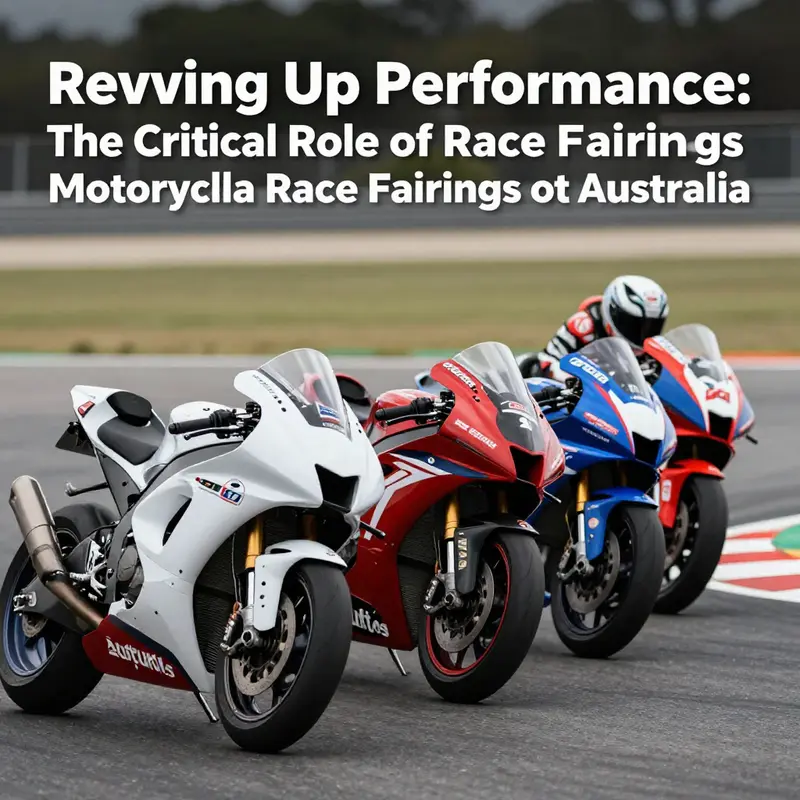
Australian motorcycle racing sits at the intersection of speed, science, and safety. The race track becomes a high-stakes laboratory where every gram of weight and every millimeter of form can shave a critical fraction of a second from a lap time. In this environment, the fairing—the streamlined skin that cloaks the bike’s front end and rider—emerges not as a cosmetic shell but as a central strategic asset. It helps define how quickly a machine can accelerate out of a corner, how steadily it can hold a high speed along a straight, and how reliably it can endure the punishing rhythm of endurance events. Across Australia’s premier championships, from sprint rounds that hinge on flawless throttle response to endurance battles that test durability, fairings are designed and tuned to deliver a precise blend of aerodynamics, cooling, protection, and serviceability. They are the arena where design theory meets the brutal realities of race day, and where compliance with safety and technical standards translates into tangible competitive advantage.
The materials chosen for race fairings in Australia reflect a careful weighing of weight, stiffness, impact resistance, and cost. Lightweight composites—primarily carbon fiber and fiberglass-reinforced resins—are the core for front-end shells. Carbon fiber brings exceptional stiffness-to-weight characteristics, which translates into a more responsive front end and crisper handling characteristics. Fiberglass-reinforced polymer (FRP) provides a robust, cost-conscious alternative that still achieves meaningful weight savings and structural resilience. High-grade ABS plastics also play a role in certain sections, offering impact resistance and ease of fabrication for complex geometries. The overarching goal is to form a complete, integrated shell that supports the engine and chassis while remaining slender and smooth enough to minimize parasitic drag. In practical terms, this means a fairing that covers the engine and frame’s leading edges, guides air in a way that reduces wake behind the rider, and maintains a predictable flow pattern that a skilled rider can exploit through every turn.
The aerodynamic logic of these fairings is not a matter of aesthetics; it is a matter of physics. The goal is to lower the drag coefficient times area (CdA) without compromising cooling, rider visibility, or mechanical access. In high-speed racing, even small reductions in drag translate into measurable gains in top speed and acceleration. Fairings are sculpted with careful attention to how air travels around the rider’s body, the front wheel, and the radiator intakes. A well-designed fairing smooths the boundary layer along the rider’s torso, minimizes flow separation at corner entry, and curtails turbulent wake that can disrupt stability at the apex. This is especially critical on Australian circuits where the mix of fast straights and slow-to-medium speed corners demands both a stable air cushion around the rider and an efficient heat path for the engine. Track testing, wind tunnel data, and computational fluid dynamics inform this artistry. The result is a shell that is not only light and stiff but also predictably behaving across the speed spectrum, giving engineers and riders a reliable canvas upon which to craft a race-ready setup.
Behind the scenes, the fairing’s form must also meet stringent safety and technical standards. In Australia, oversight by the Motorcycle Racing Australia (MRA) and alignment with international federation (FIM) rules set the baseline for what a fairing must withstand and how it must be attachable and removable. A fairing needs to guard the rider against debris and fragments in a crash, yet it must also release quickly enough to allow emergency responders access if a crash occurs. The design must accommodate impact resistance without introducing harm to rescue crews during intervention. Fairings thus incorporate deliberate geometries, energy-absorbing zones, and fast-release mounting points that strike a balance between resilience and serviceability. The safety ethos extends to cooling ducts and radiator shrouds; a fairing should not obstruct critical cooling pathways or complicate quick-access maintenance in the pits, a factor that can matter as temperatures rise under the strain of a long race or a hot Australian summer day.
For teams, the strategic value of fairings goes beyond raw aerodynamics. In the sprint format, where every corner exit matters, the fairing’s influence on stability and throttle response becomes a lever for corner speed. In endurance formats, reliability takes center stage, and the fairing’s protection and cooling support become a multiplier for on-track stamina. A well-tuned fairing can reduce engine heat stress, protect essential components from debris, and help maintain a consistent performance envelope as fuel loads change and the track temperature shifts. The balance is delicate: a small change in the fairing’s curvature or inlet size can swing the drag balance enough to affect lap times over a full stint. Teams approach this as a holistic problem, where aerodynamics, engine cooling, rider ergonomics, and crash safety are all interwoven with the operating window of the machine. The rider’s position and the bike’s balance interact with the fairing’s airflow, meaning that the most successful configurations often emerge from a dialogue between rider feedback and engineering simulation. This collaborative process yields a shell that not only slices through air but also supports precise control through the most demanding corners.
Australia’s renowned tracks—where the weather, surface, and altitude converge with a rider’s prowess—also shape fairing philosophy. Endurance races held at places like Phillip Island demand wind-shedding efficiency and stable front-end behavior, where gusts and crosswinds can suddenly alter the aerodynamics of the machine. Mount Panorama Bathurst adds another dimension, with its undulating straights and variable camber pushing teams to optimize both the fairing’s lift characteristics and its heat management strategy. In these environments, the fairing becomes a dynamic interface: it is a shield of protection during a high-speed tumble and a precision instrument during a calm, calculated pursuit of speed. The best designs thread the needle—minimizing drag while preserving cooling capacity and rider protection—so that the rider’s confidence can translate into faster, more consistent times across a race’s demanding rhythm.
The practical mechanics of sourcing and integrating fairings into a competitive package also reflect the realities of Australian racing culture. While the technical ideals push toward high-performance composites, teams must contend with procurement realities, serviceability in pit lanes, and the ability to crash-damage repair quickly. The official rules guide these choices, but the everyday decision-making occurs in the workshop and on the track. Within this ecosystem, teams often rely on established suppliers to ensure fit, finish, and compliance. In this regard, a dedicated fairings collection from a recognized supplier can be a valuable touchpoint for teams seeking predictable fitment and verified compatibility with standard mounting points. Such sources provide the assurance that the shell will align with the bike’s frame geometry, maintain the necessary clearance for the radiator and exhaust, and accommodate the rider’s cockpit positioning without forcing an extensive redesign mid-season. A practical example for those following the broader ecosystem is the Yamaha fairings collection, which serves as a reference point for component fitment and aerodynamics across a range of chassis layouts, even as teams tailor each fairing to their own engineering philosophy. This kind of sourcing strategy underlines the collaborative nature of modern race preparation, where suppliers, riders, and engineers work in concert to translate aerodynamic theory into practical on-track performance. Yamaha fairings collection.
The chapter’s arc also acknowledges the larger narrative: fairings are a living interface between the rider and the machine. They do not merely enclose; they shape the rider’s air experience, guiding the wind around the torso in a way that can affect breathing, fatigue, and focus. The racing culture in Australia values this harmony—between form, function, and the rider’s edge. When a rider slides into a corner with the fairing carving clean air into the wind, the sensation is one of a well-tuned instrument responding to intention. When the bike accelerates out of the apex, the fairing’s role in encouraging a smooth, laminar wake behind the rider helps maintain grip and composure as the throttle opens, the chassis settles, and speed climbs. The result is a season where attention to aerodynamics and protection translates into tangible advantages on the scoreboard, a testament to how deeply the race strategy in Australia is intertwined with the design language of fairings.
In closing, the fairing is not merely a protective shell but a strategic tool that embodies the convergence of safety, efficiency, and performance. The Australian racing scene treats it as a core element of its competitive identity, one that is carefully specified by regulatory standards and continually optimized through hands-on testing, rider feedback, and advanced engineering. The intersection of materials science, aerodynamics, and practical racecraft creates a narrative where every curve, gap, and duct matters. Whether at a speedway-like sprint under a harsh summer sun or at the enduro pressure of a multi-hour race, the fairing helps convert potential energy into real-time velocity, while keeping the rider secure and the machine reliable. In this context, fairings are the quiet engines of strategy, shaping outcomes in ways that are most visible when a rider crosses the finish line with speed, control, and confidence.
External resource: https://www.racingfairings.com/motorcycle-race-fairings-yamaha-r6-composition-performance-and-how-it-is-used-across-industries/
Shaping Speed Down Under: The Evolution of Australian Motorcycle Race Fairings
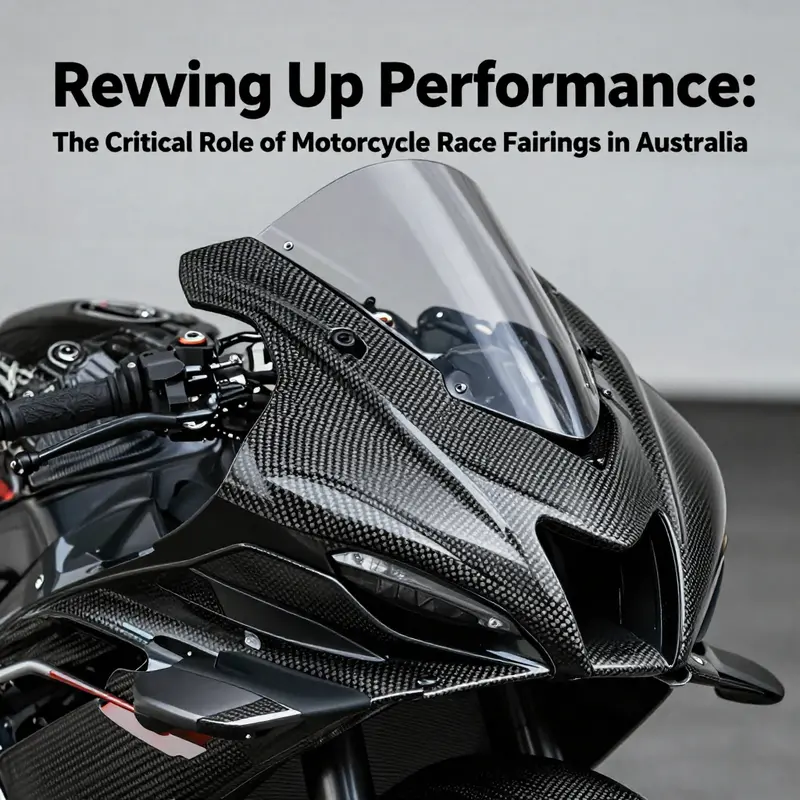
Australian motorcycle racing sits at a crossroads of tradition, regulation, and engineering. The fairing is more than a visual shell; it is the interface between rider and machine, balancing protection, aerodynamics, and speed. In a country with diverse tracks and a tight racing calendar, Australian teams tune fairings to suit local circuits while adopting global standards.\n\nThe material strategy favors carbon fiber composites for high stiffness and low weight, complemented by advanced thermosets and engineered resins to realize complex geometries and resilient performance over a race weekend. This mix supports sustainability goals as recyclability and manufacturing efficiency become part of the engineering brief.\n\nAerodynamics remains central to speed and stability. Teams pursue shape optimization for circuit-specific conditions, with attention to boundary layer behavior and underbody flow. Sensors and embedded channels transform fairings into data platforms that feed real-time telemetry and post-race analysis, closing the loop between wind tunnel predictions and on-track performance.\n\nManufacturing discipline is essential. Precision in layup, resin distribution, and fixture tolerances ensures repeatability and minimizes parasitic drag. Safety and regulatory compliance, governed by national bodies and international standards, shape fairing geometry and attachment methods so that performance and rider protection go hand in hand.\n\nCollaborations span domestic innovation and global knowledge. Australian teams absorb advances from MotoGP and WorldSBK while tailoring solutions to local tracks, weather, and rider expectations. Looking forward, advances in materials science, automated fabrication, and data analytics are likely to push the pace further, with sustainability and safety continuing to guide the evolution of Australian race fairings.
From Airflow to Armor: How Australian Regulation Shapes Motorcycle Race Fairings
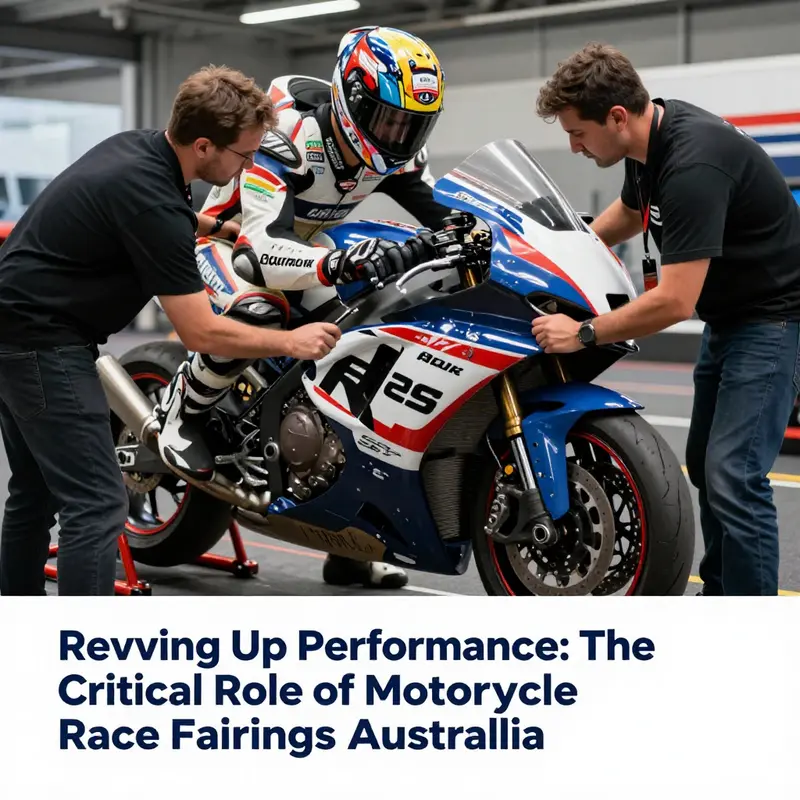
On the track, every curve of a motorcycle is a negotiation between speed, stability, and safety. The race fairing—the streamlined shell enveloping the bike’s front end and the rider in many race classes—embodies that negotiation. In Australia, the journey from the blank sheet of composite material to a finished, race-ready fairing is not merely a matter of aesthetics or performance; it is a disciplined process governed by a layered system of rules and standards that blend national road-vehicle obligations with the precise safety and technical requirements of high-performance motorcycle racing. The result is a market and a design practice where air is coaxed into behaving like a partner rather than an adversary, and where rider protection remains a non-negotiable constant even as teams chase every watt of aerodynamic efficiency.
The regulatory framework shaping Australian motorcycle race fairings rests on two complementary pillars. On the one hand, the Australian Design Rules (ADR) provide the overarching engineering and safety philosophy that governs road-legal vehicles and, by extension, any component used in or derived for public road use. While ADRs are primarily aimed at vehicles that share the road with everyday traffic, they inevitably drip into racing considerations whenever a race machine also finds its way onto public roads or when components are designed with dual-use in mind. On the other hand, Motorsport Australia—formerly CAMS—sets the specific, competition-grade standards that govern how fairings must perform in sanctioned events. This authority translates into a practical playbook: what materials are permissible, how the fairings must attach to the frame, how the edges are treated to limit injury risk, and how a fairing’s stiffness and aerodynamics are preserved under the extreme conditions of a high-speed race.
In practice, this regulatory duet creates a lifecycle for fairings that begins long before a rider enters the pit lane. Designers and engineers study the track environment to optimize CdA—the product of drag and frontal area—without compromising rider protection or the ability to quickly remove the shell in emergencies. The emphasis on aerodynamics is balanced by a parallel emphasis on safety, especially in the case of crashes where the last thing a rider needs is a rigid shell that can snag or amplify injuries. To support this balance, the rules specify that fairings must be constructed from impact-resistant materials such as fiberglass, carbon fiber, or other approved composites. The choice of material is not merely about weight or stiffness; it is a statement about energy absorption, fracture behavior, and the predictable performance of the shell under unpredictable race-day loads.
The practical implications of material and construction requirements extend into the shop floor and the wind tunnel alike. Carbon fiber and glass-reinforced resins are favored for their high strength-to-weight ratio, but they come with responsibilities. The materials must be certified, and the manufacturing process, as well as the finished product, must demonstrate consistent quality. Brittle or uncertified materials are prohibited, a rule that protects riders by reducing the risk of sudden, catastrophic failure during a crash. This safety calculus is not only about the shell’s resilience; it also concerns the fairing’s edges, which must be treated to minimize laceration risk and to prevent snagging on the rider or trackside equipment. An energy-absorbing structure or a compliant edge can, in some scenarios, be the difference between minor injuries and a serious incident.
Attachment and fitment form another critical axis of regulation. The fairing must be securely mounted to the frame using approved mounting systems that ensure structural integrity throughout a race’s dynamic demands. Any modification that weakens the chassis or creates sharp, projection-prone surfaces is scrutinized and often prohibited. The logic here is straightforward: a fairing is part of the motorcycle’s chassis in the sense that it contributes to mechanical continuity and crash behavior. If a modification undermines this continuity, it can alter how energy is dissipated in a collision or during a violent slide. The rules therefore favor standardized interfaces and tested mounting arrangements that racers can rely on, even when teams are pushing the envelope on aerodynamics and aesthetics.
Rider protection remains inseparable from aerodynamic performance in the Australian rulebook. Fairings are required to avoid obstructing the rider’s vision or interfering with control inputs. They must support, not hinder, the rider’s ability to perform delicate throttle applications, braking, and steering under pressure. In the event of a crash, a fairing must contribute to energy management rather than contribute to injury. Practically, this means designers must consider how the fairing’s curvature, thickness, and internal geometry interact with rider gear and with the ground or other objects during a slide. The term energy-absorbing structures appears in the regulatory language not as a marketing slogan but as a design directive, ensuring that the shell behaves in a predictable fashion when subjected to impacts.
The regulatory landscape in Australia also acknowledges the variability of racing formats. Supersport, Superbike, Moto3, and other categories can have subtly different requirements. This variability does not undermine coherence; it reflects an understanding that different bikes, power levels, and competitive philosophies demand tailored approaches to fairing design and integration. Every entry for a race must undergo inspection and homologation before participating in events. The inspection process serves as a final quality checkpoint, confirming that the fairing’s construction, fitment, material selection, and safety features align with the category’s rules and with the broader safety expectations of Motorsport Australia.
For enthusiasts, engineers, and clubs looking to understand how these standards translate into real-world practice, the most authoritative source of information remains the national racing regulations published by Motorsport Australia. These technical regulations spell out the specifications for materials, attachment methods, rider protection requirements, and the process by which components are certified for competition. They provide a bridge between the abstract protections of safety science and the concrete realities of a race weekend, where teams must make quick, data-informed decisions about their fairing strategies while staying within the accepted framework. The rules also acknowledge that fairings sometimes travel between different race environments and road-use scenarios, so there is an awareness of dual-use implications, even when the immediate focus is pure competition.
From a historical vantage, Australia’s approach to race fairings echoes the global emphasis on harmonizing performance with safety. The push toward lighter, stiffer shells that nonetheless absorb impact is a common thread across major racing jurisdictions. Yet Australia’s particular emphasis on rigorous inspection, certification, and edge treatment reflects a practical reflex: to protect a rider who pushes the limits in events that showcase speed but demand disciplined control, especially as speeds climb and race dynamics become more complex. The result is a culture of design that treats the fairing not as a cosmetic shell but as an engineered interface between aerodynamics, rider safety, and the machine’s structural integrity.
For readers who want a tangible sense of how this translates into the gear a team might source or assemble, consider the broader ecosystem of fairing availability and compatibility. While the regulatory framework defines what is permissible, the market responds with a range of configurable options designed to meet those standards while accommodating a diverse lineup of motorcycles. The idea is to enable rapid adaptation to evolving regulations and evolving bike platforms, without sacrificing the essential priorities of safety and performance. In practice, that means engineers collaborate with suppliers to ensure mounting points, edge radii, and internal cavities align with the current rules while still enabling the high-speed air management necessary for competitive lap times.
Within the wider literature and industry discussions, several examples illuminate how theory translates to track results. The combination of high-performance composites and carefully managed edge design, where the fairing’s outer surface is contoured for both minimal drag and predictable behavior upon impact, demonstrates why materials choice matters as much as shape. The finessing of internal stiffeners, load paths, and mounting interfaces ensures that the fairing acts as a unified system rather than a collection of glued panels. This systemic thinking—airflow, energy absorption, mounting strategy, and regulatory compliance—underpins the modern Australian approach to race fairings and reflects a broader consensus in global motorsport that safety should never be compromised in the pursuit of speed.
For readers navigating the practicalities of entering Australian racing or simply studying the regulatory landscape, it is useful to note how to access the most current information. The official Motorsport Australia site hosts the National Racing Rules with dedicated sections on motorcycle technical specifications, providing an authoritative reference point for engineers, teams, and competitors. In parallel, while road-vehicle design rules may cast a wider net, they influence the materials and testing standards used in racing applications, reinforcing the idea that high-performance race equipment is designed with an eye toward enduring safety, regulatory compliance, and track-credible reliability. A practical takeaway is that prospective entrants should treat the rulebook not as an obstacle but as a design brief that guides material selection, construction quality, testing protocols, and inspection readiness throughout the season.
In terms of public-facing resources, there is value in observing how the broader community discusses and navigates fairing choices. A well-curated gallery of configurations and a sense of the modular approach often appear in the discourse around fairings, particularly when considering the balance between customization and compliance. For those who seek a concrete example of the kind of modular design that supports rapid adaptation while staying within the rules, a reference point can be found in the Honda fairings collection, which illustrates how standardized interfaces and compatible shapes enable teams to swap or upgrade shells without violating the fundamental safety and performance constraints that govern Australian racing. This example, while not a brand endorsement, helps illuminate how a well-designed fairing system can support both innovation and compliance. Honda fairings collection
Looking ahead, the Australian framework is likely to continue evolving in response to advances in materials science, computational aerodynamics, and the ever-present pressure to maximize rider protection. As new composite technologies emerge and as safety testing becomes more sophisticated, the rules will adapt to ensure that fairings deliver consistent aerodynamic gains without sacrificing the rider’s well-being. The ongoing dialogue among regulators, teams, and manufacturers is essential to sustaining a competitive yet safe racing environment. In that sense, regulation acts not as a constraint but as a catalyst—pushing designers to rethink how a shell can be light, strong, and kind to the rider’s body while staying within a framework that can be tested, inspected, and verified at race venues around the country.
Ultimately, the Australian story of motorcycle race fairings is a portrait of how science, engineering, and policy converge on the racetrack. The fairing becomes more than skin; it is a controlled interface where airflow is tamed, crashes are imagined and mitigated, and teams demonstrate discipline in the pursuit of speed. This integrated approach sustains a culture of high performance that remains deeply attentive to the rider’s safety and to the integrity of the sport itself. In a racing landscape that prizes innovation as much as rigor, Australia offers a compelling case study of how regulatory standards can elevate both the science of aerodynamics and the art of safe, responsible competition.
External resources and ongoing regulatory updates can be found through Motorsport Australia, whose technical regulations document the current expectations for motorcycle fairings and related safety provisions. Keeping abreast of these standards is essential for anyone involved in Australian motorcycle racing, whether they are engineers drafting the next iteration of a fairing, teams preparing for a circuit, or enthusiasts studying how the sport’s safety architecture shapes the machines that thrill the crowd on weekends. External reference: https://www.motorsportaustralia.com.au/
Chasing the Edge: How Australian Race Fairings Shape Speed, Safety, and Strategy on Home Circuits
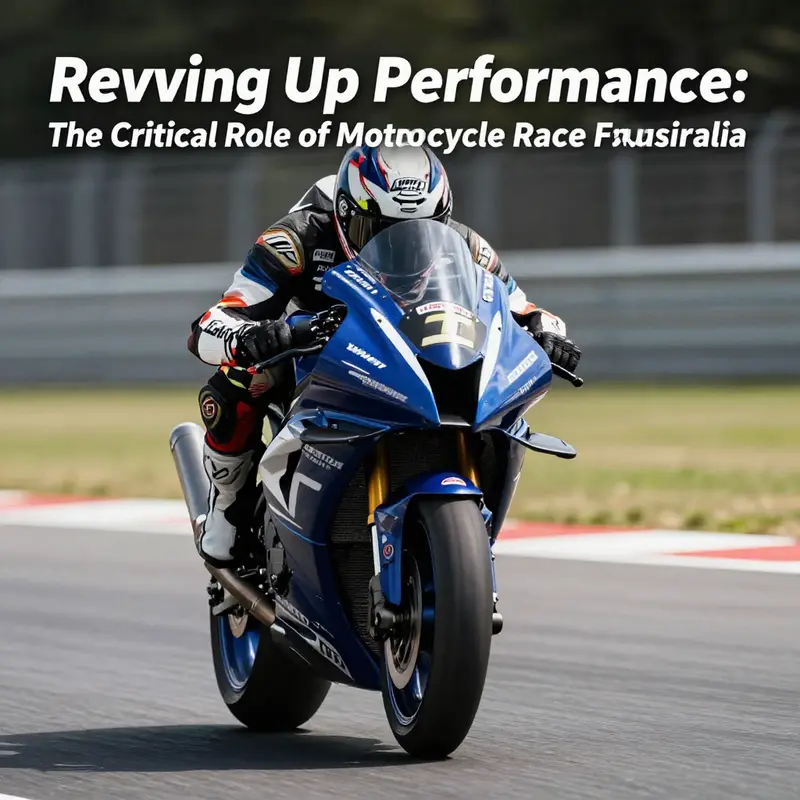
Across Australia’s circuits, a quiet art governs speed as surely as the throttle and tire compounds themselves. The motorcycle race fairing is more than a decorative shell; it is a primary instrument in a rider’s toolkit, shaping aerodynamics, cooling, protection, and even brand identity. In a country with a mature racing ecosystem, from the high-speed ovals of the Superbike and Supersport championships to endurance events that test each rider’s nerve, the design and specification of fairings are governed by a blend of international standards and domestic rules. The result is a coherent language of form and function that engineers, teams, and riders speak in a shared dialect of efficiency, safety, and refineable performance. On tracks that locals know by name—Phillip Island’s sweeping bayside bends, Mount Panorama’s legendary climbs and hairpins, or the undulating turns of particular club circuits—the way a fairing sits and breathes around the machine often translates into measurable gains in lap times, stability, and rider confidence. It is a story of wind, heat, and geometry, told on asphalt.
Aerodynamics is the clearest stage upon which fairings act. The front fairing, when shaped with disciplined precision, directs air to flow smoothly over the rider and the engine. It reduces drag and modulates the pressure field around the bike, so that the machine can slice through air with less resistance and maintain high speeds without sacrificing rider control. In practical terms, this means a lower drag figure in conjunction with a strategically tuned CdA—air resistance times frontal area—that helps the bike achieve higher top speeds while remaining stable as the rider exits straightaways into braking zones and corners. For Australian race teams, the challenge is balancing the pressure distribution that keeps tires planted in high-G corners with the need to minimize energy loss at the front end. Leathered by years of track data and wind tunnel insights, modern fairings are designed to harvest downforce where it matters most and to shed lift tendencies at the nose and around the rider’s torso. This is especially visible on courses that mix long straights with back-to-back bends, where minute shaping and fairing alignment become decisive.
The Australian racing milieu also places a strong emphasis on thermal management. The intense heat generated by high-revving engines and high braking loads, particularly on warm coastal circuits and the cooler, sometimes wind-driven mountain sections, demands a fairing that can shepherd airflow to critical components. Fairings channel air to brake discs and radiators to prevent overheating without inviting turbulence that would compromise grip. The interplay between cooling and aerodynamics is delicate: airflow optimized for heat transfer should not introduce drag or buffet that unsettles the chassis at the apex of a corner. Teams continually balance these needs through simulations and physical testing. CFD studies and wind tunnel runs reveal how subtle changes in fairing curvature, edge radii, and bumper height modify the boundary layer—how the air clings to surfaces and detaches. In Australia, with its varied climate and track temperatures, this means fairings are often tuned to conditions ranging from the sun-baked coastal air to the cooler, damp mornings that can fog track surfaces. The result is a design that functions across the calendar, not just for a single weekend.
Material choice and construction methods underwrite the entire performance envelope. Carbon fiber and glass fiber reinforced polymers (FRP) dominate for their high strength-to-weight ratios. The aim is to shave weight without compromising rigidity and impact resistance. The lighter the fairing, the less energy required to move it through the air, the quicker the bike reaches peak power, and the more nimble handling can feel in tight corners. Yet strength cannot be sacrificed for lightness. The fairing must survive the inevitable shoulder-to-metal contact of a high-speed weave through a corner, a slide, or a minor tumble, and it must also protect the rider in a crash until help can arrive. Here the design integrates crash protection concepts within the outer shell, with secure mounting points and controlled failure zones that minimize injury risk while ensuring the fairing can be detached quickly in emergencies. The safety mandate does not exist in isolation; it is a requirement shaped by both MRA and the international FIM standards that govern competition in Australia and across many continents. These bodies specify not only the dimensions and materials but also the methods of mounting and the clearance necessary for safe operation and rapid rescue. In practice, teams work under a precise set of tolerances that ensure the fairing remains compatible with the bike’s frame geometry and the rider’s ergonomics, which themselves influence aerodynamics via posture. The rider’s body position, once enclosed, interacts with the fairing geometry, altering the effective surface area presented to the airstream and the distribution of load across the contact patches. This interaction is a core reason why wind tunnel and CFD analyses are a standard part of race preparation. The geometry is not a cosmetic layer; it is a functional body that communicates with the rider’s stance, the chassis’ dynamism, and the track’s demand.
One of the most telling elements in Australian practice is the degree to which fairings are optimized for track characteristics. Phillip Island, with its fast, sweeping corners and a strong sea breeze, benefits from a fairing that encourages clean separation of flow and inhibits boundary layer separation at high speeds. Mount Panorama, with its dramatic elevation changes and abrupt direction changes, rewards fairings that maintain a consistent airflow around the rider and the bike during rapid transitions. In both cases, teams rely on iterative design cycles. They start with computational models to explore a wide design space, then narrow the field through targeted wind tunnel tests that can reproduce the pressure distributions seen on real circuits. The goal is not only a low drag coefficient but also a stable aerothermal environment that gives riders predictable feedback at the limits of adhesion. In the most competitive sessions, even small reductions in drag or modest shifts in downforce can translate into tenths of a second per lap—a margin that, across a race, means dramatic shifts in podium outcomes.
The aesthetics of efficiency also play a role. The fairing is a canvas on which aerodynamic necessity and brand identity converge. A well-designed shell communicates precision, engineering discipline, and the trusted heritage of a racing program. The visual silhouette—how the lines sweep along the bike’s chassis, how the chin and side panels wrap toward the radiator area, how the tail tapers to reduce wake—reflects a philosophy of control. Designers speak of maximizing downstream performance while protecting the rider from the gusts and buffeting that roil at high speed. They aim for a natural harmony between rider, machine, and air, where the fairing feels neither heavy nor fragile, but confident and ready for the next corner.
Within this ecosystem, the fairing also serves as a platform for ongoing technical progress. Wind tunnel work and CFD simulations are common on national and private teams alike. These tools allow engineers to explore small modifications—perhaps a new edge truncation, a revised vent arrangement, or a subtle curvature adjustment—that yield measurable lap-time benefits without compromising the bike’s overall balance. The lesson is clear: the fairing is not a one-off bolt-on. It is a living part of the motorcycle’s performance architecture, evolving with new materials, manufacturing capabilities, and a deeper understanding of how air moves around a rider in motion. In an environment where the rules enforce a level playing field, it is the dedication to refinement—the willingness to test, measure, and adjust—that keeps Australian teams at the forefront of aerodynamic efficiency.
This refinement is also a matter of economics and accessibility. Fairing development sits at the intersection of engineering investment and competition economics. Lightweight composites, precision molding, and tested fasteners add to upfront costs, but they bring long-term benefits: longer part life, better crash survivability, and reduced maintenance in the pits. For emerging teams, the choice of fairing path must balance performance ambitions with budget realities. Yet even in budgets-strained environments, the same principles apply: achieve stable airflow, manage heat, protect the rider, and maintain control through all phases of a race. The Australian experience thus underscores a pragmatic approach to design that respects international rules while tailoring solutions to local tracks, rider preferences, and climate realities.
The story of fairings, however, is not merely technical. It is also a narrative about the relationship between technology and race culture. Fairings become a tangible expression of a team’s identity, a way to communicate discipline and ambition to fans and sponsors. The equipment becomes part of a rider’s sense of confidence, the mental cue that tells them the bike will respond as expected when they push harder through a corner. In Australia, this convergence of science, safety, and sport shines most brightly when a rider navigates a familiar circuit with a well-tuned shell protecting them while the wind does not dictate their fate. The fairing makes a difference by smoothing the line between human and machine, enabling a rider to exploit the bike’s potential with composure rather than raw impulse.
For readers seeking practical insights into fairing selection and options, one practical resource is the Honda fairings collection available from a well-known aftermarket supplier. This collection illustrates the range of configurations and styles used by riders to adapt to track demands and riding preferences without sacrificing compliance with safety and regulatory standards. Honda fairings collection illustrates how manufacturers and teams think about fit, aerodynamics, and maintenance across different bike platforms. While the specific models and years in the catalog are less important than the underlying design principles, the collection provides a concrete example of how a contemporary fairing system balances weight, stiffness, and airflow goals while enabling quick service in the paddock.
The technical arc of fairing development in Australia aligns with global advances but remains deeply grounded in local practice. Manufacturers and racing teams keep one eye on the next rule refinement and the other on the next track day where early wind tunnel results must translate into real-world performance. This translation—tested on the coastlines and mountain passes that define the continent—emphasizes a core truth: fairings are not mere coverings. They are active components of a racing machine, shaping how fast, how cool, and how safely a rider can chase speed on circuits that Australia proudly calls home. External research and professional journals continue to document how even nuanced changes in material composition, ribbing patterns, or cutouts can alter drag distribution, boundary layer behavior, and ultimately lap times. Such work reinforces the idea that aerodynamic efficiency must be pursued not in isolation but as part of a holistic racing program that considers rider ergonomics, mechanical reliability, and the weathered reality of the tracks themselves.
External reading can broaden this understanding beyond national borders. For those who want a deeper dive into how different fairing geometries influence overall performance, see external resources that compile aerodynamic principles and their practical effects on road and race bikes. External resource: https://www.motorcycleperformancejournal.com/types-of-motorcycle-farings-and-their-aerodynamic-impact
Final thoughts
Motorcycle race fairings are not merely decorative elements; they are essential components that significantly affect performance, safety, and racing strategy. The evolving technology behind these fairings, combined with strict regulatory standards, ensures that riders receive both performance advantages and protection on the racetrack. As the Australian motorsports landscape continues to grow, understanding and leveraging these elements will be critical for success. Business owners in this industry should prioritize innovation while adhering to compliance standards to encourage growth and enhance the safety of riders across the nation.