
Motorcycle top fairings, often referred to as half fairings, serve a dual purpose in the world of motorcycling: enhancing performance and improving aesthetics. As key structural components of many motorcycles, they are vital for aerodynamic efficiency and rider comfort while also adding a sleek look. For business owners in the motorcycle industry, understanding the significance of top fairings can lead to better product offerings and customer satisfaction. The upcoming chapters will delve into the aerodynamic principles that govern top fairings, explore the innovative materials used in their production, and examine how these fairings impact the overall riding experience. Together, these insights will highlight the importance of motorcycle top fairings in designing and marketing bikes that meet the desires of modern riders.
The Upward Shield: Aerodynamics, Comfort, and Access in Motorcycle Top Fairings
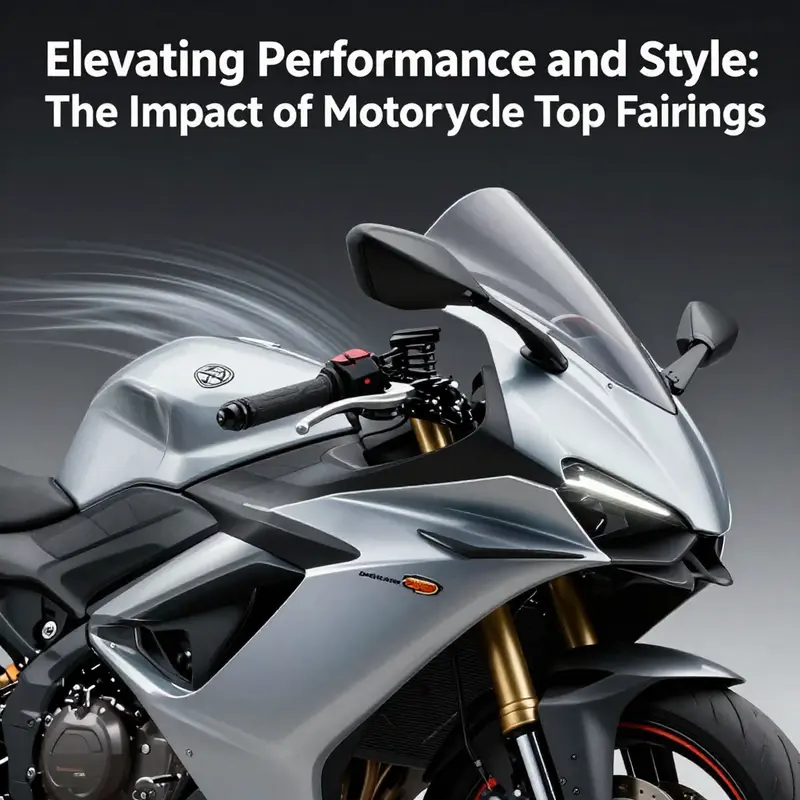
A motorcycle top fairing presents a pragmatic paradox. It is designed to reduce drag and steer airflow with a precision that makes high-speed riding smoother, while also preserving the rider’s ability to reach the controls, service the machine, and enjoy everyday usability. This balance—between aerodynamic efficiency and practical accessibility—defines the essence of the top fairing. Rather than enclosing the entire machine in a single aerodynamic envelope, the top fairing protects only the upper front region, wrapping around the headlights and the area above the handlebars, while leaving the lower engine bay exposed. The result is a design that whispers of wind tunnel science, yet speaks plainly to the rider who wants a bike that feels fast without demanding a sacrificial commitment to complexity or weight.
At its core, the aerodynamic performance of a top fairing rests on the same principles that guide any streamlining exercise: reduce the form that air must push aside, manage the flow so it travels smoothly along surfaces, and minimize the generation of turbulent wake behind the rider. By covering the upper portion of the bike and rider, the fairing nudges the airflow to follow a gentler path around the torso and arms. The wind is redirected away from vulnerable zones, diminishing both the pressure exerted on the chest and the gusts that tug at the torso during accelerations or long highway stretches. In practical terms, this translates to lower fatigue for the rider and the feeling of a quieter, more controlled ride at speed. Yet, unlike full fairings, top fairings intentionally leave the lower half more exposed. That exposure is not a flaw but a design choice, preserving lower-body protection and simplifying maintenance access.
Designers and engineers talk about this in terms of flow attachment and deflection. The top fairing acts as a small aerodynamic canopy. Its job is not to create a perfect bubble of still air but to guide air downward and around the rider with a minimum of separation. When air separates from a surface, vortices form—tiny tornadoes in miniature that can rob the rider of stability and create buffeting. A well-shaped top fairing reduces these detachments by smoothing the leading edges, shaping the lower boundary of the canopy, and tuning where the air reattaches around the rider’s silhouette. The result is a more predictable bow wave over the rider’s helmet and shoulders, a calmer ride, and a clearer sense of the bike’s momentum as speed climbs. These outcomes are not just about comfort; they influence fuel economy by trimming parasitic drag and, to a lesser extent, engine cooling efficiency by controlling where heat-laden air exits the engine compartment.
The rider’s posture matters as much as the fairing’s geometry. A forward-leaning stance, common among sport-oriented riders, interacts with the canopy in ways that make precise geometry essential. The top fairing must respect the line of sight, the ability to access the handlebars, and the rider’s head position. Kept in mind is the reality that a taller windscreen on a top fairing can improve wind deflection, but it can also magnify buffeting if the canopy contour is not harmonized with the rider’s height and seating position. The design challenge, then, is to achieve a smooth, continuous surface that guides air over the helmet rather than creating abrupt seams or corners that pulse with the wind. Small features—such as a subtly sloped crown, a gentle chine along the top edge, or a carefully tuned leading edge that bleeds air toward the sides—can alter the air’s path in meaningful ways. In high-performance contexts, these micro-shifts become macro-differences in feel and efficiency.
Modern development relies heavily on computational fluid dynamics, a discipline that translates wind into numbers that engineers can manipulate. With CAD tools such as SolidWorks and simulation engines like Star CCM+, teams model how air travels around various fairing geometries. They examine drag coefficients, lift forces, pressure distributions, and the formation of vortices behind the rider. The power of these simulations lies in their ability to reveal where a design can be nudged toward improvement without the cost of physical wind-tunnel testing for every variant. The findings matter: even a millimeter tweak to a leading-edge curvature or a subtle change in the angle of a chin line can re-route airflow in ways that reduce drag or quieten the cockpit. This precision is not ornamental; it is the practical engine of performance enhancement, where rider comfort and efficiency ride on the same contour.
In this context, the top fairing is not a single, monolithic piece but a carefully integrated part of a broader aerodynamic system. It works in concert with the headlight cutouts, the angle and height of the handlebars, and even the presence or absence of side panels. A top fairing’s effectiveness increases when it aligns with the rider’s gear and posture, the windscreen’s shape and height, and the openings that lead air toward radiators or auxiliary vents. The aerodynamic narrative is thus a story of integration, where every line and junction plays a role in how air flows from the front and around the rider to the rear. For riders seeking a balance between speed and practicality, this integration is the key benefit of the top fairing: it delivers meaningful performance gains while keeping the machine approachable and serviceable.
Aesthetics, too, follow aerodynamic logic. A well-proportioned top fairing contributes to an aggressive stance, a visual cue that the machine is designed to move quickly. The silhouette of the fairing—its curves, its sharp edges, the way it transitions into the fuel-tair and the upper frame—creates a visual rhythm that signals aerodynamic purpose even to an observer who may not know the details of flow patterns. The look matters, because the rider’s confidence is partly sculpted by sight. When a fairing looks like it has been sculpted by wind itself, it reinforces the rider’s expectation that the bike will behave as a cohesive, wind-aware system. The integration of form and function thus becomes a selling point as much as a performance attribute, appealing to riders who value both speed and refinement.
Materials selection completes the triad of aerodynamic efficacy, weight, and durability. Top fairings are typically cast or molded from high-impact plastics, fiberglass, or carbon fiber. Each material carries a different profile of stiffness, impact resistance, and weight. High-impact plastics offer resilience against road debris and ease of manufacturing, making them a practical baseline. Fiberglass gives a middle ground with improved stiffness and robustness, often at a modest weight penalty. Carbon fiber, while more expensive, delivers unmatched strength-to-weight ratios and a premium, tactile rigidity that helps maintain surface fidelity under load. The challenge is to balance the structural integrity needed to withstand wind pressures and environmental exposure with the desire to minimize weight, which directly influences the bike’s overall agility and fuel economy. The top fairing’s job is not to withstand a single storm but to endure countless rides across varying climates with a consistent surface that maintains its aerodynamic character year after year.
If the top fairing is not a stand-alone ideal but a part of a broader package, maintenance becomes a practical measure of its value. A half or top fairing that is easy to access means maintenance tasks—oil changes, filter checks, and radiator inspections—are less disruptive. In daily riding and long journeys, riders benefit from the ability to remove and reinstall or upgrade such a component without a complex process. This practicality reinforces the case for top fairings in sport-touring contexts, where the ride must blend performance with reliability and ease of service. The simplified access is not merely convenience; it translates into real time saved and less downtime, which matters to riders who depend on their machines for daily transport or extended adventures.
The decision to adopt a top fairing is a matter of intent. If a rider seeks maximum wind protection and a fully enclosed aerodynamic envelope, a full fairing might be the more appropriate path. For riders who value the freedom to service the engine quickly, downgrade weight, and still enjoy significant airflow management, the top fairing offers a compelling middle ground. It is a design philosophy that acknowledges the rider’s needs for speed without surrendering the practicalities of ownership. The top fairing stands as a testament to how aerodynamic optimization can be tuned to support rider comfort across a broad spectrum of riding styles, from spirited weekend sorties to long-distance highway cruising. In this light, the top fairing becomes less about a single attribute and more about a harmonized approach to performance, ergonomics, and upkeep.
Those who study or work with these components recognize that even the most elegant shapes confront constraints. The fairing must be robust enough to resist road hazards, UV exposure, and temperature swings, while not compromising the access required for routine maintenance. It must remain cost-effective to replace when damaged, which often involves modular mounting and standardized attachment points. In an era where additive manufacturing and rapid prototyping accelerate iteration, the top fairing can be refined quickly to respond to changing rider expectations or regulatory constraints around vehicle aerodynamics and noise. The ongoing dialogue between theory and practice ensures that top fairings stay relevant, evolving with new materials, manufacturing techniques, and sensing technologies that can inform future improvements.
To bring these ideas home, consider the broader motorcycle ecosystem. Top fairings are common on sport bikes and sport-touring machines, where riders demand acceleration, stability, and a refined riding experience at higher speeds. They also appear on custom builds, where designers lean into the aesthetic of a trimmed, performance-forward silhouette. In each case, the top fairing’s success hinges on delivering a tangible benefit: reduced drag that translates into steadier handling and better fuel economy; improved rider comfort through wind deflection that minimizes fatigue; and a practical maintenance footprint that keeps the bike accessible and reliable. The result is a component that embodies a balanced engineering philosophy—one that values performance without isolating the rider from the mechanical heart of the machine.
For readers navigating upgrades or considering a build, a practical takeaway emerges. The top fairing is a thoughtful compromise: it curates airflow and wind protection in a way that respects the rider’s need for control, access, and reliability. It invites a design dialogue about how to shape air, not just to reduce drag, but to harmonize with the rider’s posture, the bike’s chassis dynamics, and the everyday realities of riding. As aerodynamics continues to converge with digital design tools, the capability to tailor a top fairing to personal fit, riding style, and climate becomes increasingly accessible. In other words, the upward shield is not a fixed weapon of speed alone; it is a flexible instrument that can be tuned to enhance comfort, efficiency, and ownership experience.
Where does that leave the enlightened rider? With a clear sense that top fairings are more than ornamental shells. They are purposeful elements that translate aerodynamic theory into real-world benefits. They offer a pathway to smoother airflow, quieter cockpit environments, and a practical means of upgrading a bike’s performance without surrendering servicing simplicity. They also invite the rider to consider how form and function are inseparable when a vehicle moves through air. The sensation of riding into the wind is not merely a test of speed; it is a collaboration between man, machine, and the canopy that guides the air around them. And that canopy—the top fairing—exemplifies how thoughtful design can elevate a motorcycle’s character while keeping it approachable for daily use, weekend thrills, and everything in between.
For enthusiasts curious to explore options or visualize how a top fairing might harmonize with a particular bike, a curated collection of sport-bike fairings offers a starting point. These collections provide diverse shapes, thicknesses, and mounting schemes that illustrate how small changes in a canopy’s geometry can influence airflow. While the specific shapes and attachments vary, the underlying principles remain consistent: you are shaping the air that meets your body, creating a calmer wake behind you, and linking the bike’s visual language to its aerodynamic intent. In practice, you might browse such collections to compare how a more pronounced upper contour affects wind deflection versus a sleeker, lower-profile approach. Each choice represents a different balance of drag reduction, rider comfort, and maintenance accessibility, and that balance is the heart of the top fairing’s appeal.
As this exploration of aerodynamic principles unfolds, it’s clear that the top fairing is more than a functional add-on. It is a carefully crafted interface between wind and rider, a mechanism that translates the science of flight into the language of road riding. Its effectiveness rests on a blend of thoughtful geometry, material choice, and a recognition of the rider’s practical needs. The result is a component that makes a motorcycle feel more confident at speed, while also remaining approachable and serviceable for daily use. In the end, the top fairing stands as a vivid reminder that performance design is not about chasing the most extreme outcome but about achieving a balanced, livable, and rideable expression of engineering insight.
External resource for further reading: https://www.motorcycle-technology.com/aerodynamics-faired-motorcycles/
Internal link for related product context: sport bike fairings collection
Materials at the Edge: ABS, Composites, and Hybrids in Motorcycle Top Fairings
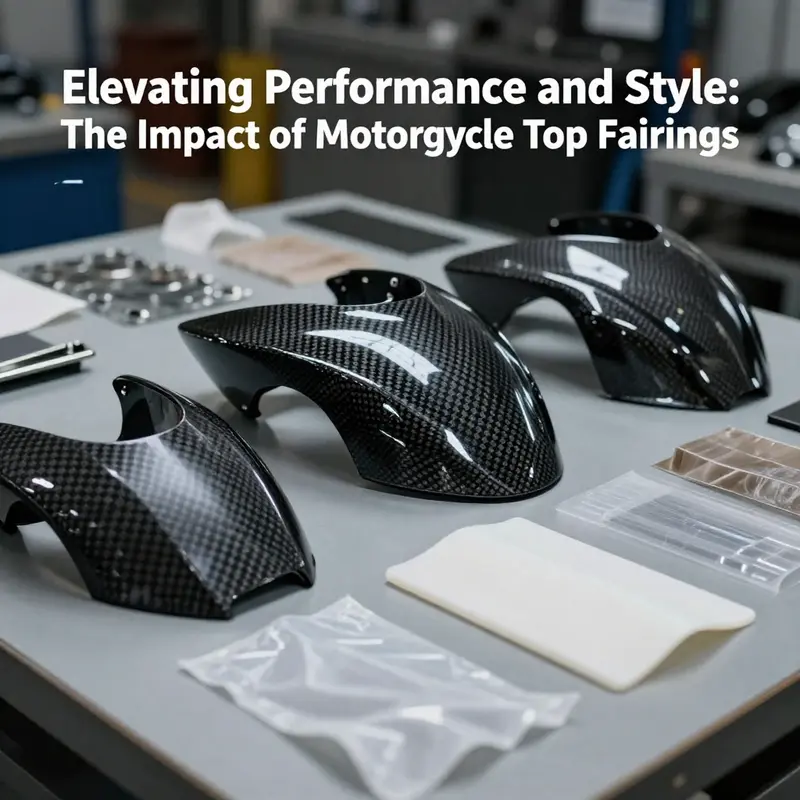
The motorcycle top fairing sits where aerodynamics, durability, and aesthetics meet. It is the visible shell that slices through air while protecting the rider and shaping the bike’s character. The material choice for this shell is a strategic decision that influences performance, repairability, and lifecycle costs. In modern bikes, three families of materials dominate: impact-resistant thermoplastics (primarily ABS and HDPE), advanced composites (notably carbon fiber), and selective use of lightweight metals in structural roles. Each brings its own balance of stiffness, toughness, weight, cost, and manufacturability, and each shapes how the fairing is designed, produced, and maintained.
At the core for mass-produced shells is a thermoplastic resin system, with ABS as the workhorse. ABS delivers toughness, ease of paint adhesion, and compatibility with high-volume injection molding. A well-formed ABS skin, coated with UV-stable primers and clear coats, resists yellowing and chalking under sun and weather, preserving sharp edges and color fidelity across miles. The surface finish plays a key role in perceived quality as much as the raw material chemistry, and the coating line—robotic spray cells, primers, bases, and clear coats—ensures consistent gloss and color.
In global manufacturing ecosystems, ABS for mass-produced shells is often paired with standardized processing streams. Regions with mature injection-molding capacity support rapid cycle times and repeatable geometry, while consistent finishing workflows ensure a uniform appearance across thousands of units. The demand for dimensional stability also drives tight process controls for mold temperature, cooling, and surface preparation, since even small deviations can alter radii, wall thickness, and aero performance.
Beyond ABS, carbon fiber is a favored choice for riders seeking maximum weight savings and stiffness. Carbon fiber skins can reduce inertia at the front end and improve handling at speed, but they come with higher cost, brittle impact behavior, and more complex repair needs. Many high-performance or premium models use carbon fiber in outer skins or face sheets, often in hybrid configurations with a thermoplastic core to balance surface quality and impact resistance.
Hybrids blend the best of both worlds: a carbon-fiber exterior paired with an ABS or HDPE core, or a carbon skin bonded to a light metallic substructure where mounting points demand extra strength. Internal frames—often aluminum or steel—provide mounting reliability without burdening the aerodynamic shell with excess mass. The strategic use of metals is limited to critical zones to preserve weight targets while delivering stiffness and fixture integrity where it matters most.
Material choice also dictates how the fairing is assembled, finished, and repaired. ABS parts lend themselves to welding or solvent-assisted repairs, while carbon fiber often requires more specialized repair workflows or component replacement. End-of-life considerations favor thermoplastics that can be recycled more readily, though recycling carbon fiber composites remains an active area of development. Designers must balance performance benefits with maintenance practicality and environmental responsibility.
The material system ultimately shapes the rider experience: how the shell deflects wind, how it accepts openings for lighting and ventilation, and how the surface responds to sunlight and road grit. In practice, this means a fairing that stays light, maintains its silhouette, and keeps its color and gloss over years of riding. As materials science evolves, new hybrids and coatings may push the limits of stiffness-to-weight, impact resistance, and repairability, but the core design challenge remains constant: maximize aerodynamics, minimize flutter, and deliver a visually compelling shell that endures.
For reference on production practices and finish quality, consider how a major manufacturer coordinates resin selection, tooling, coating workflows, and regional supply chains to deliver consistent shells at scale. External resources on ABS plastics and composite processing can deepen the understanding of the science behind these practical choices.
Wind, Control, and Connection: The Top Fairing’s Quiet Influence on the Riding Experience
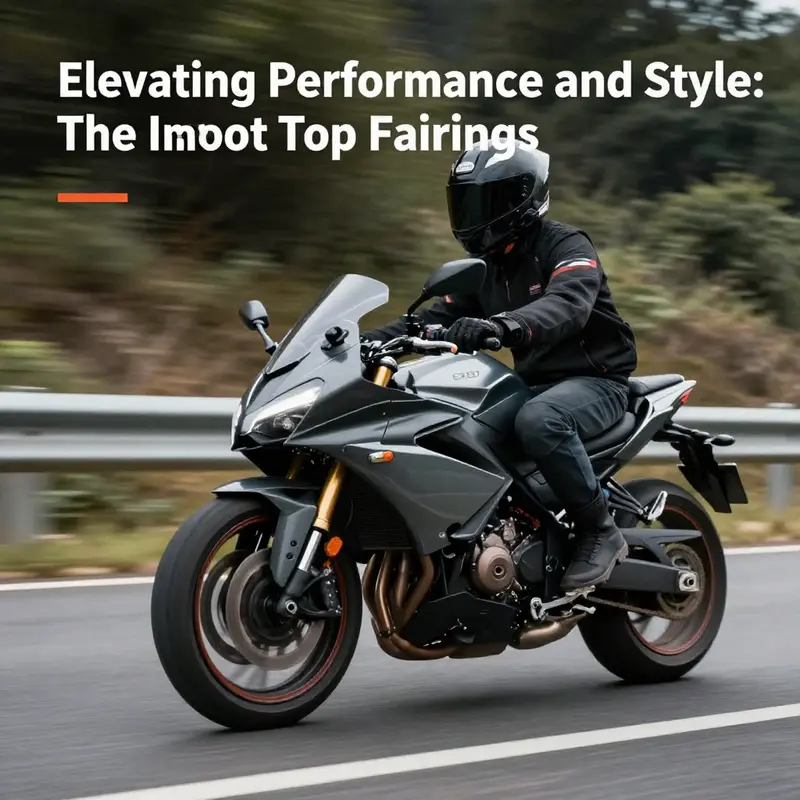
The top fairing on a motorcycle is often overlooked in casual conversations about performance, yet it quietly orchestrates a rider’s day on the road. This upper enclosure, sometimes called a half fairing, sits at the interface between rider and air, shaping how wind flows past the rider’s shoulders and neck, how sound travels through helmet and surrounding air, and how confident a rider feels when threading through traffic or slicing along a long, open highway. Its impact extends beyond mere aesthetics. It informs posture, sets the tempo of a ride, and even colors the sensory landscape that accompanies the sensation of speed. When we consider the riding experience as a balance between comfort, control, and contact with the road, the top fairing emerges as a key variable in that delicate equation. It is not simply a shell; it is a design instrument that tunes the rider’s relationship with wind, weather, and the machine beneath them, without demanding the sacrifices that a full fairing might impose on maintenance access and ease of service.
To understand the fairing’s influence, it helps to trace the wind’s journey around a motorcycle and the rider. At higher speeds, air becomes a stiff, unyielding medium. It must be redirected, diverted, or absorbed by the bike’s geometry. A top fairing does this work in a way that preserves the rider’s forward gaze and keeps the helmet’s wind shield intact against the onslaught of gusts and rain. The result is a smoother, more predictable pressure field around the torso and head. The rider feels less buffeting, less sudden force on the helmet, and a steadier line through corners. In practice, this translates into longer rides without the same degree of physical effort that wind exposure would otherwise demand. The posture that emerges is one of tolerance rather than defeat: a stance that allows the spine to align with the bike’s cruising line, with less corrugation in the shoulders and neck from wind stress. In other words, the top fairing helps the rider maintain a stable, efficient rhythm rather than fighting a constant wind-driven reaction.
The physical effort required to maintain speed and control is one of the most direct metrics by which riders understand wind effects. When the fairing is present, the air that would otherwise slam into the torso and helmet is redirected along a gentler arc. This streamlining reduces the amount of energy the rider must expend to hold a compact, aero-conscious posture. At speed, even small reductions in drag amount to meaningful gains in endurance. A half fairing does not aim for the total drag reduction of a full enclosure; instead, it offers a practical compromise: a wind shield that preserves headroom for quick maintenance checks and quick access to the adjusted cockpit area while still delivering meaningful aerodynamic benefits. The rider often notices this as less fatigue over the course of a day, a subtle but real difference after hours in the saddle. The effect can be especially pronounced on sport and touring configurations, where the rider’s body is exposed to changing air pressures as the bike leans through curves, or when the rider stands up slightly to scan the road ahead, as urban and back-road riding frequently demands.
Sound is another facet of the riding experience that the top fairing subtly modulates. Air rushing past a bare cockpit is a constant, sometimes piercing feature of riding at speed. A top fairing breaks that stream into more manageable pockets of air around the helmet, reducing the sharp, high-frequency whine that can intrude on concentration and fatigue the rider’s senses over time. When the fairing is removed, the helmet becomes a primary victim of wind noise. The wind’s whistling can press against the ears and skull in a way that drains attention and makes it harder to hear the road and other traffic cues. For many riders, that increased noise becomes a kind of fatigue multiplier, especially on longer trips or in environments with a lot of road noise from tires and vehicles. The relationship between wind and sound is not purely sonic; it also affects perceived comfort. A quieter cockpit helps riders stay focused on line and speed, responding more readily to changes in the road, and it supports calmer breathing patterns—an unglamorous but crucial component of maintaining endurance over hundreds of miles.
During evening rides, the absence of a top fairing can raise practical concerns as well. Small insects, dust, and debris are more likely to meet the visor directly, and the rider may notice an increased rate of visor cleaning and minor vision disruption. The clean lines of a half fairing are both a visual and mechanical convenience. With a fairing present, more of the air’s energy is absorbed before it can strike the visor, and the rider spends less time interrupting the ride for visors and filters. These realities matter on a daily commute or a longer weekend ride, where consistency of visibility and comfort compounds into a smoother, more predictable journey from start to finish. A fairing’s protective function extends to weather, too. Draughts, rain spray, and even the chill from passing air can be tempered by the way the fairing captures and redirects wind. The rider’s upper body feels shielded, and that shield translates into less jacket flapping, more controlled movement through a bend, and a greater sense of the bike as a single, integrated organism rather than a rider and a separate wind force acting in opposition.
With these physical effects in mind, it is important to acknowledge the strategic advantages of removing the top fairing as a practice in certain circumstances. Some riders deliberately opt for a more exposed cockpit when they seek a different rider dynamics—one that emphasizes direct feedback from the bike’s steering and chassis. Without the fairing, steering can feel lighter and more instinctive; the front end responds with a slightly quicker turn-in and a crisper sense of weight transfer during lane changes and mid-corner corrections. For riders exploring twisty urban routes or fast, sinuous back roads, that heightened sense of direct connection can become a form of communicative intimacy with the machine. It is not a purely subjective experience; it translates into a tangible feel for how the bike meets the pavement when the tires grip and release, and how the suspension communicates the road’s irregularities. In this context, the absence of a top fairing can produce a sensation of flightiness or precision, depending on rider preference, road conditions, and the bike’s geometry. The rider’s hands, wrists, and arms are the primary conduits for this experience, and the fairing directly shapes how much air pressure is felt through the bars and clamps. The fairing’s absence can make the steering feel more reactive, more willing to respond to quick inputs, and more nimble in low-speed or medium-speed maneuvers where body position and line choice are actively negotiated.
These physical and perceptual shifts sit alongside practical considerations about maintenance and serviceability. A top fairing simplifies the engine area’s accessibility and reduces the complexity of the interior channels that must be cleaned and inspected after a ride. From a maintenance perspective, half fairings typically offer easier access to the area around the headlights, cockpit wiring, and front frame tubes. This accessibility translates into shorter service intervals and quicker preventative checks, which many riders value for daily riders and for those who log long miles. While the full fairing can deliver more comprehensive aero coverage and a higher degree of weather sealing, the top fairing’s trade-off—ease of service against some wind protection—appeals to riders who prioritize everyday practicality and a modular approach to customization. The choice to use, modify, or remove a top fairing is thus part of a broader conversation about the bike’s intended role. A sport-oriented machine designed for track-like performance with a controlled wind envelope might justify a full fairing, while a versatile sport-t touring configuration could gain from a thoughtful top fairing that preserves serviceability and a clear line of sight to the engine and front suspension. Materials used for top fairings—durable high-impact plastics, fiberglass composites, or even carbon fiber in higher-end builds—play a central role in how well the fairing balances weight, resilience, and weather resistance. These materials determine not only how the fairing withstands road grime and temperature fluctuations but also how it ages and how easily it can be replaced or updated as riding preferences evolve. While a lighter material can offer a slight advantage in unsprung mass and handling, it should not compromise integrity or environmental resistance. The modern rider’s ideal top fairing, then, becomes a symphony of aerodynamic tuning, protective function, accessible maintenance, and adaptable materials, all designed to keep the rider aligned with the road’s subtle cues and the bike’s feedback loops.
There is also a broader safety frame around this discussion. Safety remains the paramount concern in any configuration. The World Health Organization has repeatedly emphasized that helmet use dramatically reduces the risk of head injury and fatality in crashes. Their data quantify the protective value of a helmet—the cornerstone of rider safety—while acknowledging that the absence of protective gear multiplies the danger riders face on the road. These statistics are not simply numbers; they reflect the lived reality of riders who face unpredictable conditions every day. The message extends beyond the helmet itself. It underlines a principle that should guide every fairing choice: armor and protective equipment work best when synchronized with careful, mindful riding. Even as a rider experiments with half-fairing aesthetics or aero setups, the helmet remains the primary shield against head injury, and its proper fit, maintenance, and use should never be compromised. The data invite riders to appreciate the complementary roles of gear and machine—how each choice reinforces the other in the moment of decision at the edge of speed and cornering.
Beyond the physics and the safety calculus, the riding experience unfolds within a rapidly evolving technological context that supports greater connection without undermining safety. When a rider opts for a more exposed cockpit or a lighter fairing arrangement to refine handling or feel, modern communication and safety devices can help preserve group awareness, awareness of road conditions, and mutual coordination in a ride. For riders who travel in packs or who navigate unfamiliar routes, real-time communication tools enable seamless coordination, reinforcing a sense of team and purpose on the road. The idea is to preserve a sense of community and information exchange in environments where wind and noise might otherwise erode situational awareness. This is not about chasing gadgetry for its own sake; it is about maintaining clarity of communication and shared intent when a rider’s attention is drawn to a combative wind, a twisty segment, or a busy intersection. In practice, a helmet-mounted intercom or a compact, weather-resistant communication system can help a rider stay connected to a co-rider’s intentions, a navigator’s directions, or a roadside support network, all without compromising the rider’s ability to hear the road and the bike’s feedback. Thoughtful integration of technology thus complements the top fairing’s physical role, ensuring that the rider’s sensory world remains coherent and navigable even when wind and speed are doing their best to scatter attention.
For riders who want to visualize how to balance wind protection, visibility, and access, examining a range of configurations can be instructive. Various fairing designs offer different skies of wind management and cockpit access, so choosing a top fairing becomes a case of aligning aerodynamic goals with practical needs. The balance is rarely binary; it is a continuum where comfort, control, and connection shift as the bike’s geometry, rider posture, and riding context change. If a rider values easy engine access for frequent service, a top fairing can be a strategic choice for maintaining that accessibility while still delivering a measurable aerodynamic advantage. If, instead, the rider’s emphasis is on a more integrated wind shield against weather and long-haul fatigue, the top fairing can be tuned to deliver greater protection with a reasonable compromise on serviceability. The art of selecting or modifying a top fairing thus involves an understanding of how air behaves at speed, how the rider’s body interacts with that air, and how the bike’s chassis communicates the road’s realities back to the rider through steering response, feedback through the handlebars, and the suspension’s own dialogue with the pavement. It requires an eye for the long arc of a ride—the way wind, noise, and posture accumulate over hours, and the way a well-chosen top fairing can ease that accumulation without masking the crucial, real-time feel of the road.
For readers exploring practical implementations, it can be helpful to consider a catalog of available fairings that illustrate how different shapes and mounting schemes translate into the riding experience. A curated collection focusing on front-end protection and aerodynamics demonstrates how choices in lip lines, panel curvature, and mounting geometry influence wind encounter and ingress. The exploration reveals that even small geometric changes—the angle of a wind-deflecting surface, the height of the crown, or the thickness of the upper edge—can alter the balance between stabilizing lift and drag and the rider’s sense of stability while cornering. Practitioners and enthusiasts who want to experiment can approach this as a modular design problem: adjust the height and rigidity of the top fairing, experiment with venting behind the headlights, or modify the curvature to tailor the air’s trajectory around the rider’s torso. The aim is not to chase a single universal formula but to cultivate a design-aware sensibility that respects the rider’s goals, the bike’s riding envelope, and the road’s physical challenges.
Within this framework, riders who seek to understand and optimize their own riding experience may find value in examining historical and contemporary examples through a design lens. The top fairing, though simple in silhouette, offers a tangible reminder that small changes in the front of the motorcycle can ripple through the entire riding experience, altering how the rider perceives speed, how easily they hold a line, and how comfortable they feel when the road stretches out before them. In practice, a rider may begin with a foundational fairing that provides a balance of wind protection and serviceability, then refine toward a preferred compromise: one that preserves a tactile link to the bike’s steering while maintaining enough wind management to sustain comfort over long distances. For those who want to explore a concrete reference in a concise, bike-friendly catalog, the Honda fairings collection can illustrate how a half fairing is designed to harmonize with a bike’s front end, delivering a balance of form and function that supports both daily riding and occasional longer voyages. Honda fairings is a useful starting point for understanding how similar front-end packages are configured across a range of models and riding styles.
As this discussion circles back to the rider’s experience, the bottom line is that the top fairing shapes more than a bike’s silhouette. It sculpts the rider’s day in motion, affecting energy expenditure, sensory load, field of view, and the steadiness of the bike’s line through wind and road. The fairing’s influence is often perceived rather than measured in a single lap around a track or a single mile of straight road. It emerges in the quiet, cumulative ways wind and sound stabilize into a familiar rhythm, in the way the rider’s hands learn to time inputs with the front end’s response, and in the confidence that comes from knowing that the machine in front of you is designed to work with you rather than against you. The decision to use, remove, or customize a top fairing is a practical negotiation between the rider’s needs and the bike’s nature, a negotiation that remains central to what makes a ride feel personal, reliable, and rewarding. When the front-end design is aligned with a rider’s goals—whether those goals involve comfort over long distances, precise handling on twisting roads, or a clean, accessible engine bay for straightforward maintenance—the riding experience can be felt as a coherent, continuous conversation with the machine. The top fairing becomes a partner in that conversation, shaping the tempo of wind and motion while still leaving room for the rider’s own sense of pace, line, and presence on the road. For those who want to deepen this understanding, the journey often starts with recognizing that every cockpit, every wind line, and every soundscape is a design choice that ultimately supports the rider’s autonomy and enjoyment, not just the bike’s speed metrics. And in that realization lies the fairing’s quiet, persistent influence: a partner that makes the road feel contained, connected, and ready for whatever the next mile may bring.
External reference: For a broader safety context tied to rider gear, see the World Health Organization’s road traffic injury data on helmet use and injury prevention: https://www.who.int/news-room/fact-sheets/detail/road-traffic-injury
Final thoughts
In summary, motorcycle top fairings play a vital role in enhancing both the performance and the aesthetic appeal of motorcycles. They provide aerodynamic efficiency, allowing riders to experience smoother rides with reduced fatigue, which is essential for long-distance travel. The evolution of materials in fairing production not only improves durability but also contributes to lightweight designs that do not compromise on strength. For business owners, recognizing the importance of these components can help in tailoring products that meet the performance needs and style preferences of today’s motorcyclists. By offering high-quality, well-designed top fairings, businesses can elevate both their brand and their customers’ riding experiences. As you consider your inventory and offerings, remember that investing in better fairing solutions can create a significant competitive advantage in the motorcycle market.