
When it comes to motorcycle aesthetics and performance, replacement fairings are pivotal components that every business owner should understand. Whether you’re a vendor or a shop owner, knowing the types, materials, and market trends of replacement fairings is crucial for making informed decisions that appeal to your customer base. In this comprehensive guide, we’ll delve into the diverse options available in fairings, the impact of material selection on durability and value, current procurement trends in the market, and the functional advantages of replacement fairings. Understanding these elements will empower you to better meet the needs of your customers while reinforcing your position in the motorcycle retail sector.
多维选择:在摩托车挡风罩中的平衡之道
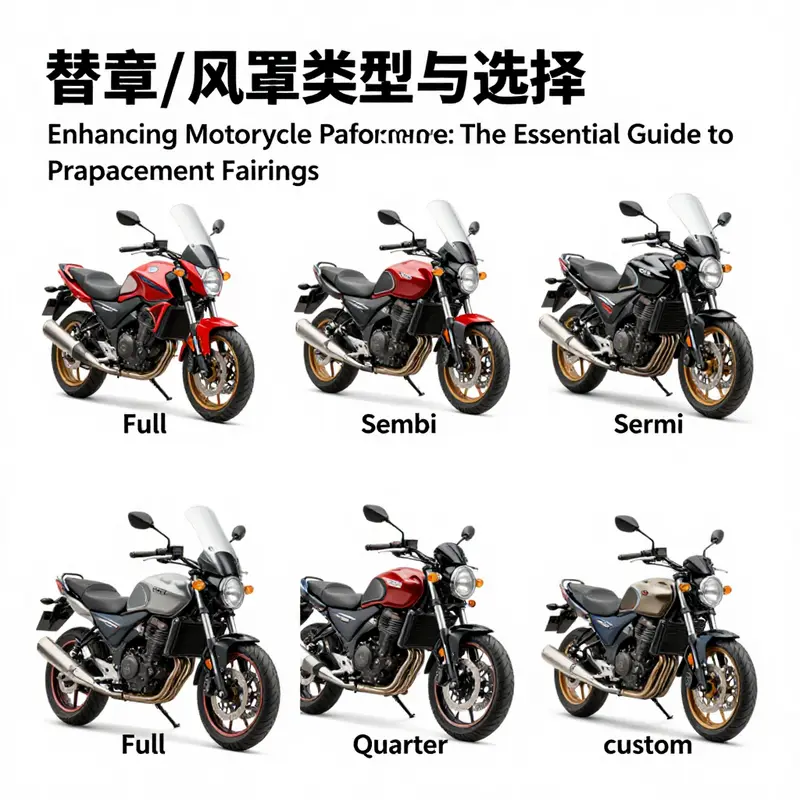
挡风罩对一辆摩托车而言,不只是外观的点缀,而是一个集成的系统,直接影响骑行的舒适度、油耗与日常维护成本。当你考虑替换或升级挡风罩时,必须从更高的视角审视这件座位前的部件:它如何在空气动力学、人体保暖、前部件保护以及个性表达之间实现耦合。没有单一变量能决定一套挡风罩的价值,真正的选择是对多重需求的综合权衡。全罩式设计在高速巡航和寒冷环境下提供最强的防风和保暖,但重量、成本与维修复杂度也相对提高;半罩在保护与通风之间取得更灵活的平衡,便于操控、易于更换,同时还能保留一定的原车线条与视野;四分之一罩最小、最轻,常用于追求轻量化或仅为外观改造的场景;定制或售后市场的挡风罩在材料、形状和表面处理上提供更丰富的选项,但对兼容性和质量控制的要求也更高。综合而言,挡风罩已经从前端件成长为一个能够显著改变骑行体验的系统。\n\n在材料层面,重量、刚度、抗冲击性和耐久性是核心。ABS塑料成本友好、成型稳定、耐日常气候;聚碳酸酯在轻量和耐冲击之间取得更好平衡但易划伤;碳纤维常用于高端改装,但价格较高。玻璃纤维提供成本效益但相对较重且强度需工艺控制。涂层和抗UV能力也影响长期外观与耐久性。厂商之间在材料排序与工艺标准上的差异意味着在选购时应结合产品描述和实样评估。\n\n在采购与供应方面,区域化分工逐渐明显。以中国市场为例,成熟产业集群覆盖模具设计、注塑成型、表面处理与物流,使ABS前罩具备成本与交期优势。对高强度需求的干碳纤维部件多用于追求刚性与轻量化的场景。采购时应评估供应商的质量保障、生产规模与客户反馈,确保长期稳定使用。\n\n挡风罩的核心功能不仅在于外观线条,空气动力学效率是直接表现:光滑轮廓、合理风阻分布有助于提升高速稳定性与燃油经济。对长途骑行者,挡风罩能减少头部、颈部、胸前的风压,提升舒适性。抵御风寒、雨水与飞溅也很重要,前方部件如灯具和仪表等的保护也有助于降低环境磨损。必要时在事故情境下也有一定缓冲作用。\n\n安装前评估要点包括适配性、安全性与视野。确保罩体与把手直径、仪表盘布局、油箱前缘及前城头部的连接点相容;优先选择高抗冲击、耐候材料;透明材料应保持透光与色差控制;安装便捷性如可调紧固带和非侵入性固定方式,能减少对原车结构的改动。涉及电子元件时,请由专业技师安装,确保电气系统正常工作。\n\n使用与维护方面,日常清洁要点包括避免强酸性或强研磨清洁剂;高端材料的涂层需定期维护以抗划伤和紫外线。若需要更换配件,优先使用与原材料相容的粘合剂与紧固件,并在正式路试前评估在不同风速下的稳定性与噪音,以便后续微调。\n\n综上,挡风罩的多样性使其成为改变骑行体验的关键装备。选择时应综合考虑适配性、材料、安装便利性与长期维护成本。若需要查看不同型号的集合,可访问厂商的前罩集合页面。\n\n外部参考资源: https://www.1688.com/offer/6784567890.html
Material Alchemy: How Choices in Replacement Fairings Define Value, Durability, and Ride Quality
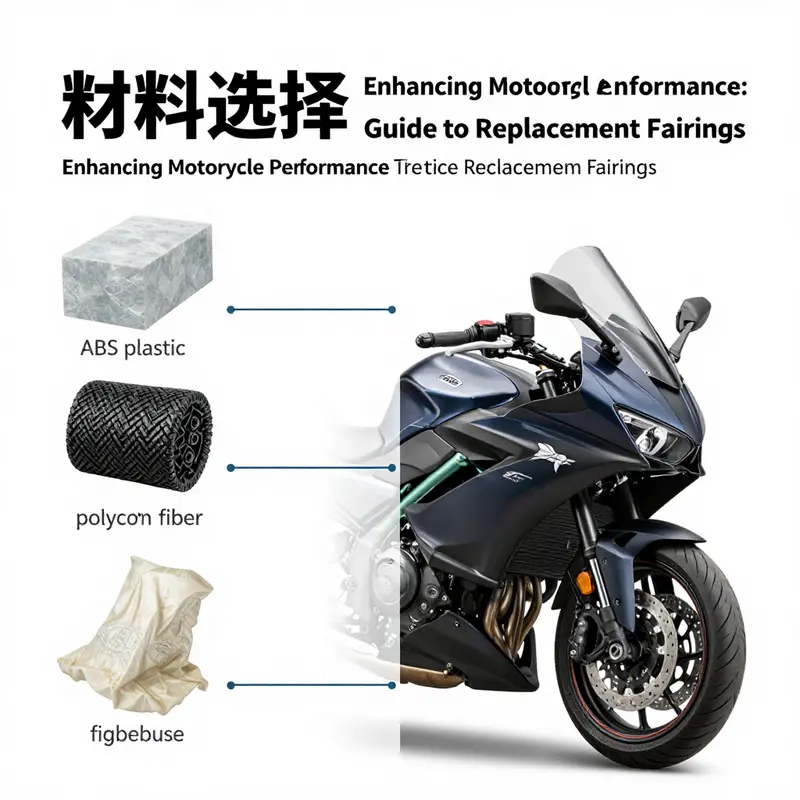
Material selection sits at the core of what makes replacement fairings more than cosmetic upgrades. It determines not only how a bike looks, but how it behaves at speed, how it protects essential components, and how long the parts will endure sun, rain, debris, and the rough realities of daily riding. When riders evaluate replacement fairings, they often weigh aesthetics and fitment first. Yet behind every glossy surface lies a matrix of properties—weight, impact resistance, transparency, temperature tolerance, and aging behavior—that collectively shape the riding experience and the true cost of ownership. In practice, the choice of material becomes a negotiation between performance and practicality. The balance struck here reverberates through the bike’s aerodynamics, its exposure to the elements, and the ease with which a fairing can be repaired or replaced if circumstances change. In markets where aftermarket components proliferate, material science becomes the quiet engine of value, guiding decisions that affect comfort on long trips, energy efficiency at highway speeds, and the confidence a rider feels when the skies darken or a highway gust presses against the windscreen. The discussion that follows threads together the main material families commonly used for motorcycle replacement fairings, from readily affordable plastics to high-performance composites, and explains how each option intersects with riding style, climate, maintenance, and total cost over time. For riders, the practical takeaway is simple: the right material is not just what you can see, but what you can trust when the road stretches ahead.
Engineering-grade plastics, particularly PC/ABS blends, have become the default for many aftermarket fairings because they strike a pragmatic balance between cost, processability, and performance. ABS on its own provides decent toughness and impact resistance, while PC adds clearer optics and a higher resistance to sudden loads. The result is a shell that can survive highway buffets, resist minor impacts from stones, and maintain a crisp, glossy finish with proper UV protection. Yet the story does not end there. The lighter, more rigid PC/ABS combinations can suffer from stress cracking in prolonged high-heat exposure, especially if the coating layer is thin or poorly applied. This reinforces a truth often echoed in the trade: the quality of the surface finish—paint, clear coat, and protective films—has as much bearing on durability as the core resin itself. When a fairing’s outer layer is properly sealed, it can resist chalking and yellowing for the duration of many seasons, maintaining clarity over the windscreen and a shield against micro-scratches that would otherwise degrade visibility. In this sense, ABS/PC blends embody the value proposition of affordable performance: an accessible material that can deliver reliable service with appropriate care and maintenance. Yet, for riders who push their machines toward the edge of the envelope, higher-performance options warrant consideration, especially when the aim is to minimize weight while preserving stiffness and fatigue resistance over time.
Fiberglass-reinforced plastics (FRP) present a different proposition. The advantage of FRP lies in its robustness and the relative ease with which it can be formed into complex shapes, a key factor for high-performance bikes and for riders who insist on protection that remains sturdy under load. FRP fairings can deliver excellent durability at a lower price point than some fiber-reinforced composites, and they tolerate heat and weathering without significant distortion. However, the heavier nature of FRP compared with advanced plastics is a real consideration for those seeking maximum agility or fuel efficiency gains through weight reduction. In practical terms, a fiberglass shell can serve as a reliable base for long-distance travel where the rider values enduring protection and predictable performance. The tradeoff becomes more obvious when acceleration, braking stability, and cornering feel are scrutinized: the extra weight of FRP tends to dampen ultra-responsive handling, though the difference may be imperceptible at normal road speeds. Yet the structural rigidity FRP provides can be a boon for models that see rough roads or aggressive riding, where a solid front end translates into consistent steering response and less flexing at the upper wind area.
Polycarbonate (PC) emerges in many discussions as a standout material for its blend of optical clarity, impact resistance, and temperature resilience. Engineering-grade PC is capable of withstanding extreme temperature swings, from the cold under dawn air to the heat of reflective sun on a long highway stretch, without fracturing. Its impact resistance—often discussed in terms of a factor of hundreds of times greater than ordinary glass—translates to real-world durability when faced with road debris and minor collisions. The high transparency of PC, particularly when treated with UV-resistant coatings, preserves the rider’s visibility through the windshield, which is crucial for safety. The durability of PC makes it the preferred platform for riders who expect a long service life from a single purchase and who value a balance between weight and stiffness. It is not, however, without caveats. PC can scratch more readily than some premium alternatives, especially without a protective topcoat, and the cost, while still reasonable, is higher than basic ABS. When properly treated, though, PC fairings offer a compelling return on investment by maintaining appearance, reducing maintenance intervals, and supporting a cleaner aerodynamic profile over time.
Carbon fiber, the sought-after material for high-performance kits, takes the discussion into the realm of speed and precision. Lightweight yet incredibly stiff, carbon fiber provides an edge in how the bike cuts through air. The payoff is clear: lighter weight translates into less inertia, faster response to steering inputs, and improved cornering stability. Carbon fiber’s denser weave also resists fatigue well under repeated loading, which is a cornerstone of long-term durability for track-oriented riders or those who ride on windy, exposed routes. The drawbacks, not surprisingly, are price and repairability. Carbon fiber versions of replacement fairings command a premium, sometimes a substantial one, and repairing embedded damage requires specialized skills and materials. For most riders who use their machines primarily on public roads and in variable weather, a full carbon-fiber fairing may be an investment beyond the majority of practical needs. Still, for select builds, especially those embracing the extremes of performance and weight reduction, carbon fiber remains the aspirational benchmark against which other materials are measured.
Acrylic, or PMMA, offers another angle on the value proposition. Its optical clarity is remarkable, delivering near-perfect transparency that enhances rider visibility and the overall aesthetic of the bike. PMMA’s transparency, however, comes with a susceptibility to surface scratching and UV-induced degradation if not protected by coatings. Its impact resistance is decent, but not at the level of PC or certain composites, making PMMA a better fit for applications where visibility and aesthetics outweigh the occasional need for rugged, high-impact resistance. For riders who prize a pristine, showroom-like appearance and ride in environments where road debris is minimal, PMMA can be a compelling choice. It is worth noting that PMMA’s scratch resistance benefits considerably from a well-applied, hard-wearing topcoat that can keep the surface looking clear and bright for longer than uncoated alternatives.
In parallel with these more rigid materials, some sellers still rely on flexible or fabric-based solutions such as waterproof nylon cloth in detachable or non-rigid configurations. While these fabrics do not provide the aerodynamics or rigid protection of a fixed fairing, they offer a portable, lightweight option for weather protection and wind shielding in certain configurations. They are not substitutes for structural, high-speed wind management, but they fill a niche for riders who value modularity and portability, such as those who switch bikes seasonally or require travel packs with weather-resistant covers. The key takeaway across these material families is that no single solution fits every scenario. The optimal material depends on how a rider uses the machine, where they ride, what they value most—weight, durability, sightlines, or price—and how they plan to maintain the finish and geometry of the fairing over time.
When weighing durability and value, the engineering decision often centers on a few guiding questions: How soon will I need to replace or repair due to UV exposure and weathering? Will the weight reduction significantly alter handling and fuel efficiency on my typical routes? How important is optical clarity for protection against glare and debris? What maintenance routine will keep the surface looking new and feeling solid under stress? The answers to these questions will tilt the allocation of priority toward PC for a balanced, long-lived option; toward FRP for maximum toughness at a reasonable price; toward carbon fiber when weight is paramount and the budget allows; or toward PMMA when appearance and visibility trump the risk of surface scratches.
Beyond the material itself, the broader ecosystem surrounding aftermarket fairings shapes value and durability. In regions with mature manufacturing clusters—where design, tooling, plastics injection, and surface finishing are integrated in a shared supply chain—the production of high-quality ABS, PC, and carbon components becomes more predictable in terms of consistency and finish. The choices made at the factory level—from resin formulations to paint adhesion techniques and UV stabilizers—enter the rider’s life not as abstract specs but as tangible differences in how long a panel retains its shape, how well it resists yellowing, and how easy it is to restore when chips appear. In this light, the cost of a fairing is not only the sticker price but the product’s entire lifecycle: its resistance to environmental aging, its resilience to road hazards, and the ease with which maintenance or repair can return it to its former reliability.
For riders seeking model-specific compatibility and a more precise fit, the interplay between material and geometry matters as well. Some fairings are designed with a simplified shell in mind, where the surface takes less stress and can use a lighter plastic; others are crafted to bear higher loads through a thicker layup or additional reinforcement, favoring a sturdier, more rigid panel. The result is a spectrum where a single model can be offered in multiple material grades, each with its own weight, stiffness, and cost profile. The rider’s task is to map their priorities—speed, daily commuting, weekend canyon carving, or a cross-country pilgrimage—to the material envelope that best matches those objectives. As an overarching guideline, engineering-grade PC often emerges as a holistic choice for riders who want reliable visibility, strong impact resistance, and reasonable durability at a mid-to-high price point. FRP remains a formidable alternative when ultimate strength and cost-effectiveness are in play, especially for long-haul use and when the rider expects less frequent, more forgiving maintenance. Carbon fiber stands as the pinnacle of performance, reserved for contexts where the premium for weight savings and rigidity is justified by the riding experience or the health of the bike’s performance envelope. PMMA and other transparent or decorative plastics should be considered when aesthetics and clarity are primary; they require a careful maintenance routine to preserve their look through the miles. The fabric or non-rigid options offer auxiliary protection or modular flexibility rather than a primary wind deflection solution.
In practice, the material question is rarely solved once. It evolves with the rider’s season, the bike’s mileage, and the climate it faces. A rider who logs many miles in sun-drenched regions may favor coatings and materials with superior UV resistance to slow down yellowing and surface degradation. A rider who prioritizes triage simplicity and a lower upfront cost might lean toward a robust ABS/PC blend, accepting a trade-off in maximum stiffness or gloss retention over several years. A track-focused enthusiast may gravitate toward carbon fiber for the weight advantage, understanding that repair complexity and cost are higher should damage occur. Each choice also interacts with maintenance routines—how often surfaces are waxed or polished, what protective films are applied to sacrificial surfaces, and how diligently UV inhibitors are replenished through coatings and replacements. All these factors, layered together, explain why two riders on seemingly similar bikes may experience very different lifespans and performance outcomes from their replacement fairings.
In this evolving market, compatibility remains essential. While the material story helps explain performance and cost, the fitment, mounting hardware, and electrical integration can be equally critical. Aftermarket suppliers—especially those with integrated production ecosystems—tend to offer more consistent compatibility across brands and models when their processes align with OEM-like tolerances. The practical implication for riders is clear: before committing to a material path, verify compatibility with your specific bike model and the intended mounting configuration. The compatibility question also influences long-term maintenance, since easier-to-align panels reduce the risk of micro-movements, vibrations, or misalignment that can accelerate wear or require rework.
For riders who want to explore options tailored to popular models without compromising the broader material advantages, model-specific pages and collections can offer a practical gateway. For example, those interested in Yamaha models have a robust catalog of aftermarket options that align with the styling and mounting points many riders expect. See the Yamaha fairings collection for an array of fitting options and material choices that reflect the balance between value, durability, and performance that this chapter has explored. Yamaha fairings collection.
In the end, the path to durable, value-driven replacement fairings is not a single shortcut but a well-considered journey. It blends material science with real-world riding demands, factory capabilities with workmanship on the shop floor, and price with long-term reliability. Whether a rider arrives at PC for its all-around excellence, FRP for its rugged resilience, carbon fiber for ultimate lightness, or PMMA for unmatched visibility, the objective remains the same: to preserve a bike’s capability to protect, perform, and please the eye mile after mile. The right material choice aligns with how you ride, where you ride, and how you plan to care for your fairings over the years. It translates into fewer surprises at the repair shop, steadier aerodynamics, and a riding experience that remains as engaging as the first day you took the keys. For anyone evaluating upgrade paths, this is the hinge point where value and durability come together, and the road ahead becomes a little more certain.
External resource for further reading: Understanding Motorcycle Fairings: Types, Materials, and Benefits.
Sourcing Shifts and Supply Currents in Motorcycle Replacement Fairings: Navigating a Market in Motion
The market for replacement fairings on motorcycles is no longer a simple matter of choosing a cosmetic upgrade or a straightforward OEM replacement. It has evolved into a dynamic ecosystem where demand patterns, material science, and supply chain logistics converge to shape every purchasing decision. In China, the shift from a primarily utilitarian, commuter focus to a more varied, customized, and higher-end segment has accelerated this transformation. For buyers—whether they are repair shops, regional distributors, or individual riders seeking to upgrade—the landscape now rewards a broader understanding of who makes these parts, what materials they use, and how quickly a part can move from design to installation. The market’s momentum rests on three pillars: rising consumer expectations for comfort and performance, rapid improvements in materials and processing, and a more sophisticated, digitized procurement environment that connects buyers with producers, often across vast geographic distances.
From a demand perspective, the expansion is most visible in regional markets that until recently carried fewer high-performance options. As the number of motorcycles in lower-tier cities increases and owners pursue longer rides, better weather protection, and a cleaner, more aerodynamic look, the appetite for replacement fairings grows. This is reinforced by the broader shift in the industry toward aftermarket and replacement components as a source of differentiation. The latest industry data highlights that the replacement-and-support channel has not only retained its relevance but is expanding its share of the total market. This is particularly pronounced in segments tied to the mid-to-high end of the displacement spectrum, where riders demand packages that balance weight, aerodynamics, and structural integrity. Some of this demand is driven by B2B use cases, including fleet maintenance and shared-mobility platforms, where standardized, robust fairings meet the need for durability and predictable service intervals.
Material choices reveal a parallel evolution. Injection-molded ABS remains a workhorse in many mass-market applications because it delivers a favorable blend of strength, weather resistance, and cost efficiency. Yet the field is broadening. The 2024 market snapshot shows that PC (polycarbonate) composites and carbon-fiber-reinforced resins have risen to 31.5 percent of high-end offerings, signaling a conscious shift toward lighter weight and improved impact resistance. Within the same period, the share of carbon-fiber components for engines and aerodynamics on motorcycles over 500cc increased from 12.1 percent in 2022 to 18.7 percent in 2024. This indicates a strong consumer and manufacturer willingness to invest in advanced materials, acknowledging that every gram shaved from a fairing contributes to better handling, greater efficiency, and a sportier silhouette. In practice, this means that a buyer evaluating a replacement fairing may be comparing a conventional ABS shell against a carbon-fiber-augmented system with protective coatings and precision-fit mounting tabs. The material story is not purely about weight. It is also about durability under real-world riding conditions, resistance to UV exposure, and the ability to withstand the scuffs and impacts of highway travel, all of which factor into total ownership cost over the life of the component.
But materials alone do not define the market. The procurement landscape has become increasingly data-driven and consumer-feedback oriented. Online reviews, community forums, and social feeds play an outsized role in shaping what riders expect from a replacement fairing. This shift is reinforced by the rise of online platforms that promise rapid fulfillment, flexible return policies, and transparent measurements of fit and finish. For buyers, the implication is clear: the shopping process now includes a robust evaluation of supplier capabilities, beyond the simple price tag. A reliable supplier must demonstrate not only the ability to reproduce a design consistently but also to certify compatibility with a broad range of models, ensure stable supply in the face of demand fluctuations, and offer post-purchase support for fitment and finishing issues. In practice, this translates into a more rigorous due diligence process, where buyers examine quality assurance systems, traceability of materials, and the territorial reach of a supplier’s distribution network.
The Chinese supply chain has responded with a combination of scale and specialization. In major manufacturing clusters across provinces like Fujian, Zhejiang, and Guangdong, the industry has developed the full spectrum of capabilities required to deliver turnkey fairing solutions. Tooling design, injection-molding, surface finishing, and logistics are now integrated within a single ecosystem, enabling shorter lead times and tighter control of costs. The result is a market that can offer flexible production lines and quick changeovers, which is essential when responding to a diverse product mix that includes full fairings for sport bikes, semi-fairings for naked bikes, and bespoke, custom-fit pieces for a growing cadre of specialty models. For instance, the consolidation of tooling and molding capacity means that a supplier can quickly switch between compatible variants, cutting development time for new fitments and enabling faster iteration of aerodynamic enhancements based on rider feedback.
At the core of these shifts is a rationalization of the supplier landscape. Industry observers note that major OEM-adjacent players have driven higher levels of investment in precision, tolerances, and finishing processes, while a new cohort of aftermarket manufacturers has expanded the range of price points and customization options. This consolidation is not merely about scale; it is about elevating standards. The leading producers, including those with deep portfolios in high-displacement motorcycles, now operate with more sophisticated mold design, better surface treatment capabilities, and more efficient post-processing lines. They are also increasingly exporting to global markets, which helps stabilize demand and create more predictable production schedules. Put simply, the market is maturing from a “buy what you can find” environment into a strategic ecosystem where buyers and suppliers collaborate more closely to define specification sheets, test fitments, and expected service life.
As buyers navigate this landscape, they must consider not only the compatibility with specific models but also the broader lifecycle costs. Compatibility is evolving from a basic one-to-one fit into a multi-variant tolerance window that accommodates minor model-year changes, variations in mounting points, and the possibility of future upgrades. The emphasis on lifecycle cost also brings maintenance into the foreground. The right choice of material, combined with protective coatings and UV stabilization, reduces the need for frequent refinishing or replacement after the first season of use. In this context, the selection process becomes less about the initial purchase price and more about the long-term value delivered by the fairing system. This shift reinforces the role of warranties, return policies, and supplier responsiveness as critical decision criteria.
The procurement and supply narrative is not isolated from the digital commerce wave that now runs through the motorcycle aftermarket. Online evaluation tools, customer reviews, and digital catalogs have become standard. A growing segment of the market relies on e-commerce platforms to source standard configurations and to order customized kits that can be matched to model families with minimal friction. The practical implication is that buyers benefit from richer information ecosystems—detailed CAD files, transparent material specifications, and clear guidance on installation—before committing to a purchase. This digital capability also helps smaller shops and individual riders access a broader range of options, leveling the playing field with larger distributors who historically had more extensive sourcing networks.
For readers exploring model-specific options, a pragmatic starting point is to examine collections that illustrate available fitments and styling options across popular makes. For instance, the Honda fairings collection showcases standardized mounting patterns and a spectrum of finishes, providing a concrete reference point for compatibility testing and visual comparison. Such focal points in the online catalog ecosystem help buyers align their expectations with what is realistically achievable during replacement, reducing the risk of post-purchase disappointment. This is particularly valuable in a market where a few millimeters of misalignment or a subtle variation in mounting hardware can complicate installation or degrade aerodynamic performance.
Beyond the technicalities of fit and finish, there is a strategic angle to the current sourcing climate. Buyers who want to optimize their procurement for reliability and speed should consider aligning with suppliers who demonstrate robust quality assurance and capacity. The industry’s trend toward intelligent manufacturing and flexible production lines supports rapid response to demand surges and seasonal variations. From a risk-management perspective, diversifying supplier sources while maintaining a core trusted partner can help cushion the impact of material shortages or logistics disruptions. It also enables buyers to experiment with higher-end materials for select models without committing to a full conversion across the entire fleet.
In this evolving ecosystem, the buyer’s decision is as much about process as it is about product. Thoughtful negotiation around lead times, minimum order quantities, after-sales support, and the availability of technical documentation becomes a major part of the equation. The best outcomes come from a transparent dialogue with suppliers about expectations: the precise tolerances, the surface finish standards, the coating strategies for weather resistance, and the post-processing protocols that ensure the part holds up under real-world riding conditions. As with any significant upgrade, the goal is to minimize friction between design intent and field performance, so the rider experiences predictable behavior at speed, stable airflow, and a cohesive aesthetic that matches the bike’s character.
For readers who want a direct reference point within the broader ecosystem, consider exploring the Honda fairings collection. It offers a tangible example of how fitment, finish, and mounting interfaces are standardized across models, serving as a useful baseline for evaluating aftermarket options against OEM expectations. This kind of cross-reference helps buyers differentiate between fairings that merely cover the bike and those that advance aerodynamics, protection, and visual impact in meaningful ways.
Looking ahead, the market is poised for continued evolution toward lightweight, modular, and intelligent components. Lightweight materials will become more common in mid-displacement bikes as the balance between cost and performance improves. Modular designs that allow owners to switch colorways or features without a full replacement will gain traction, particularly in regions where riding culture emphasizes personalization. Intelligent features—such as adaptive ventilation or integrated windscreen defogging—are likely to move from niche, high-end offerings into mainstream aftermarket lines as control electronics become less expensive and more compact. These developments will keep buyers looking for suppliers who can deliver consistent quality, clear documentation, and dependable after-sales support as part of a complete value proposition. The dynamic nature of the market means it is no longer sufficient to source a shell; buyers must source a reliable ecosystem that delivers fit, finish, and function in a package that aligns with both rider expectations and the practical realities of maintenance and repair.
External research resources can further illuminate these trends and provide a structured framework for evaluating supplier performance and market potential. For deeper industry context, you can consult a recent market analysis that surveys the Chinese motorcycle shield market, its structure, and growth trajectories across regions and product tiers. This external resource offers a data-driven lens on the shifts described above and helps quantify the potential risks and opportunities that lie ahead for buyers and suppliers alike.
External resource: https://www.zhiyanzhan.com/report/2025-motorcycle-shield-market-analysis.html
Between Aerodynamics and Armor: The Practical Promise of Motorcycle Replacement Fairings
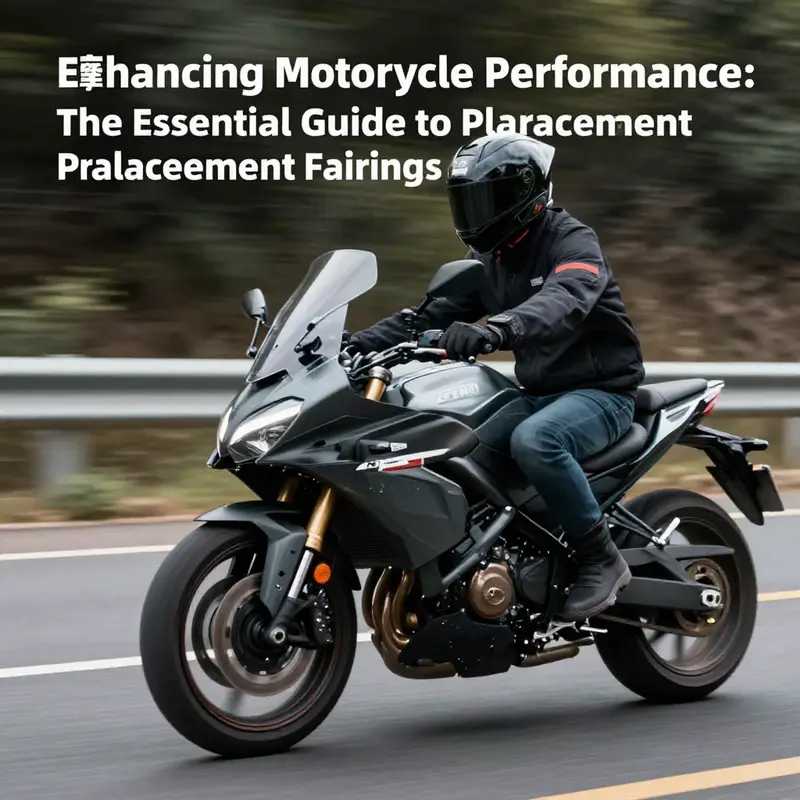
Replacement fairings on a motorcycle are more than styling. They shape aerodynamics, protect riders from weather and debris, and influence ride quality at speed. A well chosen fairing reduces drag, smooths airflow, and lowers wind noise, which translates to better stability and endurance on long rides. Material choice matters: ABS and polycarbonate offer durability and cost efficiency, carbon fiber brings stiffness and weight savings, while fiberglass remains a versatile budget option. Proper fitment and compatible mounting are essential to preserve steering geometry and seal against the elements. In short, a thoughtfully selected fairing blends performance, protection, and aesthetics to enhance both the ride and the bike character.
Final thoughts
In conclusion, understanding motorcycle replacement fairings is essential for business owners aiming to improve customer satisfaction and product offerings. With diverse types and materials available, along with insights into market trends, businesses can cater effectively to the demands of both performance and aesthetics. By investing time to learn about the functional advantages that fairings provide, you will not only increase your credibility among your clientele but also position your business favorably within the competitive landscape of motorcycle accessories. Stay informed and proactive to keep your offerings appealing as the motorcycle industry evolves.