
Retro motorcycle fairings bridge the gap between classic aesthetics and modern engineering, making them essential for both style-driven and performance-focused riders. As they pay homage to the iconic designs of mid-20th-century motorcycles, these fairings enhance visual appeal while providing practical benefits like improved aerodynamics and rider comfort. In this exploration, we dive into the distinctive design features of retro fairings, the tangible performance benefits they offer, their ease of installation across various motorcycle models, and the current market trends influencing their demand. Each chapter unpacks these themes, providing business owners with insights that highlight the value of retro motorcycle fairings in today’s competitive landscape.
Shaping Nostalgia: Design Features that Define Retro Motorcycle Fairings
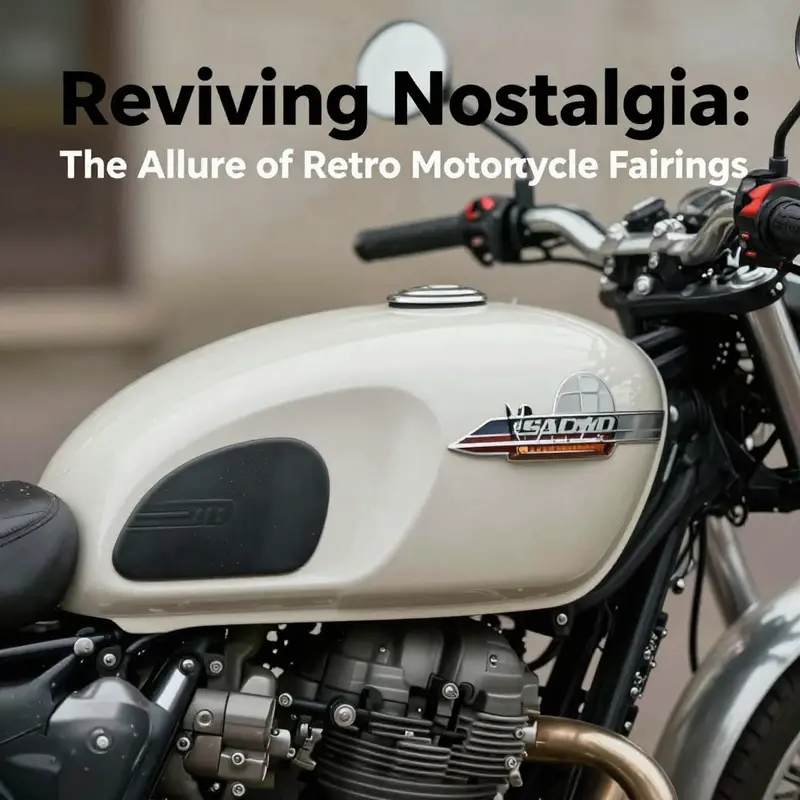
The retro motorcycle fairing sits at a curious intersection of memory and engineering. It is not merely a shell slapped onto a frame; it is a deliberate design decision that invites riders to ride with their senses tuned to decades past while reaping the benefits of modern materials and construction. This chapter takes a closer look at the design features that give retro fairings their distinctive character and their practical value on today’s roads. They are crafted to evoke the elegance of mid‑century motorcycles—the teardrop profile, the rounded contours, the minimal yet purposeful lines—while leveraging contemporary production methods to deliver durability, lightness, and consistent fitment. The result is a balance that satisfies nostalgia without surrendering usability. In the hands of a careful builder, a retro fairing can transform a naked bike into a cohesive silhouette that feels both timeless and contemporary, a statement that honors the past while embracing the present.
Shape and profile define the initial impression of any fairing, and retro designs lean hard into a streamlined, teardrop shape. This profile is more than a stylistic cue; it serves a functional purpose by guiding airflow along a smooth surface that hugs the rider’s line of sight and body posture. The curvature rises and tapers in a way that minimizes abrupt disruptions in the wind flow, reducing turbulence that would otherwise buffet the rider’s torso and chest at speed. The result is a steady, predictable slipstream rather than a gusting sting against the shoulders. The teardrop, with its cultural resonance from the 1950s and 1960s, has become a shorthand for classic charisma. When executed with precision, the profile appears almost sculptural, suggesting a bike that has emerged from a vintage showroom but carries with it the confidence and reliability of modern manufacturing techniques.
Aesthetic elements are the visual heartbeat of a retro fairing. Chrome accents, rounded edges, and a restrained, minimalist approach work in concert to create a clean, uncluttered look. The allure lies in the balance between sparkle and restraint; too much chrome or overly ornate lines can push the bike into a look that feels fussy or loud. The best retro fairings emphasize simplicity and elegance, letting the shape and light play on the surface to create a sense of movement even when the bike is standing still. This restraint does more than please the eye. It makes the fairing versatile enough to pair with a café racer’s barren, stark lines, a bobber’s rugged silhouette, or a custom chopper’s more expressive colorways. The attention to rounded transitions and smooth junctions also contributes to a tactile experience: the rider’s hands trace the fairing’s edge, inviting interaction and reinforcing the perception of quality without aggressive ornamentation.
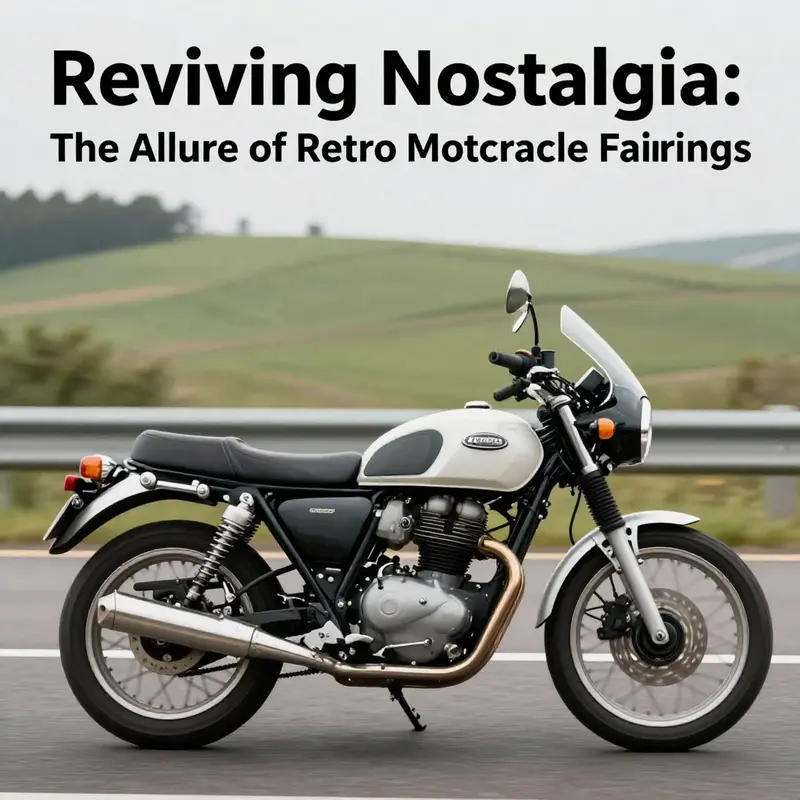
Headlight integration sits at the heart of retro fairing design. The iconic, curved housing that envelops a prominent headlamp is more than a practical housing; it is a visual focal point that anchors the bike’s face. In the era that inspires these designs, a single round headlight was both a practical necessity and a design statement. Modern retro fairings respect that heritage by incorporating a large, rounded housing that preserves the headlamp’s prominence while accommodating contemporary lighting technology. The result is a seamless union of old and new: a headlight that remains a central feature, yet one that may be paired with LEDs or other modern lighting options for improved illumination and reliability. This integration is not an afterthought but a defining feature, shaping the fairing’s silhouette from the top down and guiding the rider’s gaze as it travels along the face of the machine.
Materials and construction choices are the practical backbone of retro fairings. ABS plastic and fiberglass are the two most common selections, each offering a distinct set of advantages. ABS provides impact resistance and a degree of flexibility that helps absorb vibrations and minor impacts from road debris, while also offering straightforward, cost-effective production. Fiberglass, on the other hand, can be molded with tight tolerances and provide a more rigid, durable shell that holds paint and decals well. Both materials respond well to classic finishes—polished or brushed chrome accents, pastel or muted color schemes, and vintage decals—while supporting clean, aerodynamic lines. The choice of material often reflects the intended use, the level of exposure to the elements, and the owner’s ambitions for customization. For most riders, these materials strike a practical balance: light enough to improve handling and fuel economy, rugged enough for daily use, and pliable enough to accommodate a range of styling accents.
Construction style reinforces the retro fairing’s balance between form and function. The favored approach is a sleek, single-piece construction that covers the front and sides without enclosing the engine completely. This design philosophy offers moderate wind protection, which is a step up from a naked bike but less enveloping than a full fairing. The single-piece shell contributes to straightforward installation, maintenance access, and a cohesive, uninterrupted surface that elegantly follows the bike’s geometry. By covering only what is needed, retro fairings minimize interference with engine heat management and service access. They also leave space for the rider to feel the road, which is a subtle but meaningful nod to the purist riding experience where connection and feedback matter as much as speed. The end result is a fairing that looks purposeful and integrated, not tacked on, with lines that celebrate rather than obscure the machine’s original stance.
The balance of style and practicality is where retro fairings truly shine. They are designed with an eye toward universal fitment, particularly on bikes built around a standard 7-inch (18 cm) round headlight. This common reference point makes a retro fairing accessible to a broader range of models and builds, from café racers to bobbers. The universal design reduces the friction of adaptation, often including mounting hardware and fittings that simplify installation. For the builder, this means a path from concept to completed look can be shorter and more predictable. The fairing’s silhouette remains a unifying feature across different chassis geometries, allowing enthusiasts to achieve a cohesive aesthetic even when the underlying frame diverges from a factory blueprint. In practical terms, the universal fitment reduces downtime, encourages experimentation, and makes it easier to swap or revert the fairing as tastes evolve.
Yet the functionality extends beyond mere optics. Retro fairings contribute meaningful wind deflection, a feature that translates into tangible rider comfort on longer rides or daily commutes. While they do not enclose the rider as completely as contemporary full fairings, their shape redirects the oncoming air away from the torso and arms, mitigating fatigue without sacrificing the tactile connection to the bike. This wind management is especially appreciated by riders who ride in varied climates or on routes that expose them to crosswinds. The integrated headlight fairing also improves the vertical and horizontal glare handling, aiding visibility during dawn or dusk rides. Maintenance remains relatively straightforward, too. The design typically leaves essential mechanical components accessible, enabling adjustments and service without the need to disassemble the entire shell. This practical accessibility is not incidental; it is a deliberate feature that supports the daily life of riders who want both classic aesthetics and reliable performance.
From a design philosophy standpoint, retro fairings embody a deliberate fusion of nostalgia and modern engineering. The aesthetic cues—gentle curves, restrained chrome, and the unmistakable exposure of a round headlamp—signal a devotion to heritage. The practical sides—lightweight materials, universal fitment, modular hardware, and easy access to the engine—signal a devotion to durability and everyday use. The best examples do not chase trend lines with aggressive aggression; they rely on the proven geometry of yesteryear while harnessing contemporary manufacturing that yields consistency and longevity. This is not about reconstructing the past exactly; it is about inviting the past to inform present performance. When viewed through this lens, retro fairings become a form of design storytelling, where every contour, edge, and junction speaks to a rider’s longing for authenticity paired with the comfort of reliable modernity.
For builders and riders seeking a touch of historical charm without compromising maintenance practicality, a retro fairing is an elegant solution. Those who want to explore the intersection of form and function can begin with a universal fairing that accommodates a classic round headlamp, then select finishes and detailing that echo the era they admire. If the project involves a modern platform or a vintage-inspired chassis, the fairing’s restrained profile and clean mounting approach help preserve the bike’s original lines while adding a cohesive, era-appropriate front end. In cases where the rider wants a ready-made aesthetic, the fairing ecosystem often provides a range of mounts, brackets, and finishes that align with a vintage palette—pastel tones, subtle pinstriping, and chrome accents that catch the light without overpowering the silhouette. The result is not a collage of disparate parts but a single, harmonious statement that honors the bike’s heritage while supporting the rider’s contemporary needs.
For those who want to peek into a curated collection that reflects this approach, look to the Honda fairings catalog as a practical reference point. It offers a sense of how designers translate the old language of form into modern-ready fitments while maintaining the quintessential headlamp-centric front end. The catalog embodies the very principle described here: a universal, adaptable shell that respects the bike’s geometry and a rider’s expectation of ease and reliability. You can explore this approach in a broader context through the Honda fairings collection, which provides a tangible link between retro silhouette and current mounting standards. Honda fairings catalog.
Ultimately, the design features of retro motorcycle fairings are a testament to conscious restraint and careful storytelling. They acknowledge the emotional pull of the mid‑century look while prioritizing ride quality, serviceability, and adaptability. The teardrop profile, the rounded headlight housing, the restrained chrome, and the careful choice of materials coalesce into a product that feels earned rather than manufactured. For riders who want their machines to speak with two voices—the voice of history and the voice of now—retro fairings offer a convincing, well-crafted bridge. They are a reminder that great design can be both evocative and useful, that a bike can look as if it has always carried the road’s weather and its stories, yet still be ready to deliver reliable performance in the conditions of today. For the curious reader, the journey begins with recognizing how these design features translate into a riding experience: a softer, more confident wind profile, a face that cues tradition, and a shell that respects the machine’s lines as much as the rider’s comfort. And in that synthesis, the retro fairing becomes more than a garnish—it becomes a functional homage to the road itself. For a broader historical perspective on similar design cues in headlight fairings, see the resource linked at the end of this chapter.
External resource: Retro Headlight Fairings – Classic Motorcycle Windscreens (https://www.classicmotorcyclewindscreens.com/retro-headlight-fairings)
null
null
A Seamless Fit: The Art and Science of Installing Retro Motorcycle Fairings
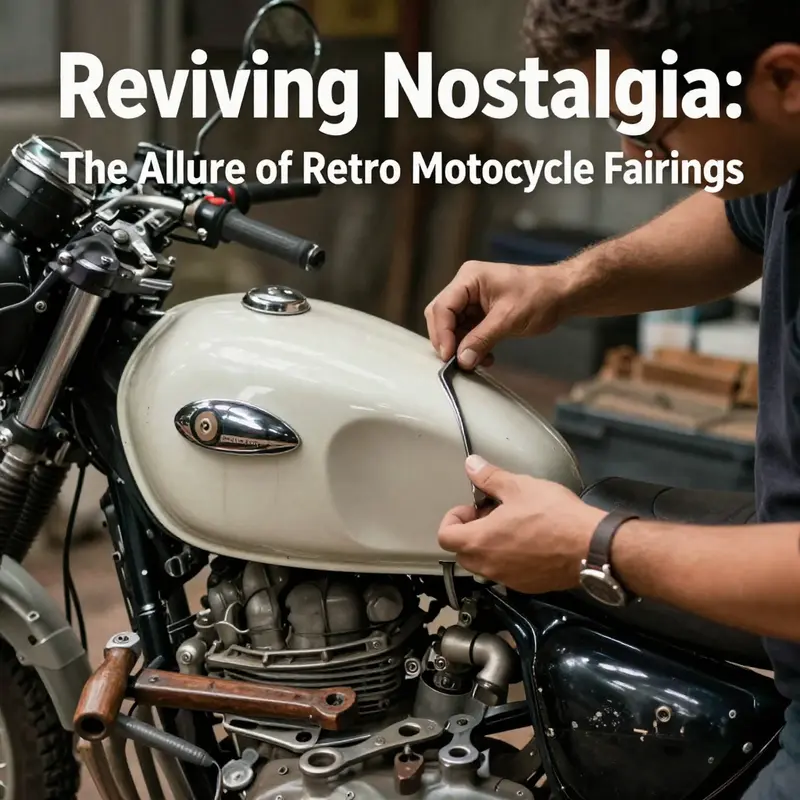
Installing retro motorcycle fairings is more than bolting on a shell; it is a careful negotiation between nostalgia and modern engineering. A well-chosen retro fairing can transform a bike’s silhouette, evoke mid-century lines, and improve rider comfort through thoughtful wind deflection. Yet the same piece of fiberglass or composite that delivers style must also respect the frame’s geometry, the bike’s electrical layout, and the rider’s daily rhythms. The chapter that follows treats this as a cohesive craft rather than a checklist, tracing how riders approach compatibility, fit, and the practicalities of installation in a way that preserves the machine’s character while enhancing its usability on real roads.
A key starting point is recognizing that retro fairings, especially those designed to complement classic aesthetics, are built for a wide range of bikes but not for every single model. The historic look often centers on a prominent, rounded front housing a headlight, a graceful line that runs down toward the handlebars, and a relatively minimal, sculpted profile. These features are not mere styling cues; they are the aerodynamic backbone of the fairing. The intent is to reduce wind resistance enough to ease rider fatigue on longer rides while keeping fuel economy within practical bounds. To achieve this, designers must balance form with function, ensuring the fairing integrates with the bike’s steering, frame, and suspension without compromising access to the engine or routine maintenance.
Compatibility begins with the basics: mounting points, frame geometry, and handlebar configuration. A retro unit that aligns with a bike’s forks and triple clamps can simplify installation and create a neat, authentic look. But even seemingly obvious compatibility can hide subtleties. For instance, the angle at which the fairing attaches to the headstock must align with the bike’s rake and trail. If the fairing sits too high or too forward, it can foul the radiator, exhaust, or gauges. If it sits too close to the rider, it can impede movement or restrict access to the controls. The mounting points themselves matter. Some designs use a mix of bolt-through brackets and clamp-style fasteners that must line up precisely with the frame. Others rely on custom brackets that adapt the fairing to nonstandard frames. In all cases, the fit must feel intentional, almost as if the bike had been drawn with the fairing already in mind rather than retrofitted after the fact.
The reality is that most retro fairings aim to be universal in concept but exact in practice. A universal fiberglass unit, for example, can accommodate a broad spectrum of bikes because it is designed around common anchor points and adjustable features. However, universal does not mean one-size-fits-all. It often necessitates additional brackets, spacers, or reshaped mounting tabs to guarantee a solid, vibration-free attachment. The cleaner the fit, the more seamless the result will look and feel, which is why many riders invest time in precise measurements before the first bolt is turned. A careful approach includes checking gauge clearance, ensuring the fairing does not obscure important instrumentation, and confirming that wiring channels remain accessible for lights, horn, and indicators. It also means considering the windscreen or headlight shield, if included, since a poorly matched screen can destabilize airflow and create buffeting that undermines comfort rather than supports it.
One practical aspect of compatibility often involves the headlight dimension. Many retro fairings are designed to work with a standard 7-inch round headlight, a nod to the vintage era while still offering ample lighting performance by modern standards. When a fairing is paired with a different headlight size or a nonstandard mount, the alignment of the headlamp’s centerline with the fairing’s cutout becomes a potential weak point. In such cases, riders might need to modify the headlight bucket or the fairing’s internal bracing to achieve the desired beam pattern and proper illumination. This is not merely a cosmetic concern; the roadway visibility of the bike depends on a precise, harmonized interface between the headlight, the fairing, and the rider’s line of sight.
For riders seeking compatibility on a broader canvas, the design of the fairing’s connection to the frame can be a decisive factor. Some retro units employ a modular approach, allowing a degree of fine-tuning to accommodate slightly different frame widths or fork offsets. Others rely on fixed templates that fit only a narrow range of models. In practice, this is where research and preparation pay dividends. Manufacturers often publish fit guides, diagrams, part numbers, and compatibility lists. Those resources turn a potentially frustrating trial-and-error process into a guided path, reducing the likelihood of misfits that require costly brackets or, worse, compromise the bike’s structural integrity.
If the fit guides do not cover a specific model, the next logical step is to consult a community of builders and riders who have tackled similar conversions. Forums and owner groups can offer real-world insights about what to expect when aligning a particular fairing with a certain frame geometry, or what brackets and spacers are typically needed for a specific setup. A practical mindset is to treat compatibility as a hypothesis that must be tested in the workshop, not a promise that can be taken at face value from a catalog page. It is not uncommon for a project to require iterative tweaks—slight trimming of mounting tabs, minor reshaping of brackets, or a careful re-routing of cables—to achieve the desired clean line and smooth operation.
Beyond mounting points and headlight alignment, the rider’s handlebars and control layout deserve thoughtful attention. The fairing’s contour should accommodate the natural sweep of the bars without creating interference with the throttle, clutch, or brake levers. For bikes with higher bars or clip-ons, the fairing’s edge must clear the rider’s knees and shins while preserving full range of motion for turning and maneuvering. This is where the aesthetic objective intersects with ergonomics: how a bike feels in the saddle under real riding conditions matters as much as how it looks in the garage. In some cases, a fairing may necessitate a minor adjustment to cable lengths or control housings to preserve clean, accessible routing. That kind of subtle work is the difference between a fairing that looks right and one that works right.
A further layer of complexity arises when considering the fairing’s impact on maintenance access. A classic bike’s engine, carburetors, or air filters often sit in places that a new shell could obscure. The ideal retro fairing preserves daylight access to vital components, sides, or venting paths, so routine checks remain straightforward. The ability to reach the oil drain plug, disconnect a spark plug wire, or adjust the carburetor without removing the entire fairing is not a luxury; it is a practical necessity for a daily rider who values reliability as much as style. In practice, this means fairing designers and fabricators may leave cutouts or removable panels in certain locations or provide quick-release fasteners that simplify service without sacrificing the look.
Another aspect of compatibility centers on materials and finish. Retro fairings commonly use fiberglass or composite constructions that balance stiffness, weight, and ease of fabrication. The installer must assess the bike’s existing bodywork, paint, and undercoat to determine if the new shell will metallurgically and aesthetically marry with the rest of the motorcycle. Some riders prefer a bare, unpainted fairing to show off the grain or weave of the material, while others aim for a seamless color match. In either case, surface preparation becomes a critical step. Sanding, scuffing, and priming create a faithful bond with primer, paint, and clear coat. A well-executed finish not only looks authentic but also resists chipping and cracking under the vibrations and wind pressure encountered during rides.
The installation sequence itself benefits from a patient, staged approach. A typical process begins with a thorough inspection of mounting hardware and a clean, dry workspace. The rider then aligns the fairing loosely, using temporary fasteners to confirm fit before final torquing. This staged approach allows the installer to check for interference with cables, gauges, and tanks, making any necessary adjustments before the fairing becomes a permanent fixture. It also makes it possible to recheck alignment after a test ride, when the bike has a chance to settle and any minor flex reveals itself. The more critical the project, the more temptation there is to rush; but the best results come from methodical, incremental steps that honor both the bike’s original design language and the fairing’s architectural logic.
From a practical standpoint, the ease of installation is often a function of documentation and support. Reputable manufacturers provide diagrams, part numbers, and compatibility notes that act as a roadmap through the process. Online compatibility checkers, which let a rider input the bike’s year, model, and key measurements, can dramatically reduce missteps. The value of this guidance becomes especially clear when a project involves a nonstandard model or a vintage frame that has seen multiple owners and alterations over the years. In those cases, the ability to cross-reference the fairing’s dimensions with the bike’s factory specifications is not a luxury but a safeguard against expensive mistakes.
For riders who want to keep the project focused and authentic, referencing a curated selection of compatible options can be a prudent strategy. It is wise to favor manufacturers known for vintage-inspired lines and meticulous fit data—providers who publish diagrams, part lists, and model-specific notes. Such clarity not only speeds up the installation but also preserves the bike’s value by reducing the risk of a botched fit. When in doubt, start with a model that closely matches your bike’s era and frame geometry, then scale up or down with adjustable brackets as needed. This approach preserves the bike’s character while still embracing the forward-looking efficiency and comfort that retro styling can offer.
The end result of a thoughtful installation is a bike that feels coherent and balanced from the paint to the pavement. The fairing should disappear as a separate part and become a natural extension of the motorcycle’s line. The rider notices the wind rushing past with less fatigue, a clearer cockpit, and a silhouette that echoes a beloved era without sacrificing today’s reliability and control. In this sense, a retro fairing becomes more than a cosmetic upgrade; it is a bridge between times, a deliberate, well-measured integration that honors the past while acknowledging the needs and capabilities of modern motorcycling. For readers who want to explore compatible options for classic-styled builds, a starting point is to browse manufacturers that maintain a dedicated catalog of retro-inspired pieces for a range of models, paying close attention to fit guides and compatibility notes. If you’re pursuing a Honda-era look, for instance, you can consult the dedicated Honda fairings collection to narrow down your options and find a fit that preserves the bike’s vintage lines while still allowing for contemporary performance and maintenance access. Honda fairings collection.
Ultimately, the journey of installing retro fairings is a hands-on education in dialogue between design and discipline. The rider learns to read the bike’s geometry the way a tailor reads a pattern, to anticipate how a single mounting point can alter the entire silhouette, and to value documentation as a partner in the workshop rather than an afterthought. It is a careful, iterative process that rewards patience and precision with a result that feels both timeless and alive on the road. For those who seek more technical guidance and a deeper dive into the nuances of fit, the workshop becomes a space where theory meets practice, where every measurement, bracket, and torque value has a story about compatibility and care. The fairing, in the end, is not just a shield against wind but a statement about how a rider chooses to honor what came before while riding with confidence into what comes next.
External references can broaden understanding of how experienced builders think about shape, balance, and airflow, offering perspectives beyond one’s own workshop bench. For a concrete look at a Daytona-style replica approach, see an external resource that examines the craft from concept to installation: https://www.motoforza.com/products/cr750-daytona-replica-fairings
Riding the Retro Wave: Market Dynamics of Motorcycle Fairings
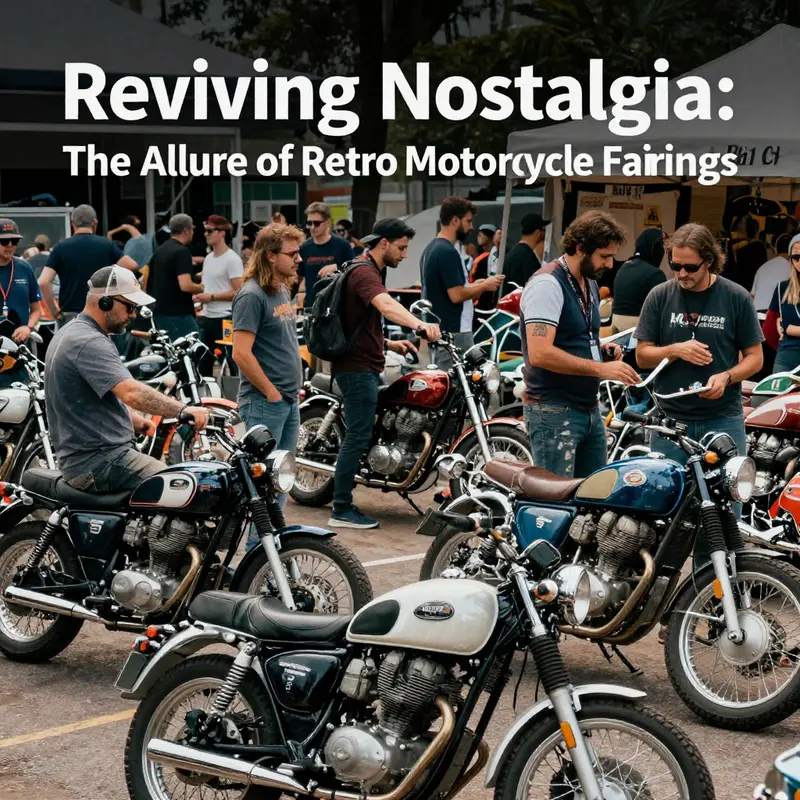
A retro motorcycle fairing is more than a cosmetic cover; it represents a design philosophy that blends nostalgia with modern engineering. In today’s market, demand for retro-inspired fairings sits at the intersection of heritage and practicality, offering wind protection and aesthetic appeal without forcing a full upgrade to a modern full-fairing system. The market for motorcycle fairings has been expanding as riders seek customizable, lightweight options that fit a broad range of models through universal-fit designs. Manufacturers leverage durable plastics and fiberglass to reproduce classic silhouettes with repeatable quality and lower production costs. As a result, the category has evolved into a vibrant ecosystem where aftermarket suppliers, custom shops, and online communities contribute to knowledge sharing, fitment guidance, and stylistic experimentation.
Key drivers include the universal-fit approach that lowers entry barriers for retro builds, the ability to tailor finishes to personal palettes, and the appeal of a vintage look paired with contemporary materials and maintenance practicality. The economic outlook shows gradual growth with steady demand from hobbyists and professional builders alike, supported by online marketplaces, paint shops, and fitment services that help riders achieve authentic, period-accurate aesthetics without substantial bespoke fabrication. The future of retro fairings hinges on balancing historical cues with modern standards of fit, durability, and rider comfort, ensuring that vintage charm remains accessible to a broad, diverse community of riders.
For readers seeking concrete examples, many manufacturers offer collections that recreate iconic shapes with modern production methods. These options demonstrate how universal-fit design can enable compatibility across multiple platforms, enabling a broader audience to enjoy retro aesthetics without compromising reliability or convenience.
Final thoughts
In summary, retro motorcycle fairings are not merely aesthetic enhancements for bikes; they embody a blend of nostalgia and modern engineering that appeals to a wide range of riders, from casual enthusiasts to serious customizers. With their practical benefits such as improved aerodynamics and reduced rider fatigue, these fairings play an essential role in enhancing the motorcycle riding experience. As the market for retro fairings continues to grow, business owners can find significant opportunities in this niche. By understanding the design intricacies, performance advantages, installation flexibility, and market trends, businesses can effectively cater to the needs and desires of today’s riders while honoring the rich legacy of classic motorcycles.