
Small motorcycle fairings, often referred to as mini motorcycle fairings, are becoming increasingly relevant in the motorcycle industry, especially for businesses looking to cater to a niche market. With a focus on durability, style, and performance, these compact body panels have garnered attention from both consumers and manufacturers. Businesses can benefit by understanding the design and material innovations driving this segment, the economic factors at play, global supply chains influencing production, and evolving consumer trends that impact purchasing decisions. This article breaks down these critical aspects to help business owners navigate the growing mini fairing market effectively.
Streamlined for Speed: Design and Material Innovations in Small Motorcycle Fairings
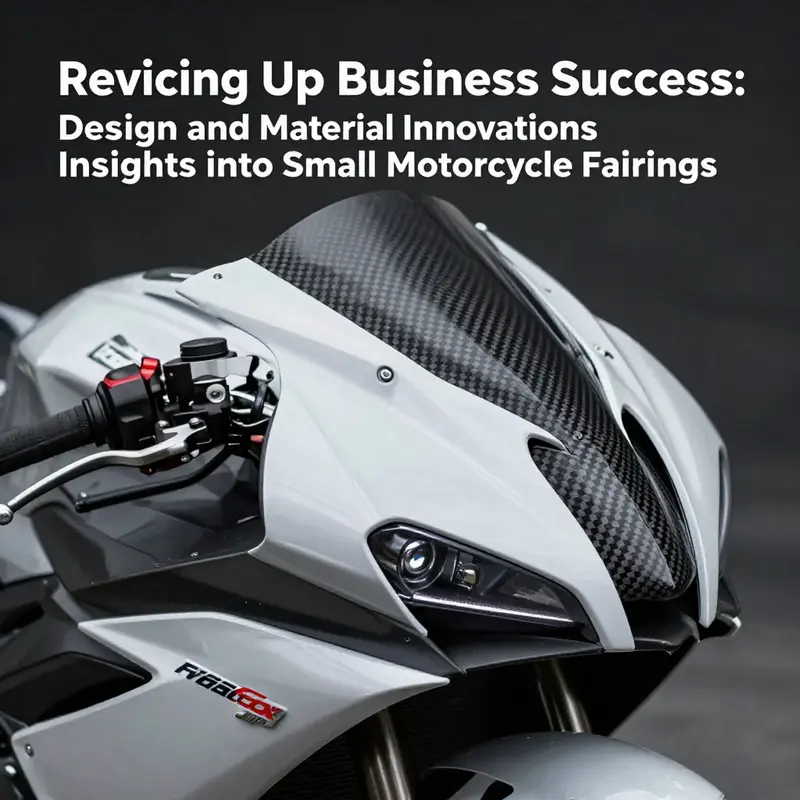
Small motorcycle fairings occupy a unique niche in the world of two-wheel engineering. They must shield the rider from wind and weather while preserving or enhancing handling, acceleration, and stability. The modern mini fairing does more than merely dress the bike; it acts as a carefully tuned aerodynamic surface that interacts with a rider’s posture, engine power delivery, and the chassis geometry. In this chapter, the evolution of these compact shell components is traced through design philosophy, material science, and manufacturing methods that together push the efficiency, durability, and customization potential of small motorcycles to new levels. The trajectory is not about vanity aerodynamics but about a holistic approach that blends airflow management with rider comfort, weight reduction, and practical manufacturability. The result is a family of fairings that can be configured to suit a wide range of bikes—from pit bikes and mini motorcycles to lightweight sport models—without sacrificing performance or reliability.
At the core of modern design lies a shift from static, single-piece shells to intelligent, performance-driven forms that respond to real-world riding conditions. Designers increasingly rely on computational fluid dynamics (CFD) to illuminate how air moves around a miniature front end at different speeds, angles of attack, and throttle states. CFD does not merely confirm a preferred silhouette; it guides the iterative process of streamlining, enabling designers to identify and eliminate troublesome wake regions that would otherwise merit added weight or drag. The aim is to reduce the drag coefficient (Cd) while preserving, or even enhancing, downforce where it matters for high-speed stability and corner grip. This kind of optimization is quiet but powerful work. It happens behind the scenes, often invisible to the naked eye, yet it yields tangible benefits in fuel efficiency, throttle response, and the sense of confidence a rider feels when navigating mid- to high-speed sections. A streamlined profile also permits shorter gear ratios to be used effectively, ensuring that the engine’s power band aligns with the rider’s natural range of inputs. In practice, the design process often begins with a few baseline shapes and then moves through several iterations where subtle changes—such as a revised chin curve, tweaked ram air inlet geometry, or a revised side contour—produce measurable improvements in pressure distribution along the surface and reduced separated flow.
The design language of small fairings has become more modular and adaptable, reflecting a broader trend across the motorcycle world. Rather than a single, monolithic piece, many modern mini fairings are conceived as a family of components that can be mixed and matched to suit different climates, rider preferences, and even regional regulations. A modular approach makes sense on a few levels. First, it enables riders to customize the look of their bike without committing to a full, permanent rework. A vented side panel here, a taller windscreen there, or a smaller belly fairing can be swapped in to alter the wind load and the windscreen’s interaction with the rider’s line of sight. Second, modular assemblies make maintenance and part replacement simpler and cheaper. If a crash unwinds a corner of the fairing, you can replace just the damaged module rather than the entire front end, limiting downtime and cost. Third, modularity supports design testing. Engineers can field-test a few variants in parallel, using real-world feedback to chosen configurations. This is precisely the point where aerodynamics becomes accessible not only to the top teams but to the broader community of small-bike enthusiasts and small-scale manufacturers. The upshot is a set of fairings that can be tailored to a rider’s actual riding environment—cold weather and rain in one market, hot sun and dust in another—without sacrificing the core aerodynamic integrity of the system.
Material choices have become another key differentiator in the evolution of small fairings. The move toward composite materials reflects both strength-to-weight advantages and a parallel concern for durability under dynamic use. Carbon fiber reinforced polymers (CFRP) stand out for their exceptional strength-to-weight ratio and stiffness. They reduce overall mass while preserving the structural integrity of the shell, allowing the panel to resist intermittent impacts and vibrations from uneven road surfaces without warping or cracking. CFRP’s benefits are especially pronounced in high-performance or premium-fit fairings, where the rider expects precise alignment of mounting points, consistent fit across assemblies, and long-term dimensional stability. Yet CFRP remains a premium option with higher material and process costs, so the market continues to embrace more accessible alternatives that still meet performance and durability criteria.
Glass fiber reinforced composites and high-performance engineering plastics offer compelling mid-range alternatives. Glass fiber composites provide a favorable balance between stiffness, impact resistance, and cost, which makes them attractive for mid- to lower-range mini fairings. Engineering plastics—such as polycarbonate and ABS blends—deliver good impact resistance, excellent UV stability, and reasonable surface finish. These materials prove especially attractive when a rider wants a fairing that is resistant to weathering and easy to repair or repaint. The ability to tailor resin systems to weather exposure and sunlight also helps extend the life of the fairing in the kind of varied climates where small bikes frequently operate. Increasing attention to sustainability is nudging some manufacturers toward bio-based composites or recycled-content materials. While the performance requirements for fairings can be unforgiving—where scratch resistance, heat during sun exposure, and long-term light stability are all tested—these greener options are finding practical compromises that keep performance high without inflating environmental costs.
One of the most exciting developments is the broader adoption of additive manufacturing, or 3D printing, within the development and prototyping phase of fairing design. 3D printing unlocks a new level of rapid iteration. Engineers can fabricate complex geometries that would be difficult or expensive to produce with traditional molding or machining, then test them in wind tunnels or real-world riding conditions. The ability to print lightweight, high-detail prototypes accelerates the path from concept to finished part and reduces the risk of expensive tooling changes late in the development cycle. For end-use production, 3D printing also enables customized or limited-run components that can be tailored to individual riders, while preserving the ability to source standard, mass-produced elements for broader market coverage. In addition to geometry, 3D-printed fixtures and internal channels in the fairing can support cooling or venting strategies, a subtle but impactful way to manage heat from the engine and accessories. The results are not merely cosmetic; they translate into better thermal management, reduced weight, and a riding experience that feels more connected to the bike’s mechanical personality.
Finally, there is a growing emphasis on surface engineering and finish. UV-resistant coatings extend the life of a fairing exposed to sun and rain, while clear coats and texture options can influence both aesthetics and aerodynamics. The surface texture—whether smooth, matte, or a deliberate microtexture—plays a role in boundary-layer behavior and could be tuned to affect turbulent wake formation in the near-field region behind the rider. While the surface finish is often judged on appearance, it is, in reality, part of the aerodynamic equation. An integrated approach to materials and surface engineering helps minimize drag while preserving a glossy appearance that remains appealing through countless heat cycles, road vibrations, and cleaning routines.
Innovation in small fairings is not limited to raw materials and shapes. It also encompasses integration with the broader ecosystem of the motorcycle. Modern fairings house more than just panels; they accommodate mounting points, seals, and fasteners that must perform under vibration, moisture ingress, and temperature swings. They must also accommodate wiring harnesses for headlights, indicators, and sometimes telemetry sensors, while preserving a clean, uncluttered interior. The ability to route cables and secure them within the margins of the shell without sacrificing easy access for maintenance is an understated but essential aspect of quality fairing design. Engineering teams increasingly view the fairing as a living interface with the bike’s electronic systems, not a separate accessory. This perspective drives innovations in quick-connect electrical interfaces, standardized mounting geometries, and compatibility with a range of peripherals. A well-engineered fairing becomes a stable platform that does not rattle loose at highway speeds and does not impose additional vibrations onto the rider.
The supply chain realities behind these innovations are as important as the ideas themselves. The modern fairing ecosystem relies on a network of specialized manufacturers and integrated suppliers that can deliver consistent quality at scale. Regions that are well known in this space offer vertically integrated factories that can control the entire process—from raw material selection, through compound formulation and molding or layup, to finishing, coating, and packaging. Two regions have emerged as particularly influential in this regard: Guangdong Province, with hubs in major manufacturing cities like Guangzhou and Foshan, and Zhejiang Province, particularly the Rui’an area known for precision-engineered parts. The Guangdong cluster emphasizes high-volume production and robust export logistics, which helps bring competitively priced fairings to riders around the world. Zhejiang’s strengths lie in precision, accuracy, and intricate component engineering, which are essential for achieving tight tolerances in small shells and ensuring consistent fit across generations of models. These regional strengths enable a mix of customization and mass production that makes both bespoke and standard-fit fairings accessible to a broad audience. For buyers and builders, this combination translates into shorter lead times, more reliable quality control, and greater opportunity to specify exact material compositions or surface finishes that meet specific performance goals.
Alongside the hardware, the narrative around small fairings now includes a broader conversation about value and accessibility. The market has evolved beyond pure performance to include considerations of cost-effectiveness, ease of installation, and the ability to tailor a bike’s appearance without compromising reliability. This is where a modular approach shines: riders can choose a trim set that complements the bike’s geometry, climate exposure, and their own riding style. It also means that aftermarket suppliers can offer a wider array of compatible components, including options for different windscreen heights, side panels, and belly fairings that alter the overall aerodynamic balance. The result is a more inclusive ecosystem in which enthusiasts can experiment with form and function while maintaining the integrity of their bike’s performance envelope. Platforms that host a wide assortment of fairing variants can give riders access to a spectrum of shapes and finishes that align with their budgets and design aspirations, making customization a feasible, repeatable process rather than a once-in-a-lifetime endeavor.
For researchers, enthusiasts, and industry observers, the trajectory of small fairings is a case study in how design, materials, and manufacturing converge to yield tangible gains on a compact platform. The synergy between CFD-driven contouring, advanced composite materials, and additive manufacturing is enabling a new standard for how lightness and strength coexist with practical durability. The emphasis on UV resistance, weather resilience, and long-term color stability ensures that the aesthetic value of a fairing persists across seasons and miles. Meanwhile, modularity and standardized interfaces enable a more resilient aftermarket, where replacements and upgrades can be implemented with minimal downtime. The environmental dimension—driven by the use of recyclable materials or bio-based composites in some cases—adds another layer of consideration for riders who want performance without sacrificing responsibility. This is the essence of progress in small fairings: a quiet revolution in which formulas, fibers, and fasteners come together to create an aerodynamic skin that is both technically competent and a joy to ride.
For readers who want a tangible sense of how these principles translate into real options, consider the recurring pattern of gallery-like fairings that are designed to fit a family of models rather than a single bike. The market increasingly rewards versatility without demanding compromises in performance. The rider gains wind protection that can be tuned to their posture and riding style, while the bike benefits from a lower overall mass and a more streamlined cross-section that reduces drag across the speed range. The future looks to expand these capabilities further through more intelligent materials and multi-material assemblies that optimize stiffness in critical regions while allowing flexibility elsewhere to absorb vibrations. The ultimate aim is not merely a slimmer silhouette but a coherent system in which every panel, every fastener, and every channel is part of a single aerodynamic and structural story. It is this holistic approach that elevates the small fairing from a cosmetic upgrade to a fundamental contributor to a motorcycle’s overall character and efficiency.
As you explore the evolving landscape of small fairings, you may encounter a catalog of designs that reflects the interplay of tradition and experimentation. Some riders will still favor classic shapes with straightforward mounting, aligned with proven performance on predictable routes. Others will embrace the prompt for customization and the ability to swap in multiple configurations as their riding environment changes or as their tastes evolve. In either case, the thread tying these options together is the shared commitment to managing air, weight, and rider comfort with precision. The modern mini fairing embodies a disciplined balance: it must be light yet strong, affordable yet capable, and aesthetically expressive without becoming a wind-catching burden. The best of these designs achieve a seamless integration with the rest of the motorcycle, a quiet efficiency that becomes apparent only when the bike is in motion and the rider is absorbed in the act of riding rather than in the mechanics of the shell itself.
For readers seeking a concrete example of how this knowledge translates into accessible options, a visit to an online collection that curates fairings for popular sport and street models can be instructive. The linked collection offers a range of shapes and finishes that illustrate the modular approach described here. It demonstrates how different shapes can be combined to tailor the aerodynamics, weight, and aesthetics of a single platform. This kind of cataloging helps riders imagine what is possible with a small fairing and provides a practical framework for evaluating options based on fit, finish, and intended use. The practical takeaway is clear: design and material innovations are not abstract concepts but enabling factors that empower riders to realize customized performance with confidence and clarity. When you combine CFD-driven shapes, advanced composites, and a smart supply chain, you create a family of fairings that not only improves efficiency and stability but also expands the creative possibilities for riders who want their bike to reflect their own riding ethos.
Internal link for further exploration: to see a curated collection that demonstrates the modular, model-spanning approach in practice, explore the Yamaha YZF-R1 fairings collection (2009-2012). This collection illustrates how multiple panels and compatible configurations can coexist within a single design language, reinforcing the principle that small fairings can be both highly aerodynamic and highly adaptable. Yamaha YZF-R1 fairings collection (2009-2012)
External resource for deeper insight: the ongoing advances in aerodynamic design and materials in motorcycle fairings are well summarized in the 2024 overview that highlights CFD-driven optimization, CFRP and other composites, and additive manufacturing implications for production and customization. See the external article at https://www.motorcycle-tech-review.com/aerodynamic-fairings-materials-2024 for a concise synthesis of these trends and their practical implications for small-bike applications.
Market Forces and Margins: Economics Shaping the Small Motorcycle Fairing Segment
The economics of the small motorcycle fairing market determine who thrives, who adapts, and who risks being squeezed out. Demand for mini fairings sits at the intersection of consumer taste, recreational spending, and broader mobility trends. Supply is governed by material costs, manufacturing capacity, logistics, and trade policy. These forces combine to set price expectations, margins, and investment incentives for manufacturers, distributors, and retailers. Understanding their mechanics helps suppliers make strategic sourcing decisions, guides buyers to realistic expectations, and frames the competitive landscape for new entrants.
Cost structure is the most immediate economic reality for fairing producers. Raw material prices—thermoplastics, fiberglass resins, and carbon fiber—form a large share of production costs. Prices of these inputs track commodity markets and energy costs. When polymer prices rise, small-volume producers often lack the purchasing power to negotiate lower rates. That exposes them to sudden margin compression. Conversely, large manufacturers that buy in bulk and lock in long-term contracts can smooth cost volatility. Labor, molding equipment, and finishing processes add predictable fixed costs. Yet the balance between fixed and variable expenses varies by region. In manufacturing hubs with mature supply chains, such as Guangdong and Rui’an in China, vertically integrated facilities reduce per-unit costs and speed delivery. Those advantages translate into competitive pricing for both aftermarket and OEM channels.
Exchange rates and trade policies add another layer of complexity. Many small fairing suppliers rely on cross-border sourcing of raw materials or components. A weaker home currency raises the local-currency price of imported resins or mounting hardware. At the same time, rising tariffs or sudden export restrictions can abruptly increase landed costs. For businesses operating with thin margins, these shifts force either price increases or profitability erosion. Retailers in destination markets must decide whether to absorb costs, trim margins, or pass increases to consumers. Each choice affects demand differently: absorbing costs may be unsustainable long term, while raising prices can suppress discretionary purchases.
Logistics dynamics are equally crucial. Small motorcycle fairings are relatively low-weight but high-volume items when sold as kits. That profile makes them sensitive to freight disruptions and container shortages. Delays raise inventory holding costs and can leave retail shelves empty during peak seasons. Manufacturers with access to efficient export logistics and regional distribution centers can reduce lead times and mitigate stockouts. These operational advantages often explain why sourcing from established manufacturing regions is appealing to international buyers. Strategic stockpiling helps, but it ties up working capital and increases warehousing costs. Smaller firms without resilient logistics networks therefore face greater vulnerability to global shipping shocks.
Demand cycles for small motorcycle fairings mirror consumer spending patterns and the broader motorcycle market’s health. When economies expand, discretionary spending grows and more riders purchase accessories for customization and performance. During downturns, buyers prioritize maintenance and safety over aesthetic upgrades. The motorcycle market’s projected recovery—from earlier valuations to larger estimates through the latter part of the decade—creates potential upside for fairing suppliers. However, demand recovery is uneven by region and segment. Urban commuters may prioritize practical upgrades, while enthusiasts and track riders value aerodynamic and lightweight options more highly. Understanding which customer segments drive growth helps suppliers tailor product lines and marketing.
Price sensitivity in the small fairing market is nuanced. On one hand, lower-cost plastic kits attract budget-conscious riders who accept simplified finishing and generic fitment. On the other hand, performance-minded buyers and aftermarket professionals demand higher-quality composites. Those buyers expect precision fit, durable finishes, and advanced materials that justify premium pricing. This bifurcation supports a tiered market: mass-market offerings compete on price and availability, while premium products differentiate on engineering, materials, and brand trust. Businesses that can span both tiers—offering value options plus certified or OEM-level replacements—capture a larger share of market spending.
Investment decisions around product development and quality control are economic as well as technical. Spending on tooling, molds, and testing raises upfront costs, but improves unit economics across larger production runs. For small fairings, accurate fitment reduces returns and warranty claims. Those reductions lower hidden costs that quickly degrade profitability. Similarly, investments in UV-stable paints, impact-resistant formulations, and streamlined installation hardware reduce lifecycle costs for end users. Manufacturers that fail to invest face recurring post-sale expenses and reputation damage. For procurement managers, evaluating a supplier’s commitment to quality and continuous improvement is as important as comparing unit prices.
The role of regional manufacturing hubs cannot be overstated. Areas with clusters of suppliers, experienced labor, and integrated logistics reduce transactional friction. Guangdong’s high-volume production capacity favors large-scale contracts, rapid prototyping, and aggressive pricing. Rui’an and other specialized centers excel at precision-engineered and technically complex components. Sourcing strategies that pair volume suppliers with specialized vendors can deliver both cost efficiency and technical performance. Those strategies require sophisticated supplier management, however, including audits, sample testing, and logistics coordination to ensure consistent quality.
Retailer margins and distribution models reflect these upstream dynamics. Online marketplaces enable direct-to-consumer sales, reducing layers and lowering end prices. Brick-and-mortar retailers carry inventory and offer installation services, which justify higher markups. For many small fairing kits, availability of fitting support and return policies matters to buyers. Retailers that offer installation, warranty handling, and customization services can command higher margins. Conversely, purely price-driven channels increase pressure on quality and fitment standards. Wholesalers and distributors that provide technical support and reliable lead times often secure long-term relationships, which stabilizes order volumes and improves forecasting.
Competition in the small fairing market emerges along several dimensions: price, speed, quality, and brand trust. Low-cost entrants can undercut established players, but they risk reputational harm if fit or material quality disappoints. Speed-to-market benefits companies that can introduce new colorways or fitments aligned with model year changes. Quality differentiation supports premium pricing and repeat customers. Brand trust develops through consistent fitment, clear warranty policies, and responsive aftermarket support. For small manufacturers, modern marketing tools and social proof can narrow the advantage of larger incumbents. However, consistent delivery and product reliability remain decisive in buyers’ choices.
Macroeconomic risks—such as inflation, commodity price spikes, and geopolitical tensions—affect strategic planning. Inflation compresses real purchasing power for consumers and increases input costs for producers. Commodity spikes force rapid price adjustments or margin cuts. Geopolitical tensions may prompt trade restrictions that reroute supply chains and add compliance burdens. Prudent businesses plan for these contingencies by diversifying supplier bases, maintaining flexible pricing strategies, and building modest safety inventory. They also prioritize transparent communication with customers when delays or price changes occur. That transparency protects brand equity during unavoidable market shocks.
For OEMs and large aftermarket players, scale creates bargaining power and absorbs shocks more effectively. They negotiate long-term contracts, secure priority shipping, and invest in localized inventories. For smaller businesses and niche designers, agility is their primary defense. They leverage local markets, offer bespoke customization, and cultivate tight customer relationships. Each model has trade-offs: scale reduces unit costs but can create rigidity, while agility supports niche appeal but limits cost competitiveness.
Financing and access to capital shape who can invest in better tooling, certification, and expanded inventory. Lines of credit, trade financing, and favorable payment terms with suppliers enable growth. Smaller firms often face higher financing costs, constraining their ability to scale. In such cases, strategic partnerships, contract manufacturing arrangements, or collaborative purchasing agreements can bridge gaps. Investors and business partners should evaluate supply chain resilience and cost transparency before committing funds.
Finally, regulatory compliance and environmental considerations influence long-term cost and consumer sentiment. Standards for materials, emissions, and recycling affect material choices and manufacturing processes. As regulators emphasize sustainability, using recyclable thermoplastics or lower-emission manufacturing can become competitive advantages. These shifts may increase short-term costs but yield brand differentiation and future-proof operations.
For those navigating procurement or seeking to enter the market, economic realities point to a few practical principles. First, map your total landed cost, not just unit pricing. Include tariffs, freight, warehousing, and returns. Second, diversify suppliers by region and specialization to reduce single-point risks. Third, invest where it reduces long-term costs: precision tooling, quality control, and logistics efficiency. Fourth, align product offerings with customer segments to avoid overextending. And fifth, maintain transparent communication with channels to manage expectations during economic shifts.
A detailed industry forecast highlights the broader context and helps validate assumptions. For an updated view of market size, trends, and material segmentation, refer to the latest comprehensive report on the motorcycle fairing market. https://www.grandviewresearch.com/industry-analysis/motorcycle-fairing-market
For buyers interested in exploring regional product options and typical aftermarket offerings, reviewing curated collections can provide practical insight into pricing, fitment, and design trends; a representative example is the Honda fairings collection available online: https://www.summitfairings.com/collections/honda-fairings
Riding the Global Network: How Supply Chains Shape Small Motorcycle Fairings

The small motorcycle fairing is often imagined as a simple shell that tines a bike into a sportier silhouette. Yet the chapter of its production runs long and intricate, threaded through a global network that blends engineering discipline with regional specialization. In the quiet spaces between design studios and shipping docks, a chain unfolds that starts with resin chemistries and carbon layups, then moves through mold shops, finishing rooms, and logistical corridors that span continents. To understand why a tiny piece of plastic or composite can arrive on a distributor’s shelf in a week or in a month is to glimpse a modern manufacturing ecosystem at work, one that rewards precision, predictability, and the capacity to adapt to a market that wants both affordability and performance. The storyline of these fairings is less about a single factory and more about clusters of capability—each regional hub shaping a particular phase of the process, each link calibrated to minimize waste and maximize speed, yet always with an eye on quality and compliance. In this light, the global supply chain for small motorcycle fairings reads less like a line and more like a living map, where a spark of innovation can travel from a carbon-fiber workshop in one province to a finished, UV-resistant shell that complements a rider’s aerodynamics on the track or the street.
The strongest regional narrative begins in the southern industrial belt and radiates outward into inland hubs, where three Chinese provinces have crystallized into distinct, supply-chain archetypes. Guangdong stands at the intersection of speed and accessibility. Its factories sit close to major international ports, a proximity that translates into faster turnarounds without sacrificing the precision of the injection-molding lines or the integrity of the paint booths. In Guangdong, a dense ecosystem of raw-material suppliers keeps shelves stocked with resins, stabilizers, pigments, and specialty additives, allowing vendors to respond to shifting demand with remarkable agility. For buyers, this translates into shorter lead times and the ability to test new colorways or graphic schemes with less risk, a critical advantage in a market that prizes fresh aesthetics as much as aerodynamic efficiency. The result is not merely quicker shipping; it is a smoother design-to-delivery cycle that makes frequent iterations feasible.
As one moves westward toward Chongqing, the landscape shifts from speed to durability and tooling efficiency. Here, the reputation rests on ABS—the workhorse plastic of small fairings—and on a robust ecosystem of mold-making expertise. Local foundries and tooling shops have cultivated a capability to produce, modify, and debug molds rapidly, cutting prototyping costs and reducing cycles from concept to final part. The emphasis in Chongqing is often on functional resilience: windshields, nose cones, and side panels that must withstand repeated sun exposure and the knocks of road tests, all while maintaining dimensional stability. This is especially valuable for low-volume or highly customized orders where a smaller nameplate on a box does not guarantee a long queue of reorders; rather, it rewards the supplier who can adapt a mold, tweak a resin system, and deliver a fairing assembly that meets OEM-like tolerances and finish standards. The localized know-how translates into predictability in a world where even minor deviations can ripple into fitment issues across a spectrum of bike models.
In Fujian, the narrative tilts toward premium performance and weight reduction, where composites labs and autoclave-based layups push into carbon fiber territory. The province’s emerging carbon-fiber workshops are not just about cutting weight; they are about integrating layup schedules, resin systems, and surface finishes that survive high-speed runs and the elements without sacrificing rigidity. For a segment of the market that seeks stronger, lighter, and more visually striking finishes, Fujian represents a maturation of material science into commercial reality. Carbon-fiber fairings, with their superior strength-to-weight ratio and their capacity to hold a high-gloss surface under UV exposure, can command a premium, and the region’s specialized facilities—paired with controlled curing environments and stringent QA processes—help ensure that premium performance does not come at the expense of turnaround speed. The collaboration between Fujian’s composites know-how and Guangdong’s logistics muscle creates a supply paradigm where a high-end carbon panel can still be moved efficiently to overseas distributors, with packaging and export paperwork aligned to international standards.
If one maps these material and process profiles across the global landscape, a coherent logic emerges. ABS-based fairings benefit from the scale economies and rapid prototyping found in the southern clusters. Carbon-fiber builds pull from the precision engineering and autoclave capabilities concentrated in Fujian, supported by skilled labor and a network of post-processing specialists. In between, the integration layer—paint shops, surface treatments, assembly lines, and quality-control stations—coordinates the transition from raw panel to finished product that meets aesthetic and functional expectations. The combination of material specialization with manufacturing efficiency is the secret behind a market where buyers demand both competitive pricing and consistent performance. It is not enough to source a kit that looks right; the kit must also fit precisely, endure the weather, and retain its finish through the rigors of daily riding and weekend track sessions.
Meanwhile, an undeniable factor in this system is the logistics architecture that binds production to delivery. Fujian’s exporters have shown how to shorten the distance from stage to sea by offering turnkey packaging, compliance with CE and FCC standards, and integrated air- and sea-freight coordination. This level of export readiness reduces the friction associated with cross-border shipments, allowing distributors to forecast arrivals with greater confidence and to plan inventory without tying up capital in surplus safety stock. The ability to bundle packaging and regulatory documentation into a single, reliable workflow matters as much as the mechanical performance of the fairing itself. In practice, this means that a kit can emerge from a processing line, be boxed with protective inserts designed to resist rough handling, carry the necessary labeling for customs, and depart via a coordinated schedule that aligns with the supplier’s production calendar and the buyer’s marketing push.
Beyond the commercial mechanics, there is a people-centered dimension to the supply chain that often goes unseen. Tools and machines are only as good as the teams who operate them, and the best suppliers cultivate a culture of ongoing improvement. In Anhui, for example, automation is reshaping how mass production scales up without eroding consistency. Robotics, intelligent fixtures, and lean manufacturing routines are reducing unit costs while preserving the repeatability that OEMs rely on. The result is a capacity to fulfill large-volume orders with the same quality profile that small-batch orders enjoy, a critical capability for fleets, rental operators, or regional distributors who want a steady cadence of fresh stock without the risk of sudden supply gaps. This is not about replacing people with machines, but about pairing human expertise with automated processes to deliver a predictable product that meets exacting tolerances and visual standards.
The net effect of these regional specializations is a China-dominated, yet remarkably diverse, global supply chain for small fairings. Suppliers with integrated mold-making capabilities can offer a level of flexibility that is invaluable for custom or limited-edition designs. Those with proven track records in material integrity and quality assurance become the go-to partners for programs that must meet strict quality gates, whether those are OEM cohorts or high-end aftermarket players seeking consistency across multiple SKUs. In this environment, lead times are not a single fixed window but a spectrum that shifts with the chosen material. ABS kits typically land in a 15-30 day frame, while carbon-fiber builds extend to 20-35 days due to curing, finishing, and post-curing steps. It is this nuance that buyers must absorb when planning launches or stocking cycles, because the difference between a two-week ramp and a six-week delay can ripple into marketing calendars, dealer commitments, and the timing of new model introductions.
The buyer’s perspective, therefore, becomes a test of supply-chain literacy as much as a test of technical specification. The most astute purchasers do not compare price alone; they examine technical proficiency, process control, and operational reliability. They seek suppliers who can demonstrate quality systems, traceability, and clear communication channels for design changes or part substitutions. They want to know who handles mold maintenance, who oversees paint consistency, and how ripple effects are mitigated when a line experiences a hiccup. The emphasis on packaging and compliance underscores a broader shift toward a more holistic view of value, where the ability to deliver on time and in compliance is as important as the raw material cost per kilogram. In this context, the supply chain becomes not only a set of physical logistics but also a framework for risk management and strategic collaboration with distributors and OEMs around the world.
For readers and buyers exploring the market, there are practical ways to navigate this landscape without losing sight of the bigger picture. One route is to study how catalogues translate into component performance: the look of a fairing, the smoothness of its surface, how well it resists UV exposure, and how the finish holds after exposure to heat and rain. A fairing is expected to weather the road and the showroom, and the materials selected—ABS for rugged practicality or carbon fiber for performance prestige—are critical toward achieving that balance. Throughout the chain, the work of paint, adhesives, and protective coatings plays a crucial role in ensuring that a fairing not only fits a given model but also sustains its appearance after thousands of miles. When buyers consider suppliers, their evaluations should extend to capabilities in mold making, surface finishing, and post-purchase support, because a reliable supplier must be able to respond to design changes, material substitutions, or regulatory updates with minimal disruption to the pipeline.
The global supply-chain story of small motorcycle fairings ultimately intersects with consumer expectations and the broader aftermarket ecosystem. Platforms that aggregate and showcase fairings help buyers draw connections between design language and engineering practicality. A concrete example of how this ecosystem can be navigated is the Honda fairings collection, which demonstrates how a brand’s styling language travels across markets while suppliers adapt the underlying technology to local regulatory and environmental requirements. For readers curious about how a catalog translates into a tangible product, exploring such collections can illuminate how a single design language becomes a family of parts tailored to myriad bikes and rider preferences. The link between design intent and manufacturing capability is not incidental; it is the result of a long chain of decisions about materials, tooling, labor, and logistics that converge to deliver a product that performs as intended under real-world conditions. This is the core truth of the modern fairing supply chain: it is a global collaboration that turns an idea into a component that improves aerodynamics, rider protection, and aesthetics in a package that can be moved, stored, and sold across the world with reliability and speed.
As markets evolve, the knowledge embedded in these supply chains will continue to inform both design and procurement strategies. A buyer who understands the regional strengths—Guangdong’s speed and raw-material connectivity, Chongqing’s tooling and ABS expertise, Fujian’s carbon-fiber precision, and Anhui’s automation-driven scale—will be better equipped to select partners that align with a given project’s ambitions. The chain’s ability to respond to shifting demand—not just in quantity but in the mix of materials, finishes, and performance targets—will define who wins in an increasingly competitive aftermarket economy. It is a reminder that a small fairing is more than a protective cover; it is a product of intricate coordination, a signal of mature manufacturing ecosystems, and a testament to the power of regional specialization woven into a global market. For those who want to see a practical example of what this looks like in a catalog and how it feels to source from a market with deep experience in this domain, a quick glance at the Honda fairings collection offers a window into the kinds of design language and finish expectations that suppliers must meet as they operate within this global choreography. Honda fairings collection provides a useful reference point for understanding how content, form, and function travel from concept to carton in a way that riders can feel on the track and on the street.
In the end, the chapter of global supply chains in small motorcycle fairing production is one of cohesion through diversity. It shows how different regional strengths can come together to deliver a product that balances cost, performance, and aesthetics for a broad audience. The chain’s resilience comes from the knowledge that there is no single bottleneck and no single source of truth; instead, it relies on a web of specialized capabilities, each contributing its piece to a larger, well-orchestrated system. The result is a market that can adapt quickly to new designs, new materials, and new demand patterns while maintaining the quality and reliability riders expect from what is, at its heart, a small but technically sophisticated accessory for their bikes. External resource: https://www.alibaba.com/showroom/motorcycle-fairings.html
What Riders Really Want: Trends Driving Small Motorcycle Fairing Choices

What Riders Really Want: Trends Driving Small Motorcycle Fairing Choices
Small motorcycle fairings have evolved from simple wind deflectors into a key expression of rider identity and practical performance. For owners of pocket bikes and mini motorcycles, a fairing is rarely purchased for a single reason. Instead, buyers weigh aesthetic customization, durability, weight, and fit as interconnected priorities. This chapter traces how those priorities shape product features, purchasing behavior, and design decisions in the small-fairing segment.
Aesthetic customization sits at the center of modern demand. Riders expect fairings to be visual statements. They want colors that pop, graphics that are unique, and finishes that hold up outdoors. This expectation is not mere vanity: visual identity strengthens rider attachment and makes an otherwise generic mini bike feel personal. As a result, manufacturers and aftermarket suppliers have shifted from offering plain, stock panels to modular systems that accept decals, vinyl wraps, and bolt-on LED accents. Integrated lighting, whether for daytime accent or low-light visibility, is now a common request. Buyers look for clean mounting points and hidden wiring channels so LED clusters can be added without altering structural components. This aesthetic shift drives design choices: panels increasingly feature crisp lines, sculpted vents, and surface geometry that supports graphic alignment and aftermarket accessories.
Durability remains equally essential. Small motorcycles spend many hours in urban or recreational environments where accidental tip-overs, door-dings, and low-speed collisions are common. For these scenarios, material selection focuses on a balance of impact resistance and lightness. High-impact thermoplastics such as ABS and polycarbonate dominate because they deform without catastrophic failure and can be repaired or reshaped after minor impacts. These materials also offer predictable UV resistance when properly treated, which maintains color fidelity and prevents brittleness. For riders who prioritize top-tier resilience and weight savings, composite options like fiberglass or carbon fiber are available, but they come with trade-offs: higher cost, potentially more complex installation, and different failure modes under impact. Consequently, most consumers choose robust plastics for everyday use and reserve composites for show builds or racing applications.
Ease of installation is a practical filter that shapes many purchasing decisions. Pocket-bike owners often customize on their own, not in a full workshop. That means fairings designed with universal mounting bosses, pre-drilled holes, and clear alignment tabs win out. Items that require extensive trimming or custom brackets reduce buyer confidence. Consumers also favor kits that include basic fasteners, rubber grommets, and simple instructions. This demand for user-friendly fitment has pushed suppliers to catalog compatibility clearly, offering model fit lists, photos of mounting points, and short video guides. Buyers consulting reviews often look specifically for comments about whether a kit arrived with necessary hardware and how much modification was required.
The interplay between looks and durability also informs finishing techniques. Paint and coating methods have improved, and consumers now expect factory-applied UV-stable finishes or durable primer-ready surfaces that accept aftermarket paint. Textured finishes that mask minor scratches appeal to riders who want low-maintenance aesthetics. Meanwhile, modular color panels and clip-on trim pieces create variety without forcing a full repaint. This modularity reduces cost for riders who like to change looks seasonally or for special events. It also influences supply chain choices: manufacturers in production hubs can stamp and color-match batches with consistent pigments, while smaller workshops may offer hand-finished options with more customization.
Price sensitivity varies but does not eliminate standards. Many buyers of small motorcycle fairings operate within tight budgets, especially for pit bikes and entry-level models. They still demand quality that justifies the cost. This drives a tiered market structure. Entry-level kits emphasize cost-effective ABS with basic finishes and universal fit, while mid-tier offerings add better fitment, reinforced mounting points, and more refined surface treatments. High-tier items target buyers who prioritize precision fit, specialized composites, or elaborate paint schemes. The tiered structure allows consumers to match spend to intended use: commuter wear-and-tear calls for economical resilience, while show or track use supports higher investment.
Another emerging priority is modular functionality. Riders increasingly expect fairings to do more than look good. Thoughtful venting, aerodynamic shaping, and accessory integration points—mounts for mirrors, small screens, or action cameras—are now part of spec sheets. Even on small-displacement bikes, airflow management improves rider comfort and reduces buffeting. Designs that include discreet channels for routing wires keep installations neat and lower the risk of exposed cables catching on obstacles. These practical design cues reflect a market maturing beyond aesthetic-only upgrades to components that enhance the overall riding experience.
Sourcing behavior has notable patterns. Many buyers prefer suppliers who demonstrate consistent quality, clear policies, and accessible customer service. For those purchasing in bulk—small shops, custom builders, or dealers—regions with broad manufacturing infrastructure offer clear advantages. Vendors that can scale production, provide consistent color matching, and support export logistics attract repeat business. For single-item buyers, transparent listings, clear photos, and verified reviews reduce perceived risk. Online marketplaces and specialized parts retailers are primary channels, but direct relationships with manufacturers remain important for customization requests.
Sustainability and aftercare are minor but growing concerns. While not yet a dominant purchase driver, an increasing portion of consumers ask about recyclability, repairability, and the availability of replacement panels. Modular, repair-friendly designs appeal to environmentally conscious riders because damaged sections can be swapped rather than replaced. Similarly, materials that accept heat-and-weld repairs or standard adhesives extend service life and reduce waste. As the market continues to mature, expect these considerations to move higher up the priority ladder.
Safety and compliance cannot be overlooked. Even when cosmetic appeal is paramount, riders expect fairings to meet basic safety criteria: secure fastenings, non-interference with steering and suspension, and materials that do not splinter dangerously on impact. Reputable suppliers highlight compliance with regional regulations and provide guidance for legal lighting, reflectors, and mirror positioning. Consumer reviews often focus on whether a kit caused unexpected handling changes, which speaks to how real-world feedback shapes design iterations.
Finally, community and trend signaling play a role in purchases. Enthusiast forums, social media groups, and local clubs share photos, fitment tips, and success stories. These communities accelerate trends: a popular graphic or a clever LED integration idea can move quickly from niche to mainstream. For manufacturers and retailers, this means staying responsive to micro-trends and offering flexible options that can be produced quickly.
Taken together, these consumer tendencies form a clear profile of the modern small-fairing buyer: someone who values personalization and functional robustness, expects easy installation, and assesses quality through both materials and fit. Suppliers that balance those needs—by offering durable materials, modular finishes, clear fitment guidance, and modest pricing tiers—find the largest and most loyal customer base. For riders, the best fairings are those that let a small motorcycle look like an extension of the rider’s identity while standing up to the inevitable scrapes, elements, and modifications that come with genuine use.
For deeper design specifications and the latest material recommendations, the official trend analysis provides a useful reference. See more details on current design and material guidance at this external resource: https://www.motorcyclefairinghub.com/trends-in-small-motorcycle-fairings-2026
You can also explore a wide selection of compatible panels and fitment options in the Honda fairings collection for comparative ideas and fit strategies: Honda fairings collection.
Final thoughts
In conclusion, the small motorcycle fairing market offers significant opportunities for business owners willing to adapt and innovate. By focusing on the latest design and material trends, understanding the economic landscape, navigating global supply chains, and aligning with consumer preferences, businesses can position themselves for success in this dynamic niche. Staying informed and responsive will be vital in maintaining a competitive edge as the market continues to evolve.