
Square headlight motorcycle fairings represent a fusion of style and functionality, crucial for modern motorcycle designs, particularly among vintage and cruiser platforms. For business owners in the motorcycle industry, understanding the ins and outs of these essential components can not only elevate the aesthetic value of motorcycles but also improve their performance and appeal. This article will delve into the definition and core features of square headlight fairings, explore their popular applications across various motorcycle models, and examine the advanced materials and technology standards that ensure durability and safety. By the end, you’ll appreciate why these fairings are not just aesthetic enhancements but vital components of modern motorcycle design.
Facing the Wind: How the Square Headlight Fairing Redefines Shape, Speed, and Identity in Modern Motorcycles
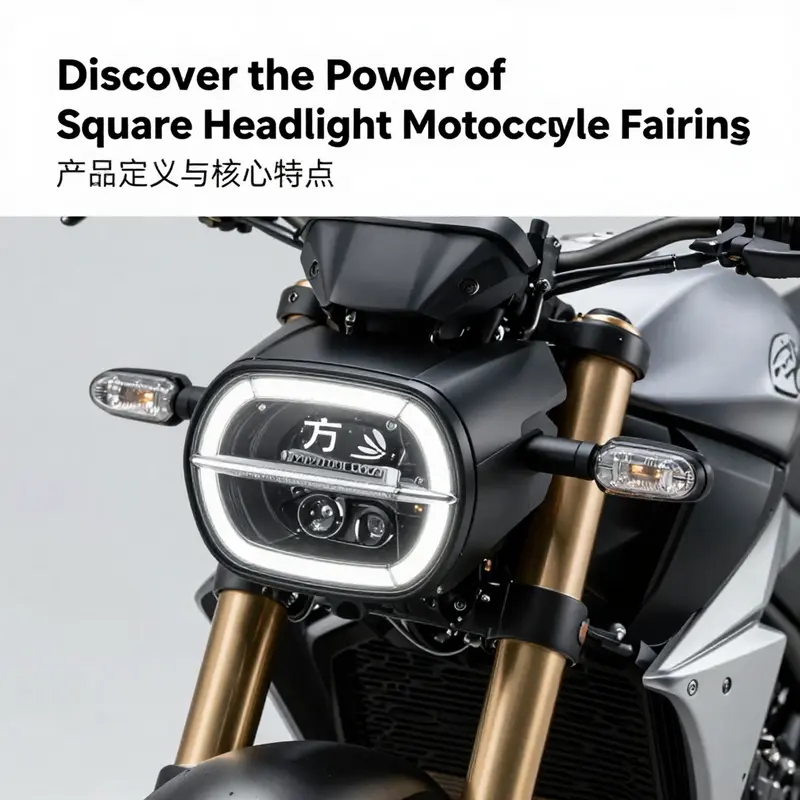
The square headlight fairing sits at the intersection of form and function, a bodywork choice that communicates more than mere style. It is a statement about how riders experience speed, weather, and road feedback, while also signaling a brand’s voice in a crowded marketplace. In the wake of a design language that favors strong lines and geometric precision, the square headlight has evolved from a bold novelty into a practical, high-performance element. This chapter traces the product definition and core characteristics of the square headlight fairing, grounded in the latest research and market data, and it situates the component as a key driver of rider comfort, stability, and personal expression across contemporary motorcycle categories.
At its core, the square headlight fairing is a front-end enclosure designed to cradle a headlamp assembly that is square or rectilinear in outline. The intent is not simply to replace a rounded lamp with a square one; it is to harmonize the headlight geometry with the surrounding fairing so that the entire nose of the motorcycle reads as a single, cohesive silhouette. In practice, this means a shell that covers the upper portion of the bike’s front, guiding the eye along sharp edges and flat planes that suggest speed even when the bike is stationary. The visual identity that emerges from this pairing—headlamp geometry plus angular fairing surfaces—creates a strong recognition point for a rider’s machine. It becomes a brand signature that can be read at a glance, a feature that matters in a market where customers often decide in seconds which bike aligns with their sense of self.
Yet the square headlight fairing is more than an aesthetic choice. Engineered geometry and careful air management work in concert to reduce wind resistance and to improve rider comfort at speed. The aerodynamic logic is not about chasing a single number; it is about shaping a wind field that interacts with a rider’s position and with the bike’s overall profile. When air meets a form with flat facets and a well-delineated airfoil profile, the result can be a smoother pressure distribution, reduced turbulence behind the windscreen, and less buffeting at the rider’s helmet. The most compelling data from recent tests point to wind-resistance reductions in the mid-teens to around twenty percent in optimized configurations. Those gains translate into calmer handlebars, lower rider fatigue on long rides, and more stable highway behavior, especially in gusty conditions or when a rider assumes a taller or more aggressive posture.
From a manufacturing perspective, the square headlight fairing is a product of modern material science and modular design philosophy. Engineers favor high-strength engineering plastics, such as FRP composites or ABS blends, for their combination of light weight, impact resistance, and weather durability. These materials allow the fairing to maintain a crisp, angular aesthetic while standing up to the rigors of road use, sun exposure, and variable temperatures. The modular approach—detachable components like the windscreen, side panels, and visible bodywork—appeals to riders who crave customization without compromising serviceability. For owners who like to swap looks or align their machines with specific riding styles, modular fairing systems offer a practical path to transformation without a full disassembly of the bike. This flexibility is particularly attractive in the realm of customization, where the square headlight theme can be extended or pared back to suit different visions of retro-futurism, neo-retro, or modern sport aesthetics.
Material choice also informs durability and finish. The common combination of a robust exterior shell with a clear, anti-fog windscreen balances visibility and protection. A well-executed finish—whether in matte, gloss, or specialty coatings—helps the geometry read as a continuous plane rather than a collection of panels. The resulting effect is a visual continuity that reinforces the square silhouette and its intended stance on the road. In the context of safety and compliance, these fairings are typically developed within quality management frameworks such as ISO-based systems, ensuring consistent performance, repeatable manufacturing, and traceable material properties. They are designed to perform across a range of conditions, from rain-slick highways to sun-drenched straights, while retaining their structure and clarity under impact and exposure.
Aesthetics and aerodynamics rarely exist in isolation; they interact with the broader styling language of the motorcycle. The square headlight fits into a design philosophy that values sharp lines, flat planes, and strong geometry—an approach that lends a sense of certainty and purpose to the machine. This visual language can be coordinated with the fuel-tiller line, side panels, and seat profile to produce a unified rider experience from the moment the bike is wheeled out of the garage. In many cases, designers and engineers draw on heritage cues without returning to past silhouettes in a literal way. Instead, they reinterpret classic cues through a contemporary lens, translating iconic forms into a three-dimensional surface with modern lighting technology and efficient air management. The effect is a fusion of nostalgia and forward-thinking engineering, where the square headlight becomes a bridge between history and the present-day ride.
The material and process choices feed into the fairing’s life cycle. A common platform—comprising a base shell, a detachable windscreen, and add-on elements like chin spoilers or small winglets—supports a wide range of rider needs. The modular assembly invites ongoing customization, which is a central driver of appeal in the current market. For instance, riders who want a more aggressive look or a more comfortable long-haul experience can choose variants that alter the wind flow and the area of the fairing in contact with the airstream. The design language also encourages color and finish experimentation. Coatings can be tuned to highlight the hard edges of the square geometry or to soften the contrast between the fairing panels and the surrounding bodywork. This flexibility matters for the customization community, where personal taste and identity play as big a role as raw performance when riders select their fairing package.
Beyond material and aesthetics, the fairing’s core characteristics include compatibility and installation practicality. A square headlight fairing is typically designed to be a straightforward bolt-on upgrade or replacement, with mounting schemes developed to align with the bike’s structural features and to minimize additional hardware requirements. The goal is a tight fit that preserves existing geometry while enabling the rider to realize a new face for the motorcycle. For builders and workshop professionals, that compatibility translates to a more predictable install process, fewer fabrication steps, and a more reliable fit across model variants. The result is a product that feels integrated rather than tacked on, contributing to a sense of cohesion that resonates with riders who want a brand-true aesthetic without appearing as if a cosmetic afterthought was strapped to the front of the bike.
From a safety perspective, the fairing must withstand incident-level loads, hold its shape under wind pressure, and maintain visibility through the windscreen and headlamp area. This is where testing and standards compliance become essential. While the precise regulatory requirements vary by region, the overarching aim is to guarantee that the fairing continues to function under rugged riding conditions, remains securely attached through normal and extreme use, and does not compromise rider visibility or helmet-protection zones. The square headlight configuration itself also participates in lighting performance: square or rectangular lamps can deliver distinctive beam patterns and visibility characteristics that some riders prefer for the perception of road geometry and target distance. Taken together, these factors—stability, visibility, safety, and user-friendliness—form a coherent value proposition for riders who seek more than cosmetic upgrades.
As a product category, the square headlight fairing crosses multiple motorcycle segments. It resonates with neo-retro and modern-cruiser aesthetics by delivering the angular, bold silhouette that complements a longer wheelbase and a more muscular stance. It also finds a home in certain sportier or retro-inspired machines that prize precise geometry and a confident front-end presence. In each case, the fairing serves as the anchor for a complete design language that communicates intent: a rider who values control, clarity, and a distinctive, self-assured look. For those who want to explore the breadth of options available across brands, there is a well-curated body of fairings designed to fit a range of common frame geometries and fairing attachment points. A notable example of the breadth of options and the way a specific family of fairings embraces the square headlight idea can be found in the Kawasaki fairings collection, which demonstrates how integrated, model-specific styling can be extended into modular, customizable packages. See the Kawasaki fairings collection here for a sense of how the square headlight concept translates into a broader, brand-aligned design system. Kawasaki fairings collection.
The broader significance of the square headlight fairing lies in its combination of form and function. It embodies a design philosophy that treats the front end not as a separate ornament but as a coherent, performance-oriented architecture. The square geometry, by emphasizing clean lines and defined planes, has a way of channeling attention to the rider’s posture and the machine’s stance. This emphasis matters when a rider sits upright for relaxed cruising or leans into a sportier tuck; the fairing’s geometry helps manage the air around the rider’s torso and helmet, contributing to comfort and control. In turn, comfort and control feed back into performance, because riders who experience less wind fatigue tend to ride more consistently, especially on longer journeys or in challenging weather. The fairing thus becomes a facilitator of endurance, enabling a rider to maintain focus on line, pace, and rhythm rather than fighting against gusts or buffeting.
Looking ahead, the square headlight fairing represents a design culture that values both heritage cues and engineering exactitude. Its popularity hinges on the delicate balance between a strong visual statement and the practical demands of real-world riding. It is not simply about turning heads; it is about delivering a comprehensive riding experience where the geometry, materials, and modular components work in concert to optimize airflow, visibility, and rider comfort. As the market continues to demand greater personalization without sacrificing performance, the square headlight fairing stands out as a practical, expressive choice—one that offers a believable path to customizing a motorcycle’s personality while preserving the fundamentals of safety, durability, and function. For riders who want to explore the breadth of options while staying aligned with a coherent design language, the square headlight approach provides a reliable framework to guide upgrades, modifications, and even new builds.
External resource: https://en.wikipedia.org/wiki/Aerodynamics
The Square Headlight Fairing: A Bold Design Language That Aligns Identity, Aerodynamics, and Adventure Across Modern Motorcycles
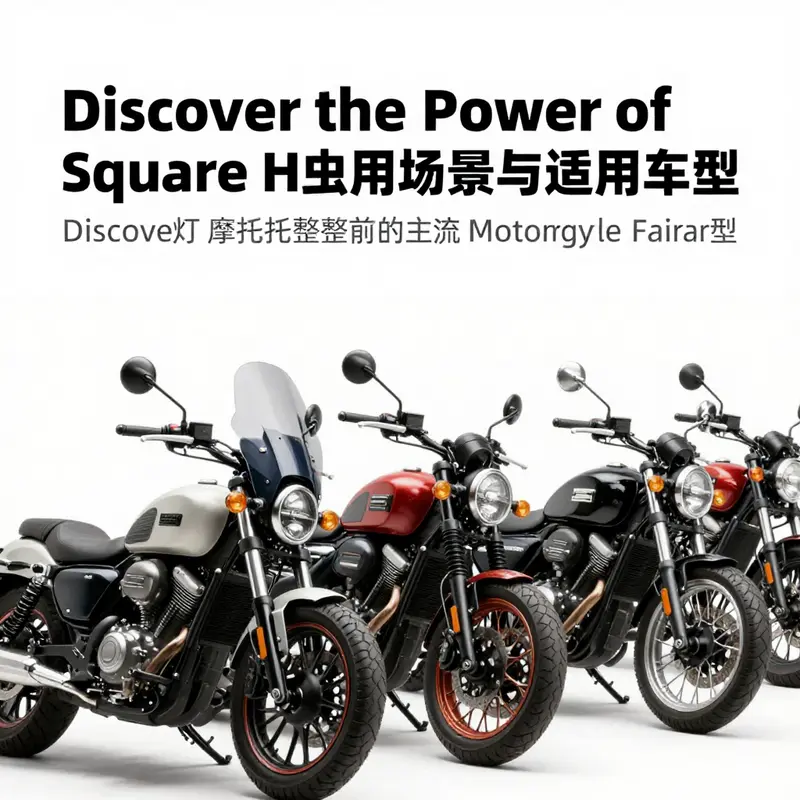
Square headlight fairings emerged from a collision of nostalgia and engineering ambition. They are not mere coverings for a front light; they are a design language that communicates a rider’s intent before the bike even rolls. In an era when every motorcycle seeks to balance heritage cues with contemporary performance, the square headlight and its accompanying fairing become a compact manifesto. The geometry is unmistakable: a hard-edged outline, a tight interplay of planes, and a silhouette that reads as both confident and functional. When the eye travels from the square lamp to the angular lines of the fairing, the rider perceives a continuum of purpose—air moves with intent, the rider feels supported by the wind rather than overwhelmed by it, and the machine presents itself as a cohesive argument rather than a collection of parts slapped together. In this sense, the square headlight fairing is not a retro flourish—it is a deliberate engineering choice that signals a philosophy: design that respects the past while engineering for the road ahead.
The most enduring applications of this design language tend to cluster in three broad scenarios: heritage-inspired or retro-styled machines, modern sport street bikes that fuse aggression with precision, and certain cruisers that lean into a statelier, more expansive stance. In retro-styled platforms, the pairing of a square headlight with a sharply defined fairing hearkens back to a period of bold color blocks, high-contrast graphics, and a sense that speed itself was a rebellious act. Yet the execution today is far more refined. The lines are not merely decorative; they are a way to manage air density around the front wheel, up through the radiator or intake zones, and into the rider’s line of sight. The effect is a front end that reads as a single identity: strong, legible, and ready for the road. On many modern sport street bikes, the same square lamp’s geometry provides a counterpoint to the bike’s compact, aggressive frame. The fairing’s planes guide air into strategic channels, helping to reduce drag at speed and to smooth the air that would otherwise buffet the rider’s shoulders and helmet. In cruisers, the square motif can be scaled and integrated with a larger, more muscular fairing that complements the bike’s broad, deliberate stance. In each case, the square headlight becomes a unifying cue—an anchor that ties the bike’s temperament to its aerodynamic behavior.
The visual impact of a square headlight is not merely about bold geometry. It is about how the light itself interacts with the rider’s perception of the machine. A square fixture tends to offer a consistent, highly readable silhouette at a glance, which enhances recognition on the road. This recognizability is amplified when the surrounding fairing uses complementary geometry—sharp angles, precise edge lines, and subtly sculpted surfaces that catch light rather than reflect it in a single flat pane. The overall effect is a front end that communicates decisiveness and control. For riders who want a bike that announces its character from a distance, the square headlight fairing provides a clear, unambiguous identity that aligns with the bike’s performance-oriented or nostalgically inspired mission. The result is a machine that attracts not only attention but a certain kind of respect: the rider looks capable, the bike looks prepared, and the path ahead seems engineered for momentum.
From a functionality standpoint, the square headlight fairing is designed with an air of quiet efficiency. Modern iterations emphasize aerodynamic efficiency in ways that reward riders at highway speed. The fairing works in concert with a carefully shaped windshield, side panels, and a rear fairing to sculpt a stable wind envelope around the rider. Tests conducted in recent years confirm what riders feel intuitively: the drag coefficient can drop substantially when the fairing is tuned to the square headlight geometry, with reported reductions in the range of roughly 15 to 20 percent in optimized configurations. That improvement translates into steadier high-speed stability, better fuel efficiency, and less wind pressure across the rider’s face. Even in less than ideal weather, when the windshield is transparent and optimized to resist fogging, the square headlight fairing helps maintain visibility by reducing the chaotic flow that can buffet the eyes and helmet visor. Riders who log long distances or frequent high-speed sections notice these advantages not as abstract numbers but as tangible comfort and confidence in the saddle.
Material choices underpin both the efficiency and the aesthetics. The most widely adopted systems rely on high-strength engineering plastic composites. These materials deliver a compelling blend of light weight and rugged durability, meeting the demands of road salt, sun exposure, rain, and temperature swings. The weight advantage is meaningful: a fairing that is lighter than metal by roughly a third contributes to overall handling gains and improved fuel economy without sacrificing stiffness or impact resistance. The fact that these composites can be formed into modular, swappable components is a major win for maintenance and customization. A modern square headlight fairing often embraces a modular concept that allows the windshield, side panels, and vents to be detached or rearranged. This modularity supports owner-led personalization—an element that has grown increasingly important as riders seek to articulate a unique relationship with their machines. For a rider, the fairing becomes a canvas for expression, while the underlying engineering ensures that the visual statement does not compromise robustness or safety.
The manufacturing and safety story behind square headlight fairings is also evolving. A growing majority of products are produced under quality management frameworks that align with international standards, ensuring consistency across batches and parts. These standards—often aligned with ISO-based processes—help ensure that the fairing maintains its shape and strength after repeated temperature cycles and under vibration. The combination of consistent resin systems, careful tooling, and rigorous inspection translates into reliable fitment across model lines and years of production. In the market, this reliability matters for riders who rely on aftermarket or factory-fitted components to maintain the integrity of their bikes during long journeys or intense riding sessions. The fairing is not merely an aesthetic upgrade; it is a performance element that must behave predictably in a wide range of conditions. When the fairing is designed to integrate with a standard electrical loom, it simplifies wiring and reduces the risk of harness-related issues during maintenance, another practical benefit that keeps riders on the road rather than in the workshop.
The design language of the square headlight fairing also serves a deeper narrative about riding culture. It is a nod to the era when motorcycles were expressive, and the front end carried a character all its own. Yet the modern implementation refuses to freeze that heritage in amber. The geometry is reinterpreted through contemporary sculpting, which means the fairing can be both a bridge to the past and a statement of technical ambition. The rider gains a vehicle that is not simply faster, but also more legible at speed. The front-view clarity of a square headlight aligns with a rider’s need to anticipate oncoming traffic and road geometry. The silhouette remains unmistakable even when the bike is viewed in motion, a factor that contributes to a rider’s situational awareness in congested environments or when glimpsed in the distance at the end of a lane.
The practical realities of customization also shape how square headlight fairings are adopted. Many riders who want to honor retro aesthetics prefer a careful blend of vintage cues and modern features. They seek a fairing that can accommodate contemporary lighting, weather protection, and electronic accessories while preserving the clean lines and angular geometry of the original concept. The modular approach—detachable windshields, side wings, and even small vents or aero fins—lets riders tailor the profile to personal preference without undermining the overall performance envelope. In this sense, the square headlight fairing is less a fixed object and more a design philosophy that invites experimentation while maintaining a core set of aerodynamic and structural principles. It is this balance—heritage-infused form coupled with scalable performance—that makes the square headlight fairing a durable focal point in the contemporary motorcycle ecosystem.
For riders who are curious about the breadth of available options and how that catalog translates to real-world fitment, a look through a dedicated fairing collection can be instructive. A catalog that gathers options from a broad spectrum of brands demonstrates how the square headlight concept has traversed different topologies—from compact, race-inspired front ends to larger, protection-forward fairings designed for longer rides. While each entry speaks in its own tonal language, the unifying thread is the same: a front end that communicates strength and precision through geometry, and a surrounding shell that channels air with intention rather than simply covering the bike.
In terms of attribution and ongoing development, the broader market has benefited from the gradual alignment of style with engineering. The square headlight fairing is not simply a cosmetic upgrade but a platform for improved aerodynamics, rider comfort, and even safety. By shaping the airflow in a controlled way, it helps to stabilize the front end, reducing shock and vibration that can travel through the handlebars and into the rider’s arms. When integrated with a well-designed windscreen, the effect compounds: a clear, fog-free field of view is preserved, and the rider experiences a calmer, more controlled ride in a variety of weather conditions. Riders who spend time on mountain passes or long highway stretches often report this as one of the most valuable benefits of a thoughtful fairing design. It is not just about keeping the rider dry or warm; it is about maintaining composure and control in dynamic riding scenarios, which ultimately enhances safety.
The story of the square headlight fairing also intersects with the broader trend toward modularity and aftermarket support in motorcycling. As more riders seek to personalize their machines, the ability to swap windshields, tweak airflow channels, or adjust the side panel geometry becomes a selling point. This flexibility aligns well with the growing interest in neo-retro and custom builds, where individuality does not need to come at the expense of performance. In practice, riders can experiment with different glare control, air intake, and deflection patterns while preserving the core identity of the front end. And even as the fairing serves a distinctly modern function—delivering drag reduction and wind comfort—it remains deeply tied to the emotional appeal of the square form. The resulting motorcycles carry a sense of purposeful design that resonates with riders across disciplines, from daily commuters who value comfort to track enthusiasts who demand precise handling and reliability.
For those exploring the spectrum of compatible options, a gateway to understanding how the square headlight concept translates across platforms can be found in curated collections that assemble fairings from multiple makers. A representative entry point is a dedicated catalog that groups square-headlight compatible fairings, allowing riders to visualize how the geometry scales with different chassis layouts and tank shapes. This resource shows that the square headlight design is not a one-trick pony but a versatile starting point for expressively shaping the front end of a motorcycle without sacrificing the mechanical fundamentals that support high-speed performance and long-day comfort. In short, the square headlight fairing embodies a philosophy: design that communicates identity, improves aerodynamics, and remains adaptable to the rider’s evolving needs.
As riders look toward the future, the evolution of the square headlight fairing will likely continue to weave together light management, air flow optimization, and modular components. Advances in material science may yield even lighter composites with improved impact resistance, while computational fluid dynamics will enable even more precise shaping of the fairing’s aerodynamic wake. The result could be front ends that are not only more efficient but also more comfortable and safer, with integrated features such as smart wind deflectors or adaptive lighting that responds to speed and weather conditions. The interplay between form and function in the square headlight fairing is a prime example of how a seemingly simple design element can influence a motorcycle’s entire riding character: a machine that is unmistakably modern, yet rich with a sense of history, and always ready for the next ride.
Internal link for further exploration of compatible options: Kawasaki fairings. This link provides a catalog-style view of how square headlight design language has been implemented across a range of chassis and fuel-injected platforms, illustrating the practical reality that a strong front-end identity can be paired with diverse mechanical architectures. While the exact shapes and dimensions may differ, the underlying principle remains consistent: define the silhouette with sharp geometry, configure the airflow with intention, and offer modularity that supports both maintenance and customization. External readers who want a historical and design-oriented reference can consult official pages that trace the lineage of iconic front-end aesthetics and their influence on contemporary designs, such as the long-standing heritage associated with certain legendary models and their front-end conventions. For broader context, see the official resource that details the evolution of one historic square-headlight lineage and its continuing influence on modern sport and retro-inspired machines: https://www.kawasaki.com/en-US/motorcycles/z1000r
Square Headlight Motorcycle Fairings: Materials, Standards, and Integrated Aerodynamics
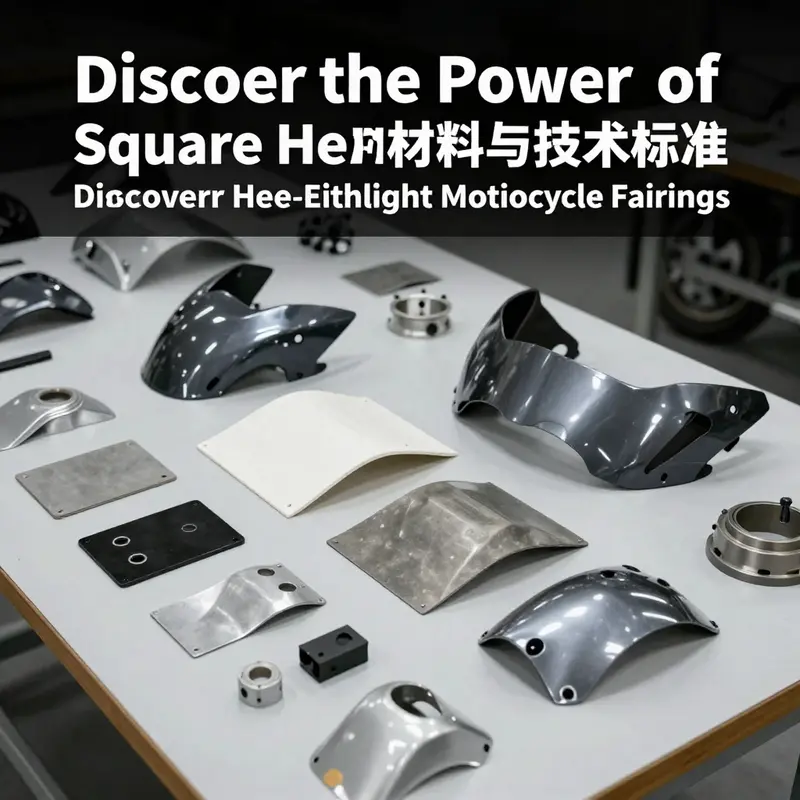
The square headlight fairing is more than a styling cue. It embodies a convergence of geometry, material science, and aerodynamic thinking that together influence how a motorcycle behaves at speed, how it feels to ride, and how resilient it proves to be under variable weather and road conditions. In the modern landscape where aesthetics meet performance, the square headlight design leans into its own identity: bold lines, crisp angles, and a sense of mechanical purpose that signals wind resistance and stability as much as visual stance. This chapter traces the underlying materials and technical standards that make this family of fairings functional, reliable, and capable of delivering a coherent riding experience across a spectrum of models and riding styles. The story begins with the material of choice and then broadens to how those materials are engineered, tested, and integrated into a modular ecosystem that accommodates different windshields, side panels, and accessory mounts while maintaining safety margins and long-term durability. Through this lens, the square headlight fairing reveals itself not merely as an external shell but as a performance component whose life is measured in drag reduction, rider comfort, and predictable behavior under adverse conditions.
At the core of most contemporary square headlight fairings lies a class of engineering plastics that balance lightness with strength. The dominant material, an acrylonitrile butadiene styrene blend, is chosen for a host of practical reasons. ABS offers a favorable strength-to-weight ratio, critical for maintaining fuel efficiency and responsive handling when a fairing is mounted at the front of the bike. Its density is low enough to contribute meaningful weight savings over metal without sacrificing rigidity where it matters. More importantly, ABS can be molded in complex geometries that support the characteristic angular, geometric forms of square headlight designs. The smooth curves and sharp edges that define the silhouette are not merely aesthetic; they are features that translate into predictable airflow patterns. The result is a component that can be both visually striking and aerodynamically functional.
Durability in the face of road grime, UV exposure, rain, and temperature cycles is essential for a fairing that sits at the very front of the bike. ABS compounds used for fairings are engineered with weather-resistant additives and stabilizers that resist degradation from sun and environmental exposure. The same material resists impact from road debris at typical highway speeds, which is crucial for riders who spend long hours on intercity corridors or remote routes where repairs need to be minimized. In addition to baseline resilience, a significant portion of modern fairings uses a reinforced ABS or a tailored blend that enhances stiffness in critical sections, such as the mounting flanges and the air-diverting surfaces. These modifications maintain the fairing’s shape under load, ensuring that the aerodynamic profile remains stable even when the front end encounters gusts or crosswinds.
From a manufacturing perspective, ABS is well suited to volume production through injection molding. This process lends itself to consistent wall thickness, tight tolerances, and repeatable surface finishes that contribute to the perceived quality of the fairing when installed. The modular ethos of these components also shows up in the way they are produced. A typical square headlight fairing system is assembled from several removable subcomponents—front windscreen, side panels, winglets, and sometimes mirror housings—that can be treated as individual modules or combined for a seamless look. This modularity not only supports personalization and aftermarket customization but also reduces the downtime and complexity of maintenance. When a section is damaged or requires a different aesthetic, the portion can be replaced without reworking the entire shell, which is a practical advantage for riders who modify or upgrade their equipment.
The design language of the square headlight fairing increasingly embraces aerodynamics as a core performance feature. The airframe geometry is chosen to influence airflow in a controlled manner, shaping how air splits around the bike and where pressure concentrates across the rider’s torso and helmet. The goal is to lower the overall drag coefficient and to produce a more uniform distribution of wind pressures, reducing buffeting at higher speeds. Early wind tunnel studies and modern computational fluid dynamics simulations converge on a consistent insight: angular faces and carefully contoured leading edges can direct airflow in a way that minimizes turbulent wake behind the front wheel and rider. It is this synergy of geometry and material stiffness that helps the fairing maintain a stable riding platform, especially during high-speed cruising or quick maneuvers where even small improvements in airflow translate into tangible reductions in rider fatigue and vibration.
A notable outcome of these aerodynamic refinements is a meaningful improvement in high-speed stability. Recent testing suggests the optimized square headlight fairing can lower wind resistance by roughly fifteen to twenty percent compared with less refined configurations. This reduction translates to smoother handling, improved fuel economy, and a calmer ride for the rider’s upper body and head. While the figure can vary with the exact model and environmental conditions, the trend is clear: an aerodynamically attuned front end, constructed from robust ABS blends, can deliver real-world benefits across a broad range of speeds and terrains. Equally important is the way this design interacts with accessory upgrades, such as windscreens and lightning-fast rain shields. When used in concert with a transparent, fog-resistant windshield, the fairing system helps maintain visibility in adverse weather, ensuring that the rider’s line of sight remains clear and predictable.
Beyond raw aerodynamic performance, the material and design strategy centers on integrated system thinking. The fairing does not exist in isolation; it forms a junction with mirrors, mounting points, and electronic housings that are part of a broader front-end ecosystem. In many designs, the fairing provides dedicated locations for side mirrors that minimize vibrational transfer and help keep the field of view stable under acceleration and braking. Interfaces for switchgear, such as ignition or emergency controls, are planned with ergonomics in mind, locating them where gloved hands can operate them with confidence. The result is a cockpit that feels cohesive, where the front end communicates a sense of intent and control that aligns with the rider’s expectations when they twist the throttle or lean into a corner.
Of course, aesthetics remain a central driver in the square headlight concept. The visual identity of these fairings—defined by a matrix of lines, angles, and planes—works in tandem with the rider’s perception of speed and control. The dark, glossy surface of a typical ABS fairing is not merely a cosmetic choice but a reflective canvas that interacts with light to emphasize the machine’s geometry. This optical interplay helps strengthen brand identity and differentiates the bike in a crowded market, especially for riders who seek a modern retro or neo-retro look. In practice, the color and finish are often designed to complement the headlight shape, producing a unified silhouette where the headlamp and the surrounding fairing contribute to a single, legible signature at a glance.
From a standards standpoint, the development of square headlight fairings proceeds within a framework that values repeatability, safety, and performance consistency. The manufacturing and testing processes align with recognized quality management principles, including the ISO 9001 family of standards for quality management systems. These standards guide the way materials are sourced, parts are produced, and assemblies are validated before they reach the consumer. The emphasis on traceability, process control, and continual improvement supports a mature supply chain where suppliers and manufacturers share a commitment to consistency and reliability. In addition to ISO, broader regulatory considerations touch on electrical and safety requirements—particularly when the fairing houses or intersects with electrical components such as indicators, control switches, or integrated lighting. Compliance with regional regulatory frameworks, such as CE for many European markets or DOT-related standards in the United States, helps ensure products perform reliably under diverse operating conditions and meet the expectations of riders who rely on these components in everyday use.
The integration of modular design with standardized testing enables a fluid customization pathway without compromising safety or performance. The modular approach allows a rider to swap windscreens, adjust side panels, or add wind deflectors and winglets to tailor the aerodynamic profile for specific riding contexts. Each modification, while primarily cosmetic or comfort-oriented, remains bounded by the same performance and safety criteria that govern the base fairing. For riders who want to push the envelope further, the modular concept scales into the realm of race-inspired configurations, where engineers focus on the precision of air-handling surfaces and the alignment of the fairing with the rider’s posture. Even in those cases, the materials—ABS blends with high impact resistance and stable mechanical properties—remain the backbone that keeps the structure intact under increased loads and rapid changes in speed.
One practical implication of this material and standards ecosystem is maintenance and longevity. ABS-based fairings may encounter scratches and minor surface damage over time, but the material’s ability to absorb impact without catastrophic failure means repairs are feasible and cost-effective. When maintenance is required, the modular architecture facilitates straightforward replacement of damaged pieces rather than entire assemblies. This attribute appeals strongly to riders who customize and personalize their machines and who value the possibility of upgrading components without destabilizing the overall front-end geometry. The surface finishing processes used for ABS fairings—paint, clear coats, or textured finishes—enhance durability and provide aesthetic options that keep the bike visually compelling despite the rigors of daily riding and exposure to the elements.
Beyond the workshop, the lifecycle considerations for square headlight fairings extend to sustainability and end-of-life decisions. ABS is recyclable to a meaningful degree, and modern manufacturing and recycling programs emphasize reclaiming and reprocessing scrap from molding and assembly operations. This aligns with broader industry trends that seek to balance performance with responsible material stewardship. In practice, riders and manufacturers are increasingly mindful of the environmental footprint of front-end components, whether through recyclable materials, longer-lasting finishes, or design choices that simplify disassembly and reuse of parts when upgrades occur. The result is a fairing system that maintains its functional and aesthetic value while fitting into a broader narrative about sustainable motorcycling.
From a practical perspective, the square headlight fairing embodies a synthesis of form and function. The material choice—predominantly ABS—provides a reliable platform for shaping aggressive geometry, delivering predictable aerodynamics, and supporting modular integration. The technical standards that govern its production—from quality management to regulatory compliance—ensure that the resulting product can withstand the demands of real-world riding. The end-user benefits are clear: reduced drag, improved rider comfort, stable handling at speed, and the potential for personalization without compromising safety or performance. A rider encountering such a fairing experiences not only a visual impression of a deliberate, well-engineered stance but also a tangible sense of how the front end interacts with the air and with the rider’s own body. The fairing becomes a partner in the ride, guiding air in a way that supports stability and reduces the fatigue that can accumulate during long journeys.
For readers seeking concrete examples of how these principles play out across different model lines, consider the broader ecosystem of fairing families that embrace square headlights and modular components. A useful reference point is the Yamaha fairings collection, which demonstrates how a single front-end concept can scale and adapt while maintaining core aerodynamic and structural characteristics. This approach illustrates how standardization and customization coexist, enabling riders to tailor their machines to personal preferences without sacrificing fundamental performance criteria. Yamaha fairings collection offers a window into how modular design and material choices are implemented in practice, serving as a practical case study for the integration of geometry, materials science, and engineering standards.
Ultimately, the story of square headlight motorcycle fairings is one of disciplined engineering that respects the rider’s need for clarity, control, and comfort. The choice of ABS as a sustaining material, the emphasis on aerodynamic shaping, and the adherence to established quality and safety standards together create a robust platform for front-end design. The result is a part that looks intentional, behaves predictably, and can be upgraded or adapted over time with minimal friction. This synthesis of aesthetics, performance, and process discipline positions square headlight fairings not merely as cosmetic enhancements but as essential performance components. They carry with them a philosophy of design where every line is measured for both its visual impact and its contribution to the riding experience. And as technology advances, those lines are likely to become even more refined, further blurring the line between sculpture and performance in the world of street and sport cruising.
External resource: https://www.iso.org/iso-9001-quality-management.html
Final thoughts
In summary, square headlight motorcycle fairings are transformative components that enhance both the aesthetic appeal and functional performance of motorcycles. As a business owner in the motorcycle industry, recognizing the significance of these fairings is vital. Not only do they create a striking visual identity for various motorcycle styles, but they also contribute to improved aerodynamics and rider comfort. Investing in high-quality fairings that align with industry standards ensures that you deliver exceptional value to your customers. Therefore, prioritizing these essential components in your offerings could very well elevate your business’s competitiveness in the market.