
Stealth motorcycle fairings offer a unique blend of functionality and minimalist design, tailored for business owners and motorcycle enthusiasts alike. As the demand for high-performance parts grows in the competitive motorcycle market, understanding the significant role of stealth fairings is crucial. These fairings not only enhance a motorcycle’s aesthetic appeal but also improve aerodynamics and riding comfort. In the chapters that follow, we will delve into the aerodynamic benefits, material choices, compatibility considerations, performance enhancements, and the latest market trends related to stealth motorcycle fairings. Each aspect highlights how these components contribute to an efficient and sleek riding experience, ensuring that business owners can confidently cater to their customers’ evolving desires for efficiency and style.
Stealth in Motion: Aerodynamics, Comfort, and the Subtle Power of Stealth Motorcycle Fairings
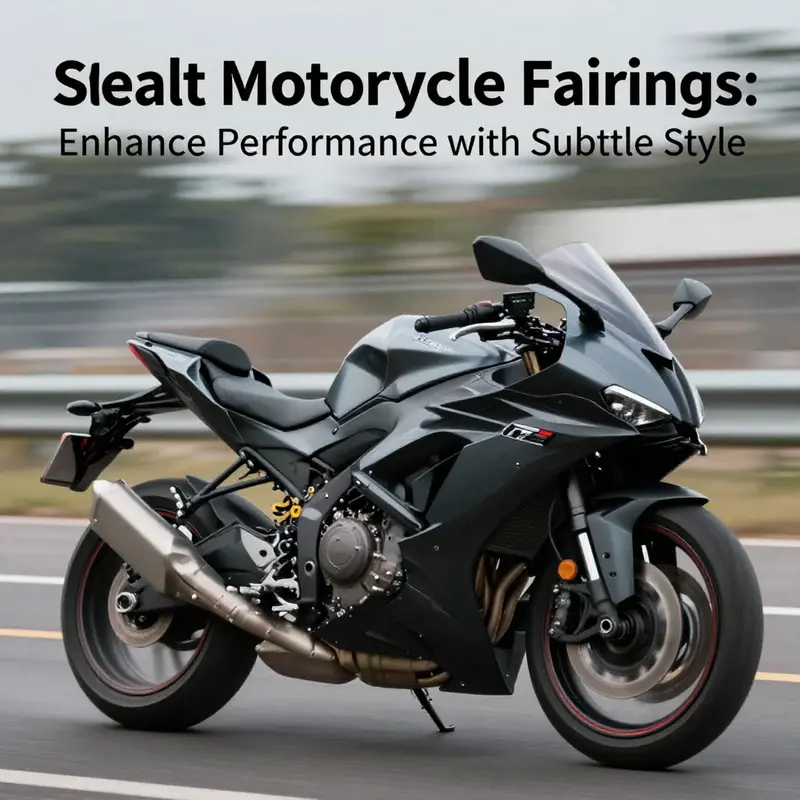
Stealth motorcycle fairings represent a careful balance of restraint and capability. They are designed not to shout from the saddle, but to work with the rider’s body and the bike’s mechanical heart to produce a quiet, efficient flow of air. The idea is simple in principle yet difficult in practice: shape the surface so air moves smoothly, reduce disturbances that tug at the rider’s head and shoulders, and minimize drag without compromising protection. This combination yields a motorcycle that feels steadier at speed, more comfortable on long rides, and unexpectedly efficient when the throttle is opened wide. In practice, the visible result is a low, clean silhouette finished in matte or dark tones that emphasize function over flash. The stealth aesthetic is not merely about colors or absence of decals; it is an intentional design philosophy that integrates aerodynamic performance with a subdued visual language. When a rider sits behind a well-executed fairing, the first effect is not a dramatic look but a different kind of perception: a smoother, quieter ride as air follows the bike’s lines rather than gnashing against them. The absence of busy graphics helps the eye register the fairing’s sweep and the way it meets the wind, inviting a closer look at the engineering underneath rather than at decoration on the surface.
At the core of this design is aerodynamic efficiency. The fairing’s contours are engineered to guide airflow with minimal separation. Smooth, contoured surfaces help air glide over the front and sides, reducing turbulent wake that would otherwise linger behind the rider’s helmet and shoulders. The result is lower drag and fewer shifts in pressure that can cause buffeting at highway speed or in gusty crosswinds. A well-curated air path also stabilizes the motorcycle, making it feel more planted when the throttle is opened or the road surface changes abruptly. The rider senses this as a calmer ride and, paradoxically, as a more responsive machine because the rider’s attention is less divided between fighting the wind and focusing on the road ahead.
The stealth approach adds another layer of consideration: minimizing visual and radar signatures without sacrificing safety or function. In civilian riding and professional contexts alike, the goal is to reduce the perception of clutter around the bike. Fewer protruding antennas, fewer tabs and edges that can trap turbulent air, and a smoother overall envelope all contribute to the air’s unimpeded flow. This streamlined profile is especially important in high-speed wind, where small changes in shape contribute disproportionately to stability and comfort. The interplay between form and function becomes clear when one contrasts a cluttered, boxy front end with a sleek, continuous shell that blends into the bike’s overall geometry. The stealth philosophy therefore extends beyond aesthetics into the physics of how air interacts with the machine.
Behind the scenes, this interaction is validated through advanced techniques. Computational fluid dynamics, or CFD, models simulate millions of airflow interactions around the fairing and the rider. These simulations predict pressure distributions, identify eddies that could cause drag, and reveal how different geometries affect buffeting. CFD is often paired with wind tunnel testing, where scaled models or full-size prototypes experience controlled airflows. The data from these tests refine the curves of the fairing, ensuring that what looks clean in a computer model also performs in the real world. The integration of aero and stealth features requires precision in manufacturing and finish, so that the intended surface geometry is realized faithfully. The final product must be dimensionally accurate within tight tolerances to maintain the predicted flow, even when confronted with real-world conditions like uneven road surfaces or rider posture changes.
Stealth technology in this context refers to more than appearance. The materials and surface treatments chosen for the fairing can influence how the bike interacts with radar in specialized scenarios, absorbing or deflecting certain wavelengths. While such considerations are less common on everyday street riding, the underlying principle—minimizing features that disrupt the smooth air path—remains central. This approach makes the bike feel more fluid in transition, whether navigating a long, steady highway stretch or riding through a headwind that shifts with the terrain. Importantly, the design process keeps safety and rider fatigue at the forefront. Reduced buffeting translates into less neck strain and fewer vibrations transferred through the handlebars. The rider experiences a calmer, more focused riding experience, which matters just as much as top speed or fuel economy.
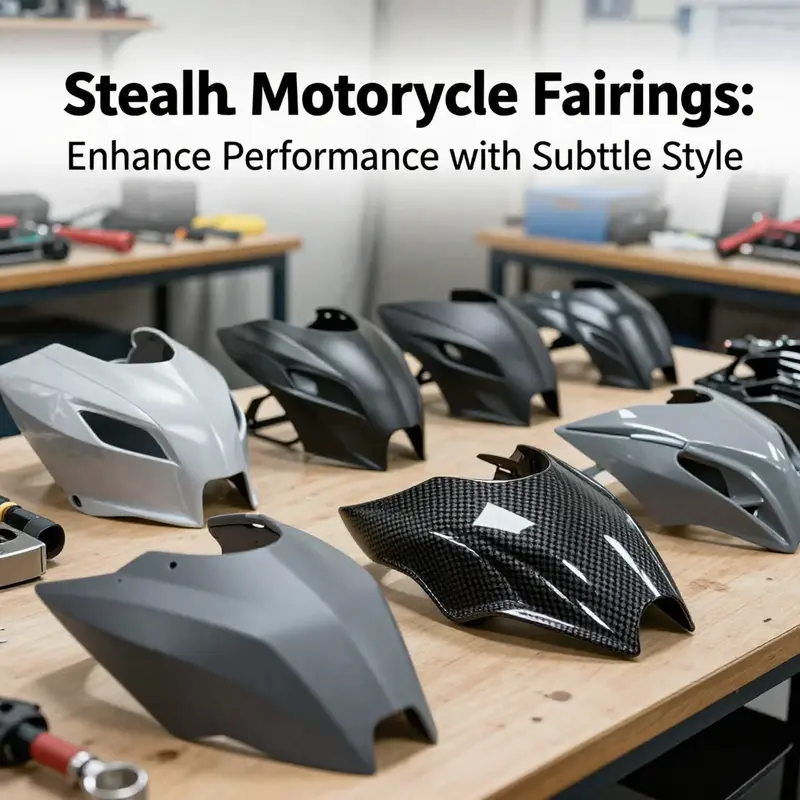
The types of stealth fairings—full, half, and quarter configurations—offer different levels of coverage and aerodynamic influence. A full fairing creates a continuous surface from the front to the midsection, optimizing the air path for the most comprehensive drag reduction. Half and quarter fairings provide flexibility for models with distinct chassis contours or for riders who prefer a lighter aesthetic while still gaining significant aero benefits. Compatibility is essential, and selecting the right type involves matching the fairing to the bike’s overall geometry, mounting points, and cockpit layout. This alignment ensures the intended airflow remains uninterrupted and that the rider’s view and instrument visibility stay unobstructed. Materials range from injection-molded ABS for durability and affordability to carbon fiber variants for stiffness and weight savings. In premium builds, dry carbon fiber with autoclave curing offers an exceptionally light, rigid envelope that holds fine-toleranced curves under load. Coatings, including UV-stabilized finishes, protect the surface from yellowing and degradation, preserving the stealth look over time and through exposure to the elements.
The practical benefits extend beyond aesthetics. Aerodynamic efficiency improves fuel economy by reducing parasitic drag, especially at higher speeds where air resistance grows with the square of velocity. A more stable ride reduces rider energy expenditure, which matters for endurance in long-distance riding or sportier sessions that push the envelope of speed and handling. Reduced buffeting also contributes to more accurate windscreen perception, decreasing helmet-turbulence that can blur vision and increase rider fatigue. In short, the stealth fairing embodies a disciplined approach to performance: it respects the rider’s body, the bike’s mechanical layout, and the physics of air moving around both.
Design validation is a crucial thread in this narrative. Engineers iterate shapes using CFD, then test promising candidates in wind tunnels to observe real-world effects. This two-step approach ensures that the theoretical gains translate into measurable performance. It also helps identify unintended consequences, like new forms of flow separation that may arise at certain yaw angles or speeds. The synergy between computational and experimental methods anchors the design in repeatable, testable results rather than intuition alone. The result is a fairing that not only looks purposeful but behaves consistently across a broad range of riding conditions. It is this blend of aesthetics and rigor that makes stealth fairings a compelling option for riders who value controlled calm as much as aggressive stance.
For readers seeking a concrete sense of how these principles translate to practical applications, consider how similar aero strategies are employed in other stealth contexts. The same discipline that governs the B-2 stealth bomber’s airframe design—minimizing disturbances from antennas, joints, and protrusions while shaping the boundary layer—underpins motorcycle fairing development. The parallel lies in acknowledging that small changes to a surface can create meaningful shifts in airflow, stability, and efficiency. The study of such systems often points back to core aerodynamic tenets: smooth surfaces, gradual curvature, and careful avoidance of abrupt interruptions in the flow. Underpinning this philosophy is a commitment to testing and verification, ensuring that the ride remains predictable and confident as speed increases. For readers who want to explore the broader aerodynamic literature that connects aircraft and motorcycle practices, a well-regarded reference on stealth aerodynamics offers deeper context and validation for the concepts discussed above.
To connect the discussion with practical resources, riders and builders can explore a representative catalog of compatible options and configurations. For example, a curated collection of Honda fairings provides a practical sense of how stealth-inspired shapes are implemented across different chassis layouts. You can browse such options here: Honda fairings collection. This link illustrates how manufacturers balance coverage, mounting compatibility, and aero efficiency in real-world products, without compromising fit or finish. The emphasis remains on reliable fitment, durable materials, and finishes that resist chalking or yellowing under sun and rain. As the fairing envelope tightens around the bike, the rider benefits from a more integrated, purpose-built silhouette that communicates intent through efficiency rather than ornament.
Looking ahead, the ongoing fusion of computational tools and empirical testing promises to refine stealth fairings even further. Advances in material science, coating technology, and additive manufacturing may unlock more nuanced surface textures that manage boundary layer behavior without adding drag. The goal is a surface that remains smooth, abrasion resistant, and visually understated while providing measurable gains in efficiency and rider comfort. In practice, that means more accurate fitment across a wider range of models, better long-term durability in varied climates, and simpler maintenance that keeps the stealth aesthetic intact. The overarching narrative remains clear: stealth motorcycle fairings are a deliberate synthesis of aerodynamic engineering and restrained design, delivering performance and protection in a package that speaks softly and carries a confident, purposeful presence on the road.
External reference for broader aerodynamic principles and validation methods can be found in established stealth aerodynamics literature, which provides a broader context for the techniques discussed here: https://www.aiaa.org/publications/technical-papers/design-and-aerodynamics-of-b-2-stealth-bomber-aircraft
null
null
Silent Fit, Steady Performance: Compatibility and Selection of Stealth Motorcycle Fairings
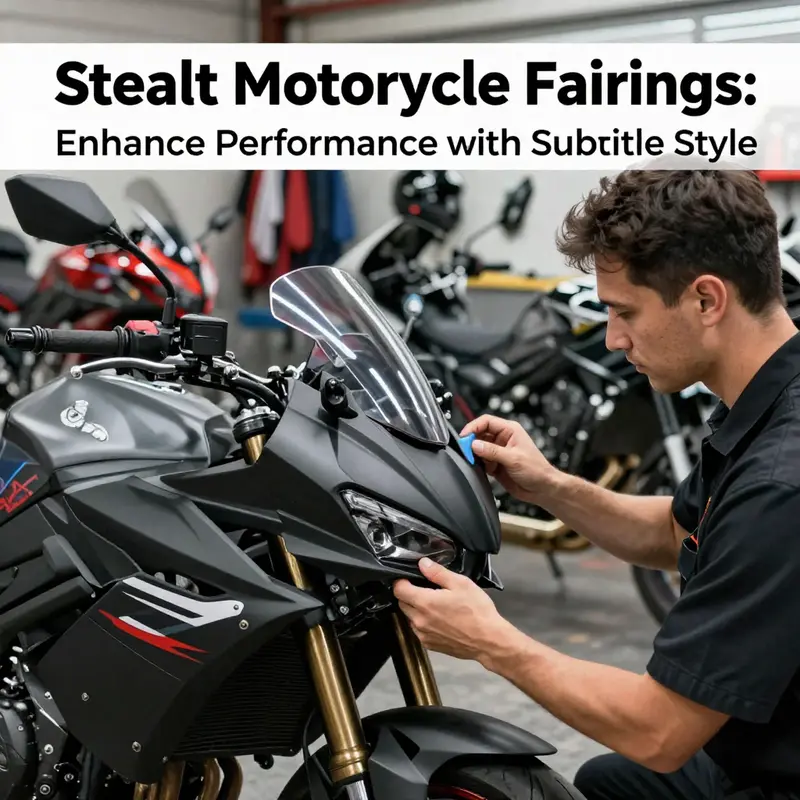
Compatibility is not a cosmetic concern when stealthy, low-profile fairings are in play. It is the quiet engine behind a smooth, efficient ride. In the realm of stealth fairings, a precise match to the motorcycle’s make, model, and year governs how well the pieces align with the existing frame, how securely they mount, and how effectively they channel air without introducing new sources of vibration or buffeting. This is where the practical becomes almost architectural: every mounting point, every contour, and every attachment point sits within a tight tolerance band that dictates performance, comfort, and durability over thousands of miles. For riders, the promise of a subdued, aggressive silhouette only holds if the fairing behaves as a single, integrated system rather than a hodgepodge of panels that fight with lines and gaps. The simplest truth is often overlooked: no two bikes are identical across generations, even if they share a common model line. Subtle changes in the steering head angle, frame stiffness, or instrument cluster geometry can ripple into the fairing’s fitment. A fairing that was designed for a earlier year may create misalignment with a later frame revision, causing gaps at the edge of the windshield, ill-fitting mounting brackets, or interference with the fuel tank and tank-mounted deflectors. It is this precise alignment that makes compatibility the first criterion in any serious selection process. The practical path to a reliable fit begins with an exact match in the parts catalog: you need a fairing that is dimensionally tailored to your bike’s year, generation, and intended model variant. In standard terms, this means confirming that the mounting points correspond to the frame’s geometry, that the headlight and instrument housings clearances are preserved, and that the windshield or deflectors do not collide with the rider’s line of sight or helmet geometry. In real-world terms, a well-matched stealth fairing is not simply bolted on; it integrates with the bike’s electrical loom, vacuum lines, and ram-air or venting paths. The result is a cohesive envelope that maintains or improves the aerodynamics without introducing rattles, gaps, or new points of wind intrusion. The role of fitment extends to the finer details as well. For instance, the alignment of a front fairing with the tank area matters for wind deflection and the rider’s comfort. A misaligned edge can induce turbulent flow that reintroduces helmet buffeting or helmet lift at speed. The same logic applies to quarter and half fairings, where leg fairings or side panels must nest into the frame’s contours without forcing the rider’s knees outward or adding unexpected weight to the front assembly. In post-market environments, compatibility testing expands beyond the factory lines. It often requires assessing how aftermarket or OEM-upgrade fairings work with a bike’s existing rake, trail, and suspension geometry. The most reliable indicators of compatibility are not only the part numbers but the documented fitment surveys and the mounting diagrams supplied by manufacturers or major suppliers. These documents translate years of engineering into usable instructions that guide a careful, pre-install evaluation rather than a trial-and-error approach. It is here that a simple measurement habit becomes invaluable. Measuring mounting hole spacing, the distance from the top edge of the headlight to the leading edge of the fairing, and the clearance between the windshield and the instrument cluster helps prevent surprises during installation. A tolerance as tight as ±0.5 millimeters for critical ABS panels is not unusual in serious applications; this is the line between a clean, flush skin and a setup that highlights imperfect seams or loose hardware after the first long ride. Alongside physical fit, structural compatibility requires a look at how the fairing attaches to the bike’s subframe. Some stealth designs rely on modular brackets that thread into existing mounting bosses, while others use custom brackets that mirror the bike’s unique geometry. The robustness of these attachments—how well they resist air pressure at speed and how repeatable they are when removed and reinstalled—directly impacts ride quality and long-term durability. In this respect, the selection criteria are not limited to the aesthetic. They encompass the entire lifecycle of the fairing, from initial fitment to the endurance of the mounting hardware under vibration, temperature swings, and UV exposure. The material choice feeds into this endurance conversation. Injection-molded ABS is a staple for affordability and resilience, offering a balance of stiffness, impact resistance, and surface finish that accepts UV-stabilized coatings to resist yellowing. For riders seeking maximum stiffness and a lighter overall weight, dry carbon fiber with autoclave curing presents a premium option. The carbon fiber’s high strength-to-weight ratio can contribute to subtle gains in handling, especially when the fairing integrates tightly with the bike’s aerodynamics. However, the ultimate performance is not about material prestige alone; it hinges on cohesive design that respects the bike’s contours, as well as the environment in which the bike operates. A well-chosen stealth fairing reduces drag, minimizes buffeting, and shields critical components from debris and weather, while preserving access to the injectors, wiring harnesses, and instrument modules for routine maintenance. In that sense, selection criteria go beyond sheer aesthetics. They demand reliability, realistic performance under real-world conditions, and a proven track record of durability. This is why many buyers look beyond the surface finish and color to the developer’s history: how well does the supplier understand fitment across a range of model years? What are the reliability statistics—how often do panels fail to align or warp with heat cycles? How does UV exposure affect the chosen resin or coating, and will the gloss hold up under sun, rain, and road salt? In pursuit of practical answers, buyers turn to performance-based indicators rather than standard certifications alone. Production volume consistency, lead times for specific model variants, and documented warranty coverage become essential considerations. In many cases, reputable suppliers based in major manufacturing hubs, especially in Asian supply networks, have refined a balance of speed, quality, and cost. The better collections present not only a range of panels but a cohesive mounting system and a documented fit for an array of years and variants. This attention to fit and finish translates into a more confident installation and a long-term sense of security that the fairing will operate as designed across miles and weather cycles. When evaluating suppliers, the emphasis shifts from generic claims to demonstrable performance of the finished product. Buyers are encouraged to seek evidence of realistic field testing, including durability under vibration, exposure to UV rays, and visible signs of fatigue in mounting points after repeated assembly and disassembly cycles. In the current landscape, credible documentation from the supplier, plus third-party validation in industry publications, often offers the most reliable compass for decision-making. For those who want to ground their assessment in data, authoritative manufacturer documentation and well-regarded industry literature provide essential context. They help bridge the gap between an attractive silhouette and a genuinely aerodynamic, durable system that harmonizes with the rider’s needs. In practice, the selection process becomes a narrative of meticulous verification: confirm year-specific fit, examine mounting hardware and bracket configurations, assess edge-to-edge alignment, and scrutinize the ability to route wires without creating chokepoints or heat builds. It is a careful balance of fit, material choice, and real-world performance that determines whether a stealth fairing will stay quiet on the freeway or reveal its presence through rattles and gaps after a few hundred miles. For readers seeking a ready-made touchstone, one can consult a curated fairings catalog that frames compatibility within a model-year context, while also pointing toward add-on features like vented panels or adjustable windshields that can enhance aerodynamics without compromising the stealth aesthetic. As a practical note, always verify with the vendor about exact fitment for your bike’s year and production batch. A well-informed purchase avoids the disappointment of a misfit panel that looks right but performs poorly. And to keep the riding experience consistent with the design intent, check that UV-stabilized coatings on ABS parts won’t yellow in the sun and that carbon fiber elements are properly protected from moisture ingress and micro-cracking. In short, compatibility is the gateway to capability. The right stealth fairing, selected with care and installed with attention to the bike’s unique geometry, becomes more than a surface upgrade. It becomes a statement of how a rider values efficiency, control, and a suppressed yet purposeful stance on the road. With a thoughtful approach to fit, material selection, and supplier credibility, stealth fairings deliver the intended blend of reduced visual clutter, improved aerodynamics, and durable protection—without compromising the ride’s integrity or its essential performance cues. For a practical catalog of compatible options, see the Honda fairings collection. Honda fairings collection. External resources offer wider perspectives on the aerodynamic science that underpins these designs and help frame how modern fairings optimize flow around a motorcycle in real-world conditions. For a broad overview of the role of computational fluid dynamics in vehicle aerodynamics, see https://en.wikipedia.org/wiki/Computationalfluiddynamics
Shadows on the Wind: The Performance Edge of Stealth Motorcycle Fairings
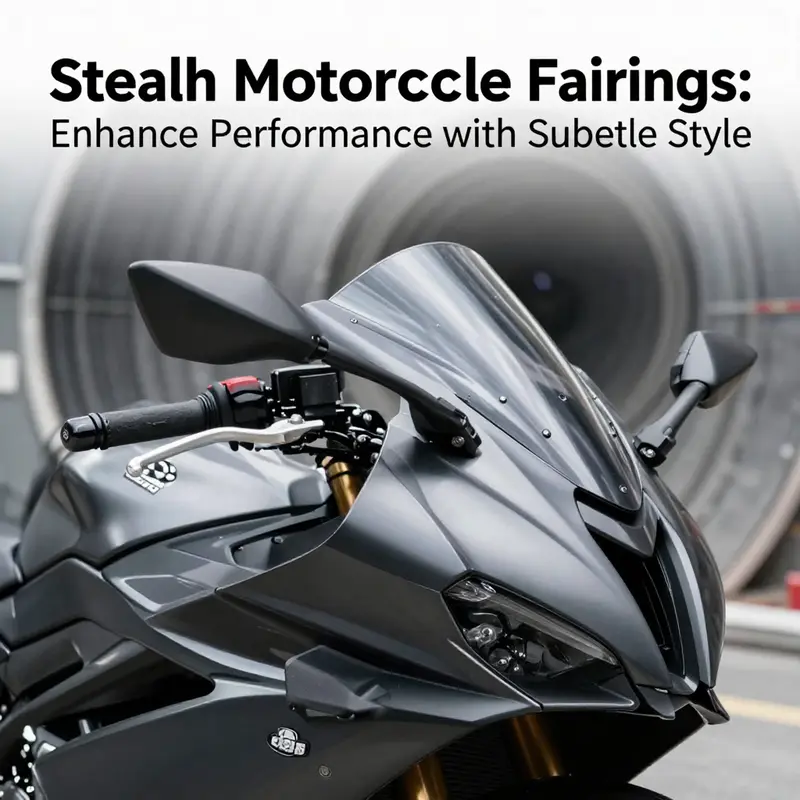
Stealth motorcycle fairings represent more than a visual shift toward a minimal, matte aesthetic. They’re a deliberate recalibration of a bike’s front-end geometry to maximize efficiency, control, and rider comfort without sacrificing the core protective role of traditional fairings. The quiet, unembellished lines—often finished in dark tones that absorb rather than reflect light—conceal a well-tuned aerodynamic philosophy. The goal is not to shout speed but to slice through air with a clean, orderly flow. When the rider leans into a corner or opens the throttle, the unseen advantages begin to emerge: smoother airflow that reduces energy losses, steadier handling in gusty conditions, and a shielded cockpit that keeps the rider focused on the road ahead rather than on microbursts of wind.
Aerodynamic efficiency sits at the heart of the performance argument for stealth fairings. By streamlining the bike’s frontal area and minimizing abrupt transitions, these fairings guide air more predictably around the machine. The result is a measurable reduction in drag and, by extension, lower wind resistance at highway speeds. That isn’t merely theoretical. In real-world testing—where wind tunnels, computational fluid dynamics simulations, and track validation converge—the shape of a stealth fairing is optimized to balance frontal lift, drag coefficients, and the reattachment of turbulent flow behind the windscreen. The practical payoff appears in better fuel economy during long rides and consistently higher effective speeds on open stretches, where every small gain compounds over miles and hours. Riders reporting less helmet buffeting and a more planted front end point to the same aerodynamic logic in action: a smoother, more coherent interaction between rider, wind, and machine.
The choice of materials amplifies these aerodynamic and handling benefits without inflating weight. Stealth fairings frequently blend high-impact polycarbonate with fiberglass-reinforced composites or, in premium applications, carbon fiber. The polycarbonate option offers affordability and impact resistance, while the composite approach provides an excellent strength-to-weight ratio, enabling a stiffer, more stable shell that resists deformation under buffeting and debris strikes. Carbon fiber, often dry carbon cured with autoclave techniques, pushes weight savings even further and yields a response that feels skittish and precise in corners and straights alike. The lighter the front-end mass, the less inertia the rider must overcome to change direction or settle the chassis into a streamline. This translates into quicker acceleration response from low to mid revs and a more confident transition into corner exits, especially when paired with a balanced center of gravity that stealth designs tend to emphasize through their compact profiles.
Wind protection, while sometimes framed as a comfort feature, also plays a direct role in performance. Full fairings, of course, deliver the most protection against wind pressure, rain, and cold, but stealth variants are often chosen for their refined compromise. Half or quarter fairings provide a disciplined shield that reduces wind fatigue without completely masking the engine’s character or the bike’s mechanical honesty. For sport riders, this is a tactical advantage: they preserve air separation that helps keep the rider’s helmet within a stable buffer zone, which reduces fatigue and maintains a sharper line of sight. For touring and long-distance commuters, the same design intent translates into sustained comfort, allowing riders to maintain steady tempos on intercity routes and open highways alike. The result is a more consistent power delivery and a steadier throttle hand when conditions shift, something that an overly aggressive shield can sometimes compromise. The stealth approach, with its emphasis on controlled exposure, keeps the rider connected to the bike’s mechanical heartbeat while preserving the aerodynamic gains.
Compatibility and fitment are not afterthoughts in the stealth fairing equation. These parts come in full, half, and quarter configurations to accommodate a broad spectrum of makes and models. A critical practical detail is tolerancing; modern stealth fairings are commonly manufactured to tight dimensions, with dimensional accuracy within ±0.5 millimeters for ABS variants. Attention to UV-stabilized coatings ensures the matte or dark finishes endure through sun exposure, rain, and repeated cleaning without yellowing or fading. The installation process, while straightforward for experienced hands, benefits from precise mounting points and factory-like fitment. In a market where aftermarket offerings compete with OEM equivalents, the assurance of compatibility matters as much as the performance gains themselves. Riders often choose a configuration that aligns with their riding style: sport-focused riders lean toward full fairings that sculpt the aerodynamic profile most aggressively, while long-distance riders may gravitate toward half or quarter setups that preserve engine heat management and a tactile sense of the bike’s raw temperament.
The broader ecosystem surrounding stealth fairings also informs their performance narrative. Sourcing from established manufacturing hubs offers a spectrum of technical options—ranging from budget-conscious ABS to premium composites—so builders can tailor a fairing package to the bike’s goals and the rider’s expectations. The choice is rarely purely cosmetic; it reflects a strategy to optimize handling, weight distribution, and the machine’s audible and tactile feedback. A well-chosen stealth fairing, mounted with care, becomes part of the bike’s aerodynamic chassis, contributing to a more cohesive feel at highway velocity and a more confident dynamic response when the road grades dip or rise. This is not about hiding the bike’s identity but about refining its performance signature—quiet, efficient, and precise.
For riders who value a subdued, aggressive presence on the road, the stealth look provides a psychological edge as well. The minimal branding and restrained graphics draw attention away from the machine’s exterior and redirect it toward the rider’s posture, line, and throttle discipline. The aesthetic aligns with a performance-first mindset: speed is earned through efficiency, weight management, and careful integration of components rather than through decorative flourishes. As with any significant fairing upgrade, the payoff lies in an integrated system where geometry, materials, finishing, and mounting accuracy work in concert. The rider experiences not a single breakthrough but a cascade of improvements—wind calm, improved cornering stability, smoother acceleration, and a cockpit that remains readable even at high speeds. In this light, stealth fairings become a practical philosophy as much as a design choice: a disciplined emphasis on performance parity between rider intent and machine response.
For those who want to explore a tailored option without committing to a full Fairing overhaul, the market offers accessible pathways to compatibility and customization. The modular ethos of stealth styling means a rider can mix and match configurations to suit a bike’s personality and the rider’s route profile. In this context, it is also important to verify material integrity and fitment before purchase, especially when sourcing from suppliers that emphasize OEM-compliant replacements or custom upgrades. The careful collector of performance data—drag coefficients, stability metrics, and rider feedback—will find that stealth fairings contribute meaningfully to the machine’s overall efficiency and numeric performance without compromising the bike’s inherent character. For readers who want to explore compatible options, the Honda fairings collection provides a useful reference point for how manufacturers approach fit, finish, and longevity across a range of models, with a focus on dimensional alignment and protective performance. Honda fairings collection offers a sense of how a well-engineered stealth approach translates across different platforms while maintaining the essence of the bike’s design language.
As with any advanced aftermarket modification, the performance narrative benefits from a grounded technical baseline. The broader literature on fairing materials and performance, including manufacturer technical resources, helps validate the pragmatic claims about aerodynamics, weight savings, and protection. External research highlights the ongoing dialogue between design aesthetics and engineering rigor, underscoring that stealth fairings are part of a strategic approach to riding dynamics rather than a cosmetic impulse. For readers seeking additional context, refer to technical documentation that discusses material grades, durability, and performance metrics. External resource: https://www.honda.com/technical-resources/motorcycle-fairing-materials. The conversation around stealth fairings thus sits at the intersection of airflow theory, material science, and the rider’s experiential truth on the road, weaving together science, craft, and perception in a way that keeps the motorcycle’s purpose unmistakably clear: to move through air with intention, weather the ride with composure, and deliver control that feels almost intuitive as speed and stability synchronize in the rider’s hands.
Shaping Silence on Two Wheels: Market Currents, Materials, and the Rise of Stealth Fairings

Stealth motorcycle fairings emerge not just as a visual style, but as a disciplined approach to a rider’s entire experience. The term carries a sense of quiet efficiency, where the aim is to strip away visual clutter without sacrificing protection or comfort. The silhouette of a stealth fairing is low and focused, with dark, matte finishes that reduce glare and emphasize form over branding. Yet this minimalism carries a practical purpose. When the wind speaks loudly, a rider pays in fatigue and distraction. A well-tuned, stealth-inspired fairing can tame that wind, smoothing the ride so long hours in the saddle feel more like cruise than endurance test. The result is a riding environment that feels both intimate and purposeful, where every contour serves a function, from airflow management to protection of vital components and electrical systems.
Market signals over the past few years point to a robust appetite for these components. The global nose fairings market, a key proxy for the niche, was valued at approximately 487.6 million dollars in 2021 and is projected to climb to 634.4 million by the end of 2025. Those figures align with a broader upswing in the powersports sector, which researchers anticipate growing from about 43 billion dollars in 2026 to almost 59 billion by 2031, a compound annual growth rate near 6.5 percent. In other words, riders are not just looking for better wind protection; they are seeking smarter, lighter, more efficient solutions that fit a broader push toward touring and sport-touring models. Within that landscape, stealth designs are positioned to capture both the significance of efficiency and the appeal of a restrained, aggressive presence on the road.
Design innovation in this realm has matured beyond mere shell work. Consider the latest generation of touring fairings on a leading bike of the current era. The new batwing-like fairing embodies a shift toward holistic vehicle design, where the fairing is not a cosmetic shell but a performance component. It features all-LED signature lighting and refined paint and graphics that communicate a premium aesthetic while prioritizing aerodynamics. The integration goes further: the fairing is designed to accommodate a ride-tuned suspension and a high-contrast digital display, creating a cockpit environment where visibility, access to information, and wind management are harmonized. Tests—through wind tunnels and computational fluid dynamics—have demonstrated measurable reductions in helmet buffeting and overall drag. In some scenarios, helmet buffeting can be reduced by significant margins, which translates into calmer, quieter rides and less fatigue after long hours in the wind.
This convergence of aesthetics and engineering signals a broader philosophy. Stealth fairings are no longer seen simply as protective shells; they are essential components of performance, comfort, and rider experience. The emphasis is on minimizing drag without compromising wind protection or weather sealing. A carefully sculpted profile can extend the rider’s comfort window on long journeys by smoothing the flow around elbows, knees, and shoulders, while also protecting instrument clusters and electrical systems from rain and debris. The practical gains—improved fuel efficiency, steadier handling in crosswinds, and reduced wind noise—support a more confident, composed riding posture. Even form factors, such as full, half, or quarter fairings, are chosen to align with the rider’s typical seating position and the bike’s aerodynamics, ensuring compatibility with existing chassis geometry rather than forcing a one-size-fits-all solution.
From a materials perspective, the range mirrors the diversity of riding styles and budgets. Injection-molded ABS remains a widely adopted baseline because it delivers durability and cost-effectiveness in mass production. Yet premium options have become increasingly common in higher-end builds. Dry carbon fiber, especially when autoclave-cured, offers a compelling blend of stiffness and lightness. In practice, manufacturers and serious enthusiasts alike select carbon fiber not only for its weight savings but for the crisp, high-tech finish it provides—an attribute that resonates with the stealth ethos of understated performance. The choice of material is also tied to long-term resilience. UV-stabilized coatings help prevent yellowing and preserve the dark, muted appearance that characterizes stealth aesthetics. In a market where customization and durability are prized, it is common to see a layered approach: a robust ABS core with strategic carbon fiber reinforcements in high-load zones, all covered by weather-resistant, UV-stable coatings. These decisions affect not only aesthetics but the fairing’s resistance to heat cycling, impact, and road debris.
The supply chain behind stealth fairings has evolved in parallel with those design choices. A growing number of suppliers operate from hubs in Asia, with Guangzhou and Shenzhen standing out as centers of activity. These locations support a spectrum of production—ranging from OEM-compliant replacements to customized aftermarket upgrades. The shift toward lighter, more resistant materials has driven longer-term sourcing musts: precise tolerances, consistent resin systems, and the ability to rapidly prototype and iterate new shapes. Dimensional accuracy has become a routine specification, often quoted within plus or minus 0.5 millimeters for ABS parts, which helps guarantee a clean fit on a broad catalog of bikes and model years. The supply chain also emphasizes durability in coatings and finishes, ensuring matte or low-sheen surfaces maintain their stealthy appearance under sun, rain, and highway exposure. For riders who are balancing cost with performance, this means choices that feel premium without tipping into the realm of fragile, high-maintenance fiber layups.
Compatibility remains a central concern for stealth-minded buyers. The modern market offers a spectrum of fitment options—from full fairings that enshroud the bike’s silhouette to more modest half or quarter configurations. The decision rests on how a rider values aerodynamics versus tactile access to the bike’s instruments, radiator shields, and wiring harnesses. A robust stealth fairing strategy considers ease of installation, serviceability, and the ability to source OEM-compliant replacements that preserve the bike’s original alignment and clearance. It is not merely about covering a frame; it is about preserving the integrity of the bike’s cooling, charging, and sensor systems while ensuring the screen, mirrors, and dash remain readable and functional in all weather. This is where modern design practice meets practical engineering: the fairing’s interior geometry is sculpted to avoid interference with rider controls and the bike’s existing hardware, while exterior contours are tuned to minimize buffeting and maximize a smooth perception of speed at a wide range of velocities.
Beyond the hardware, the stealth aesthetic itself has matured. Dark tones and restrained graphics deliver an aggressive, understated look that many riders find aligns with a performance mindset. The color and finish choices are not arbitrary; they work in concert with the fairing’s aerodynamics to reduce visual noise and emphasize movement. In touring and sport-touring applications, the design language supports long-haul comfort by limiting wind volume around the rider’s torso and head, lowering fatigue, and enabling more consistent throttle control and handling. In short, stealth fairings are becoming a holistic component of the motorcycle: they speak to efficiency, durability, and rider confidence as much as они do to a subdued visual identity.
The rise of electric propulsion adds another layer to the discussion. As powertrains shift toward electric architectures, weight and aerodynamics become even more critical for range and efficiency. Lightweight composites gain prominence, enabling longer rides between charges while preserving the protective qualities one expects from a fairing. The push toward modular, adaptable shapes also supports a broader ecosystem of upgrades and customizations. Riders who may have once prioritized bold graphics now look for the same aura of precision and control through materials, finish, and fit—again reinforcing the stealth ethos: a confident, unflashy presence that performs in the wind and protects the rider without shouting about it.
For readers seeking hands-on paths to explore compatible options, a practical route is to browse a curated fairings collection that emphasizes fitment versatility and durable finishes. This resource provides a sense of the ranges available and how different configurations can affect the overall balance of a bike’s profile. Fairings collection offers a glimpse into how suppliers segment products by model families, dimensions, and finish options, helping riders narrow choices without sacrificing the stealth discipline. The emphasis on accessible, OEM-style replacements also underscores an important point for enthusiasts: stealth doesn’t require abandoning the bike’s original character, but rather enhancing it with parts designed to integrate cleanly with existing geometry and systems.
The broader implications of these trends reach into the design community, manufacturing strategies, and consumer expectations. The market’s steady expansion signals both opportunity and responsibility: as fairings become more integrated with digital displays, ride-tuned suspensions, and sensor-driven features, their development requires rigorous testing, precise manufacturing, and transparent communication about fitment and durability. The result is a mature ecosystem where stealth fairings serve as both aesthetic statement and engineering backbone. They enable riders to pursue a more focused, connected, and comfortable riding experience, even as the bike slices through wind and weather with minimal disruption. This is the essence of stealth: not invisibility, but clarity of purpose—where every line, material choice, and surface finish reinforces a coherent intention to ride with greater control and less distraction.
External reference: for context on the wind-shielding performance and design rigor associated with modern touring fairings, see the official design overview linked in the research notes. It provides a useful benchmark for how aerodynamic efficiency and rider comfort are measured and validated in contemporary flagship configurations. https://www.harley-davidson.com/en_US/motorcycles/2026/street-glide.html
Final thoughts
Stealth motorcycle fairings represent a vital evolution in motorcycle bodywork, combining aerodynamic efficiency, rugged materials, and understated design, catering to the modern rider’s needs. This article highlighted the importance of understanding the aerodynamics, material choices, compatibility, performance enhancements, and market trends surrounding these fairings. For business owners, offering stealth fairings could not only enhance their product range but also meet the growing demand for high-performance, stylish motorcycle modifications. By investing in quality stealth fairings, businesses can provide customers with not just aesthetic appeal but a significant improvement in riding experience.