
Custom motorcycle fairings have become an essential aesthetic and aerodynamic upgrade for motorcycle owners, particularly among the Harley-Davidson and Honda communities. Tracey Motorcycle Fairings stands out in this market, providing enthusiasts with 3/4 fairings that not only enhance the look of bikes but also serve functional purposes. In the following chapters, we will delve into the design and functionality of Tracey fairings, analyze the material quality and durability, explore their market position, review customer feedback, and look ahead to future trends in the custom fairing market. Each element offers insights crucial for business owners considering investing in or promoting these products.
Shaping Speed and Style: The Integrated Language of 3/4 Motorcycle Fairings
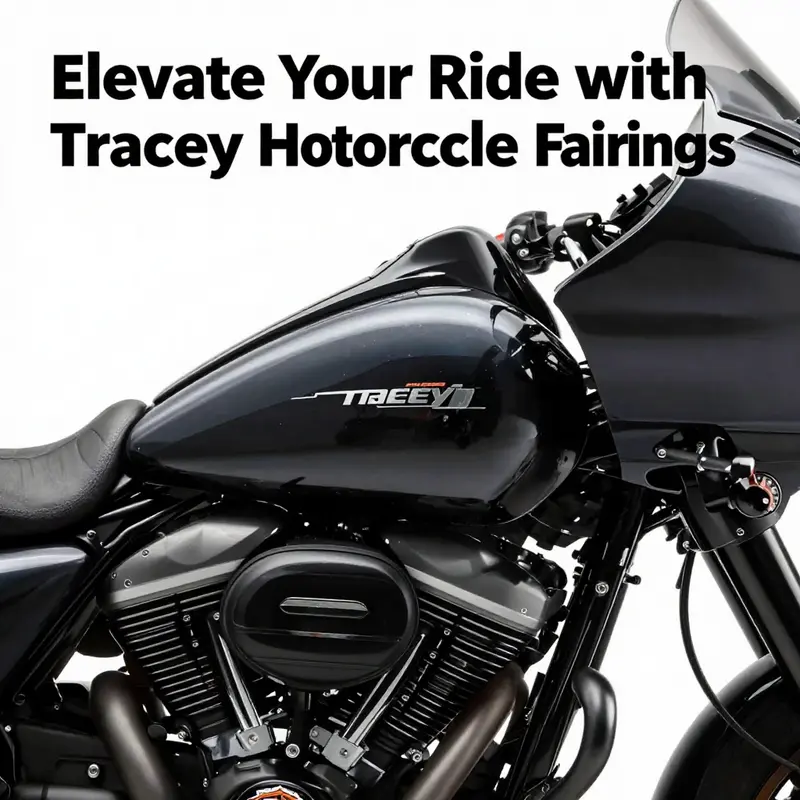
Riding a motorcycle with a 3/4 fairing is to enter a conversation between air, geometry, and the rider’s own sense of identity on the road. The chapter of fairings we’re exploring does not rest on a single stylistic gesture; it rests on a set of decisions that affect how a bike slices wind, how quiet the cockpit feels at highway speed, and how the machine communicates its character to onlookers. In this sense, the modern 3/4 fairing is less a decorative shell and more an integrated system that blends aesthetics with function. Its upper sweep—the portion that rises from the handlebars and folds over the rider’s line of sight—serves as both a shield and a stage. It channels air around the rider’s torso, reduces turbulent flow that would otherwise buffet the chest and arms, and reduces the stray wind that can steal rider focus during long miles. Yet it does so while shaping the machine’s silhouette with a blade-like precision that signals motion even when the bike is at a standstill. The result is a look that feels both aggressive and refined, a visual cue that the rider has chosen speed not as a momentary thrill but as a continuous relationship with the road.
The fascination with this form begins with the fundamental aim of fairings: to optimize aerodynamics, not merely to cover machinery. In practical terms, the 3/4 fairing covers the upper front end, offering wind protection where it matters most while leaving the lower portions exposed to the elements and to the eye. This selective coverage preserves a naked-bike aesthetic that many riders cherish—the sense that you can see the machine’s mechanical backbone while still enjoying some wind tunnel-informed protection. The design challenge lies in balancing these competing priorities. A fairing must direct airflow to minimize drag and lift, reduce engine heat and noise to comfortable levels, and maintain rider visibility without creating blind spots or cockpit turbulence. It must also accommodate headlights, mirrors, and instrumentation in a way that preserves the rider’s line of sight and control. In other words, the 3/4 fairing is a compact wind tunnel, a work of optical geometry, and a personal statement all in one.
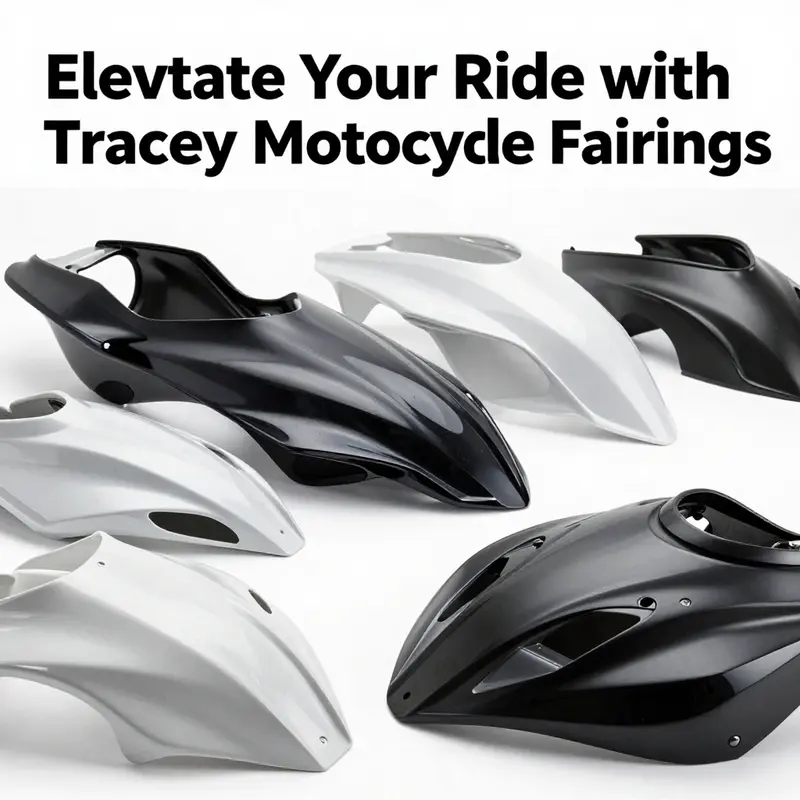
Material choices play a critical role in delivering this balance. Engineering plastics and composite materials, chosen for their stiffness-to-weight ratio and impact resistance, have become standard bearers in fairing construction. The lightness of these materials contributes to the bike’s overall efficiency and handling, while their rigidity helps to maintain a precise fit across miles of riding and a spectrum of weather conditions. The finish quality—whether a matte, glossy, or mirrored surface—also tells a story. A high-quality finish not only enhances visual appeal but signals durability and attention to detail. Riders often report that the perceived quality of the finish can surpass product images, a testament to how reflective lighting and curvature interact with real-world surfaces. The interplay between light and line is part of the fairing’s choreography: a smooth reflective sweep can exaggerate speed, even when the bike is stationary, while a sharp, blade-like edge can emphasize the machine’s athletic intent.
The precision of fit is another pillar in this narrative. A 3/4 fairing promises a snug envelope around the upper front, and that promise is fulfilled most effectively when the mounting points align with the frame and triple clamps with minimal gaps. Precision fit matters not just for appearance but for aerodynamics and ride quality. Gaps can create unwanted wake, increase vibration, and quicken the wear of fasteners. In this light, the engineering discipline behind fairings resembles that of a well-tailored suit: the suit must follow the body’s lines without pinching, bunching, or revealing the rider’s nerves. Experienced riders know that a fairing’s fit can influence acoustic comfort—reducing noise and wind hiss—while also contributing to stability in gusty conditions.
The aesthetic dimension—the visual language that 3/4 fairings articulate—has always stood beside function. The design vocabulary often features mirrored finishes and shaving-edge profiles that deliver a modern, aggressive presence on the road. These visual cues are not merely for show; they work with the bike’s geometry to reflect the rider’s intention. A fairing that reads as both elegant and threatening can change how a machine is perceived in traffic, how it handles, and even how it is perceived by potential admirers. The visual logic of these designs is a careful negotiation between symmetry, negative space, and the crisp edges that read as aerodynamic pedigree. When the eye travels along a fairing’s silhouette, the line should feel uninterrupted—like a single, unbroken breath of air. This is not accidental; it is the result of deliberate curvature, a disciplined choice of line weight, and an understanding of how light travels over a curvature.
Riders who seek a balance of style and practicality often gravitate toward a 3/4 configuration because it preserves a minimalist, sporty statement while still delivering meaningful wind protection. The approach appeals to those who want a bike that looks ready to race but remains adaptable for longer journeys. In this sense, the fairing becomes a personal instrument of storytelling on the road. It says, without words, that the rider values both the thrill of speed and the discipline of control. The choice of a 3/4 fairing can signal a preference for a machine whose naked chassis is visible to passersby yet remains comfortable to pilot through long stretches of highway.
The conversation around brand and model names often sparks questions about heritage and engineering lineage. While there is interest in specific manufacturers and their distinctive profiles, the literature does not settle on a single, universal blueprint for Tracy-style fairings. The broader discussion centers on how different makers interpret the same functional demands: how to keep the rider shielded without losing the sense of exposure that characterizes naked and semi-naked setups. In this space, a catalog-like approach to fairings emerges as a practical reference point. For readers curious about how a collection can frame options and compatibility, a catalog page that aggregates fairing options—without asserting a singular identity—offers a useful map of the design landscape. For those who wish to see how a catalog approaches fitment and aesthetics in a concrete way, a linked collection page provides a tangible reference point: a collection page that presents multiple fairing variants across different models. This navigational tool helps readers understand how designers and manufacturers translate aerodynamic theory into concrete components that fit a range of frames and riding styles. It is not a definitive guide to any one brand, but it does illuminate how form follows function in the real world. In this sense, the fairing story is less about the badge on the tank and more about the geometry at the front end where air first meets the rider.
For readers who want a concrete example of how a broad catalog approach translates into real-world options, a curated catalog page can serve as a practical reference point. Within such a catalog, the exploration of fairings—whether for a sportbike, a naked bike, or a tourer—often centers on how a particular upper profile interacts with the bike’s overall proportions. The rider’s posture, the windscreen height, and the fairing’s edge treatment all converge to produce a coordinated silhouette that feels purposeful, even when the motorcycle is at rest. That sense of purpose is what makes the 3/4 fairing a compelling choice for riders who value performance without surrendering personality.
To bridge theory and practice, consider the idea that a fairing is not the end of a story but a chapter in a longer narrative about a bike’s engagement with wind. The upper fairing’s extent, curvature, and finish all influence how the air is managed around the rider’s torso and head, shaping both comfort and control. The lower portion’s visibility preserves the mechanical honesty of the machine, allowing the observer to appreciate the chassis, engine, and components that drive performance. In the end, the conversation about 3/4 fairings is a meditation on how to balance lightness and stiffness, surface quality and functional detail, and the rider’s evolving relationship with speed.
For readers who want a practical touchpoint as they explore this design language, a glance at a Honda fairings collection can illustrate how different OEM and aftermarket pieces address similar aerodynamic and ergonomic goals. The collection page serves as a reference point to see how designers translate physics into form, while maintaining a coherent brand identity across an entire range of models. Honda fairings collection provides a useful contrast to understand how a catalog can organize options that preserve function while offering distinctive styling cues.
External resources that illuminate the broader engineering realities behind these design decisions can deepen understanding. A touring or sport-touring fairing profile often embodies a combination of wind protection, noise reduction, and rider comfort that aligns with advanced rider-assistance strategies and stability considerations. While specific product names are not the focus here, the underlying principles remain consistent: a fairing should contribute to a quieter, cleaner, and more controlled ride, enabling the rider to stay focused on the road ahead instead of battling wind or fatigue. The literature and official guidance underscore that a well-designed fairing is a tool for safety, efficiency, and enjoyment, not merely an ornament.
In sum, the modern 3/4 fairing stands at the intersection of aerodynamic science and personal expression. It is a compact system that channels air with intent, frames a rider’s silhouette with clarity, and reinforces a bike’s character with finishing details that reward close inspection. Its appeal lies not in novelty alone but in the quiet confidence of design that speaks to riders who value both performance and presence on the road. The conversation continues as manufacturers refine materials, hone tolerances, and push the edges of what a front-end shell can achieve when married to a rider’s needs, ambitions, and sense of motion.
null
null
Riding the Edge: Market Positioning for Premium 3/4 Motorcycle Fairings in a Competitive Landscape
The space between a naked bike’s bare, exposed essence and a full, weather-sealing shell is where the most compelling design stories unfold. A premium 3/4 motorcycle fairing sits squarely in that gap. It is not a full-body cocoon, nor is it mere cosmetic armor; it is a deliberate statement about balance—between aero efficiency and rider sensation, between aggressive styling and practical wind management, between a bike’s natural lines and a rider’s appetite for individuality. In this space, market positioning hinges on a few core capabilities: fit and finish that persuade riders to upgrade from stock, a design language that feels contemporary yet timeless, and a construction approach that respects both performance and practicality. When a brand anchors itself in these pillars, the 3/4 fairing becomes more than an accessory; it becomes a defining part of a rider’s everyday experience on the road, a way to sharpen character without surrendering the bike’s open, agile feel.
A successful positioning narrative starts with a clear sense of target riders. The 3/4 fairing category most often appeals to riders who want a fast, sculpted silhouette without fully enclosing the machine. They may be returning to riding after a dry spell, or they may be core enthusiasts who appreciate the way a crafted upper enclosure can toll wind and weather while preserving the lower bike’s airiness and maneuverability. Within that broad audience, a brand can finely tune its appeal by emphasizing three intersecting needs. First, the aesthetic proposition: sharp, blade-like edges, clean lines, and in some cases mirrored or high-chrome finishes that catch the eye in sunlight or urban dusk. Second, the functional promise: improved wind deflection for the head and shoulders, reduced turbulence around the cockpit, and a level of weather protection that makes longer rides more comfortable without turning the bike into a bulky, all-enclosing machine. Third, the practical reality of ownership: precise fit, durable finishes, and a installation experience that feels engineered rather than improvised.
This triad—style, performance, and reliability—frames how a brand courts its audience. In recent years, riders have shown they are willing to invest in design-forward parts when those parts deliver measurable benefits on the road. The best 3/4 fairings emerge from partnerships among designers, fabricators, and engineers who understand curvature, mounting geometry, and the realities of vibration and heat. It is not enough to render a visually compelling shell; the component must align with the bike’s existing architecture. The upper fairing must integrate with the headstock, the mounting points must stay secure under stress, and the finish must resist chipping and fading through seasonal weather and regular cleaning. Customers repeatedly note that when a fairing looks and feels like a factory-level piece, the perceived value climbs sharply. They remark that the product sometimes looks even better in real life than in the images, a sign that the process—polish, paint, and edge-work—translates into trust and satisfaction.
A brand seeking to own or grow this niche can carve out a distinctive market position by leaning into both execution and storytelling. On the execution side, precision fit is not optional; it is the foundation of trust. When a rider can bolt a fairing onto a bike with minimal tools and without additional brackets or shims, the payoff is immediate: less time in the garage, more time on the road, and a confidence that the product will withstand the rigors of daily riding and occasional track days alike. The finish matters as well. A multi-step painting process with layered clear coats, UV protection, and a choice of gloss or matte surfaces gives the rider real options to match or contrast with the bike’s colorway. The more a brand can demonstrate durability—through testing, warranty coverage, and honest product storytelling—the more it earns credibility in a market crowded with alternatives that promise much and deliver less.
Beyond fit and finish, design language becomes a critical differentiator. The most compelling offerings in this category present a visual signature that is unmistakably contemporary yet adaptable across a range of bikes and styles. Mirrored finishes, where offered, deliver a striking visual cue that catches the eye from any street corner or parking lot. Blade-like edges and angular sculpting communicate speed and precision even when the bike is standing still. These cues speak to a broader social aspiration: the rider who wants to project a modern, kinetic image while preserving the bike’s essential character. It is important, however, to balance drama with practicality. Bold styling should not compromise aerodynamics or ease of use. A fairing that looks fast but traps heat or complicates maintenance undermines the value proposition and erodes trust. Hence, the most enduring market positions combine bold design with real-world engineering, ensuring riders feel a tangible upgrade rather than a cosmetic upgrade.
Materials and production choices are another axis of positioning. The category often hinges on whether a brand can deliver a respectful blend of weight, stiffness, and cost. Carbon fiber accents or overlays can elevate perceived value and performance, but there is a trade-off with price and repairability. Composite materials such as fiberglass or reinforced acrylics can offer a compelling balance of lightness and impact resistance, particularly when paired with robust mounting hardware and precise tolerances. A finish that remains pristine after repeated washings and road debris exposure reinforces the sense that the product is engineered to last. A well-positioned brand may also emphasize modularity—upper shells that can be swapped or re-skinned with different finishes or graphics—allowing riders to refresh the look without a full replacement. The ability to customize through color options, finish textures, or edge treatments creates a pathway for ongoing engagement and repeat purchases, which is essential in a market where style tends to evolve with the rider’s personal story.
Pricing strategy must reflect the dual realities of premium engineering and aspirational design. The category sits in a space where riders are prepared to invest for better aesthetics and functional gains, yet they still evaluate value against the broader ecosystem of aftermarket components. A direct-to-consumer approach can help optimize price-to-performance ratios by reducing middleman costs and enabling more transparent measurement of fitment data and warranty terms. Bundling options—such as mounting hardware, selection of finishes, and optional protective coatings—can also improve perceived value. Transparent communication about fitment coverage, return policies, and installation guidance builds confidence. In practice, this means presenting clear fitment charts, model-year correlations, and real-world installation notes that help a rider assess compatibility before purchase. When a brand pairs a compelling design language with a straightforward ownership experience, it can justify a premium without alienating price-conscious riders who still crave quality and individuality.
Distribution and after-sales support round out the market positioning narrative. A brand differentiated by fit, finish, and ease of installation will seek to minimize friction for the buyer. Comprehensive installation guides, accessible customer support, and a robust warranty program become living proof points that the product is durable and reliable. The channel strategy might emphasize a strong online storefront paired with selective partnerships with independent service centers or aftermarket shops that can provide hands-on guidance during the first installation. By thinking through the rider’s end-to-end journey—from unboxing to first ride to ongoing maintenance—a brand can set expectations accurately and reduce the risk of buyer remorse. In turn, customers become ambassadors, sharing real-world stories of how the fairing altered their riding experience. This social proof is a potent accelerant for growth, turning a well-made product into a recommended choice within riding communities.
Market signals in this category point toward a continued appetite for a design-forward product that does not sacrifice usability. Riders increasingly favor aesthetics that can be customized to reflect personal taste while still preserving the bike’s basic form. The three-quarters approach satisfies that demand by offering a visually dramatic addition above the wheelline, without completely enveloping the rider or the machine. The popularity of different finishes—gloss, matte, or reflective—suggests that buyers are seeking a way to align the bike’s outer shell with their own identity. The success stories in this space often hinge on credible, demonstrated fit and a finish that remains vibrant under sun and rain alike. When a brand speaks honestly about the engineering work behind the curves and edges, it gains credibility and trust—a vital currency in an aftermarket landscape where first impressions are quickly tested by performance on the road.
Taken together, these positioning elements form a coherent narrative for a premium 3/4 fairing brand. The strategy is not about replacing the bike’s stock silhouette but about enhancing the rider’s connection to their machine. It is about delivering a package that feels thoughtful from the first unbox to the first long ride and every mile thereafter. The right combination of precise fit, striking yet balanced design, durable finishes, and an accessible ownership experience can elevate a product from mere aftermarket add-on to a trusted extension of the rider’s identity. In that light, the category’s vitality rests less on chasing trends and more on sustaining a consistent promise: that a well-made 3/4 fairing can sharpen the on-road persona of a motorcycle while preserving the bike’s inherent agility and spirit. The market rewards brands that honor this balance with clear communication, reliable performance, and a design language that continues to look relevant as riding culture evolves. As long as riders seek distinctiveness without surrendering practicality, the premium 3/4 fairing will remain a live, evolving statement in the broader world of motorcycling.
null
null
Riding the Winds of Change: How High-Performance, Customizable Fairings Shape the Future of Motorcycle Aesthetics and Performance
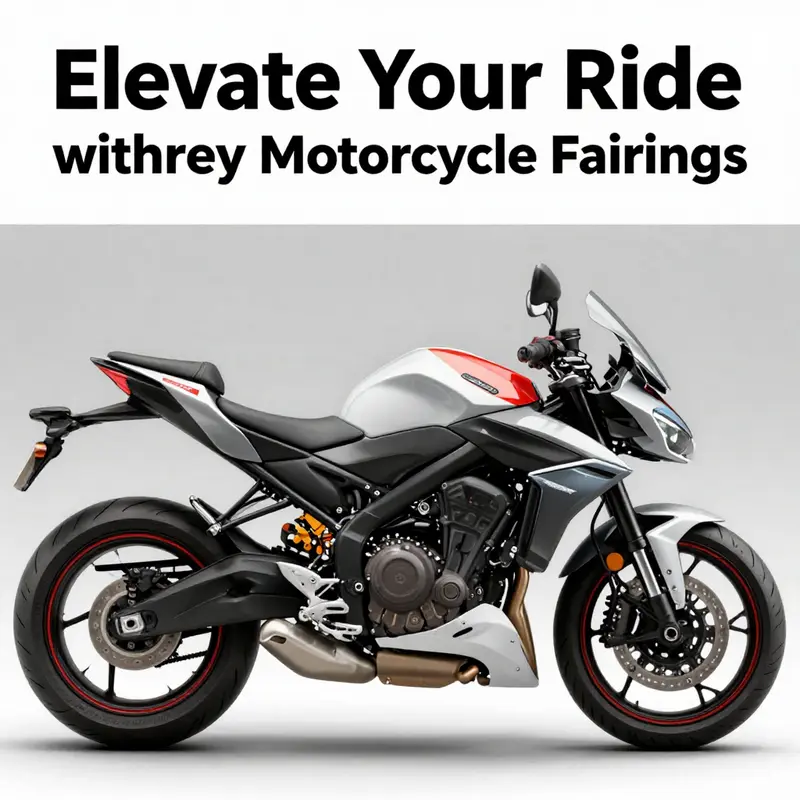
Fairings have long stood at the crossroads of form and function, balancing aerodynamic efficiency with the rider’s desire for a distinctive road persona. In the evolving landscape of aftermarket components, the fairing is no longer a simple shell that tethers a bike’s silhouette to engine protection. It has become a living interface between rider, machine, and road, capable of shaping comfort, handling, and personal expression in equal measure. This chapter surveys the trajectory of the fairing market, with a focus on high-performance, customizable kits that align with the broader shifts in the industry. While specific brand trajectories may vary, the underlying forces driving adoption—airflow management, material resilience, precise fitment, and expressive design—are broadly shared across makers and riders alike. The result is a market that is not just expanding in size but also deepening in capability, where a rider can select a kit that enhances long-distance comfort without sacrificing the lean, aggressive stance that defines contemporary sport and naked bikes.
One of the clearest currents running through the present and near-future market is the demand for high-performance fairings. Riders increasingly seek aerodynamic forms that reduce wind fatigue on long tours and highway stretches, allowing them to stay fresh and focused after hours in the saddle. Well-engineered fairings do more than redirect air; they shield sensitive components from road spray and debris, preserve equipment longevity, and maintain consistent engine temperatures by directing flow in a controlled manner. In practice, this means fairing shapes that anticipate rider posture, accommodate accessories, and seamlessly blend with the bike’s existing lines. The trend toward performance is not solely about speed; it is about rider endurance and confidence. When a fairing design minimizes turbulence around the rider’s torso and arms, fatigue drifts away with the miles, and the experience of riding becomes a more sustainable, enjoyable pursuit. Even in configurations that intentionally leave the lower portion exposed—such as 3/4 fairings that cap the upper front end—the sense of speed and aggression remains intact, while wind deflection and weather protection still offer meaningful benefits. The best examples of this philosophy marry sharp, contemporary geometry with practical engineering that reduces drag without compromising ease of maintenance.
Market dynamics reinforce what riders are already noticing in their garages and on social channels. The global motorcycle fairing market stood at a substantial value in the mid-2020s and continues to grow at a double-digit pace, with North America identified as a particularly fertile ground for premium offerings and customization. A robust compound annual growth rate underscores how communities of riders are increasingly willing to invest in aesthetics that also deliver tangible performance gains. This momentum reflects a broader cultural shift in motorcycling: customization as a form of self-expression that aligns with a rider’s identity, comfort needs, and riding style. The market’s expansion is not merely about more options; it is about higher expectations for what those options can deliver. Consumers expect kits that fit precisely, install cleanly, and look as if they were conceived as an original component of the bike—whether the aim is a stealthy, monochrome race look or a vibrant, gallery-like surface that makes a statement on the street.
Material innovation sits at the core of this evolution. High-quality fairing kits traditionally rely on robust, impact-resistant ABS plastic or lightweight fiberglass. These materials have proven durable in everyday riding and responsive to the demands of aftermarket customization. ABS plastics offer a good balance of stiffness, impact resistance, and cost, while fiberglass supports lighter weights and tighter tolerances, which contribute to a more precise fit. The push toward longevity includes considerations of UV resistance to prevent yellowing and material degradation under prolonged sun exposure, a factor riders across climates must factor into long-term ownership. Beyond raw materials, the industry’s attention to fitment cannot be overstated. In the custom segment, a precise fit minimizes installation complications, reduces vibration-induced wear, and ensures the fairing operates harmoniously with the bike’s electrical, cooling, and steering dynamics. A kit that aligns perfectly with a specific model not only looks right but behaves well under the stresses of real-world riding, where wind pressure and road irregularities test every connection point. This emphasis on precise fitment also reduces post-purchase service frictions, contributing to higher satisfaction and repeat engagement from riders who value reliability as much as appearance.
Customization and personalization are the emotional engine of this market. Riders want surfaces that reflect their tastes, from bold, high-contrast color schemes to finish options that evoke a sense of speed, drama, or nostalgia. The market now accommodates a broad spectrum of finishes—gloss, matte, metallic markets, and textures that catch the light in dynamic ways—so that a kit can read as a piece of art from certain angles and as a practical, durable shell from others. The customization trend extends to graphic themes, allowing riders to explore motifs that range from abstract geometry to culture-driven prints, enabling a sense of individuality that factory options rarely capture. This shift toward personalization aligns with a larger cultural movement in motorcycling toward self-expression, where the bike becomes a personal canvas and the rider’s choices articulate identity as clearly as their riding style does. Compatibility remains essential, of course; manufacturers emphasize design-to-model precision because the best-looking finishes lose their impact if installability is awkward or if gaps and misalignments betray the rider’s eye.
The interplay of performance, protection, and aesthetics also informs how designers approach the visible proportions of modern bikes. For riders who opt for naked or sport-touring configurations, the 3/4 fairing approach offers a compelling balance: substantial upper-front protection and aero refinement without fully enclosing the bike. This design philosophy preserves a lean line, preserves the accessibility of controls and instrumentation, and preserves the tactile feel of the bike’s chassis. It also invites a higher degree of customization because the exposed lower areas can serve as a counterpoint to the upper fairing’s styling; a bold upper contour paired with a complementary lower silhouette creates a cohesive, dynamic presence on the road. In practice, manufacturers experiment with blade-like edges, mirrored or reflective finishes, and sculpted inward curves that emphasize speed even while the bike is stationary. Each choice in shape, texture, and color is calibrated to communicate a rider’s intent—whether it is aggression, refinement, or a playful defiance of convention.
Longer-term prospects for the market appear robust, driven by three converging forces. First, ongoing material optimization will continue to reduce weight while bolstering impact resistance and weather resistance. While ABS and fiberglass form the backbone today, there is steady interest in exploring lighter, more durable composites that maintain the precise tolerances required for flawless fitment. Second, the market’s growth trajectory is anchored not only in product variety but also in the breadth of rider demographics seeking premium upgrades. The rising appetite for customization in regions with high motorcycle ownership translates into a more expansive addressable market, ensuring continued demand for high-end, precisely engineered fairing solutions. Third, the overall shift toward personal expression will keep pushing designers to expand the palette of visual options and finish technologies. The result is a cycle in which better materials enable more ambitious designs, and more compelling designs demand higher-performance engineering to deliver a reliable, attractive end product.
For readers looking to innovate or outfit a bike in a way that balances protection, aerodynamics, and a personal aesthetic, the future lies in embracing a holistic design mindset. A successful kit will integrate aero-efficiency with model-specific precision, offer a curated spectrum of finishes and graphics, and present a clear pathway for installation that minimizes guesswork and downtime. In this ecosystem, a rider is not merely choosing a shell; they are selecting a co-engineered system that harmonizes the bike’s aerodynamics, weight distribution, and stylistic intent. The promise is a more comfortable ride with lower fatigue, a package that resists weather and debris, and a look that communicates who the rider is as they navigate urban canyons or open highways. As the market evolves, the lines between custom art and engineering discipline will blur further, yielding fairing kits that not only clamp onto a motorcycle but also elevate the entire riding experience.
External resources can provide practical guidance for riders and builders seeking durable, affordable options that still deliver standout performance and appearance. For broader context on accessible fairing kits and a curated selection of durable, affordable choices, see the external resource here: https://www.motorcyclefairingkits.com/top-10-best-fairing-kits/
Final thoughts
In summary, Tracey Motorcycle Fairings not only delivers aesthetically pleasing designs but also ensures durability and satisfaction among riders. As the market evolves, staying informed about these developments can be crucial. Business owners looking to enhance their offerings or understand consumer preferences in the custom fairing sector will find value in the insights discussed. Tracey continues to maintain a strong position while catering to diverse customer needs, making them a pertinent player in the motorcycle accessories landscape.