
The motorcycle fairings market in the UK is a dynamic landscape, influenced by various factors such as model compatibility, material choices, and local manufacturer services. For business owners, understanding the key models and design trends is vital in selecting the right fairings for their clientele. This article unfolds three crucial aspects of this industry: mainstream models and their design evolution, the different types and functionalities of fairings, and the selection of materials ensuring durability and appeal. Each section will provide valuable insights to help you make informed decisions in your business ventures.
Winged Futures on British Roads: Aerodynamics, Style, and the Mainstream Fairing Surge
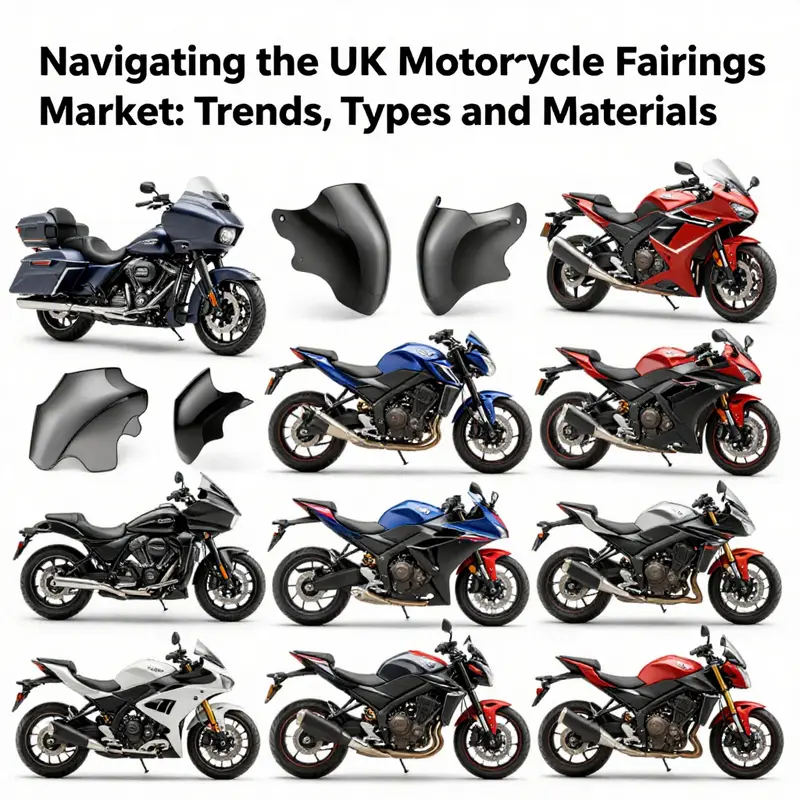
Across the United Kingdom, the market for motorcycle fairings is evolving to balance high-speed aerodynamics with everyday practicality.
Riders want shells that shape airflow, reduce drag, and improve stability at speed, while preserving the bike’s silhouette and color language. In mainstream models—street, sport, touring, and cruiser—the latest design language blends material science with consumer ergonomics. The result is fairings that are lighter, stronger, and more visually integrated, delivering tangible benefits in fuel efficiency, handling, and ride quality without compromising aesthetics.
Aerodynamics sits at the core of this evolution. Modern fairings are active contributors to propulsion and stability, guiding air around rider and engine to reduce drag and smooth crosswinds. The emphasis is on an integrated envelope rather than a patchwork of parts, with full fairings on sport and some touring bikes and well-sculpted half or quarter fairings on standard and naked models. Even urban riders benefit from lower wind fatigue, better mileage, and a steadier feel at speed.
Material and finish innovations underpin the shift. OEM plastics remain common, but advanced composites are rising in popularity in higher-volume configurations. Glass fiber reinforced plastics balance weight and cost, while carbon fiber laminates appear in performance lines for weight savings and stiffness. The broader UK and European supply chain supports regional processing centers that deliver UV-stable finishes and durable surface treatments, suitable for both stock and aftermarket fairings.
From a consumer perspective, installation ease, model compatibility, and reliable aftermarket support matter as much as performance benefits. The best mainstream fairings are those that integrate a coherent aerodynamic philosophy with a clear design language, allowing owners to tailor color schemes and graphics while maintaining structural integrity and fit.
For those seeking context, global analyses highlight a trend toward lighter, stiffer, and more thermally efficient solutions that still offer strong aesthetics. The mainstream transition is about delivering an integrated riding experience that aligns with how people live and ride in the UK, combining style with everyday practicality.
Shells of Speed: The Anatomy, Function, and Market Pulse of UK Motorcycle Fairings
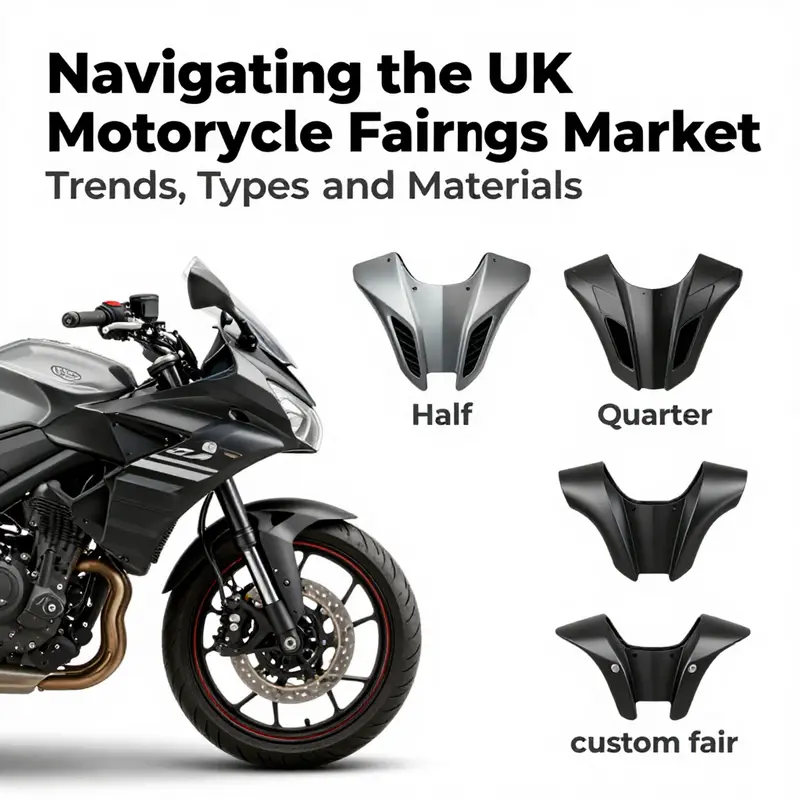
Across the United Kingdom, the motorcycle fairing is far more than a cosmetic shell. It is a carefully engineered element that shapes how a bike performs, protects, and presents itself to a rider who rides through rain, grit, and open road alike. This chapter unfolds a coherent view of how fairings function within the UK context, weaving together the physical realities of airflow and comfort with the local manufacturing, distribution, and regulatory environment that quietly governs what a rider actually fits onto the front end of a bike. The story begins with a practical truth: fairings are about balance. They must be light enough to improve handling and fuel efficiency, yet sturdy enough to survive the occasional collision with a stray stone or a curb at low speed. In Britain, where weather can swing from sunshine to squalls in a blink, the choice of materials becomes a matter of persistent reliability. ABS engineering plastics have long dominated the OEM and aftermarket landscape for their toughness, impact resistance, and predictable behavior under temperature swings. Yet the demand for lighter, UV-stable, and more durable alternatives has pushed the market toward advanced composites and reinforced polymers. The result is a spectrum of options, each calibrated for different riding realities: urban commuting that rewards ease of maintenance and repair, long-distance touring that benefits from integrated aerodynamics and weather protection, and sport or performance riding where every gram matters and wind management can influence acceleration and stability. The UK market reflects these needs with a surprisingly diverse ecosystem of suppliers. Manufacturers and aftermarket brands alike recognize that a fairing system is not a stand-alone part but an integrated piece of a motorcycle’s overall performance package. The fairing must align with the bike’s frame geometry, mounting points, headlight configuration, air intake routing, and even instrument placement. Compatibility becomes a non-negotiable criterion. Riders who push for affordable replacements often confront pattern-fit challenges: a fairing designed for one chassis may not align with another’s mounting tabs, windscreen angles, or fairing lowers. This is why the selection process in the UK market increasingly emphasizes precise fitment data, verified through both manufacturer-grade documentation and community-supported knowledge bases. As a result, the decision-making rhythm tends to be more deliberate than impulsive, especially for owners who rely on a single bike for daily commuting, weekend rides, and occasional track sessions. The modern UK rider does not view a fairing merely as a shield against wind; it is also a canvas of personal expression. The paint, finish, and graphic treatment tell a story about the rider’s priorities—efficiency, aggression, elegance, or retro charm. The appeal of a fully integrated, sculpted appearance often goes hand in hand with the aerodynamic efficiency that contemporary fairings promise. The visual impact is not just about color or gloss; it is about lines that guide the eye along the bike’s silhouette, suggesting speed even when the machine is stationary. The design language in the UK reflects a confluence of global influences and local taste. In practice, a good fairing system merges form and function: a smoothly contoured surface reduces drag and buffeting, while a robust junction with the headlight, mirrors, and cockpit ensures reliability in the field. The best designs also account for weather exposure—UV resistance, thermal expansion behavior, and resistance to rain and road salts—so that the surface remains free of cracking or dulling hue over years of use. Material choice, therefore, becomes a dialogue between weight, durability, and environmental resilience. ABS remains the workhorse for its excellent balance of stiffness, impact resistance, and cost. But the UK’s long, wet winters and bright summer days push a shift toward tougher variants or composites that resist UV degradation and chalking. When riders opt for aftermarket or custom fairings, the conversation often shifts to the trade-offs between weight and strength. A carbon-fiber or glass-fiber composite shell can lower weight and improve stiffness but may require careful handling and special paint and repair procedures. This is particularly true for riders who view their fairings as a platform for personalization—graphic schemes, color shifts, and decals that withstand frequent exposure to sun and rain. A key point for buyers concerns the installation journey itself. The UK market favors a thoughtful, stepwise approach to installation, one that respects both the rider’s safety and the bike’s electrical and control systems. For example, a fairing that changes the aerodynamics around the headstock can subtly alter steering feel. It might also affect the visibility or alignment of indicator lights if not designed with precision alignment in mind. In practice, this means that installation should be treated as a scheduled maintenance activity, not a rushed weekend project. For those who undertake batch procurement for workshops, the fabric of sourcing shifts beyond the individual bike. The market increasingly sees professional distributors who consolidate orders from several manufacturers, enabling better pricing and standardized warranty terms for UK-based workshops. The presence of local service networks matters deeply here. When a fairing is damaged or requires color refresh in Britain, a rider benefits from quick access to spares or repair services concentrated in regional hubs. This localised service network helps reduce downtime and ensures that repairs adhere to the bike’s original geometry and safety standards. It also helps reassure customers that a design’s aesthetic intent remains intact after years of exposure to salt, rain, and the occasional de-icer application. The fairing’s journey from a raw material sheet to a finished, ride-ready shell is a tale of supply chains and regulatory checks. The UK market sits at the confluence of global manufacturing and domestic compliance. A significant chunk of aftermarket fairings is produced abroad, leveraging cost efficiencies and advanced molding technologies. The UK importer network plays a pivotal role, acting as a quality filter and a compliance gateway, ensuring that the product you receive meets UK road-use standards, including appropriate fitment with lighting, reflectors, and crash protection considerations. In this landscape, the quality of the aesthetic finish matters. A fairing is a surface that must endure ultraviolet exposure and temperature fluctuations without coloration fading or cracking. Paint systems must resist chalking and maintain gloss over years of daily riding in variable weather. The careful selection of topcoats, clear layers, and protective laminates can be the difference between a shell that looks new after a few months and one that shows age within a season. The human factor cannot be ignored. A rider’s preferences for stance and riding position also influence fairing choices. A half fairing, which covers only the upper portion of the bike, can deliver a more aggressive look and quicker maintenance, while a full fairing may contribute to a calmer, more protected cockpit that reduces wind blast on long rides. These practical differences often align with the rider’s daily routines. A commuter in a crowded city benefits from the ease of entry and escape that a lighter, simpler shell provides. A touring rider, on the other hand, might prioritize tall wind protection and integrated storage or routing for cables and hoses, even if that adds weight. The market’s versatility is underpinned by a broad spectrum of materials. ABS remains a stalwart for its cost effectiveness and adaptability to a rapid production cycle. Polycarbonate blends with glass fibers can offer improved stiffness at a modest weight penalty. Carbon fiber composites, while more expensive, are appealing to riders who want the pinnacle of strength-to-weight ratio for performance bikes. Each material brings its own process requirements for repair and refinishing, which is why, in practice, a shop must have a clear service path for color matching, repair, and repainting that aligns with UK environmental and safety standards. The decision calculus thus expands from fitment compatibility to lifecycle performance, warranty coverage, and the availability of local repair partners who understand how a shell interacts with a bike’s electrical harnessing, frame attachments, and fairing stays. Beyond the technicalities, the UK’s fairing market is also a canvas for personal storytelling. The bike becomes a rolling exhibit of the rider’s preferences: prefers clean lines and understated colorways, or bold, graphic-driven visuals that turn heads at traffic lights and on the highway. The design language translates into a local fashion sense as much as it does into aerodynamics. The practical element—protection from rain and debris—remains front and center in daily use, but it coexists with a studio-like attention to surface quality and finish that makes a fairing a talking point even when the bike is stationary. For those who seek model-specific fitment, the reality is that not every shell will align perfectly with every chassis variant. This reinforces the importance of verifying compatibility before purchase or installation and underscores the value of reputable suppliers who publish precise fitment data and test results. In practice, that means riders and shops alike increasingly rely on documentation, straight-through return policies, and, where possible, hands-on compatibility checks, such as test-fits with common mounting points in a workshop setting. The market’s maturity is clear in the way it handles maintenance and color updates. A fairing’s lifespan is no longer measured only in how long the resin holds up under impact but in how gracefully the surface ages. UV-stable finishes and anti-yellowing clear coats now play a pivotal role in preserving the visual integrity of a shell that spends countless hours under a British sun or a rain-soaked sky. The interplay between aesthetics and aerodynamics is a sophisticated dance. A well-designed fairing reduces drag not merely as a theoretical concept but as a tangible improvement in fuel efficiency and engine cooling, particularly on longer rides that press the engine into higher RPMs and sustained throttle use. At a broader level, fairings contribute to the rider’s safety by shaping the airflow around the rider’s torso and arms. They reduce buffeting, which can impair visibility and control, and help maintain a stable wind pressure around the cockpit. In the UK, with its variable climate and road surfaces, this stability matters more than ever. The value proposition for responsibly sourced fairings, whether OEM, aftermarket, or custom, lies in aligning with the rider’s expectations for durability, serviceability, and a long-term aesthetic that can be refreshed without replacing the entire shell. This is where the market’s reliance on robust supplier networks, and on the practical knowledge of installation specialists, becomes vital. For those exploring the journey of fairings in the UK, a practical path emerges. Start with clear objectives: do you want maximum weather protection for daily commuting, or a leaner, sportier shell for weekend rides and occasional track days? Then evaluate compatibility through the bike’s model family, checking mounting points, windscreen dimensions, and headlight geometry. Consider the climate and the typical riding conditions you face, and choose a material that promises endurance in those scenarios. If you plan to modify or customize, factor in color matching and repair compatibility into the exit strategy—how easy will it be to repair chips, cracks, or sun-damaged areas? Finally, look for a supplier that provides transparent documentation, easy access to spare parts, and clear guidance on maintenance and repair. The UK market is increasingly structured to support this kind of informed choice, with distributors and workshop networks that can advise on long-term ownership rather than short-term savings. As a closing reflection, the fairing’s value in the UK rests on its ability to transcend being a simple protective shell. It is a responsive interface between rider and machine, translating speed into form and weather into resilience. The chapter’s thread runs through the practicalities of material selection, the realities of fitment and maintenance, the realities of local service networks, and the aesthetic ambitions that riders carry into each ride. It is a reminder that, in this market, a fairing is not a one-size-fits-all accessory but a carefully chosen component that, when selected with care, can elevate the daily ride into a more comfortable, more confident, and more personal journey. For riders who want to explore model-specific fitment and aftermarket options without losing sight of these core priorities, a broader catalog such as the Yamaha fairings collection can serve as a useful reference point for understanding how different shells align with similar chassis philosophies. Yamaha fairings can illuminate common patterns in design and mounting logic, enabling a more informed comparison across brands and models. External guidance on regulatory compliance for vehicle components, including fairings, adds another layer of assurance. In the UK, compliance standards touch on lighting visibility, structural integrity, and general safety commitments that help ensure that a replacement shell does not compromise rider protection or other road-use requirements. The official guidelines and regulatory framework provide a grounded baseline for evaluating aftermarket pieces and remind buyers that every choice has to harmonize with the road-use rules governing vehicle construction and safety. External resource: https://www.gov.uk/government/publications/vehicle-type-approval-and-compliance
Shaped by Winds: Material Choice and Enduring Durability in UK Motorcycle Fairings

The journey of choosing a fairing in the United Kingdom begins with wind, road texture, and the unpredictable weather that sharpens every rider’s eye for protection, weight, and long-term reliability. In this landscape, the fairing is more than a shell. It is an aerodynamic partner that must balance the demands of daily urban legs, longer cross-country trips, and occasional laps around a track with equal grace. The UK market reflects a blend of mass production and bespoke preference, where comfort, fuel economy, and the ability to withstand damp winters and bright summers all ride side by side with the aesthetics of a bike. When riders consider material selection and durability, they are not merely picking a surface finish; they are negotiating a set of trade-offs that will shape handling, riding comfort, and maintenance costs for years to come. The core choices—what a fairing is made from, how it behaves under stress, and how it ages under sun and rain—determine how well a motorcycle can perform its function without sacrificing the rider’s confidence in the machine’s integrity.
The spectrum of fairing types remains wide, but in practice it often narrows to two broad paths: complete, integrated enclosures and leaner, more modular front sections. Full fairings are favored on dedicated sport and sport-touring machines for their superior wind protection and reduced drag. They create a smooth aerodynamic profile that limits buffeting at speed and helps stabilize the motorcycle in crosswinds. Half fairings, by contrast, are popular among naked bikes and standard setups, where the rider seeks protection with fewer impediments to weight balance and steering feel. Quarter fairings—often chosen for striking looks rather than protection—serve the aesthetic end of the spectrum, raising the visual impact while keeping weight and cost within modest bounds. Finally, the rise of custom or aftermarket fairings reflects a cultural impulse toward personalization as a form of performance tuning. For riders who value a unique silhouette or a tailored aerodynamic footprint, these options allow a precise alignment between the bike’s handling envelope and the rider’s preferences, albeit often at higher material and fabrication costs.
In the UK, material choice remains the principal lever shaping durability and performance. ABS plastic remains the workhorse of the mass market, prized for its balance of resistance, weight, and affordability. Its impact resistance makes it well suited to the knocks and bumps of city riding, while its lightness supports nimble handling in congested streets. With proper coating and paint, ABS can resist weathering and UV exposure reasonably well, preserving color and gloss through the typical British cycle of rain, sun, and occasional salt spray. Yet ABS is not a one-size-fits-all solution. The very lightness that makes it economical also means it can be more susceptible to deformation under high-energy impacts or sustained heat exposure, and its long-term performance hinges on quality finishes and the integrity of the protective coatings.
Fiberglass presents another pragmatic option, especially in scenarios where a rider seeks a balance between stiffness and weight without entering the premium cost tier. Fiberglass can deliver enhanced structural rigidity compared with basic ABS, particularly in larger fairing shells where long, sweeping curves demand strength to resist warping and cracking. The trade-off is weight and manufacturing cost. In a market that prizes agility and responsiveness, fiberglass fairings require robust resin systems and careful lay-up to avoid surface imperfections that could trap moisture or lead to delamination after a few seasons of use exposed to damp conditions. The structural reliability of fiberglass often makes it a practical choice for mid-range or custom builds where riders want a more substantial, durable shell without venturing into the most expensive materials.
Advanced composites—carbon fiber and related systems—occupy a smaller, more selective corner of the market. They are deployed where weight savings translate into visible performance benefits, such as in racing-inspired builds or premium, limited-run models. Carbon fiber’s unmatched strength-to-weight ratio can yield sharper handling, quicker throttle response, and improved fuel efficiency by shaving mass from the front end. However, the high material cost, the complexity of lay-up, and the specialized processing required for consistent quality keep carbon fiber as a niche choice in the UK’s broader street and touring segments. For most riders, the appeal lies not in absolute lightness alone but in predictable durability under normal riding stresses, long‑term resistance to ultraviolet light, and the feasibility of maintenance with reasonable costs.
The choice among these materials is not only about mechanical properties. It is also about how each material ages under the climate and road conditions typical for Britain. The damp, sometimes salty atmosphere of winter months, coupled with summer sun in some regions, pushes manufacturers to emphasize weather resistance, UV stability, and colorfast finishes. In practice, this means coatings and paints must perform beyond mere gloss. They should cling to the substrate through temperature swings, rain, road salt, and the occasional stone strike. Designers and engineers look for coatings that resist microcracking, yellowing, and chalking while maintaining an aesthetic that satisfies riders who want their bikes to look as good after several years as they did on day one. This is not merely cosmetic; a dull, faded finish can mask underlying micro-damage and create an early sense of wear that erodes rider confidence.
With those material realities in view, the durability story extends into the testing regime that backs consumer assurance. In the UK and across Europe, standards bodies and manufacturers align on a set of expectations that govern crash resistance, environmental impact, and long-term structural integrity. The British Standards Institution sets out guidelines that cover the safety criteria for body components, including fairings used on public roads. This framework ensures that parts perform under realistic conditions—impact simulations, temperature extremes, and prolonged sun exposure—before they reach the market or the replaceable-parts shelf. For riders, this translates into the peace of mind that the plastic or composite shell will behave as expected when confronted with a sudden impact, or when cruising through a long summer day and through autumn’s mist. It also fosters a market in which suppliers must demonstrate durability through repeatable testing, not merely through attractive visuals or stinting claims about toughness.
The UK market’s demand for durability is not isolated from global supply chains. While the most visible fairings on mass-market bikes are manufactured in high-volume facilities around the world, the UK’s distributors and dealers increasingly depend on an intercontinental mesh of suppliers. In many instances, the post-market ecosystem has grown to integrate materials and components produced in East Asia, with established processes for resin systems, reinforcement fabrics, and UV-stable pigments that meet or exceed international standards. Guangdong and Zhejiang, for example, are known for their efficient polymer processing and a mature supply chain that can deliver lightweight, weather-resistant fairings to European distributors. The practical effect of this supply chain is that UK riders can access well-priced, durable fairings that are compatible with a wide range of models, while still demanding high-quality finishes and robust fitment.
Compatibility remains a central concern in the buying process. The ideal fairing is not simply one that looks right; it is one that fits the frame and aligns with mounting points, venting channels, and the rider’s cockpit ergonomics. The UK wind and weather profile amplifies the importance of a precise fit. A fairing that seals well around the belly of the bike reduces drag and improves stability in gusty conditions, while a snug fit around the headlamp and instrument cluster minimizes noise and buffeting. In practice, riders and dealers emphasize the importance of verifying compatibility with the specific model year and trim level. Even seemingly identical models can differ in mounting hardware, fuel-tiller clearances, and radiator shape. This is a pragmatic discipline that keeps maintenance costs predictable and helps ensure that the chosen fairing delivers long-term value rather than cosmetic appeal alone.
Beyond the raw materials and the fit, the ethical and practical dimensions of sourcing come into play. For many riders, the decision to adopt a particular fairing type or material is entangled with considerations of cost efficiency, reliability, and after-sales support. In a market that often favors local service and quick turnaround, it is essential to weigh the advantages of factory-backed parts against the flexibility and customization options offered by aftermarket suppliers. The reality is that an efficient, well-supported supply chain can significantly influence the total cost of ownership. In practice, buyers may benefit from establishing relationships with professional sourcing guides or distributors who can help navigate the options, confirm compatibility, and verify that the selected material and finish meet the desired performance expectations while staying within budget.
Riders who value a balanced approach—combining aesthetics, performance, and durability—often favor ABS-based fairings for many standard and sport-touring configurations. ABS offers a practical combination of impact resistance, weight, and cost that suits daily commuting and weekend rides alike. For those who demand a stronger structure or desire a more substantial presence on the road, fiberglass can deliver added rigidity, provided the shell has been properly reinforced and finished. In the rarefied space of high-performance or bespoke builds, advanced composites may deliver meaningful gains in weight reduction and stiffness, but the benefits must be weighed against higher material costs, more complex repair procedures, and the potential scarcity of service options in a regional setting. The overarching aim remains consistent: to provide a fairing system that is predictable, repairable, and able to maintain its protective function through years of use under British conditions.
For the curious reader who wants to explore practical procurement options that bridge cost and quality, there is a helpful resource that discusses how to source fairings from leading Chinese manufacturers. It offers a structured approach to evaluating suppliers, understanding lead times, and validating compatibility across models. The guide is particularly informative for buyers who are planning batch purchases or looking to optimize a regional distributor network. As a starting point, readers can consult the Supplier Guide to China Motorcycle Fairings, which presents a clear framework for assessing materials, finishes, and fitment. This kind of sourcing insight complements the more technical materials discussion by addressing the realities of supply chains and the responsibilities that come with commercial-scale buying. For riders, this means you can pursue a practical, cost-aware path to upgrading a bike’s silhouette and aerodynamic profile without compromising safety, longevity, or performance.
In the end, the decision about which fairing to choose in the UK is a negotiation among several intertwined factors: the model’s geometry, the rider’s expectations for comfort and speed, the climate’s demands on weather resistance, and the lifecycle cost driven by maintenance and repainting needs. The materials themselves—ABS, fiberglass, or advanced composites—each bring distinct advantages and caveats, and the durability story is inseparable from the standards and testing practices that underpin modern motorcycle components. The market rewards riders who bring a clear sense of use case to their choice. A rider who spends long hours on motorways and dual carriageways will prize a shell with excellent weather sealing and low buffeting, while a commuter navigating unpredictable urban streets may prioritize impact resistance and easy repair. A weekend track day enthusiast might seek the weight advantages and stiffness of composites, but only if they are prepared to manage the higher cost and the specialized maintenance those materials require.
The broader takeaway is that UK riders are not simply buying a shell; they are selecting a durable shield that defines the relationship between rider and machine. A fairing that endures the British climate, integrates smoothly with the bike’s frame, and remains visually compelling as it ages earns a longer-term return on investment. The ongoing emphasis on durability is reflected in both the engineering choices and the regulatory expectations that govern the market. As production methods evolve and as post-market suppliers broaden the array of compatible shapes and finishes, the path to a well-matched, durable fairing becomes clearer for riders who invest time in understanding materials, testing, and fitment. In this sense, the UK’s fairing culture is a sophisticated dialogue between design intuition, material science, and practical maintenance—an ongoing conversation conducted on roads that demand both resilience and refinement. As riders move through this dialogue, the chorus of voices—from OEM engineers to aftermarket fabricators and from workshop technicians to end users—coalesces into a shared standard: a fairing that does not merely cover a bike but enhances its character and resilience against the elements.
For those who want to deepen their understanding of standards and material specifications relevant to UK motorcycle components, including fairings, the British Standards Institution provides a comprehensive framework that guides safety, environmental impact, and performance criteria. This body of knowledge helps ensure that fairings behave as expected under real-world conditions and that riders can rely on consistent quality across different brands and supply channels. As the market continues to evolve, this regulatory backbone remains a crucial reference point for manufacturers, distributors, and enthusiasts alike, anchoring advancements in material science to tangible, ride-ready reliability. The interplay between standards and practice is what ultimately supports a durable, aesthetically satisfying, and safe riding experience across the United Kingdom. If you wish to explore these standards in detail, the official publications offer a structured and authoritative overview of the requirements that shape motorcycle components from the fairing to the underpinnings of safety testing.
External参考资料与延伸阅读:进一步了解材料标准和应用,可访问英国标准机构的相关出版物,查看 motor vehicle body components 的具体指南与测试要求。https://www.bsigroup.com/en-GB/standards/; 同时,若需要进一步的采购与供应链策略参考,可查阅行业指南中的综合资源与案例分析。
Final thoughts
In summary, navigating the UK motorcycle fairings market requires a solid understanding of current trends, types, and material choices. Emphasizing model compatibility and quality will not only satisfy customers but also enhance your business’s reputation. With an ever-evolving landscape, staying informed on these aspects is crucial for success in this competitive sector. Ensure you cater to diverse riding preferences by offering a range of fairings that appeal to both performance-oriented and aesthetically-focused riders.