
Universal motorcycle fairings serve as a practical and aesthetically pleasing solution for bike owners looking to enhance the performance and customization of their motorcycles. Unlike their Original Equipment Manufacturer (OEM) counterparts, universal fairings are designed with simplicity and adaptability in mind, providing riders a chance to combine personal style with enhanced aerodynamics and protection. This article will delve into the design and functionality of universal fairings, their compatibility and installation requirements, the materials that influence their durability, current market trends, and their profound impact on riding culture and motorcycle customization. Each chapter uncovers dimensions of universal fairings that collectively emphasize their importance in the biking community, equipping business owners with insights to cater to this evolving segment.
Adaptable Armor: The Design, Function, and Freedom of Universal Motorcycle Fairings
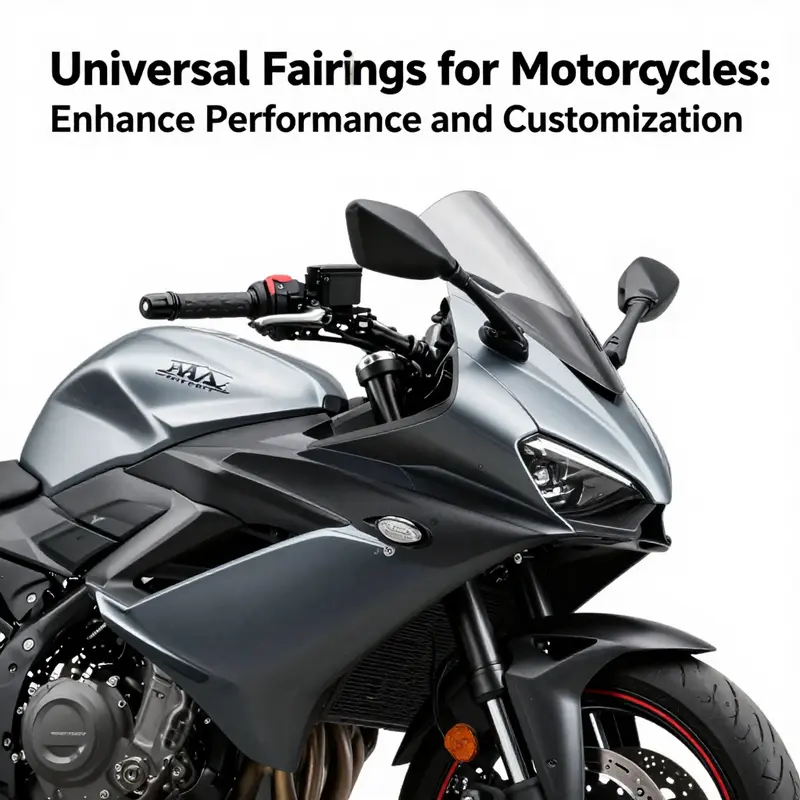
Universal fairings arrive not as a single product, but as a design philosophy that marries broad compatibility with practical performance. They are not sculpted for one model; they are made to move beyond model year and brand, embracing the geometry of many frames. For riders who chase a cleaner look, better wind management, or a shield from rain on mixed road trips, universal fairings promise a middle ground: close-to-OEM aerodynamics without the premium price tag of model-specific parts. In a market where customization often means costly fabrication, universal fairings broaden the accessibility of aerodynamic efficiency and rider comfort, inviting riders to rethink how much of a motorcycle’s appearance and performance can be tuned with a single, adaptable shell.
At the heart of their design is a mounting philosophy that rejects rigid, one-size-fits-all rigidity in favor of flexible, adjustable simplicity. The bracket system is built with versatility in mind, featuring slotted attachment points, adjustable arms, and multi-position hardware. This approach allows the fairing to hug a spectrum of frame geometries and handlebar configurations. By contrast, fixed brackets force compromises and often require custom fabrication or multiple SKUs to accommodate different bikes. In practice, this translates to a practical outcome: a single universal fairing can be aligned to a rider’s chosen stance, whether the bike is ridden upright on a cruiser or leaned into a sport-touring posture. The result is a smoother relationship between rider and wind, a harmony of geometry and airflow rather than a clash between incompatible parts.
The material choice reinforces that philosophy. Durable ABS plastic is the workhorse behind most universal fairings. It provides a robust shell that can resist impact without becoming heavy. ABS holds up well to weather exposure, tolerates minor repairs, and accepts surface finishes that help the shell blend with the bike’s lines. A lightweight yet sturdy shell is essential because the aerodynamic gains hinge on maintaining a stable silhouette at speed. If the fairing flexes, warps, or cracks under wind gusts, the very purpose of reducing drag and buffering the rider diminishes. The balance of strength, weight, and resilience in the material therefore underpins both performance and durability on long rides through changing weather and road conditions.
Functionally, universal fairings are designed to deliver multiple benefits that collectively enhance riding experience. The most prominent is aerodynamic drag reduction. By streamlining the air around the rider and the engine bay, the fairing helps to minimize turbulent wake and improve high-speed stability. This stability translates into tangible benefits: steadier steering feel at highway velocities and lower fuel consumption on extended trips. Because universal designs come in various sizes and contours, they can be matched to different riding styles—from a compact, streamlined profile intended for reduced buffeting to a grander, more expansive shield for touring comfort. The same shell can also shape the flow over the cockpit and undercarriage, influencing how heat and air circulate around hot components and the rider’s core.
Protection sits alongside aerodynamics as a core function. A well-fitted fairing acts as a windbreak for the torso and arms, while deflecting rain and road debris away from the rider’s chest and hands. This protection reduces the need for constant micro-adjustments to body position and helps maintain a comfortable posture during long days on the road. While the rider is the primary beneficiary, a fairing that channels air effectively also helps the passenger, reducing fatigue borne of wind pressure and buffeting. In practical terms, the right universal fairing can transform a mixed-road ride into a more predictable and less strenuous experience, enabling longer sessions before fatigue takes hold.
The design vocabulary of universal fairings encompasses several silhouettes, each suited to different riding philosophies. Full fairings maximize coverage and aerodynamic efficiency, offering the most protection but adding weight and cost. Semi-fairings cover only the front portion—typically the headlight, instruments, and upper fuel tank—providing moderate protection while preserving better engine access for maintenance and customization. Cowling-style fairings strike a balance between performance and practicality; they enhance aerodynamics without fully enclosing the bike, making them appealing for sport-touring and adventure motorcycles where access and versatility matter. Every option has its trade-offs, but the underlying logic remains consistent: a universal approach seeks to capture the aerodynamic and protective benefits of a purpose-built fairing while maintaining the flexibility needed to fit a range of bikes and rider needs.
Beyond the physical shell, the real-world value of universal fairings rests on attention to fitment and the integration with existing components. Compatibility decisions revolve around frame geometry, handlebar width and position, and the location of features such as headlights and windshields. A universal unit may include a built-in windshield option or be designed to accept aftermarket screens, but the decisive factor is how well the mounting system accommodates these variations. Riders must verify dimensions, clearance around forks and clamps, and potential interference with instrumentation or radiator outlets. The promise of a universal fairing is not a guarantee of a perfect fit for every model, but with careful measurement and alignment, the outcome can approach OEM-like airflow with far less adaptation work.
From a shopping perspective, the path to an effective universal fairing blends data with hands-on assessment. The best offerings provide clear fitment guidance, robust hardware, and straightforward installation instructions. Adjustable hardware is a boon, reducing the risk of misfit and simplifying the process of achieving a clean, stable mount. For the DIY-minded rider, the appeal is clear: a single shell that can be tuned to a motorcycle’s unique geometry, complemented by a set of straightforward modifications—such as repositioning a headlight or re-securing a windscreen—without requiring custom brackets or specialized fabrication. The broader point is empowerment: universal fairings enable riders to narrate their bike’s story through form and function, not just through model-specific parts.
To help readers connect with the expansive world of compatibility and aesthetics, consider how a rider might approach model-specific aesthetics within a universal framework. There is value in exploring different brand lines through adaptable hardware. For example, a rider curious about a particular brand’s lines can explore a Honda fairings collection to see how stock silhouettes can be augmented by flexible mounting and adjustable shells. This is not about replacing model-specific pieces, but about understanding how universal fitments can respect and echo factory design while offering personal customization. For a clearer view of how universal designs interface with various models, see a curated Honda fairings collection, which demonstrates how traditional lines can coexist with modern, adaptable mounting systems.
If you want to deepen your understanding of universal fairing specifications and installation details, a comprehensive guide offers thorough guidance on sizing, mounting strategies, and material choices. This resource helps readers translate the general principles described here into concrete decisions for their own bikes. It emphasizes that successful universal fairing installations rely on careful measurement, deliberate selection of hardware, and an appreciation for how wind, texture, and color interact with a bike’s overall silhouette. External discussions of design trade-offs also remind readers that universal fairings are as much about the rider’s comfort and the bike’s balance as they are about surface aesthetics.
As the conversation around universal fairings continues to evolve, look for modular, upgradeable approaches that keep pace with evolving frame geometries and rider expectations. The most compelling designs will remain those that balance flexibility with durability, ensuring that the arms and brackets hold their position under wind gusts and road shocks. Materials may advance toward lighter composites or reinforced polymers that maintain rigidity while shedding weight, further enhancing aerodynamic performance and ride quality. The end result remains clear: universal fairings offer a practical path to improved aerodynamics, weather protection, and customization freedom, without sacrificing the legibility and heritage of a bike’s original lines.
External resource: https://www.motorcyclefairings.com/universal-fairing-guide
From Fit to Finish: The Art and Science of Universal Motorcycle Fairings
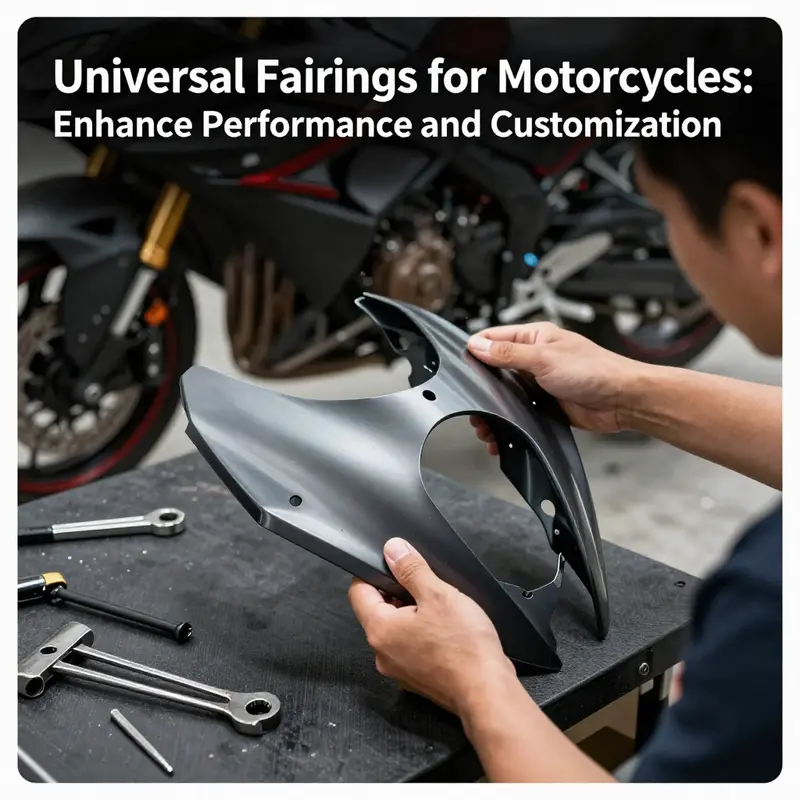
Universal motorcycle fairings promise something more than a simple aesthetic upgrade. They are built to fit a broad spectrum of frames using a standardized set of attachment points, mounting brackets, and sometimes adjustable gaps. That design philosophy gives riders a practical route to improved aerodynamics, reduced wind fatigue, and better weather protection without committing to a bike-specific OEM kit. The appeal is clear: one kit, many bikes, a shared philosophy of performance and value. Yet that same breadth of fitment creates questions about whether a given panel will align with a particular frame, handlebar arrangement, or windshield. The conversation between universal fit and personalized fit is not a tug-of-war but a careful negotiation among geometry, materials, and user skill. A well-chosen universal fairing can look and behave like a factory option on a diverse range of cruisers, sport-tours, and retro-styled machines, while a poor fit can turn a once-aero advantage into wind noise, rattles, and a tangle of wires. The key is to treat fitment as a system, not as a single measurement.
Fitment starts with measurement. The rider who wants to maximize the benefit of a universal kit should gather the actual frame width at the mounting points, the distance from the steering head to the forward edge of any existing windscreen, and the clearance around the headlight, forks, and radiator or engine cooling features present in the fairing. Manufacturers typically publish fitment guides that cross-check frame geometry, rake, trail, and bar width. A universal kit may cite compatibility with a broad family of models, not every exact year. To verify, measure the bike’s overall width across the triples or mounting frame, compare the fairing’s widest point with the space available under the handlebars, and confirm that the windshield height aligns with the rider’s seating position. If the fairing includes a headlight cutout, ensure the headlight pattern remains unobstructed and the wiring harness can reach the control module without modification. In practice, this process often means sketching a quick diagram, noting mounting hole locations, and testing fit on the bike before any drilling or trimming. Riders who ride with tall screens or tall handlebars will want to ensure the fairing’s windscreen cleaves cleanly into the existing silhouette rather than colliding with it. In some setups, you may discover that you can only achieve a partial alignment without modifying the bike’s frame, brackets, or fairing supports. That is not a failure of the kit; it is a reminder that universal is a spectrum, not a single perfect match.
Installation considerations: From a mechanical standpoint, installation can range from straightforward to intricate. Many universal kits include a set of mounting brackets and screws designed to clamp to common frame rails, but every machine uses a unique combination of fasteners, brackets, and fairing support points. On simpler front portions, installation can be a matter of dry-fitting, doubling back to mark holes, and then attaching with existing hardware. On larger, three-quarter or full fairings, you may encounter the need to trim upper edges, create new bracket points, or even suffer through minor alignment tasks to ensure consistent gaps along the sides. Some designs call for cutting or drilling into the fairing itself to align with the bike’s headlight assembly or turn signals. In other words, the installation is a multi-step process that rewards patience. A careful reader will review the supplied instructions in tandem with the bike’s service manual, identify any electrical routing issues around the headlight and instrument cluster, and plan a test-fit schedule that avoids stretches of bare metal becoming exposed to the elements. If the kit lacks specific hardware for your bike’s frame, you may be looking at third-party brackets or local fabrication, which can be a smart path for a truly customized fit but requires measured confidence and the right tools.
Materials and their impact: Materials chosen for universal fairings—polycarbonate, ABS, and fiberglass—determine how a kit behaves in the real world. Polycarbonate is prized for impact resistance and clarity, making it a natural choice for windshields and clear view panels. But it benefits from protective coatings because scratches show more easily, especially on long rides or in rough climates. ABS plastic is light and cost-effective; it holds up well in moderate UV exposure but can become brittle in direct sunlight for extended periods, depending on grade and thickness. Fiberglass offers stiffness and flat, easy-to-work-with panels, which lends itself to custom builds and rigid frame lines. However, fiberglass is heavier, and its fatigue characteristics can demand more careful mounting, vibration isolation, and sometimes more rigorous finishing work to keep joints sealed against water or road spray. Riders often balance these materials with how they plan to ride: a touring setup might favor polycarbonate shields for visibility and lightness, while a retro cruiser might lean into fiberglass for the sculpted look. Regardless of material, good edge finishing, appropriate sealing, and UV protection go a long way toward preserving fit and function across seasons. The expected lifespan of a fairing improves when attention is paid to the mounting hardware, thread engagement, and protective coatings on exposed surfaces that might otherwise degrade under sun, salt, and vibration.
Styles and use-cases: Universal fairings come in several broad styles that map to riding goals. Full fairings deliver maximum aerodynamic efficiency and weather protection, but they carry more weight and cost. Semi-fairings shield the rider from the oncoming air while leaving space for engine access, maintenance, and a lighter footprint. Cowling-style fairings push the boundary toward performance by shaping airflow around the front of the bike without fully enclosing it, often appealing to sport-touring and adventure bikes that must retain some degree of versatility. The choice among these forms is less about a single bike and more about the ride you want to craft: a long-haul traveler who wants predictable wind buffering with minimal fatigue, a city commuter who values compactness and ease of handling, or a style-focused builder who uses fairings as a major aesthetic statement. The adaptability of universal kits encourages experimentation—riders can mix and match windshields, side panels, and mounting brackets to produce a silhouette that echoes classic lines or a futuristic edge. It is that cross-pollination—the practical aerodynamics of a modern windscreen paired with the timeless shape of a retro cruiser—that often draws riders into universal fits as a gateway to customization rather than a final, fixed solution.
Buying considerations: Beyond fit, the purchasing decision hinges on a few practical tests. Look for clear fitment notes that map to a family of models with similar frame geometry, not a single year or trim. The listing should provide part dimensions, mounting hole spacing, and a recommended sequence for installation. Where possible, seek listings that offer a test-fit promise or a guarantee of compatibility; such assurances reduce the risk of the common mismatch between the fairing and the bike’s windscreen, headlight, or steering components. A generous return policy helps you swap a panel that simply does not align after a preliminary test-fit. For riders who want the broadest possibilities within a finite budget, the market tends to favor kits that include a complete mounting kit, weather seals, and a preassembled harness for lighting and indicators, which makes the transformation more seamless. It is also wise to compare shipping costs and delivery times, as many universal kits can arrive in modular pieces that require careful staging for a successful assembly.
Internal and external references: For those who want a road-map toward model-specific compatibility while maintaining the option to go universal, a well-curated catalog can illuminate paths through the maze. For riders exploring compatible options, the Honda fairings collection provides a solid starting point for evaluating fitment across a family of models; it is a helpful resource to understand how a universal approach can align with standard frame geometries and mounting philosophies. See the resource here: Honda fairings collection. This page can help you compare the key dimensions and mounting choices that recur across many bikes, and it may offer guidance on how to adapt universal components to particular handlebars and screens without sacrificing symmetry or function.
Practical approach to testing and finishing: When you have a kit in hand, the first work session should be a dry-fit. Clamp the fairing to the bike using the included brackets, then align the sides to ensure consistent gaps along the forks and the engine cover. A cautious approach to trimming involves removing material in small increments and checking for fit after each cut. If the bike uses a complex electrical setup, route the harnesses before final assembly, making sure there is no interference with the steering range or with the turning signals. The last steps should include sealing any joints against water intrusion and applying protective coatings to exposed edges. A well-finished job avoids gaps that catch wind and reduce the aerodynamic gains the fairing promises. It also preserves the bike’s aesthetics by keeping lines smooth and continuous from the fairing edge to the tank and seat area. While the work can be iterative, this is part of the value proposition of universal solutions: the chance to tailor your ride to personal taste while maintaining performance fundamentals. With patience, you can coax a universal kit into behaving like a purpose-built panel that complements the bike’s proportions rather than fighting them at every turn.
Closing reflection and external resource: Universal fairings represent a bridge between two worlds: OEM styling precision and the experimental ethos of customization. They are not a shortcut for every bike, but they are a practical tool for riders who want better airflow and weather protection without buying a model-specific kit. The right universal fairing respects the geometry of the bike, honors the rider’s seating position, and makes a visual statement that can echo decades of motorcycle design. For readers seeking broader perspectives on fit and pricing in the aftermarket landscape, a useful external resource can be consulted that collects comprehensive listings and user feedback for fairing kits, including universal-fit options. Motorcycle full fairings kits on eBay
The Material Armor of Universal Motorcycle Fairings: Durability, Design, and Real-World Performance
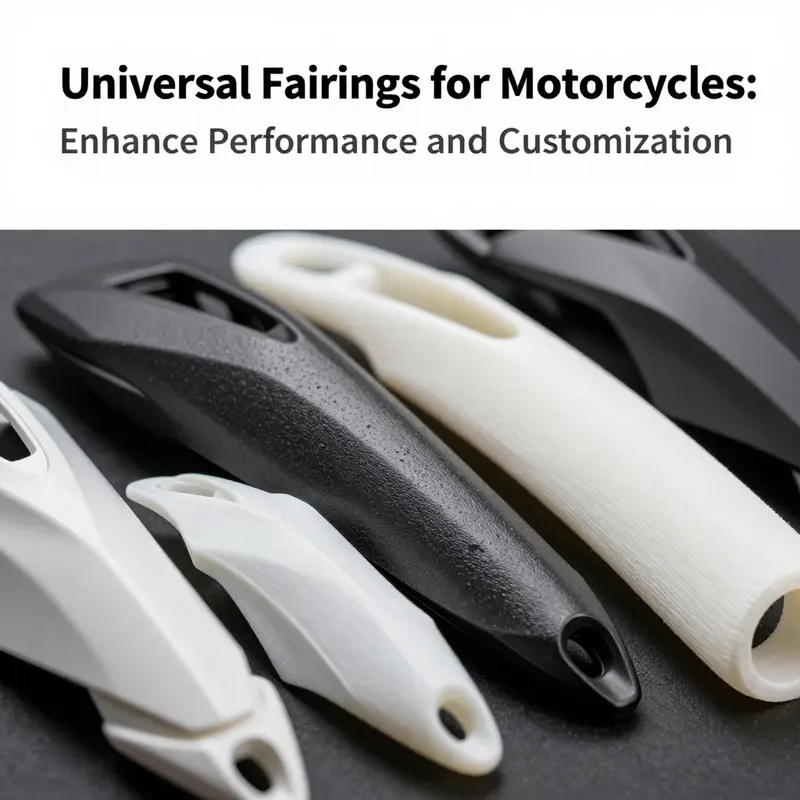
Material choice sits at the center of every universal motorcycle fairing’s promise and peril. It is not simply about a shell that looks the part; it is the primary line of defense against wind fatigue, weather exposure, and the daily realities of riding on imperfect roads. When choosing a universal fairing, fitment and price are important, but the material behind the shape determines how well the panel ages, resists impacts, and stands up to sun and heat. Three broad families dominate: fiberglass (GRP), ABS plastic, and fiberglass-reinforced plastics (FRP), with billet aluminum appearing in higher-end, precision-built kits. Each offers a different balance of stiffness, weight, impact resistance, and processability that affects wind management and installation.
Fiberglass, or GRP, can be sculpted into complex forms while remaining relatively stiff for its weight. In a universal context, GRP helps the fairing hold its shape against crosswinds, which matters for rider fatigue on long rides. Rigidity comes with a price: GRP is more brittle than some plastics and can crack from sharp impacts. A cracked panel can ruin aerodynamics, create sharp edges, or stress mounting points. Finishing GRP requires a gel coat that is polished for weather resistance, or paint adhesion will suffer. In practice, GRP fairings demand careful handling and mindful mounting where load paths converge.
ABS plastic is common in aftermarket fairings because it blends impact resistance with lightness and molding versatility. For riders seeking broad compatibility, ABS tolerates minor frame variances and reproduces complex curves well. High-quality ABS often uses thicker walls, improving dent resistance and service life. A good ABS fairing benefits from a durable paint finish that resists UV fade. When installed correctly, ABS panels offer a solid mix of weight, stiffness, and longevity.
FRP combines fiberglass reinforcement with a plastic matrix, yielding strength and the ability to mold sharper, more aggressive shapes than plain GRP. FRP performs well under dynamic loads and rough terrains; it resists fatigue with fiber reinforcement and resin networks. It often enables bolder geometry for universal applications without heavy weight penalties. The caveat is proper curing and finishing to avoid surface flaws that invite moisture ingress. When well fabricated and sealed, FRP can offer a durable, mid-weight option that pairs with good aerodynamics.
Billet aluminum sits at the premium end. In precision-fit kits, aluminum panels resist cracking and tolerate high heat, offering a premium hand feel in lean angles and gusty crosswinds. The trade-off is weight and cost: billet aluminum can be heavier and more expensive, so it’s less common where mass-market fit matters. When used strategically—brackets, guards, or trim—it can extend durability and improve perceived quality without dramatically impacting weight or price.
Beyond material families, fitment and mounting integrity matter as much as the material. A fairing must accommodate a range of frames and windshields. The quality of mounting hardware and joints often determines real-world durability more than the bare material. Cheap fitment can lead to misalignment, vibrations, and cracks at load-bearing points, shortening life. Finishing and surface protection also matter: ABS benefits from durable paint that resists UV, GRP and FRP require proper gel coats to prevent micro-cracks, and ongoing UV exposure calls for protective coatings and proper maintenance.
In practice, many riders favor a mixed-material approach: ABS for primary panels, GRP where gentler curvature suffices, FRP for stiffness in key areas, and selective billet components for critical load paths. The goal is to balance durability with weight and cost, while preserving ride feel.
For the reader, the lifecycle of a universal fairing is a conversation between form, function, and fault tolerance. The material choice informs how the panel resists denting, how the finish withstands sun and rain, and how easy it is to repair. Durability is an ongoing practice of inspection, upkeep, and timely replacement when signs of wear appear.
When choosing, evaluate compatibility: frame geometry, handlebar height, windshield presence, and headlight alignment. A well-chosen internal link to a broader catalog can help explore different silhouettes and mounting philosophies across brands and models. Exploring fairings from different brands can illustrate how shapes translate into universal compatibility, while material choice remains the ultimate long-term determinant.
For readers who want a concise guide, look for information on resin systems, fiber orientations, and protective finishes. This reinforces that the right material choice balances resilience with repairability for real-world riding. Avoid cheap \”one-size-fits-all\” options that compromise fit or safety; instead prioritize material quality, proper finishing, and robust mounting hardware. When these align, universal fairings can deliver aerodynamic efficiency, weather protection, and a durable ride—mile after mile.
For readers seeking a broader perspective on evaluating a fairing’s material credentials, look for guides that discuss UV resistance, weather sealing, resin hardness, and fabrication methods and how they impact long-term performance. This can help translate material labels into real-world expectations and maintenance routines.
Riding the Curve: Universal Motorcycle Fairings and the New Economics of Aerodynamics
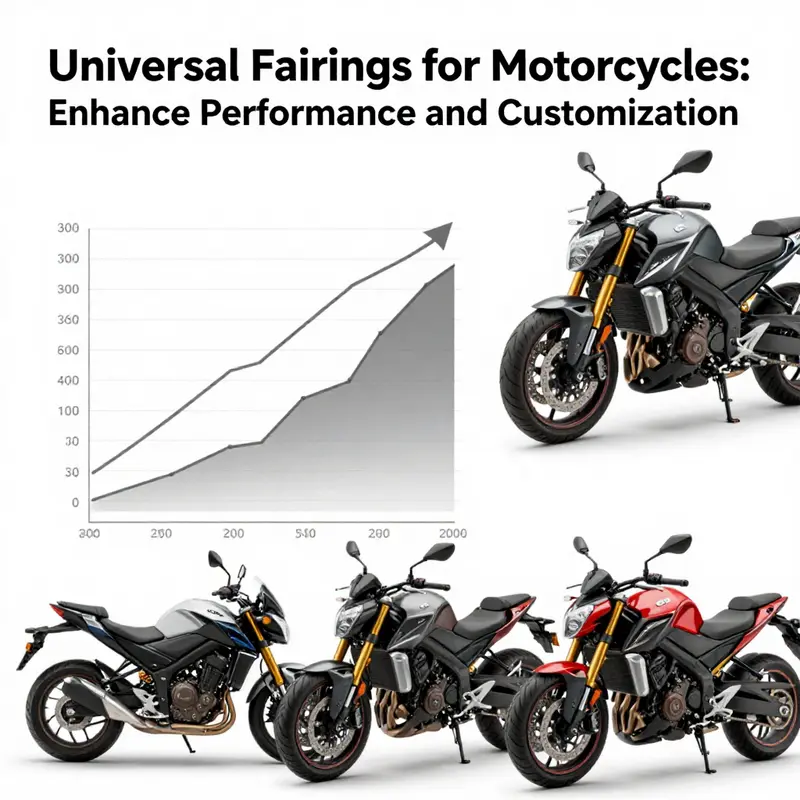
Universal motorcycle fairings sit at the intersection of performance engineering, consumer economics, and personal expression. They are not tied to a single model in a factory showroom; instead, they embrace a standardized philosophy that prioritizes fitment versatility, installability, and the ability to transform a bike’s silhouette and wind behavior with minimal friction. In the broader market, this approach shifts how riders approach customization while expanding the aerodynamic toolkit available to those who value efficiency and style. Market data show a growth trajectory: the global motorcycle fairing market was valued around USD 1.2 billion in 2024 and is forecast to grow at roughly 8 percent per year from 2026 to 2033, reaching about USD 2.3 billion by the end of the period. These figures reflect a broader shift toward accessible upgrades rather than boutique add-ons.
What makes universal fairings compelling goes beyond price. They bring aerodynamic efficiency, rider comfort, and the opportunity for personal expression. A well designed fairing can streamline airflow, reduce drag, and create a steadier wind envelope around the rider. Even modest drag reductions translate into smoother highway cruising and incremental fuel savings, aligning with sustainability trends and the economics of long distance riding.
Rider comfort is central. A fairing’s wind shield and overall shape can lessen fatigue during long rides. Universal kits are increasingly versatile, designed to accommodate different riding styles without major reconfigurations. This flexibility feeds a broader customization wave, allowing riders to reflect personal aesthetics while maintaining installation simplicity and serviceability.
From an engineering standpoint, universal fairings must balance protection with weight, and standardization with model specific realities. Touring and sport touring configurations benefit from front end treatments that channel air efficiently and shield riders from weather. The spectrum includes full fairings for maximum gains, semi fairings for a compromise, and cowling inspired options for performance gains without enclosure. The result is a modular toolkit that supports personalization while preserving aerodynamic baselines.
Economically, universal fairings reduce inventory complexity and up front expenditure for manufacturers, while offering a lower barrier to entry for consumers. Standardized fitment notes and guarantees help riders avoid misfits and dead ends. The net effect is a marketplace where parts are more interchangeable, potentially lowering total cost of ownership when you include installation time and maintenance.
For readers exploring install options, the key practical messages are to verify dimensions and mounting points, check if hardware is integrated, and understand how the fairing interacts with the windshield and headlight. Reviews and fitment guides play a crucial role, especially when catalogs span multiple makes and generations. In this context, the internet accelerates experimentation by enabling broad access to compatible options, but breadth also raises the risk of mismatch. Clear measurement data and reliable return policies are essential.
In summary, universal fairings are not a single solution but a modular approach that expands the aerodynamic and aesthetic toolkit for riders. They stand at the crossroads of efficiency, accessibility, and personal style, offering scalable upgrades that fit a wide range of bikes without requiring bespoke fabrication. The continued evolution of fitment standards, installation guidance, and consumer education will shape how riders translate this strategy into real world improvements.
For further exploration, see industry guides and retailer specifications that emphasize fitment standards and measurement references across model families and mounting styles.
Riding Identity in Motion: How Universal Motorcycle Fairings Recast Customization and Community
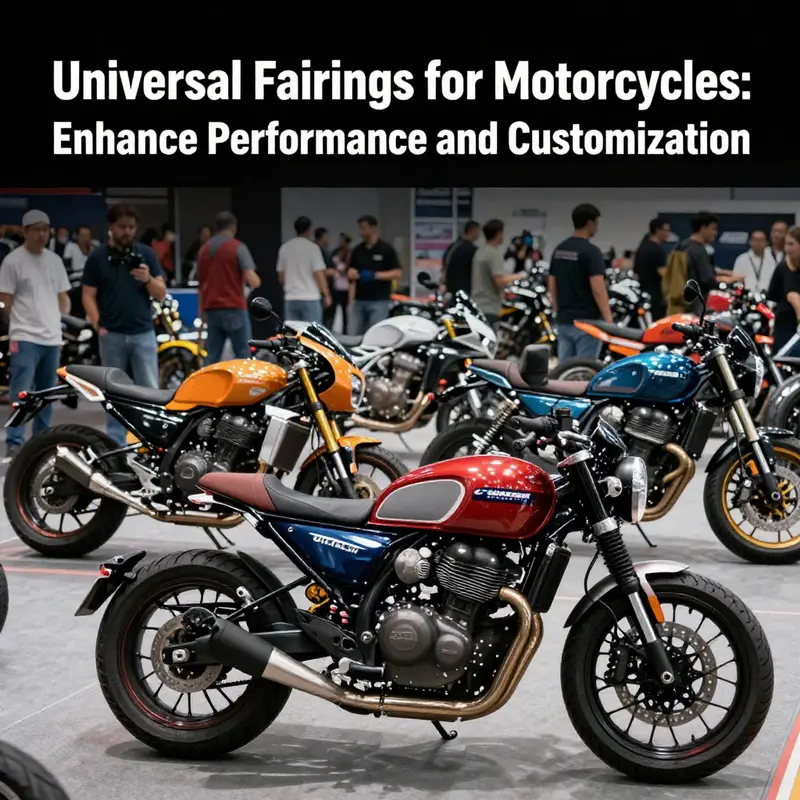
A fairing is more than a weather shield or a silhouette on the front of the bike. It is a statement of how a rider wants to be seen on the road, a tool for comfort during long hours in the saddle, and a portal to an evolving practice of customization. Universal motorcycle fairings, with their promise of broad compatibility and modular design, have accelerated a shift in how riders approach both form and function. They democratize the process of refining aerodynamics, shielding the rider from wind fatigue, and shaping the bike’s character without requiring a factory-grade fitment or a full teardown and rebuild. The result is a culture that not only prefers customization as a hobby but treats it as a shared public language, a way to communicate a personal narrative through the body of the motorcycle itself.
What makes universal fairings compelling is their architectural philosophy as much as their practical function. Traditional OEM fairings are engineered for a single bike, building on a precise geometry that aligns with a specific frame, stance, and component layout. Universal designs, by contrast, embrace adjustable mounting points, modular panels, and adaptable brackets that can be coaxed to align with a range of frame geometries and handlebar setups. The effect is a rider experience that prizes flexibility over exclusivity, enabling a café racer to achieve a skinnier, sportier arc or a touring bike to gain a wind-quiet, shielded cockpit without surrendering its essential identity. In a culture that often prizes swift swaps and quick changes, the ability to reconfigure a fairing to reflect a new mood, a new riding goal, or a new aesthetic becomes a powerful form of self-expression.
The social dimension of this shift is striking. A universal fairing lowers the barrier to trying different looks and different aerodynamic profiles. Enthusiasts share before-and-after photos, discuss trim lines, test wind protection in varying weather windows, and compare mounting strategies in online communities and at informal meetups. The DIY ethos thrives here because the core work—alignment, bracketing, trimming, or even minor fabricating work—often occurs in a home workshop rather than a professional body shop. The culture that forms around these projects is not just about the final appearance; it is about the process as an occasion for learning, testing, and collaboration. Builders post tips on how to avoid common fitment pitfalls, how to route cables cleanly, and how to maintain a clean airflow path that does not disrupt engine cooling or headlight performance. In turn, these exchanges seed a shared playbook that future riders can consult when embarking on a similar transformation.
Identity, in the realm of motorcycles, has long hinged on the image a bike projects. The classic café racer, the bare-bones scrambler, the touring mule—all carry cultural signifiers that connect rider and machine to a broader lineage. Universal fairings broaden this language further by enabling a wider range of bike platforms to participate in these design conversations. A sport-tancy aesthetic can be grafted onto a vintage cruiser, creating a hybrid look that nods to performance heritage while retaining the bike’s original soul. Conversely, a modern sportbike can be paired with a retro silhouette, reintroducing a nostalgic mood through a contemporary aerodynamic envelope. The freedom to experiment with these juxtapositions invites a new generation of riders to curate a personal style that respects the bike’s character while expanding its communicative reach on the street and at events.
This cultural expansion is reinforced by the way universal fairings intersect with marketplaces and showcase venues. Riders increasingly attend or host shows that celebrate fairing swaps, colorways, and aerodynamics packages as a form of design competition. Social media becomes a gallery and a workshop at the same time, where a glossy photo can reveal a clever bracket arrangement or a clever heat-drawn contour line that improves airflow without compromising a bike’s classic lines. In this environment, a bike is not a fixed assignment from a manufacturer but a canvas for iterative design and public dialogue. The visibility of these projects, shared across networks, helps normalize experimentation and lowers the perceived risk of modifying the bike in ways that were once the exclusive domain of professional shop work.
Of course, the appeal of universal fairings carries practical trade-offs that riders must weigh. Because universal kits must marry a broad spectrum of frame geometries, some fitments require drilling, trimming, or the fabrication of custom brackets. These steps can alter structural interfaces and, if not executed with care, may compromise the intended aerodynamic profile. The exact alignment of mounting points matters as much for wind deflection as for minimizing interference with headlights, instruments, or the windscreen. In practice, this means that a successful installation often hinges on methodical measurement, a flexible toolkit, and a patient approach to mock-up fittings before committing to cutting or drilling. The trade-off is a more hands-on project that rewards careful planning with a highly personalized result, rather than a plug-and-play upgrade that looks identical to someone else’s setup.
The conversation around fitment also touches on the quality and precision of the universal kits themselves. As the market matured, manufacturers increasingly pursued more accurate fitment data and better aerodynamics through refined bracket profiles, better edge treatments, and more effective weather sealing. The goal is to narrow the gap between a universal solution and an OEM partner’s perfectly tuned product. When these improvements land, riders enjoy better wind protection, more consistent airflow around the rider, and less turbulence around the head and shoulders. The sense of reliability that comes with sturdier mounting assemblies and cleaner panel gaps also contributes to the cultural shift, encouraging more riders to experiment with bold looks or more aggressive aerodynamic packages without fear of a hasty, ill-fitting result.
Selecting a universal fairing in this context becomes not merely a matter of measuring dimensions but of reading the bike’s personality and the rider’s goals. A rider seeking touring comfort might favor a semi-fairing approach that shields the upper torso while preserving engine access for maintenance. A café racer builder may prioritize a low, compact silhouette that emphasizes the bike’s line and stance. A rider chasing adventure touring might lean toward a cowling-style solution that blurs the line between full fairing protection and the freedom to strip parts for off-road versatility. Across these goals, the universal design language remains consistent: extract measurable gains in wind protection and stability while preserving the bike’s identity and enabling ongoing experimentation.
As riders become more proficient at evaluating fitment, the role of digital resources and catalogs grows more important. Many online platforms provide filterable options by model family or year range, allowing a prospective buyer to visualize alignment cues with familiar reference points. For example, a rider who already has a well-documented Honda or Yamaha platform can use universal kits as a switching mechanism to explore multiple looks without committing to separate OEM parts for each iteration. Within this landscape, a useful starting point can be found in catalogs dedicated to specific brand families, such as pages aggregating various Honda fairings. These resources offer practical insight into how universal brackets map onto common bike geometries and can help gauge the amount of modification a rider should expect to undertake. For riders exploring cross-brand compatibility, it becomes a helpful heuristic to think in terms of mounting planes, edge tolerances, and the clearance available around the windshield or instrument cluster. A practical step is to look at a few build threads or guide articles that discuss fitment challenges and the precise steps used to achieve clean, secure installations. This hands-on knowledge, shared in a public forum or a detailed guide, shortens the learning curve for new builders and reduces the risk of misalignment or over-modification.
In the broader arc of motorcycle culture, universal fairings have become more than a hardware choice; they are a social instrument that fosters community through shared technique and visible transformation. The evolving ecosystem—comprising design refinements, DIY tutorials, swap groups, and local gatherings—reflects a shift in how riders conceive of what their bikes are capable of expressing. It also signals a broader democratization of mechanical savvy. Today’s rider can undertake a successful fairing swap with a modest toolkit, a careful plan, and a willingness to iterate. The net effect is a culture that values creativity, craftsmanship, and the ongoing conversation between rider and machine. In that sense, the fairing is not merely an aerodynamic surface; it is a vehicle for storytelling—the rider’s story about velocity, weather, control, and personal style—told through the evolving silhouette of the bike.
To those who track this evolution, the takeaway is clear: universal fairings have reshaped both the practicalities and aesthetics of motorcycle customization. They invite more people to participate in the design conversation, broaden the palette of possible looks, and reveal how much of riding’s appeal lies in ongoing experimentation. The simpler hardware world of a single OEM match is replaced by a living toolkit, where fitment, finish, and form are continuously negotiated between rider intention and the bike’s capabilities. As new mounting systems emerge and as more builders document their processes, the language around universal fairings will keep expanding. The bike you ride may still carry its brand’s DNA, but the skin you choose to wear—through a universal kit—will tell a broader story about who you are on two wheels and why you ride.
Internal link for further exploration: readers curious about brand-specific compatibility can browse the Honda fairings collection to gauge how universal kits align with established frame geometries and mounting points. Honda fairings collection.
External resource: https://www.motorcycle.com/guides/universal-fairings-guide/
Final thoughts
Universal motorcycle fairings present an exceptional opportunity for both riders and business owners to innovate and fulfill the demands of the modern motorcycle market. Their adaptable design, ease of installation, and durable materials make them a popular choice among motorcycle enthusiasts looking to personalize their rides. As market trends suggest a growing interest in customization and aftermarket enhancements, businesses can leverage this opportunity by offering a variety of universal fairing options that cater to diverse customer preferences. The cultural impact of universal fairings in promoting individuality among riders cannot be overstated, making them an integral part of the motorcycle community. By understanding and embracing these dynamics, business owners can position themselves competitively in a rapidly evolving landscape.