
Universal motorcycle headlight fairings represent a fusion of style and functionality, enhancing not just the aesthetics of a motorcycle but also its performance. In the modern world of motorcycling, where the competition for both speed and design is fierce, these components are indispensable for any bike enthusiast or business owner in the industry. To begin with, Chapter 1 examines the aerodynamic benefits of these fairings, showcasing how they can improve fuel efficiency and stability. Following this, Chapter 2 delves into the various materials used in their construction, shedding light on why durability matters. Then Chapter 3 explores the endless customization options available, allowing riders to express their individuality. Chapter 4 presents insights into the market landscape and potential suppliers, guiding business decisions for those looking to stock these products. Finally, Chapter 5 addresses installation and compatibility considerations, ensuring the perfect fit for different motorcycle models. Together, these chapters provide a comprehensive understanding of universal motorcycle headlight fairings, a must-have for any motorcycle retailer or modifier.
Carving the Wind: The Real Aerodynamic Promise of Universal Motorcycle Headlight Fairings
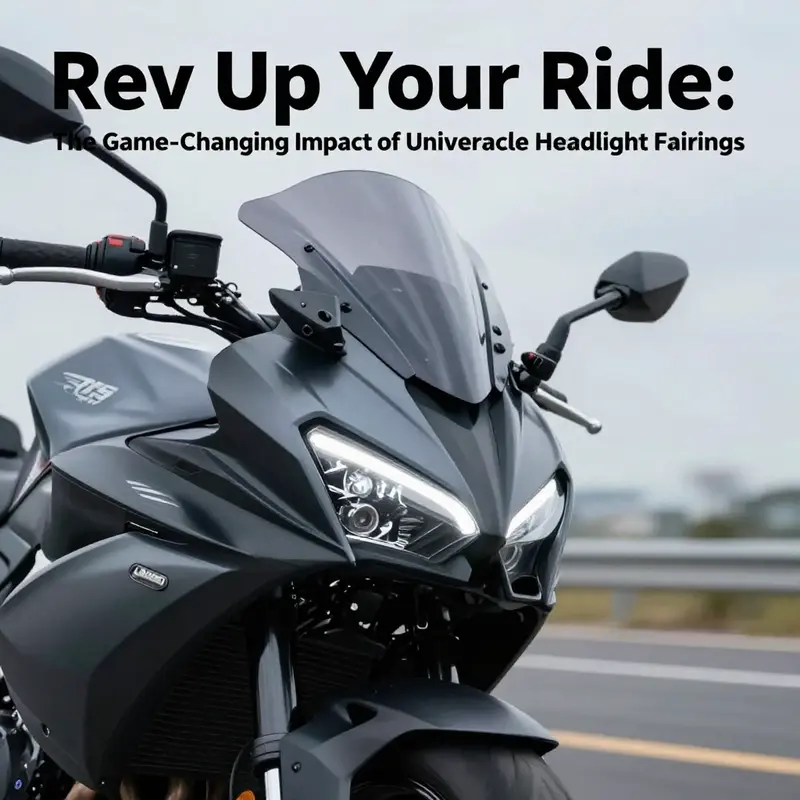
The wind is a relentless partner on every ride, and the way air behaves around a bike’s front end can quietly determine how that ride feels and behaves. Universal motorcycle headlight fairings exist at the intersection of form and function, crafted not merely to hide a headlamp but to choreograph the air that meets the bike each time the throttle opens. They are designed to shape the flow field in front of the rider, smoothing the nose of the machine and reducing the drag that wears on speed, stability, and fatigue. When the front of the motorcycle slips more cleanly through the air, the rider’s body does less work pushing into turbulent pockets, and the engine works less to overcome that turbulence. The result is a tangible sense of efficiency and ease, especially on long highway stretches where even small aerodynamic gains compound into meaningful comfort and range.
Central to this effect is the simple idea of streamlining. A well-crafted universal fairing rounds the front profile, introducing gentle, continuous curves that guide the air instead of fighting it. This reduces wake turbulence directly behind the headlight area, allowing air to rejoin the rest of the forward flow sooner and more predictably. Riders notice the difference as less wind buffeting, smoother steering feel, and a calmer chassis at higher speeds. In practical terms, the fairing acts as a shield and a guide: it keeps the rider from meeting a wall of gusts and swirls, and it nudges the air into a path that the machine can follow with less lift and less drag. That second effect—reduced drag—shows up most clearly beyond metropolitan speeds, where the bike begins to run into air resistance that shapes acceleration, fuel economy, and even top speed.
The aerodynamic logic is particularly clear with universal headlight fairings that embrace a 7-inch wide-beam design. The round, prominent lens often sits at the focal point of the fairing’s shape, so the surrounding curves must balance both light and wind. Sculpting these elements is where material choice and mounting philosophy converge. Aluminum alloys offer a light yet stiff framework that resists corrosion and maintains form after weather cycles and road grime. ABS plastic, while heavier in some builds, can be molded into complex contours that cradle the headlight and the windshield without adding unnecessary weight. In many designs, a Plexiglas windshield rides as an integrated feature, not merely an accessory bolt-on. The wind-cutting effect of that small windshield may seem modest in isolation, but it synergizes with the fairing’s curve to reduce gusts that travel up over the fairing and into the rider’s chest. The combined result is a calmer ride with less fatigue on long treks and a more stable line through crosswinds.
Material selection also frames how a universal fairing stands up to real-world conditions. Aluminum’s corrosion resistance and stiffness translate into enduring performance, particularly for riders who ride in varied climates or who log miles toward distant destinations. The aluminum skin can be shaped, welded, and reinforced to hold together under speed, crosswinds, and occasional impacts from brush or gravel. On the other hand, high-grade plastics and composite blends can bend around complex geometry, delivering a lighter package and broad design flexibility. The choice matters because the structural integrity of the front end matters not just for aesthetics but for function: the fairing must stay aligned with the headlamp, windshield, and mounting points across a broad range of models. A universal fit means the design relies on robust, repeatable mounting systems rather than bespoke brackets, so the rider can swap among different bikes with minimal modification. Yet even with universal fitment, the importance of careful installation cannot be overstated. A loosely mounted unit or one that interferes with fork travel or wheel movement can introduce vibration at speed, eroding both comfort and safety. Proper torque, alignment, and secure fasteners become the invisible but essential part of translating air theory into real-world benefit.
Beyond the physics, the aerodynamic benefits unfold in the ride’s tactile experience. A cleaner front profile reduces buffeting, which means the rider’s head, shoulders, and arms are exposed to more uniform airflow. This translates into fewer high-frequency gusts that vibrate the helmet and helmet latch, contributing to a clearer line-of-sight and reduced rider fatigue over hours on the road. Stability at speed tends to improve as the front end maintains a more consistent pressure distribution, lowering the tendency for the bike to wander in crosswinds or hover in the slipstream of large trucks. All of this matters not only to comfort but to confidence; when a rider feels that the front of the bike is a predictable partner, they can focus more on line choice, corner rhythm, and throttle control.
The universal nature of these fairings is a deliberate design choice, aimed at enabling riders with a wide range of motorcycles to experience aerodynamic benefits without a lengthy customization process. The idea is that, for most standard 7-inch round headlights—the common focal point on a broad spectrum of classic, cruiser, or retro-styled machines—a single fairing can be adapted with modest hardware changes. Fitment is a trade-off: the broader the range of models a fairing can serve, the more flexible the mounting system must be. This means attention to offset tolerances, to the height of the headlamp, and to clearances around turn signals and gauges. It also means that riders may encounter some minor vibration if the mount lacks the ideal rigidity on certain frames. The payoff, however, is a more versatile aesthetic and a front-end geometry that remains faithful to the intent of the design—reduce drag, improve protection, and deliver a cleaner silhouette without sacrificing accessibility to headlight illumination and rider visibility.
Aesthetic and practical considerations naturally converge in the design language of universal fairings. The shape often nods to retro Café Racer sensibilities, with slim profiles and minimal frontal area that still deliver effective airflow management. Painted or wrapped to match a bike’s color story, the fairing becomes a seamless extension of the machine’s identity rather than an afterthought. The integration of a modest windshield Reed by windscreen design—an approach that blends form and function—emphasizes the rider’s comfort without compromising the fairing’s streamlined geometry. For riders exploring compatible styling across models and bikes, the catalog page for universal fairings provides a clear sense of how front-end shapes translate into a coherent silhouette across different chassis. collection page offers a practical, model-agnostic glimpse into how the design language scales with different mounting schemes and rider preferences.
As with any aftermarket upgrade, the true measure of aerodynamic benefit lies in long-term experience rather than short rides. The fairing’s shaping acts as a partial boundary condition for the air around the machine, easing the commitment the bike must make to accelerate and cruise through high-speed air. The cumulative effect shows up in quieter cabin sound levels, a steadier throttle response, and a more predictable handling envelope when the riding line becomes less forgiving, such as on open highways or when negotiating gusty crosswinds. For riders who crave both performance and personalization, universal headlight fairings provide a bridge between a bike’s classic bones and a modern aerodynamic sense. They let a rider tune the balance of protection, visibility, and look without forcing a change in the bike’s core geometry.
In considering the broader ecosystem of fairings and front-end accessories, it’s worth acknowledging how knowledge of aerodynamics informs practical choices. The body of practical insights around universal fairings emphasizes that design is not just about reducing drag in theory. It’s about the lived experience: smoother airflow, more comfortable long-haul riding, and a frame that remains faithful to the bike’s identity while offering an improved front-end habit. For riders who are intrigued by the aero story but wary of the complexity of installation, there is a spectrum of options, from simple mounting kits to more integrated windshield combinations, all designed to work within the context of a universal fitment philosophy.
This chapter has aimed to weave together the science of air flow with the craft of fairing design, showing how the universal approach can deliver meaningful, practical gains. The air does not care about a brand name; what it responds to is a thoughtful front-end shape that reduces resistance and guides wind around the rider. That is the heart of the aerodynamic promise. It is a reminder that a motorcycle’s most telling performance metric often hides in plain sight—what you feel as the bike cuts through air on a sunlit highway, and how your body remains relaxed and composed as the miles accumulate. As we move to the next layer of design considerations, the conversation will turn toward how these fairings influence noise, rain protection, and further enhancements to rider comfort, revealing a fuller picture of what universal headlight fairings can contribute to both the look and the feel of a machine on the move.
External resource: for broader aerodynamic principles and sourcing considerations related to universal headlight fairings, you can explore additional perspectives here: external resource.
Under the Shell: Material Choices for Universal Headlight Fairings
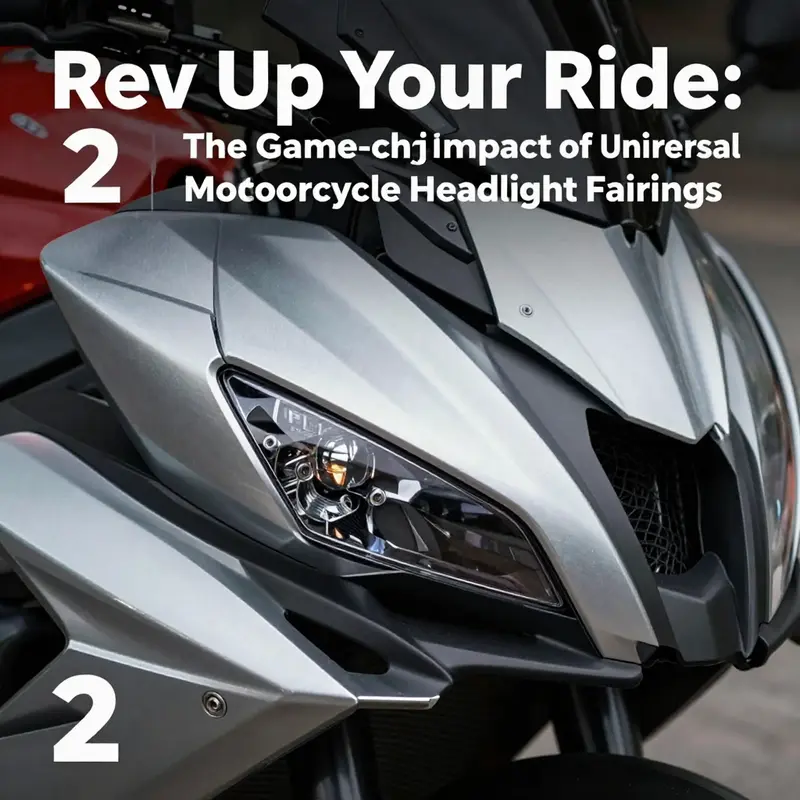
The headlight fairing may not grab the eye at first glance, but the material underneath it matters to every rider who spends hours in the saddle. In universal motorcycle headlight fairings, the choice of material governs weather resistance, aerodynamics, and how the shell ages with the bike. When a fairing must fit many models, the material must balance rigidity with a touch of flexibility, cost with performance, and a design language with durability. This chapter centers on the three workhorse materials most commonly used in universal designs: aluminum alloy, ABS plastic, and Plexiglas or high‑impact acrylic for windshields. Beyond the numbers, the material mix reveals tradeoffs in weight, impact resistance, UV stability, and the aesthetic story each fairing tells. This is where form meets function, and where the shell’s character begins to emerge from its surface.
Aluminum alloy has long been cast as the sculptor’s metal in motorcycling. Its lightness translates to better performance when a fairing must slice through wind and maintain stability at speed. Aluminum’s stiffness helps the shell hold its shape, while its corrosion resistance suits riders who contend with rain, road salt, and damp mornings. The resulting fairing stays true in appearance and performance, contributing to the bike’s overall integrity rather than becoming a maintenance burden. Aesthetically, aluminum offers a clean, modern sheen that can nod to retro cues without feeling dated. The alloy’s formability also lets designers craft smooth lines that reduce turbulence and glare at speed. While heat resistance isn’t the primary concern for a headlight fairing, aluminum’s behavior under heat can still matter when the engine bay or instrument cluster runs hot, helping the shell avoid deformation over time. Durability under impact is another practical note: ductility allows aluminum to absorb minor hits and recover, reducing the chance of catastrophic cracks.
ABS plastic sits at the other end of the performance spectrum, bringing a different set of advantages for universal fitment. ABS is renowned for impact resistance, a critical trait when a fairing is mounted on a machine intended for varied urban environments and rough backroads. Its light weight keeps costs down while preserving enough rigidity to maintain the fairing’s silhouette at speed. The molding capabilities of ABS are a key strength: complex curves, crisp edges, and integrated features like small windshields can be created in a single shot or with straightforward blends of ABS and additives. This flexibility suits universal shells designed to accommodate many models, where the same basic skin must contour to different headlight diameters and mounting points. The price advantage translates into accessibility for enthusiasts who want to refresh a build without breaking the bank. ABS’s resilience to impact pairs with scratch resistance and color stability, important when riders chase long‑term color matching with the bike’s bodywork or wraps. The trade‑off is UV degradation and heat sensitivity if the material isn’t stabilized and protected.
Windshield material is the third pillar in the fairing’s material stack. Plexiglas, an acrylic family, is a common choice for windshields due to its clarity, impact resistance, and ease of machining. Plexiglas, or acrylics marketed under Plexiglas, provides an optically clear shield that helps reduce wind blast while preserving rider visibility in diverse weather. The transparency of acrylic is a virtue when riders rely on horizon sightlines through the windshield during cornering and lane changes. In practice, high‑impact acrylic blends further increase resilience to cracking under stress, a crucial attribute when the fairing faces stones, insects, and road debris. The difference between standard Plexiglas and high‑impact acrylic becomes evident in rougher riding environments, where the latter maintains structural integrity and clarity longer.
The interplay among these materials is not simply a matter of selecting one for every job. A universal headlight fairing, by design, must adapt to multiple models, spaces, and mounting configurations. Aluminum might dominate the shell for a rugged, weather‑resistant look. ABS can be chosen for inner layers or for intricate fairing pieces where shaping is critical to achieving a seamless fit across various headlights and instrument clusters. The windshield, typically in acrylic, provides a separate layer that protects the rider from wind and weather while preserving visibility. Each material also dictates maintenance: aluminum benefits from regular cleaning and, if anodized, resists corrosion; ABS requires UV protection to prevent chalking or cracking; acrylic windshields benefit from scratch resistance and careful cleaning to avoid crazing. Taken together, these factors shape how a rider cares for the fairing and how often it might require refinishing as technologies evolve.
Beyond the material properties, the design ethos of universal fairings remains essential. The 7‑inch round headlight fairing, common in retro and café‑inspired builds, shows how material choices align with rider goals. Aluminum’s weight benefits appeal to those seeking a lean, speed‑oriented stance with a rugged finish. ABS’s affordability and molding flexibility invite experimentation and customization, where repainting or wrapping a fairing can echo a chosen aesthetic without compromising structural integrity. A windshield in high‑impact acrylic ensures protection and visibility on long highway stretches or gravelly back roads. The net effect is a balance where each material’s strength compensates for another’s limitations, elevating the rider’s experience with a universal fairing.
For builders and enthusiasts exploring options, the practical path forward begins with a clear sense of riding style, climate, and maintenance priorities. A touring rider facing varied weather and miles might favor aluminum for longevity and a bold look, with an acrylic windshield that blends protection and clarity. A rider drawn to a lighter, more customizable aesthetic might prefer ABS for its ease of shaping and cost, paired with a high‑impact acrylic windscreen for reliability on longer trips. Regardless of the combination, proper mounting remains paramount: a universal fairing must be secured against vibration, alignment, and fasteners that work across different models. The last thing a rider wants is a fairing that wobbles or shifts under a crosswind. In practice, material choices are most effective when paired with careful installation and ongoing maintenance.
For practical exploration, collectors and builders often reference compatibility standards across model families, enabling smoother integration of a chosen fairing with popular frames. A starting point is to compare shells that balance weight, rigidity, and ease of customization. In this spirit, the relationship between form and function becomes clearer: the material sets the potential, and the installation discipline translates that potential into a satisfying riding experience. A well‑chosen mix of aluminum, ABS, and acrylic can deliver a headlight fairing that is not only visually compelling but also capable of withstanding the road’s unpredictable demands. The story of universal fairings is one of versatility—how a single shell can be adapted to many bikes while preserving safety, aerodynamics, and personality.
As a closing reflection, the materials chosen for universal headlight fairings reveal much about what riders demand from modern motorcycling: resilience against weather and debris, efficiency in aerodynamics, and a canvas for personal expression. The ongoing evolution of these materials—new alloys, advanced polymers, and innovative clear plastics—promises even more sophisticated combinations in the years ahead. The fairing’s shell is not merely a cover but a statement about how a rider negotiates speed, weather, and identity on two wheels. For builders seeking a practical starting point for compatible universal shells that align with a classic silhouette, consider collecting references across model families and exploring how a universal shell can be adapted without sacrificing your bike’s character.
Shaping Light and Identity: Crafting Customization for Universal Motorcycle Headlight Fairings
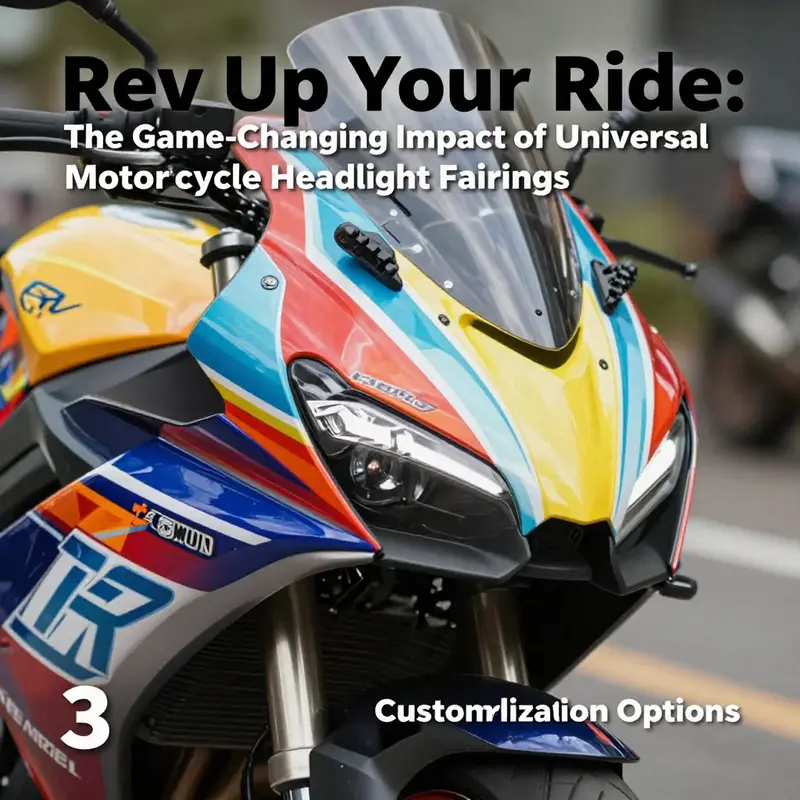
Customization is more than appearance; it is a dialogue between rider, machine, and road. In the world of universal motorcycle headlight fairings, customization turns a standard component into a personal signature. The fairing becomes a canvas where form meets function, where a rider’s taste for café racer heritage, cruising serenity, or sport-bike aggression is translated into curvature, texture, and shade. The core promise of universal fairings is flexibility: a single design language that can align with many models, while still allowing a rider to sculpt the bike’s outer silhouette into something that feels uniquely theirs. The journey from stock to signature begins long before paint meets plastic. It starts with thoughtful material choices, deliberate structural strategies, and an understanding of how modest changes in geometry affect wind, light, and rider comfort at every speed band.
Material technology sits at the heart of every successful customization. Modern universal fairings leverage high-quality plastic composites that balance stiffness, impact resistance, and weight. Compared with traditional metal shells, these composites can shave significant mass without compromising strength. In practical terms, a lighter fairing reduces the inertial load on the mounting points and the frame, making installation easier and helping to preserve the bike’s handling characteristics. Yet weight is only part of the story. The same materials are engineered for durability in the face of sun, rain, road salt, and debris. UV-stable resins slow color fading, while moisture-resistant seals help keep the rider shielded from spray and fogging at low speeds and high humidity. A crisp, clear windshield—often crafted from polycarbonate or other clear plastics—adds another layer of wind protection, improving rider comfort on longer journeys and in blustery conditions. The result is a surface that not only looks contemporary but also behaves robustly in a range of climates and riding styles.
Interactivity is the second pillar of customization. Universal fairings are designed with modularity in mind, offering adjustable configurations that let riders tailor the silhouette to their bike’s distinctive lines. This modularity is practical as well as aesthetic. Pre-drilled mounting points simplify the installation process, enabling a professional-grade fit without requiring complex fabrication or specialized tools. A rider can experiment with different angles, gaps, and alignments to achieve the precise wind flow and visual balance they desire. Such flexibility encourages experimentation: a subtle tilt can shift how air wraps around the forks, thereby influencing the bike’s perceived speed and stability. Because of the standardized fit around common 7-inch round headlights, these fairings can be swapped, trimmed, or reassembled to suit a broader array of models—from retro-inspired street cruisers to modernized cafe racers. The ability to change the look without changing the core bike is a powerful form of customization, one that respects the rider’s budget while honoring the bike’s original architecture.
Of course, optimization of aerodynamics remains central to why riders pursue fairing customization in the first place. The shaping of the fairing—its curvature, edges, and mounting plane—directly influences how air travels over and around the motorcycle. Careful design can reduce wind resistance by meaningful margins. In practical terms, optimized fairing geometry can lower drag by as much as twenty percent compared with less refined profiles, contributing to improved high-speed stability and a calmer ride at highway speeds. The rider senses this as reduced helmet buffeting and less fatigue, even on longer stretches. Beyond raw speed, better aerodynamics translates into steadier line handling and predictability when negotiating gusts or mixed road surfaces. These benefits are especially meaningful for riders who spend long days in the saddle or who push bikes toward their performance envelope during spirited rides.
Weather resistance is not merely about keeping the fairing looking new; it is about preserving visibility, reliability, and comfort. Many universal fairings incorporate weather-resistant materials and protective finishes that resist rain and road grime. Clear windshields protect the eyes from spray while allowing the rider to maintain a wide field of vision. The combination of a sealed exterior and a transparent windscreen reduces the chance of moisture collecting on the surface or fogging the inside, which is crucial when riding in mist, drizzle, or early morning chill. A well-sealed, well-mounted fairing also keeps the rider’s body more shielded from wind pressure, which contributes to a steadier posture and less muscular strain over time. The design language here is not just about looking sleek; it is about enabling a rider to embrace the ride in more comfort and with less interruption from the elements.
Branding and personalization extend beyond color. Some models accommodate customized logos or artwork, letting riders translate a personal emblem or a street-cred motif onto the fairing surface. This is where the emotional connection to the bike grows stronger: a silhouette that echoes a rider’s club, a personal moniker, or a design cue from a favorite era of motorcycling becomes part of the bike’s identity. Yet with personalization comes responsibility. Not every graphic or finish adheres to local regulations, particularly when illuminated elements or RGB lighting are introduced. The aesthetic appeal must be balanced with legal and safety considerations to ensure that the bike remains street-legal and widely visible under various lighting conditions. The best practice is a measured approach: celebrate individuality, but verify that each modification aligns with regional lighting standards and color-luminance requirements before taking the bike on public roads.
Now, customization is not only about the glassy surface of the fairing; it is also about how the whole kit integrates with the bike’s existing geometry. For riders who own vintage-styled or café-racer-inspired machines, a universal fairing can echo the retro lines while delivering modern performance. A Café Racer-inspired silhouette, with its clean lines and compact windscreen, can harmonize with a classic stance while reducing wind blast that often plagues older builds. The result is a hybrid ride that blends past charm with present-day efficiency. The beauty of a universal approach lies in its compatibility; it is designed to accommodate a range of headlight sizes and mounting patterns, enabling a cohesive look across a spectrum of models without the need for a bespoke shell for each bike. As riders experiment with different configurations, they discover a balance that respects both the bike’s heritage and the rider’s contemporary needs.
For riders who crave guidance while exploring options, it is useful to connect with established design ecosystems that catalog compatible shapes, mounting patterns, and aesthetic cues. A practical starting point is to browse a curated collection of fairings that align with a motorcycle’s existing architecture. This approach preserves the bike’s character while offering a fresh, tailored look. When researching, keep an eye on fitment notes, including whether the fairing supports a standard 7-inch round headlight, the recommended mounting hardware, and the range of adjustments available. A thoughtful selection process considers not only the visual effect but also the subtle shifts in turning radius, wind handling, and rider ergonomics that accompany any change to the bike’s front end. For designers and enthusiasts seeking a tangible path through the options, the Honda fairings collection provides a useful reference point for understanding how different silhouettes integrate with classic and contemporary lines. Honda fairings collection offers insight into how a range of shapes can coexist with a widely used headlight format, guiding choices that honor both style and practicality.
As the customization conversation deepens, riders naturally begin to weigh the trade-offs between different materials and finishes. Aluminum alloy fairings are known for rigidity and corrosion resistance, offering a robust option for riders who value long-term durability in challenging environments. Plastics, on the other hand, win on impact resistance and ease of molding, enabling more complex curves and lighter weight—an important consideration for riders who frequently swap fairings or who value the ability to install without extensive mechanical support. Some riders even opt for clear or tinted windshields integrated into the fairing system to modulate wind exposure, while others prefer a minimal, low-profile windscreen that preserves the headlight’s visibility as the focal point of the bike’s face. This spectrum of choices—between metal, composite, and transparent protection—gives riders a customized toolkit to tune not only how the bike looks, but how it feels when the throttle is opened and the wind becomes a tangible companion.
In the end, universal headlight fairings epitomize a design philosophy that prizes adaptability, performance, and personal expression in equal measure. They empower riders to craft a bike that looks like it was built around a story, not around a standard template. The ability to alter material, geometry, shielding, and graphics means that a single universal solution can become a bespoke experience across different riding contexts—from long highway hauls to nimble city spins. The right choices depend on how a rider values weight, strength, airflow, weather endurance, and visual impact. The chapter of customization never truly closes; it evolves as the rider’s goals shift, the bike’s setup changes, and new finishes and technologies emerge. For those who wish to continue exploring, the journey is as much about learning the language of aerodynamics as it is about painting a personal icon on the fairing’s surface, a language that translates intention into rideable reality.
External reference: https://www.alibaba.com/product-detail/Custom-5-75-Inch-Cafe-Racer-Headlight-Fairing_1601184918882.html?spm=a2700.1.w.default.1.3f4d6c52rZiCQm
Market Currents and Sourcing Signals for Universal Motorcycle Headlight Fairings
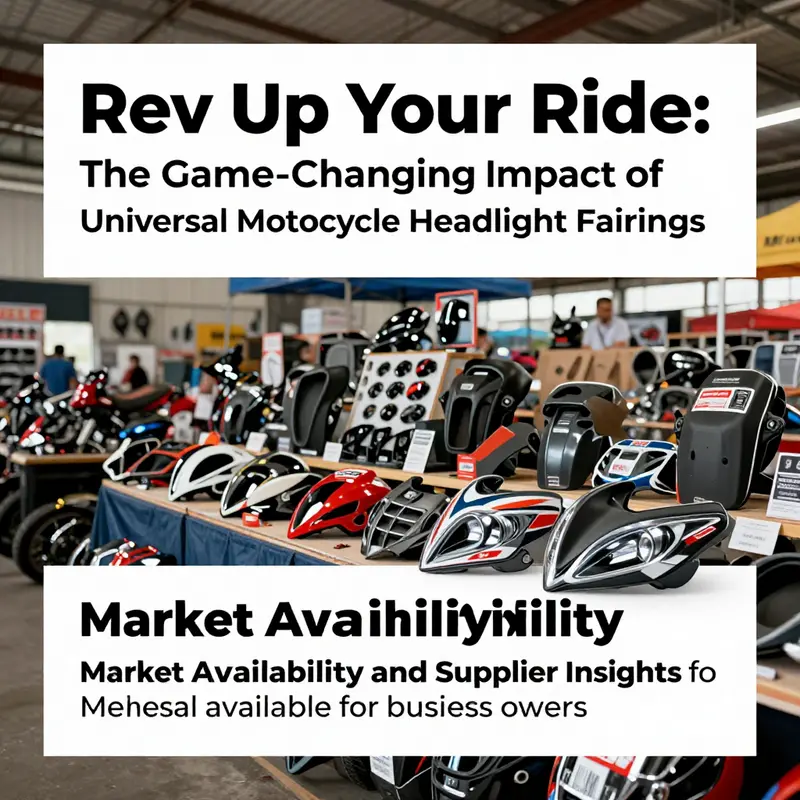
The market for universal motorcycle headlight fairings sits at the intersection of performance engineering and personal stylization. Builders and riders seek components that can adapt across models while delivering wind management and a distinctive silhouette. The universal fairing acts as a modular platform rather than a single, model-specific shell, which makes it attractive for cafe racer builds, retro cruisers, and light adventure bikes alike. Demand is global and buoyed by custom shops, refurbishment projects, and riders seeking to modernize wind flow without sacrificing classic lines.
Material choice sits at the heart of value. Two families dominate: corrosion resistance and lightweight strength from aluminum, and plastics engineered for smooth aerodynamics and cost efficiency. Aluminum variants are prized for durability and a lighter footprint, which helps handling and reduces unsprung weight in quick maneuvers. Supplier descriptions sometimes quote weight advantages in the order of thirty percent compared with conventional plastics, while preserving structural integrity in tough riding conditions. Meanwhile, plastics offer predictable surface finishes, good gloss retention, and resistance to yellowing, with the trade-off typically around long-term durability under impact.
Design philosophy emphasizes universal fitment with a modular mindset. Fairings are pitched as adaptable solutions that cover a broad spectrum of motorcycles, especially those relying on standard round headlights around 7 inches in diameter. The universality reduces the need for extensive customization, but proper mounting remains essential. Misalignment or insufficient fasteners can cause vibrations at speed, so suppliers advocate reinforced brackets, vibration dampers, and careful alignment with the bike’s electrical harnesses to preserve aero and comfort.
Key design features include integrated windshields and the use of clear materials such as acrylic for visibility and resilience. A common pairing is a 7-inch wide-beam headlight arrangement that expands night coverage and smooths airflow over the rider. Aesthetic versatility is important, allowing repainting, wrapping, or visor replacements to refresh the bike’s look without changing core fitment.
Procurement dynamics show broad access via global B2B platforms, with marketplaces that connect buyers to suppliers offering off-the-shelf and customized options. Buyers can compare materials, finishes, and add-ons such as integrated windshields or accent lighting. Some listings tout aerodynamic benefits claimed in the mid-teens percentage range relative to older fairings, a reminder that numbers vary by model but signal potential gains in wind management and rider comfort.
Suppliers emphasize universal fitment as a core benefit, underscoring the convenience of mounting across multiple models with minimal fabrication. Many designs are modular and adjustable, enabling personalization through color schemes, visor replacements, or wrapping. OEM services, including branding, bespoke packaging, and design tweaks, are often available for boutique builds, events, or collaboration projects.
Market dynamics also reflect cost and lead times. While the breadth of options supports quick access to basic models, customized manufacturing can bring higher costs and longer production windows. For shops stocking inventories, bulk orders and tiered pricing help improve margins, while individual riders may value a shorter path to road-ready installs. The ability to order in quantity enables dealers and studios to offer promotions or kits that align with seasonal demand.
Education and careful selection remain important. Buyers should prioritize corrosion-resistant materials, modular systems that support easy customization, and suppliers with proven international shipping and support. Close attention to exact headlight diameter, mounting points, and electrical compatibility helps ensure the fairing integrates smoothly with a bike’s harness and controls. For those seeking a quick sense of range, model-specific collections and fitments provide practical examples of how universal concepts translate into model-appropriate aesthetics and performance emphasis.
Taken together, universal motorcycle headlight fairings offer an accessible, technologically grounded path to upgrading a bike’s wind management, protection, and personality. They sit at the nexus of mass-market availability and boutique customization, rewarding buyers who do due diligence on materials, mounting, and supplier capability. As sourcing platforms mature and design tools enable faster iteration, the universal fairing remains a versatile instrument in a rider’s toolkit—facilitating not just a new look but noticeable improvements in efficiency, comfort, and riding confidence.
Riding Toward a Perfect Fit: Installation and Compatibility for Universal Motorcycle Headlight Fairings
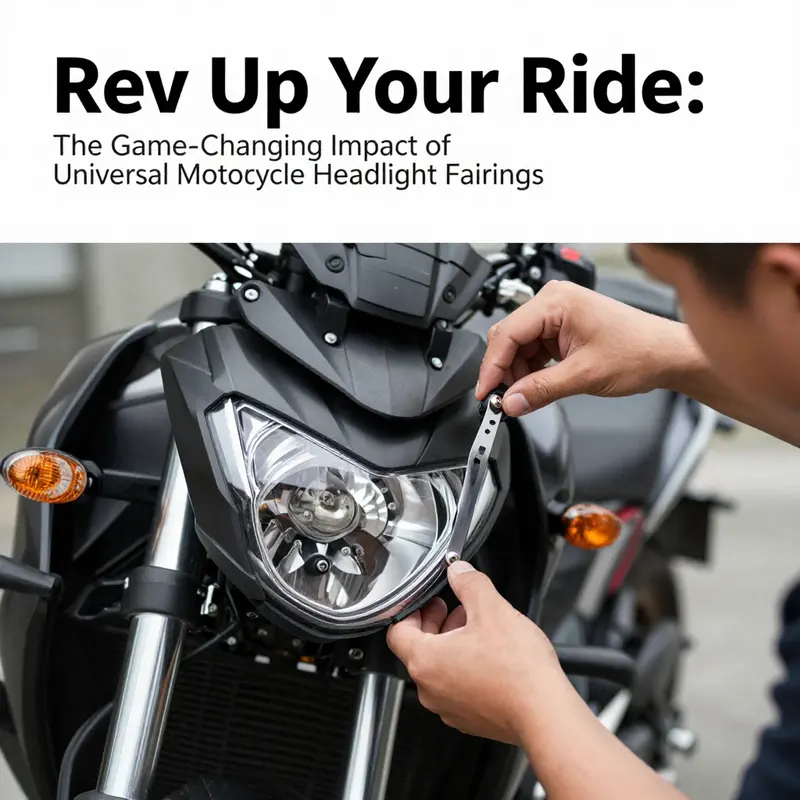
A universal headlight fairing promises an easy way to redefine a bike’s silhouette while dialing in aerodynamics and protection. Yet the promise hinges on a quiet, exacting process of installation and a clear-eyed assessment of compatibility. The most confident riders approach this upgrade not as a casual swap but as a careful fitment project that begins with measurements, proceeds through alignment and secure mounting, and ends with a test that confirms stability at speed. The idea of universal fitment is appealing, but the reality is that no two motorcycles are identical in every dimension. What matters most is treating compatibility as a real constraint—the headlight opening, the mounting points, the fork diameter, and the space around the housing all define whether a fairing will sit true rather than sing with every bump or wind gust.
The first gate is compatibility with your motorcycle model and the specific headlight bulb type you use. Even though a fairing may be marketed as universal, the precise fit depends on the headlight’s diameter, the position of the mounting brackets, and the depth clearance available behind the fairing. A typical seven-inch round headlight is a common reference point, but measurement should never stop at the outside diameter. You must verify the housing’s depth and the distance between bracket holes. The space between the fork tubes and the headlight itself also matters, especially on models where the fairing must clear the yoke, the brake line routing, or the radiator shroud. To avoid misalignment, start with a dry, hands-off fit. Place the fairing in position, mark where the brackets intend to sit, and confirm that the wiring harness can route cleanly without bending or pinching. It is in this initial sizing that the universal claim often reveals its limits, and the rider discovers whether a small modification or a simple repositioning is needed for a clean, confident mount.
The headlight opening compatibility is the second major gate. A fairing s cutout must accommodate the bulb type — whether H4, H7, or a modern LED module — without obstructing the beam or the ballast housing, and it must leave room for wiring connectors to pass through smoothly. If the kit features an integrated windshield, which is common on many retro or cafe racer inspired designs, the mounting angle becomes even more critical. The windshield s angle interacts with the fairing s curvature, the headlight s angle, and the rider s line of sight. A slight tilt or twist can dramatically alter the beam pattern, which in turn affects nighttime visibility and the rider s perception of distance. The structural integrity of the mounting becomes essential here; the fasteners must hold the fairing steady under load, and the fairing must not flex or shift when the wind picks up at highway speeds. This calls for a robust mounting frame or brackets that can distribute loads without concentrating stress on a single point. If the fairing tube attaches to a fork crown or triple-tree, check for any potential interference with steering motion and ensure that the fairing does not rub the brake line or the brake master cylinder during full lock or compression.
Material choice shapes both how the fairing reacts to the road and how it behaves technically. Many universal headlight fairings use aluminum alloy for its combination of lightness, corrosion resistance, and stiffness, while others rely on impact-resistant ABS plastic. Aluminum tends to hold its shape better in the face of road grit and weather, a consideration if the bike will be ridden year-round. ABS, while lighter and easier to mold, can be more prone to flex and crack under repeated impact or in very cold conditions. A Plexiglas windshield, when included, adds a further aerodynamic benefit by deflecting wind toward the rider s chest, but it also introduces another element to align and seal. Whichever material the kit uses, confirm that the finish and the mounting points resist corrosion and fatigue, especially where fasteners thread into the brackets. If you plan to repaint or wrap the fairing, consider how the material will respond to heat from the headlight and from the engine heat radiating up from the fairing s core.
Fork diameter compatibility is another practical hinge. Front-end fitment often specifies a range—for example, fork tubes measuring roughly 38 to 41 millimeters in diameter. If your bike sits outside that window, you will either need an adapter kit or a different mounting approach. The fit must be snug enough to prevent wobble yet not so tight that it deforms the fairing s attachment points. The mounting hardware is often designed to work with a specific set of holes and spacings; misalignment here can lead to persistent vibrations, a compromised seal, and ultimately a more dangerous front end. The universal promise can be realized only when the kit sits flush against the fairing s inner surfaces, with brackets anchored to solid, vibration-resistant points. If a fork-diameter mismatch is detected, you may need to source additional spacers or choose a fairing variant that aligns more closely with your fork s geometry.
Beyond fitment, ease of installation is a meaningful consideration for riders who prefer to tackle projects in their garage without extensive fabrication. Many universal kits come with a complete set of hardware and a mounting diagram that clarifies which bolt goes where. Some entries claim tool-free installation, a tempting prospect for DIY enthusiasts. The reality is typically more nuanced: you will save time if you thoroughly review the manufacturer s specifications and the community s real-world feedback. A successful installation benefits from a staged approach—first the frame, then the headlight, then the wiring, and finally the windshield. During this process, the rider should look for any signs of interference, check clearances around the wiring loom, and confirm that the fairing won t contact the front fender under full compression or when the suspension travels through its range. It s in these checks that you ll understand whether the universal design truly fits your model or if a minor trimming or repositioning is required to preserve the bike s integrity and the rider s safety.
The electrical aspect cannot be overlooked. A fairing that accommodates different bulb types must allow space for connector blocks and harnesses. Incorrect routing can cause chafing, water ingress, or heat buildup within the housing. It s prudent to plan the wiring pathway ahead of mounting and to use protective grommets to seal the entry points where cables pass through the fairing. A careful, methodical routing approach reduces the risk of future maintenance headaches and ensures that bulb changes remain straightforward rather than a treasure hunt behind the fairing. If the bike uses a modern LED or HID headlight, ensure the fairing s opening and internal geometry accommodate the additional heat sinks and cabling without cramping airflow around the bulb. The rider who treats these details as sacred learns to align aesthetics with function, so the bike remains stylish and practical under all conditions.
A note on aesthetics and rider comfort caps this discussion. The goal isn t simply to bolt on a new look, but to harmonize form with function. The fairing should complement the bike s lines, not fight them. The angle, curvature, and symmetry of the fairing must be balanced with the rider s posture and the wind profile around the cockpit. Even small misalignments can produce wind glare, glare reflections, or a buffeting sensation that is tiring on a longer ride. Achieving this balance requires a test ride in a controlled environment—short stretches to feel the impact of the wind, then longer, more representative runs to verify beam alignment, vibration levels, and rider comfort. If the fairing introduces any new noise or buzz, the culprit is often a loose fastener or a misaligned bracket rather than an inherently flawed design. Tightening, redrilling, or shimming may be necessary, but such adjustments are part of the process that leads to a stable, integrated look and a calm, efficient wind flow.
For riders who want to explore compatible options within a familiar family of bikes, one practical approach is to reference a broader catalog that broadens your view of fit and style. The Honda fairing collection, for instance, offers a range of shapes and cutouts that align with universal fairings while preserving the bike s original character. A visit to the collection page provides a better sense of how a fairing can be integrated with different headlight configurations and mounting layouts without sacrificing the bike s architecture. You can explore this practical resource here: https://www.summitfairings.com/collections/honda-fairings.
As you prepare to embark on installation, keep in mind that universal does not always mean universal perfection. Some bikes with unusual headlight housings or tight front-end assemblies may require minor modifications or professional assistance to achieve a truly clean, secure fit. The best-fit outcome is one where the fairing sits in precise alignment, the wiring routes cleanly, the windscreen remains stable through the full range of steering motion, and the beam pattern remains unobstructed. With patience and a careful eye for measurement, a universal fairing can become more than a cosmetic upgrade; it can transform the way a bike cuts through air, handles wind, and carries its rider with confidence into the night. For riders who want to deepen their understanding of how headlamp positioning and aerodynamics influence performance, a broader look at automotive lighting design and its interaction with airflow can provide valuable context and guidance: https://en.wikipedia.org/wiki/Headlamp
Final thoughts
Universal motorcycle headlight fairings stand out as crucial upgrades for riders and sellers alike, enhancing both the performance and appearance of motorcycles. As discussed across the chapters, these fairings not only bring aerodynamic advantages but also offer a variety of customizable options paired with durable materials. For business owners, understanding the market dynamics and ensuring proper installation will lead to customer satisfaction and repeat business. In an ever-evolving motorcycling landscape, adopting these elements into your product offerings can significantly impact your success in this industry.