
Vintage BMW motorcycle fairings are not just components; they are emblematic pieces of history that connect enthusiasts and collectors to the rich legacy of BMW engineering and design. With a growing restoration market enhancing the desire for authentic and aesthetic parts, understanding the sourcing, materials, market demand, and restoration trends is vital for business owners looking to capitalize on this niche. This article delves into the nuances of acquiring authentic fairings, the techniques involved in their production, the current economic climate influencing buyer decisions, and the emerging restoration trends that enrich the BMW motorcycle landscape.
Tracing Provenance: Authenticity, Sourcing, and the Craft of Vintage BMW Motorcycle Fairings
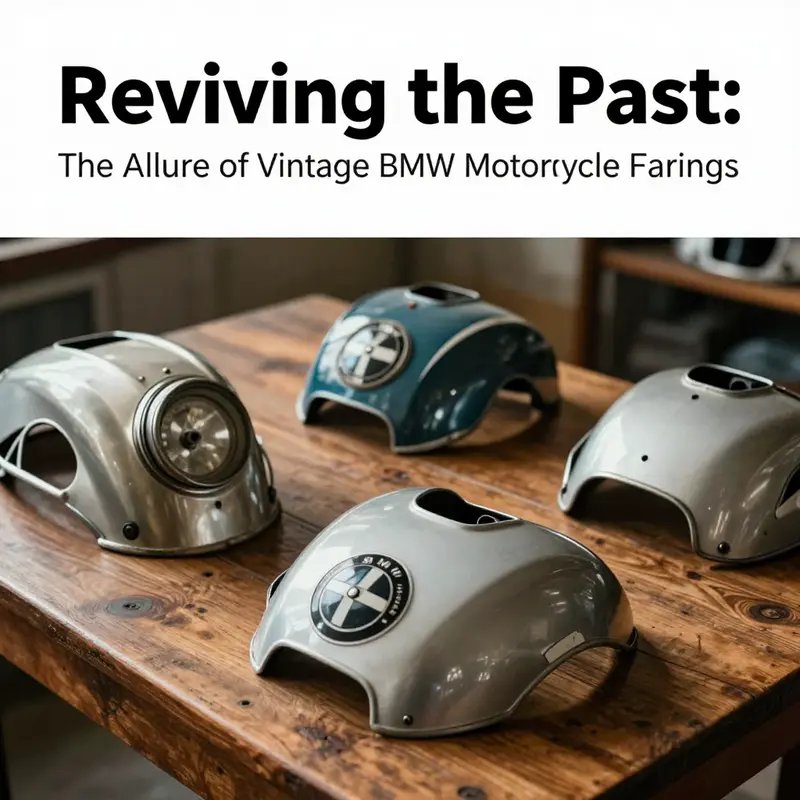
Vintage BMW fairings are more than protective shells; they are a visible lineage of engineering and design that speaks to a particular era of motorcycling: air-cooled engines, sculpted lines, and the careful integration of instruments and lighting. When you restore a bike from the R-series or early K-series, the fairing is often the most contested piece, not just for its price but for its authenticity. A correct fairing does more than cover a tank; it anchors the bike in time and helps the machine breathe its original character. The market for these pieces is a quiet ecosystem of collectors, restorers, and small production houses that understand the subtleties of BMW’s styling. The challenge, and the reward, lies in separating genuine pieces from replicas while preserving the bike’s patina rather than erasing it with a glossy, modern substitute.
Authenticity is the first condition of any meaningful restoration. NOS, or New Old Stock, parts carry a particular aura because they arrived from the factory shelf as a time capsule. But NOS is not a guarantee; the part must align with the bike’s model year, production run, and finish. The best way to verify a part’s provenance is to search for original part numbers stamped or embossed on the shell, cross-check those numbers against factory records or trusted reference databases, and look for manufacturing codes that reveal an age and a plant. The material and finish should echo the era—fiberglass with a compatible gel coat, or early epoxy resins that resist UV degradation in a way that mirrors the OEM’s performance. Documentation helps; reputable sellers often include a photo of the label, a model-to-year chart, or a certificate that traces the part back to a production run. When a found piece checks these boxes, it doesn’t just fit a bike; it fits its history.
Beyond the numbers, the provenance of a fairing is a story visible in seams, mounting points, and the subtle cues of its finish. Finish consistency matters as much as shape accuracy. Look for tool marks that align with factory tolerances, the correct texture of the gel coat, and the proper seam lines where panels join. Check that the curves match the era’s wind flow and the model’s mounting points align with brackets on the frame. A careful eye will notice if a piece has been repaired, repainted, or trimmed to disguise its true age. Reputable sellers can provide multiple angles, close-ups of fastener holes, and even photos of the inner side that shows how the fairing was constructed. Such documentation isn’t espionage; it’s a buyer protecting the bike’s authenticity and your investment. When the provenance is clear, the fairing becomes a trustworthy canvas for a true restoration.
Recommended sourcing strategies lean on community knowledge as much as on catalog listings. Online communities dedicated to BMWs, such as well-known forums and model-specific clubs, add a dimension of trust built from shared experience. Members swap stories about sellers who consistently deliver authentic parts and warn others about misrepresented pieces. The practical value of these communities lies in peer reviews, model-by-model checks, and the ability to verify a seller’s history through cross-referenced posts and photo galleries. In many cases, a seller will be asked for additional information—clear pictures of interior cavities, evidence of earlier refinishing, or a scan of the original bill of sale. These conversations can save hours of entanglement with listings that claim authenticity but lack supporting details. If you are new to the hunt, lurk before you leap; the sharper your questions, the better you can separate genuine NOS or OEM-style parts from reproductions.
For those who prefer a guided route, trusted restoration shops and specialist suppliers can be a steadying influence. These sources tend to offer OEM-style fairings that reproduce the look, if not always the exact manufacturing lineage, with a measured emphasis on fitment and long-term durability. The distinction here matters: a high-quality reproduction may faithfully capture the shape and color but might not carry the same structural integrity or historical accuracy as a factory-original piece. Quality evaluations should focus on three dimensions: fit during mounting, finish consistency across panels, and the presence of correct edge treatments and trim lines. Materials also matter; many authentic-looking reproductions rely on fiberglass reinforced shells with gel coats that withstand UV rays, while some higher-end options employ epoxy resins or even dry carbon for a performance-oriented, lighter shell. A responsible seller will be transparent about material choices, the expected lifespan of the finish, and any caveats about installation. This transparency is the bedrock of a successful restoration partnership.
Platform dynamics also shape the sourcing journey. For a collector, marketplace listings might be the first spark of interest, but the long arc of purchase requires caution. Detailed descriptions, clear photos, and the seller’s feedback history can illuminate whether the piece is a genuine piece of BMW history or a well-made stand-in. A critical habit is to compare the listed item with multiple sources. Rarity can drive price, but condition, completeness, and the presence of mounting hardware or trim pieces can swing the value dramatically. If a shell is offered without its essential brackets, seals, or gaskets, it may be worth negotiating a lower price or seeking the missing components elsewhere. Cross-model compatibility should be understood; some early BMW fairings share mounting patterns across different bikes, but mismatches can compromise both fit and aesthetic coherence. The goal is not only to acquire a part that fits but one that integrates with the bike’s visual language and historic character.
An awareness of BMW’s design evolution helps in spotting authentic pieces and avoiding costly misfires. The contours, the way the headlight bin integrates with the fairing, the air intake shapes, and the color schemes track with model years and even production runs. For example, subtle shifts in contour lines or the placement of badges can signal a later production stage rather than an earlier one. When you assemble a bike, you want a shell that speaks with the correct period voice—neither too bright a finish nor so weathered that it reads as misaligned with the rest of the machine. In this context, a mismatched color, a different shade of white, or an odd decal arrangement isn’t merely a cosmetic flaw; it can erode the bike’s narrative. The best restorations treat each component as a chapter in the bike’s biography, ensuring that the final shell, the paint, and the hardware tell a consistent story across decades.
Material choices matter in both authenticity and performance. Original fairings used materials and processes appropriate to their era, and reproductions mirror that aesthetic while making trade-offs for modern buyers. Fiberglass remains common for reproduction shells due to its moldability and cost, but the gel coat finish must be UV-stable to prevent chalking and color fade. Some producers experiment with epoxy resins for increased strength and fidelity to the original weight, while others explore dry carbon for a performance-oriented, lighter shell. The temptation to chase flashy new materials can overshadow the intent of a vintage restoration: staying true to the look and fit of the bike from its era. A discerning buyer weighs trade-offs between weight, rigidity, and ease of installation against the bike’s historical accuracy. The careful path blends the thrill of a new appearance with respect for the machine’s age, ensuring resilience for decades of riding and display.
Working with trusted suppliers turns authenticity from a goal into a sustainable practice. It is rare to stumble upon a perfect part without building a relationship that privileges quality, traceability, and predictable delivery. A structured approach to sourcing—one that prioritizes documented provenance, transparent manufacturing methods, and a trackable return policy—helps avoid the common pitfalls: misrepresented parts, delayed shipments, or parts that require significant fitting work. The better suppliers will offer not only the shell but the mounting hardware, trim, and documentation that confirms their alignment with the era. They may also provide guidance on proper surface preparation and paint matching to ensure the final appearance is uniform with the rest of the bike. In this way, the quest for authenticity becomes less a scavenger hunt and more a careful collaboration, where both sides—collector and restorer—contribute knowledge, capacity, and a shared respect for BMW’s design language.
Finally, the broader value of authenticity lies in the community that sustains it. The bond among owners who care about details—the way a faded number stamp echoes the factory’s production lines, the careful alignment of a headlight with an aged fairing, or the measured finish around the mounting holes—creates a living archive. The experience of buying an authentic fairing is not simply about matching a year; it is about preserving a standard of restoration that respects the machine’s lineage. As collectors grow more discerning, the conversation shifts from mere appearance to provenance, fit, and long-term maintainability. It invites a patient approach: study references, compare against multiple bikes in similar condition, and seek out a seller who has built trust through consistent truthfulness and technical competence. The result is not only a bike that looks correct but a restoration practice that remains credible long after the gloss wears away. In that sense, authenticity is a commitment to continuity, a decision to honor BMW’s engineering heritage rather than to reinvent it.
External guidance on NOS and reproduction parts for vintage BMWs can be found here: https://www.airheads.org/forums/topic/how-to-source-nos-and-reproduction-parts-for-vintage-bmw/
Shaping Heritage: Materials, Craft, and the Quiet Precision of Vintage BMW Motorcycle Fairings
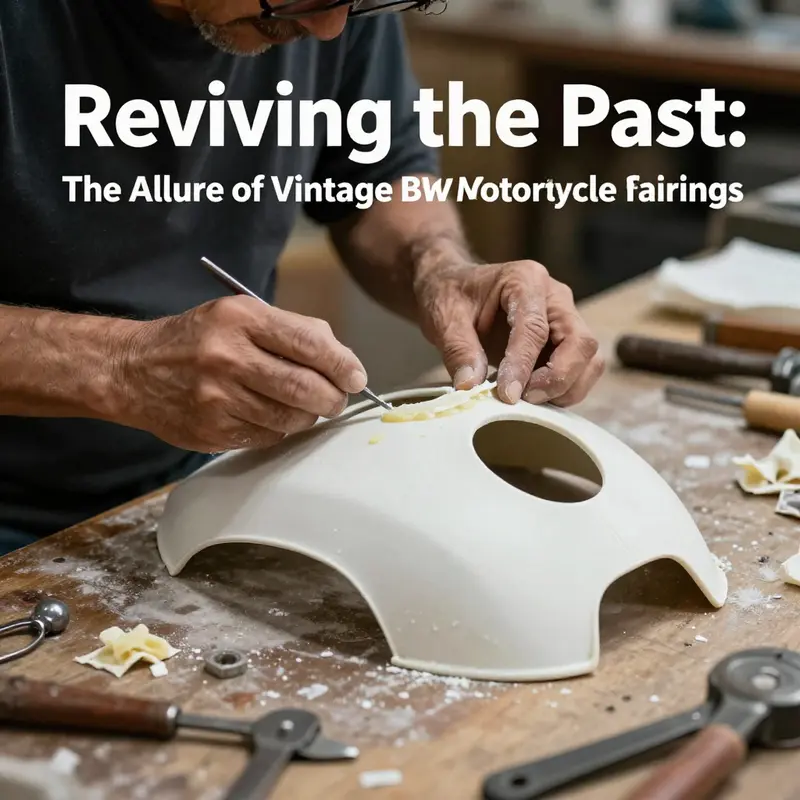
Vintage BMW motorcycle fairings are more than protective shells. They are a distilled record of an era when performance, elegance, and practical manufacture pressed into a single shape. The silhouettes of classic BMWs—the long, sculpted lines that wrap around the engine and rider, the gentle taper toward the tail, and the careful taper at the windscreen edge—were not merely aesthetic choices. They were the result of a craft that combined reshaping air with the stubborn materials of the time. To restore or recreate these fairings is to respect a balance between form and function, between the hand of the craftsman and the constraints of the factory floor.
Fiberglass, in particular, dominates the story of vintage BMW fairings. Its appeal rests on a unique combination of light weight, excellent shapeability, and reasonable strength. When manufacturer and artisan hold a piece of fiberglass in a mold, the material yields to the designer with a clarity that is hard to replicate with later composites. The process begins with a mold carved from wood or foam, the latter sometimes machined with careful input but more often shaped by skilled hands and decades of accumulated knowledge. Layers of fiberglass cloth, each cut to fit the curves, are laid by hand. Resin is applied to saturate the fibers, and the weave is coaxed to lie flat, avoiding air pockets that would dull the surface or compromise rigidity. The choice of resin matters as well: polyester resin is forgiving and cost-effective, while epoxy resin offers improved bond strength and moisture resistance, a consideration that can affect long term stability in aged or restored parts.
As each layer cures, the artisan checks thickness and symmetry, turning the fairing while the resin hardens so the surface takes on the smooth, continuous curve that defines the BMW look. This is more than vanity; the curves influence aerodynamics and rider comfort. A fairing that is too thick in one area or too thin in another can alter weight distribution, resonate with wind, or produce unwanted flutter at speed. After curing, the fairing is trimmed and sanded to remove the sharp edges and to prepare a uniform surface for paint and gel coat. The gel coat, typically a high-gloss layer, seals the surface and gives the classic glossy finish seen on many vintage examples. Colors like white, black, or metallic tones were chosen not only for period accuracy but also for their ability to accentuate the line work of the panels and the transitions from nose to screen to side panels. A well finished gel coat catches the light along those long lines and highlights the aircraft-like precision of BMW’s design language.
In many modern restorations or reproductions, producers still respect these traditional methods. Yet, to improve consistency and reduce variability, some craftspeople have adopted techniques such as vacuum bagging. In vacuum bagging, the laminate is enclosed in a flexible film and a vacuum pulls excess resin away, creating a more uniform thickness across the surface and reducing the risk of air pockets. This technique helps reproduce the smooth, unbroken planes that characterise the vintage look while improving the repeatability of production runs. Even when newer methods are employed, the core objective remains the same: to achieve a fairing that looks authentic, feels right in the rider’s hands, and interacts with the bike’s geometry without betraying its past.
An authentic BMW fairing is more than a shell; it is a carefully integrated system. The way it meets the frame brackets, the alignment of the mounting points, and the fit of the screen are all essential clues to whether a part will vanish into a vintage machine or stand apart as a replica. Designers of genuine equipment built their fairings to resolve a set of constraints that included the bike’s frame geometry, the rider’s seating position, and the airflow at highway speeds. The result is a balance of lines that preserve the characteristic silhouette: a screen that directs air to a rider’s torso while not causing buffeting at higher speeds, a belly that fairingly encloses the engine bay, and a rear portion that tapers softly into the tail. Reproduction fairings aim to capture those lines, but differences in original tooling and the geometry of the core structure can lead to subtle mismatches in weight distribution or fit. That is why many restorers and collectors insist on working with specialists who understand the nuanced relationship between the fairing and the bike’s chassis.
A closer look at authentic features reveals the details that separate period-correct pieces from decorative shells. The mounting brackets, the type of fasteners, and the way the screen is integrated with the fairing often carry the imprint of the factory’s craftsmanship. Smoked acrylic or polycarbonate screens, for example, were commonly paired with specific mounting arrangements that aligned with the fairing’s top edge and the frame’s open geometry. Those details are not merely cosmetic; they affect ventilation, wind protection, and the rider’s sense of connection to the motorcycle. The same holds true for the finish. The gel coat, when well cared for, presents a glassy surface that resists the sun’s bleaching rays and the slight chalk of long exposure. Over time, though, exposure to UV light and temperature cycles can create fine crazing or microcracks. Restorers respond with cautious refinishing: gentle sanding, careful reapplication of gel coat, and a new gloss layer that respects the original color depth and the way light plays across the panel seams.
The market for vintage fairings sits at the intersection of authenticity and accessibility. While some original equipment fairings survive in conditions that favor preservation, many enthusiasts turn to high-quality reproductions when restoring a machine for daily use or display. The key is not merely matching the color and the curve but understanding how the materials age and how the build will behave under real riding conditions. Fiberglass remains the backbone of most reproductions, but the conversation is broader. Some manufacturers now offer reproductions that use a mix of epoxy resins for better moisture resistance or even dry carbon for select panels where weight and stiffness matter. These choices reflect a tension between historical authenticity and the demands of modern performance. For collectors, the temptation to chase perfect alignment or the lightest possible shell is balanced by the recognition that the charm of the vintage look often lies in its slightly imperfect, human-made heft.
Sourcing plays a crucial role in this balance. A healthy market for vintage fairings includes a spectrum of options, from lightly restored originals to high-quality reproductions and OEM-style shells. As prospective buyers compare candidates, they evaluate fit, finish, and the story behind the part. The best suppliers, aware of the subtle differences between eras and models, can guide a buyer through questions of thickness, weight distribution, and the means of attachment to the bike frame. The goal is not simply to obtain a piece that looks right but to secure a component that can endure a long restoration journey. The process of verification often relies on careful inspection of the surface texture, the symmetry of the curves, the alignment of the mounting points, and the presence of original-style hardware where appropriate. A well-documented listing—photos that show inside ribs, seam lines, and the thickness of the gel coat—helps a buyer assess the part’s history and expected performance. When possible, a seller who can speak to the part’s provenance and maintenance history adds another layer of confidence. In the world of vintage restoration, trust between buyer and supplier grows from clear communication, transparency about materials, and a shared appreciation for the design language that defined a generation of BMW motorcycles.
For those exploring the fairing landscape, a practical step is to consider how the part will integrate with the rest of the bike. A careful restoration does not treat the fairing as a single, isolated piece; it becomes part of a system that includes the windscreen, the headlight assembly, the inner bracing, and the mounting hardware. If the goal is an authentic vintage ride, a collector may seek out a set that preserves the original panel geometry, including the curvature around the headstock and the lower belly that channels airflow along the engine case. The very act of combining these panels with a vintage seat, chrome trim, and period-correct paint completes the narrative of a machine that was born to ride as much as to look timeless. In practice, building a coherent look means paying close attention to the scale of each panel in relation to the motorcycle’s frame. It is not enough to admire a single fairing in isolation; the panels must speak to one another, forming a coherent surface that is honest to its era.
As the craft continues to evolve, the fidelity of reproductions improves, and the community of restorers grows more skilled, the fairing itself remains the heart of the machine’s visual identity. The journey from raw fiberglass to a glossy, model-accurate panel is a tale of patience, technical know-how, and a respect for the old ways. For those who want to explore further hands-on detail, a recent deep dive into the craft of fiberglass fairings in motorcycle restoration offers a broader technical frame for understanding the work behind every layer and every seam. It notes how layer orientation, surface prep, and curing cycles influence the final feel of the panel and its resistance to road wear over time. It is a reminder that the beauty of vintage BMW fairings rests not only in their lines but in the quiet discipline of making them endure.
In this context, the modern hobbyist benefits from a blended approach. Appreciate the integrity of the original design language while remaining open to pragmatic improvements that preserve authenticity without compromising the bike’s essence. The ideal restoration treats fiberglass as a fabric of history that can be repaired and renewed without erasing its past. It embraces careful measurement, faithful replication of mounting interfaces, and an eye for the way light plays along a panel seam after years of sun. This approach keeps the channel between past and present open and honest, inviting new generations of riders to discover the same sense of proportion that captivated enthusiasts decades ago. To see how a broader community curates its own collections, explore the Yamaha fairings collection as a reference point for how functional aesthetics translate across brands and models, and to compare how different producers handle the balance of heritage and modern manufacturing, consider the following broader reading and sources. Yamaha fairings collection.
Finally, for those who crave more depth about the material science behind fiberglass and related bodywork, the long view from professional restoration tracks the same themes across brands and eras. The craft remains anchored in a respect for the sense of proportion that life-sized drawings capture when they first leave the drafting table. The surface that riders see is a product of careful thinking about how air will move around a motorcycle at speed, how the rider will experience that air, and how the part itself can survive decades of vibration, heat, and sun. The enduring lesson is that the best vintage fairings are not merely old shells but well-made, thoughtful solutions that keep a machine’s spirit intact while inviting riders to feel the road in a way that feels cinematic and timeless. For those seeking additional technical perspective, see the detailed discussion on fiberglass fairings in the Motorcycle Classics article linked in the sources.
External resource: Fiberglass fairings in motorcycle restoration. https://www.motorcycleclassics.com/magazine/2023/06/fiberglass-fairings-motorcycle-restoration
Nostalgia in Flux: Market Dynamics and Economic Realities of Vintage BMW Motorcycle Fairings
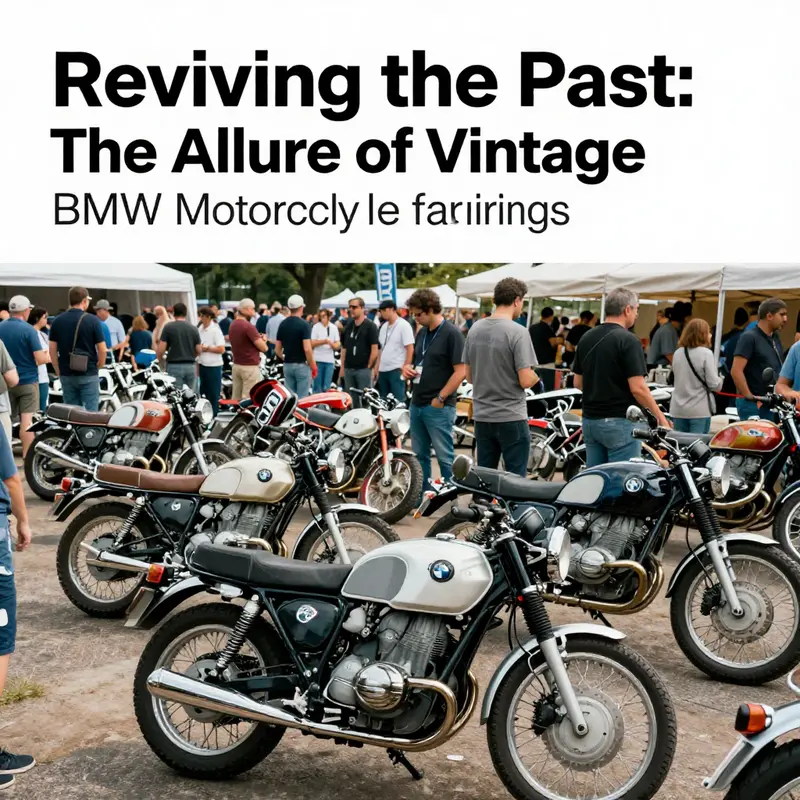
Every motorcycle carries a story, but a vintage BMW with its fairings intact tells a story with provenance, aesthetics, and engineering aligned in a single arc. The market for these components is not merely about replacement parts; it is a strategic intersection of heritage stewardship, collector psychology, and the economics of small-batch fabrication. Vintage BMW fairings, especially those from celebrated lines like the R-series air-cooled era and various K-series generations, sit at the heart of restorations that aim to recapture a moment when form and function fused in the wind. Demand flows from multiple impulses: the nostalgia that links rider and machine to a bygone era, the collector’s eye for originality, and the practical need to preserve integrity during a painstaking rebuild. Auction results and private sales that feature unrestored, low-mileage examples of iconic models have shown that the market assigns tangible value to the skin of the machine as much as to its heart. When a factory-specified shape and surface meet the right condition, the fairing becomes more than cosmetic; it is a keystone for the bike’s historical narrative and the restoration’s credibility. This dynamic pressure—nostalgia meeting inspectable authenticity—has pushed fairings from mere protection into a collectible asset whose condition is read as carefully as a VIN or an engine number.
The value of a vintage BMW fairing is not fungible. Its worth hinges on model-specific fit, the presence of original mounting points, and the integrity of paint and gel coat. In discussions about restoration, the fairing is both a functional shell and a canvas of history. When a rider searches for a fender, a screen, or side panels, they are not simply seeking a shield from road spray; they are seeking a tangible link to a specific sprint or era—an R90S’s red-and-orange palette, a quintessential air-cooled silhouette, or the clean, purposeful line of a late-70s/early-80s BMW touring fairing. The market responds accordingly. Unrestored pieces with minimal miles—or better, examples that retain the bike’s original look with honest wear—tend to anchor bidding, creating a benchmark against which reproductions and OEM-style alternatives are judged. The result is a niche where the value of the external shell can influence the total restoration budget just as much as the engine internals or the frame itself. In this environment, the fairing is a negotiator of narrative and economics alike.
As collectors seek authentic parts, the ecosystem around vintage BMW fairings has matured. A robust secondary market for genuine parts is complemented by a growing cadre of restoration shops and suppliers who produce high-quality OEM-style fairings designed to honor the original geometry. These reproductions are not mere facsimiles; they are engineered to align with the same mounting schemes, vent configurations, and seam lines that defined the period’s design language. Where a new part can’t capture the exact sun-warmed nuance of an original, a well-made reproduction can deliver a faithful look and reliable fit, preserving the bike’s visual cadence while offering practical durability. Materials have evolved with the times. Fiberglass remains a common backbone for many OEM-style shells, but modern gel coats offer UV stability that guards against fading. Anti-static resins, used to reduce dust attraction during handling and painting, further support a restoration workflow that seeks both accuracy and efficiency. The choice between original and reproduction often comes down to a balance between authenticity, budget, and the preservation strategy for the bike in question. In some cases, the best path to a faithful finish is a carefully sourced reproduction that mirrors the scale and curvature of the classic lines without introducing later-era compromises.
From a procurement perspective, the market has diversified beyond the vanity of appearance into what one might call a reliability-centered approach. A growing number of suppliers emphasize OEM-style fit and finish, acknowledging that the badge on a BMW fairing is not only a symbol of brand but a benchmark for fit, color fidelity, and mounting precision. Gel coats that resist yellowing and UV degradation are standard in reputable reproductions, and resins engineered for dimensional stability help ensure that the shell does not distort in temperature swings or during solvent-based paint processes. The shift toward more controlled materials does not erase the romance of the past; it enhances it by limiting the incidents of misfit and degradation that used to frustrate restorers. Yet the market remains wary of trade-offs. Catalog pricing or aggressive lead times can tempt buyers into choices that compromise quality. A structured buying approach becomes essential, one that weighs operational reliability, technical capability, and the potential for a long-term partnership with the supplier. In effect, buyers are not merely evaluating a part; they are assessing a collaborator who can support the bike’s story through the many years of its post-restoration life.
The economics of vintage BMW fairings also reflect broader shifts in global supply chains. The traditional offshore model—where small but precise parts were manufactured far away—often exposed restorers to unpredictable delays and price volatility. The current market has seen a meaningful recalibration toward localized or near-shore production. By sourcing critical inputs like epoxy resins, dry carbon sheets, and release agents domestically, suppliers have shortened lead times and improved pricing predictability. The estimated reductions in lead times, on the order of a substantial fraction—up to forty percent in some cases—translate into smoother project timelines, fewer missed restoration windows, and greater confidence in inventory planning. This logistical resilience matters as the restoration calendar often compresses around rider events, concours deadlines, or the availability of rare donor components. It also resonates with the sustainability agenda that many collectors now embrace, favoring shorter supply chains that minimize transport emissions and support regional expertise.
Nevertheless, opportunity and risk walk hand in hand. The same market dynamics that reward fast delivery and reliable sourcing can magnify the consequences of quality lapses. A single batch of resin with inconsistent curing or a color-matching deviation in a gel coat can derail a restoration timeline, turning a dream project into a months-long delay and a budget that spirals beyond the forecast. For buyers, the remedy is not to chase the lowest price or the shortest lead time alone but to pursue a disciplined supplier selection process. A vendor’s operational reliability—evidence of process control, traceable material provenance, and a history of on-time delivery—becomes as important as the aesthetic alignment of the shell itself. Technical capability matters, too. A partner who can advise on paint compatibility, surface preparation, and the interplay between fairing geometry and mounting hardware can save hours of trial-and-error work. Long-term partnership potential often emerges as the most valuable asset in these relationships. A supplier who understands BMW design history, who can reproduce a specific trim line or vent cut with fidelity, and who stands behind quality with clear warranty terms becomes a strategic ally in the restoration journey. The upshot is that the market for vintage BMW fairings is no longer a simple exchange of a shell for a few dollars; it has matured into a collaborative, knowledge-rich ecosystem that blends artistry, metallurgy, and logistics.
As heritage-minded buyers navigate this market, the value proposition of an authentic or well-executed OEM-style fairing expands beyond appearance. The fairing’s condition influences the rider’s overall restoration budget, the bike’s final appraisal value, and even the potential for future investment returns. A pristine, correctly engineered shell can preserve or enhance the bike’s historical narrative, supporting higher-quality finishes across the rest of the bodywork. Conversely, a subpar reproduction or a misfit piece can undermine the entire restoration, creating a scenario where time and money are wasted chasing compensation through future sales or concours judgments. This reality fuels a preference for transparent documentation: material specifications, manufacturing tolerances, test-fit notes, and high-resolution images that verify authenticity and fit. Collectors who adopt this disciplined approach often find themselves better positioned to weather market fluctuations, because they can articulate the value of the shell in terms of a reproducible restoration standard, not just a subjective judgment about “looks right.”
Within this frame, the market’s trajectory looks set to rise alongside the broader appeal of classic motorcycles as a category. As more enthusiasts commit to the long-term preservation of their BMWs, the fairing—once a purely functional envelope—gains status as a central piece of the bike’s legacy. The economics of supply and demand will continue to push authentic and carefully crafted reproductions upward in price, as long as quality remains the differentiator. That means buyers who embrace a meticulous sourcing strategy, who align with suppliers capable of delivering consistent results, and who view the restoration as a long arc rather than a single purchase, will likely see a favorable balance of value over time. In the end, what makes vintage BMW fairings so compelling is not only their silhouette or their color but their capacity to economically anchor a restoration that honors a manufacturer’s design language and the rider’s sense of connection to a storied lineage.
For readers seeking a concrete sense of market direction, recent trends point to a steady ascent in value for original and OEM-style shells, tempered by the usual cautions about counterfeit or poorly matched components. The careful buyer who pairs historical knowledge with a rigorous sourcing approach can navigate price cycles with confidence while contributing to the preservation of a brand’s heritage in the process. The chapter’s closing image is not a fixed price on a desk but a living project—one where market forces, material science, and a collector’s commitment converge to keep the BMW wind in the story, even as the wind itself changes. For further context on the broader market dynamics affecting vintage BMW motorcycles, see the authoritative market trends report linked in the external reference below.
Internal reference note: while the BMW-specific ecosystem remains centered on authentic and OEM-style fairings, the broader category of sport and vintage motorcycle fairings informs how supply chains, material choices, and restoration practices evolve. For enthusiasts seeking broader sourcing options that maintain a commitment to quality, exploring the Yamaha fairings collection offers a useful benchmark for fitment philosophies, manufacturing tolerances, and finish standards that collectors expect when pursuing a faithful restoration. Yamaha fairings illustrates how a well-organized catalog and a consistent finish approach align with the expectations of a discerning restoration community, even when the primary focus is a different marque. This reference is indicative of how manufacturers and retailers structure their offerings to support careful restoration work across the sport-bike spectrum. External reference: Vintage BMW Market Trends 2026 provides a broader, evidence-based view of how this niche is evolving in the current decade: https://www.motorcycle-riding.com/vintage-bmw-motorcycle-market-trends-2026
Preserving the Shape of History: Restoration Trends for Vintage BMW Motorcycle Fairings
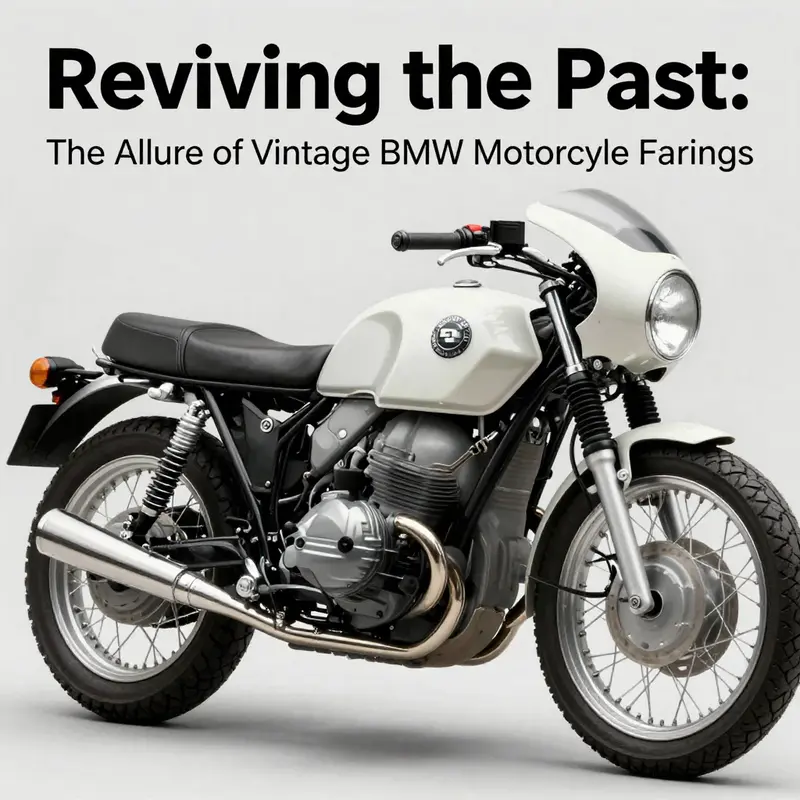
The fairing is more than a shield against wind and weather; it is a storyteller, a visual shorthand for an era when air-cooled engines ruled the road and design spoke as loudly as horsepower. On vintage BMW motorcycles, the fairing carries both engineering intent and cultural memory. It frames the rider, it frames the ride, and it carries a patina of time that many collectors prize as much as the bike’s mechanical completeness. In the workshop and at motorcycle shows, restoration work on these components has evolved into a discipline that honors authenticity while accommodating the realities of aging materials and modern riding conditions. The latest trends in restoring vintage BMW fairings reflect a shared respect for history, balanced with practical considerations about longevity, safety, and usability. It is a discipline that rewards patient craftsmanship, meticulous documentation, and an eye for details that only repeat exposure to these venerable shapes can sharpen.
Authenticity and precision remain the heart of the restoration ethos. Restorers increasingly source period-correct materials and apply methods that replicate the look and feel of the factory finish without turning the clock back to the original, fragile manufacturing tolerances. Original-style fiberglass molds are prized for their fidelity; they guide the process of reproduction when exact replicas are needed, and they anchor a project in verisimilitude. The hand-laid composite layers that emerge from skilled workshops carry the tactile impression of the era—the slightly variable weave, the subtle thickness differences, and the way light settles into the surface in a way that mass-produced reproductions sometimes struggle to imitate. This approach is especially important for iconic models such as the air-cooled R-series and the early K-series, where the curvature of the fairing, the rake of the windscreen, and the transition to the tank line are as defining as the engine. The goal is not to recreate a factory line in a modern garage but to recapture the touch and character of the original parts, so the bike speaks with one consistent voice when viewed from every angle.
To achieve this, restorers combine archival resources with hands-on craft. The process often starts with close visual and tactile inspection: checking for consistent glass thickness, evaluating the surface irregularities that signal hand-lain or reinforced areas, and assessing the overall geometry against reference templates from period brochures or service manuals. When color is involved, archival color charts and OEM paint codes become more than references; they are safeguards against anachronism. The paint, clear coat, and even the gloss level are chosen to mimic the factory finish, but with a degree of resilience that original materials rarely possessed after decades of exposure. The finishing stage may involve wet-sanding and multiple polishing passes to achieve a glass-smooth surface that still hints at the age through the remaining micro-scratches and the unevenness that comes from careful, non-destructive refinishing. This blend of traditional technique and modern discipline is central to the craft. It also underlines a broader respect for the historical narrative written by every rider who mounted a BMW in the 1970s and 1980s, when the fairing was as much sculpture as shield.
Another key trend is the thoughtful use of reproduction parts that stay faithful to original design language while improving durability. A growing segment of the restoration market embraces high-quality reproductions based on original tooling. These parts enable restorers to preserve the bike’s silhouette and proportions without sacrificing ride quality or long-term service life. Reproductions can fill the gaps where a damaged section cannot be repaired to an acceptable standard or where the original tooling has become difficult to source. The best reproductions are not cheap facsimiles; they are products of careful reverse engineering that respects the delicate balance between weight, rigidity, and flex. They give restorers a reliable baseline for fitment and alignment, ensuring that body lines, mounting points, and fastener locations remain consistent with the original geometry. This approach preserves the bike’s classic character while acknowledging the realities of modern materials and manufacturing tolerances.
Alongside authenticity in shape and finish, there is a quiet, strategic adoption of subtle modern upgrades. Restorers are increasingly comfortable adding improvements that extend the life of the fairing and its mounting system without altering the bike’s visual integrity. UV-resistant clear coats help shield the finish from sun damage, a risk that has become more pronounced as many bikes spend longer periods on display or in less-than-ideal storage conditions. Lightweight reinforcement layers are used in non-structural areas to reduce the risk of cracks from vibration and minor impacts. These upgrades are deliberately understated; they are designed to be invisible to most observers, preserving the original silhouette and color. The aim is longevity and reliability rather than performance enhancement. When done with restraint, these enhancements can dramatically improve a fairing’s resilience to environmental exposure and daily use, enabling more owners to enjoy attentive maintenance rather than a constant fear of cosmetic deterioration.
In this evolving landscape, the role of expertise cannot be overstated. Restoration is not a hobby but a serious technical practice that demands a structured approach. Evaluating value, provenance, and condition requires a careful, documented process. The nuances of design history—curve radii, transition radii, and the way light plays across a curved surface—are essential knowledge if a collector hopes to preserve an authentic lineage. This is where expert guidance becomes crucial. A trusted reference is a guide to the valuation and restoration of BMW vintage motorcycles, which outlines the specific factors that influence a fairing’s value and authenticity. It emphasizes evidence-based appraisal, cataloging, and provenance verification as core elements of responsible restoration. While the guide focuses on the broader category of vintage BMW motorcycles, its emphasis on historical fidelity and documented history translates directly to fairing restoration: the origin of the tooling, the era-specific paint and decals, the maintenance history, and any documented repair work all contribute to the final value and aesthetic integrity of the bike.
For practitioners seeking to broaden their sourcing while maintaining quality, the market offers a spectrum of options. Reproduction parts from dedicated specialists provide practical alternatives when originals are no longer viable. The process of selecting such parts involves more than matching model numbers; it requires an eye for line continuity, join integrity at seam points, and the way a replacement sits in the overall silhouette. Even rare edge cases—such as complex contours that define the transition from fairing to temple or radiator mount points—demand meticulous comparison with archival images and reference measurements. In some instances, restorers may blend original fragments with carefully matched replicas to reconstruct a complete piece that is both faithful and robust enough for daily riding. The attention to detail extends to hardware as well, since fastener shapes and finish can subtly alter the perception of the entire assembly.
The restoration journey, then, is not merely about making a bike look new. It is about granting it permission to endure in the form its designer imagined decades ago. This involves balancing reverence for patina with the pragmatic needs of a modern rider. Patina—those micro-scratches, slight residue, and faint color shifts—often carries more historical information than pristine surfaces. It speaks to the bike’s journeys, the climates it endured, and the hands that coaxed it through long miles. To preserve this history, restorers might selectively remove corrosion and repair damage in a way that does not erase the evidence of the machine’s life. The object remains legible; the rider’s story remains legible; and the bike continues to communicate with those who encounter it, whether they are collectors, restomod enthusiasts, or riders who simply appreciate the era’s design language.
Supply chains for restoration work reflect a blend of tradition and modernity. Long-standing relationships with experienced workshops and reputable suppliers are essential for consistent outcomes. A structured approach—focusing on proven operational reliability, technical expertise, and long-term partnership potential—helps prevent quality inconsistencies and minimizes delays. This approach also facilitates access to archival materials, color codes, and historically accurate tooling that might otherwise be difficult to source. It is a reminder that value in these restorations is not merely monetary; it resides in the cumulative trust built between the owner, the restorer, and the workshop that houses the knowledge to translate a design drawing into a living, breathing bike.
Within this ecosystem, a single, practical consideration often governs the pace of a restoration: fit and finish must fulfill both display and ride criteria. A fairing that sits correctly on the frame, aligns with the tank shape, and matches the wheelbase, without requiring intrusive modification, embodies the best of both worlds. It allows the bike to be enjoyed as a complete machine and as a historical artifact. The balancing act—between truth to the original and fidelity to the current ride experience—is the invisible thread that runs through every successful project. The result is a vintage BMW that retains its visual identity while showing signs of careful adaptation to the test of time. Owners who embark on this path discover that restoration is less about imitation and more about interpretation: about reading the period correctly and translating that reading into a tangible, rideable object that invites new stories without erasing old ones.
For readers seeking further guidance, many restoration communities point to resources that help quantify value, document provenance, and establish best practices in fairing evaluation. These resources emphasize a disciplined approach to assessment—checking for original tooling marks, verifying paint layers against known factory ranges, and recording every repair or modification to preserve a bike’s narrative. Such practices help ensure that the restored fairing continues to contribute to the bicycle’s overall value and to the rider’s enjoyment, rather than becoming a mismatched piece that undermines the vehicle’s historical coherence. This is not merely about keeping a shape intact; it is about maintaining a living link to the engineering, aesthetics, and personalities that shaped BMW motorcycle design during an era when form followed function in the most definitive way.
As restoration methods continue to mature, the community’s collective memory grows richer. The shared knowledge—of which techniques work best in particular plastics and composites, which color matches hold under light, and how to preserve original fastener patinas—becomes a resource, not a secret. It travels through forums, workshops, and journals in a way that keeps the art of restoration dynamic. Even as new materials and tools emerge, the emphasis remains on authenticity, durability, and respect for the bike’s historical language. The result is not simply a cosmetically restored fairing, but a faithful re-creation of the original rider’s experience, a bridge between past and present that allows another generation to hear the whisper of an air-cooled engine and feel the road through a fairing that has earned its place in a long, continuing conversation about design, engineering, and riding pleasure.
For those who want to explore further, a curated resource on BMW vintage motorcycles offers deeper insights into how valuation and restoration practices influence the final presentation of a project. This guide remains a touchstone for understanding the criteria used to judge a fairing’s condition, provenance, and overall historical integrity. It underscores that value comes from a combination of tangible evidence—the quality of materials, the precision of assembly, the quality of finishes—and intangible factors like documented history and the maker’s intent. In short, restoration trends for vintage BMW motorcycle fairings reflect a broader movement toward conscientious craftsmanship, where history is not merely preserved in a cabinet but brought back to life on the road.
External resource for deeper context: https://www.bmwblog.com/2026/01/25/what-makes-bmw-vintage-motorcycles-valuable/
Internal link to related materials: Suzuki fairings collection offers a useful reference point for how specialist suppliers approach historical styling and fitment across brands, illustrating the shared challenges and solutions found in reproduction parts and restoration-grade components.
Final thoughts
The world of vintage BMW motorcycle fairings is rich with nostalgia, dedication, and a communal passion for two-wheeled heritage. As the demand for these components continues to grow, businesses that engage with authentic sourcing, understand manufacturing intricacies, and keep a pulse on market trends will find ample opportunities to flourish. Coupled with the revival of classic restoration aesthetics, the potential for profit and customer loyalty within this niche is significant. Embracing the legacy of vintage BMW fairings not only fulfills a demand but also enriches the connection between riders and their historical roots, creating a thriving market for quality restorations.