
Vintage motorcycle race fairings hold a special place in the hearts of enthusiasts, merging aesthetic charm with functional design. Steeped in history, these fairings embody the spirit of racing from the 1950s to the 1970s, making them highly coveted by collectors and custom builders alike. In tracing their historical evolution, we witness the resurgence of retro-inspired aesthetics in modern motorcycle culture. The materials and design innovations behind these fairings reveal how they remain both durable and lightweight, catering to both performance and visual appeal. Finally, we delve into current market trends, examining community engagement and the thriving marketplace that sustains the legacy of vintage motorcycle race fairings. Each chapter underscores the significance of these iconic components in the context of business opportunities within the motorcycle industry.
The Silhouette of Speed: A History of Vintage Motorcycle Race Fairings
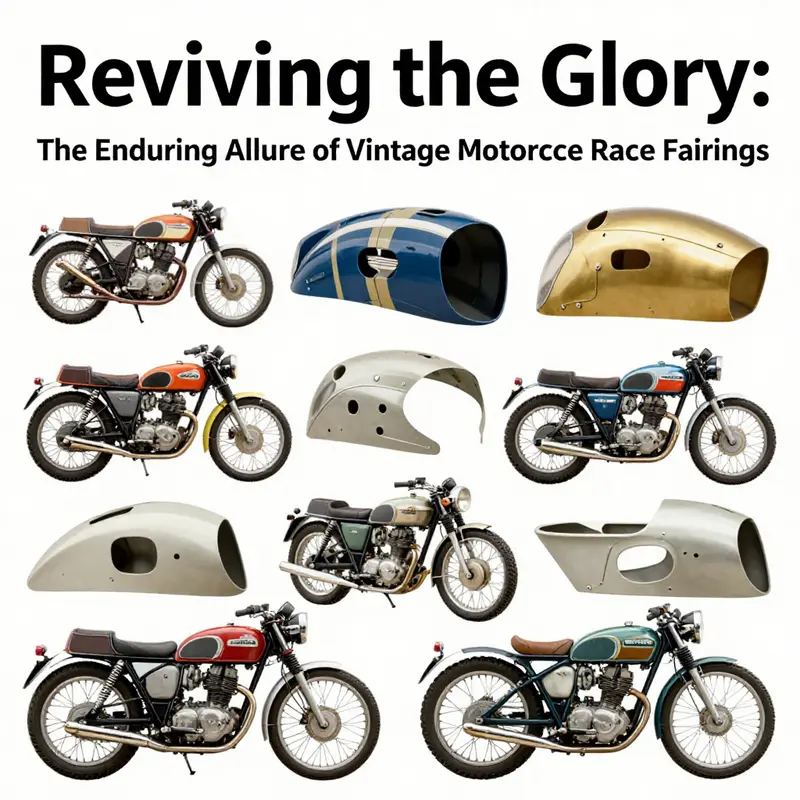
Speed shaped the early fairings, born from shielding the rider from wind and debris while preserving weight and balance.
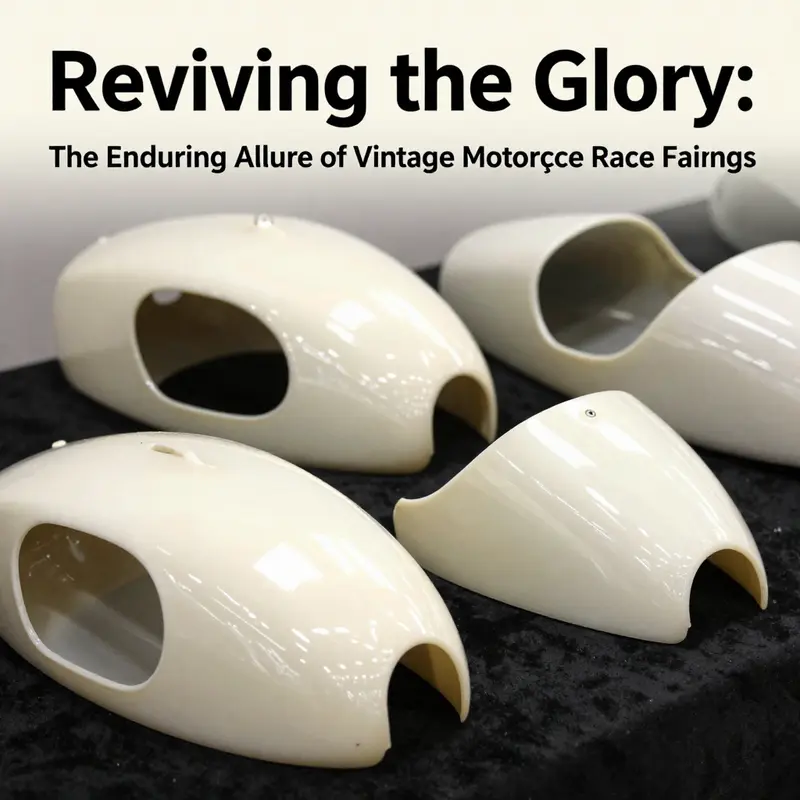
In the mid-20th century, practitioners built simple shells from fiberglass and aluminum that hugged the frame and protected the rider, prioritizing function over form. As circuits demanded more, designers began to shape the wind and refine the profile to reduce drag without sacrificing protection.
In the 1960s, fiberglass shells gave way to more integrated profiles that managed frontal area and flow around the rider. The line between protection and performance blurred as aerodynamics entered the toolkit, yielding silhouettes recognizable to fans of classic racers.
The 1970s and 1980s saw fairings treated as active aerodynamic components, with careful tapering, smoother transitions, and taller windscreens to optimize laminar flow. The fairing became a system, not a shell, influencing handling, braking, and the chassis rhythm.
By the 1990s and beyond, CAD and wind tunnel data accelerated iteration while preserving the heritage language. Modern reproductions often balance period look with contemporary tolerances and materials, letting riders relive the past while maintaining reliability on today’s bikes.
Today’s scene blends restoration, homage, and innovation. Enthusiasts seek period-correct shapes or heritage-inspired lines that acknowledge wind, rider ergonomics, and the machine’s overall architecture. Reproductions and careful restorations let new generations experience the aesthetic of speed—an enduring silhouette born from a timeless pursuit.
null
null
Racing Nostalgia in a Living Market: How Vintage Race Fairings Shape a Global Community and a Growing Industry
The chapter title invites us into a realm where metal, fibreglass, and stubborn devotion to design meet the rhythms of a modern marketplace. Vintage motorcycle race fairings are not mere panels that reduce drag; they are carriers of memory, sculpted echoes of the wind tunnel behind a racetrack long since retired from its original circuits. They embody a philosophy that blends retro aesthetics with purposeful engineering. When riders and builders seek these fairings today, they are not simply acquiring an accessory; they are stitching together a lineage that spans decades. The revival of interest in authentic or period-correct fairings shows how a niche can redraw its boundaries, moving from a quiet corner of restoration shops to a dynamic, nearly global conversation that involves collectors, restorers, artists, and a widening ecosystem of suppliers and communities. In this sense, market trends and community engagement are two sides of the same coin: demand creates a space for craftsmen and marketplaces, and the energy of enthusiasts sustains and expands that space through shared knowledge, testing, and storytelling.
What is driving this revival is not merely nostalgia, though nostalgia is a powerful force. It is also a recognition that true vintage components offer something that modern reproductions sometimes struggle to match: authenticity in detail, texture of age, and the quiet evidence of the machine as a partner rather than a template. The fairing, as a component, sits at the intersection of style and function. It frames the rider in the moment of acceleration, and it frames the machine as a story rather than a mere engine on two wheels. For collectors, restorers, and builders, the fairing is a tactile archive. Its curves, seams, and mounting points tell the history of a period of racing, the constraints of materials, and the evolving understanding of aerodynamics. The current market reflects this complexity. It encompasses both original vintage pieces that survive in museums or private collections and carefully crafted reproductions that allow a new generation to experience the silhouette and the feeling of a bygone era while still engaging with contemporary riding and safety standards.
Market demand in this niche is nuanced. It is less about mass purchase and more about the precise alignment of several factors: the authenticity of the shell, the accuracy of the mounting system, the fidelity of the paint and decals, and the overall condition of the component. Enthusiasts often pursue period-correct details, down to the rivets, the badge placement, and the join lines that reveal how a fairing was engineered to fit a specific frame and model. This attention to detail raises the premium for authentic or period-accurate pieces, but it also sustains a resilient secondary market where collectors trade rare items, restorers seek exact patterns, and craftsmen supply both faithful reproductions and innovative modernization options. In this landscape, even a small deviation from original geometry—say, a minor alteration in the air intake position, or a slightly altered curvature to accommodate modern forks—can ripple through the value and the fitment of a restoration. The market thus rewards not just aesthetic alignment but a demonstrated respect for engineering nuance and historical fidelity.
A telling signal of the market’s current strength is the breadth of demand that extends beyond strictly original race bikes. The wider vintage and retro segments have begun to feed a steady demand for fairings that honor the look and the spirit of the era while serving as functional upgrades for contemporary riders who value both form and performance. This expansion is not simply a matter of collecting; it is about the cross-pollination between restoration, customization, and café racer culture. The café racer phenomenon—where riders fuse classic design cues with modern reliability—has become a powerful amplifier for fairings because these builds rely on clean lines, minimalism, and a sense of history translated into contemporary aesthetics. In practice, this means more builders are commissioning or fabricating shells that echo the factory shapes of the 60s, 70s, and 80s but with improved materials, stronger resins, and better impact resistance. Fibreglass remains a staple for its balance of weight, cost, and workability, but high-grade ABS plastics have gained traction for their durability and facially precise finishes. The result is a marketplace that supports both museum-quality restorations and road-ready, performance-focused builds, all under the same banner of historical reverence.
The value reality of the market is reflected in the broader economic context of motorcycle components. A recent industry outlook places the global motorcycle fairing market in the realm of several tens of billions of dollars, with a notable portion of growth attributed to vintage and retro-style segments. In practical terms, this means more options for enthusiasts to select from: authentic period pieces, high-quality reproductions, and hybrid forms that preserve the silhouette while updating mounting hardware and aerodynamics for modern safety standards. For collectors and restorers, authentication and provenance have become essential currencies. The story behind a fairing—the origin, the workshop that produced it, and the era of its use—can elevate a piece from a simple part to a cultural artifact. As the community grows, so too does the demand for documentation: build sheets, photos, correspondence, and even case studies that trace the fairing’s journey from the track to a display shelf or a rider’s garage. This culture of documentation fuels trust, which in turn accelerates trade in genuine pieces and confident purchases of high-quality reproductions.
An important driver of market vibrancy is the way digital platforms extend reach and accessibility. Online marketplaces and auction sites offer opportunities to discover rare items that would otherwise have remained hidden in private collections or out-of-reach for regional shops. The digital arena lowers the barriers to entry for new collectors, enabling them to participate in price discovery, connect with knowledgeable sellers, and learn through the shared experiences of a global community. Yet this digital shift also brings challenges. The same technologies that expand access can complicate the verification process. Provenance can be obscured, and reproductions can blur the line between original and recreated pieces. The most resilient communities navigate these tensions through open forums, expert moderators, and collaborative projects that document what is authentic and what is reproductions. In this sense, community governance—how knowledge is shared, how trades are verified, and how disputes are resolved—becomes as critical as the physical components themselves.
The community dimension of vintage fairings is not merely about buying and selling. It is about the social practice of restoration and the storytelling that grows from shared hands-on work. Online forums buzz with questions about fitment, encouragement for correct paint schemes, and technical advice on achieving both authenticity and reliability. Social media groups crafted around particular eras or design lines function as living archives where builders post project updates, share their missteps, and celebrate the small, often invisible, improvements that bring a vintage project to life. At the same time, seasoned restorers and mentors offer guidance, sharing practical tips on surface preparation, decal reproduction, and the delicate process of aligning fairings with vintage forks and frames. This mentorship culture is a key strength; it accelerates learning, reduces the risk of costly mistakes, and helps preserve the tactile knowledge that keeps aging components functional and true to their period aesthetics.
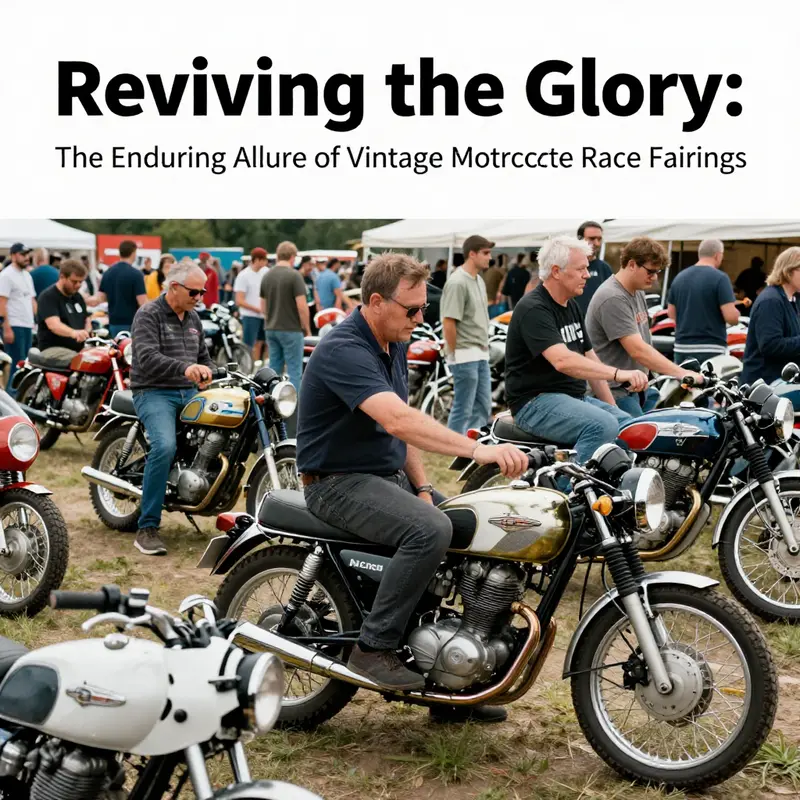
Events and gatherings provide a different, equally vital dimension. Vintage rallies, showcases, and dedicated bike nights give participants tangible spaces to compare notes, swap parts, and celebrate craft in a mass-to-small-scale setting. These occasions function as focal points where the abstract market signals visible in data and trend lines become concrete, social experiences. Riders bring their projects, manufacturers or makers display reproductions and trim details, and enthusiasts engage in conversations that blend technical assessment with emotional resonance. The result is a public-facing validation of the market’s vitality: a visible, shared expression of what vintage fairings represent in the broader culture of motorcycling. The social energy surrounding these events reinforces brand loyalties within the community, while also inviting newcomers to participate in the ongoing conversation about design, engineering, and heritage.
The influence of these fairings stretches beyond the hobbyist circles. Modern motorcycle manufacturers and aftermarket suppliers observe how vintage aesthetics continue to captivate riders, not only as a visual cue but as a design language that informs contemporary products. While these modern iterations may depart from period exactness, the intent is clear: to evoke the same sense of motion, speed, and lineage that fairings conveyed decades ago. The market’s health depends on this dialogue between past and present. It requires a steady stream of authentic references and the ability to translate that knowledge into accessible, reliable parts for today’s riders. In turn, the community benefits from a steady cadence of new ideas, from resin technology that better captures the subtleties of old shapes to safer, lighter mounting solutions that preserve the rider’s experience while meeting current safety standards. The interplay of market dynamics and community practice thus constitutes a self-reinforcing loop: appreciation fuels demand, demand incentivizes craftsmanship, and craftsmanship keeps the memory of vintage racing alive in a world that is continuously rewriting the rules of speed and style.
Within this ecosystem, practical considerations shape what is possible for enthusiasts. The condition and availability of authentic fairings influence decisions about restoration timelines and budgets. Provenance is increasingly recognized as a critical asset; a well-documented piece can justify higher value and more confident replacement decisions when parts are scarce. For many builders, the question is less about perfect replication and more about achieving the correct character while ensuring that the piece can withstand modern riding conditions. This often requires careful decisions about materials, structural reinforcement, and finishing techniques. It is here that the community’s cumulative knowledge proves most valuable. Veteran restorers share their experiences with different resins, paint systems, and decal reissues, while newer builders contribute fresh perspectives on lightweight composites and production methods that can emulate the vintage feel without sacrificing durability. The outcome is a more resilient market where authenticity and craft are not mutually exclusive with practicality and safety.
Another layer of complexity emerges when considering cross-border trade and the logistics of rare parts. Vintage fairings, especially those tied to storied racing histories, carry a premium that makes shipping, insurance, and customs more salient concerns. The global nature of the community means that buyers, sellers, and restorers are often navigating different regulatory environments and shipping realities. Yet the global interest also multiplies the opportunities for collaboration. Builders can source hard-to-find components from distant regions, share restoration techniques across time zones, and participate in international events that celebrate technical elegance and historical memory. In this sense, the market’s growth is not a straight line of price increases or inventory expansion; it is a tapestry of cross-cultural exchange where aesthetics, knowledge, and technical skill travel as freely as the machines themselves.
To anchor this discussion in observable data while keeping the narrative grounded, it helps to reference the broader market context. The motorcycle fairing market, as a whole, has reached a substantial scale and is projected to grow in the coming years. Within this market, vintage and retro-style segments occupy a meaningful share of growth, reflecting the enduring appetite for design that pays homage to the machines that once defined the sport. This macro perspective illuminates why communities invest time and resources into the preservation and celebration of vintage fairings: they are not only artifacts but catalysts for a living culture that traverses hobby, art, and engineering. For participants, that means opportunities to contribute to a story that others can participate in, whether through restoration projects, exhibitions, or the simple act of sharing progress and methods with fellow builders. The social fabric—the befores and afters, the trial-and-error learning, the exchange of paint codes and decal kits, the careful documentation of fitment—becomes just as valuable as the actual fairings themselves. The fairing, in this light, is both a product and a narrative, a tangible piece of history and a living portal to current practice.
The narrative of market trends and community engagement around vintage race fairings is thus a story of continuity and adaptation. Enthusiasts are not clinging to a static past but actively shaping how heritage is preserved, displayed, and experienced. They embrace the challenge of maintaining authenticity while embracing the possibilities offered by new materials, new manufacturing techniques, and the global reach of online communities. They are building a shared culture that honors the precision of the past while welcoming the creative energy of contemporary builds. The result is a thriving, interconnected network where a single fairing can inspire a restoration, spark a new café racer project, or serve as a touchstone for a conversation about what motorcycling means across generations. The chapter of history being written here is not a museum chronicle but a living, evolving dialogue—one that invites participation from riders, restorers, collectors, designers, and spectators who value both the thrill of speed and the dignity of craft.
For readers curious to explore practical avenues within this vibrant ecosystem, consider the digital hubs through which knowledge is shared. A focal point for ongoing dialogue and resource sharing is the Honda fairings collection page, which serves as a case study in how a dedicated online catalog can support both preservation and creative customization. The broader takeaway is that access to well-curated parts, precise technical information, and a community of supportive practitioners can transform a niche interest into a durable cultural practice. When a builder posts a progress update about aligning vintage lines with modern fasteners or shares a tip on achieving historical paint finishes, the impact ripples through the community, prompting others to weigh their options, test new techniques, and contribute their own findings. The momentum created by these exchanges keeps the market lively and the memory of the machines alive.
As this chapter looks forward, it recognizes that the market will continue to be shaped by how enthusiasts balance authenticity with practicality. The best projects will likely emerge where provenance, craftsmanship, and shared knowledge converge in a way that respects the limitations of aging components while embracing the possibilities of modern restoration. The community will continue to serve as a living archive, where each new build or restoration adds another layer to the story and helps others navigate the sometimes tricky terrain of vintage parts. In this sense, the fusion of market intelligence and community practice is not a mere coincidence but a deliberate fusion of value and meaning. The fairing ceases to be just a piece of hardware and becomes a catalyst for conversation, a porch light for a global neighborhood of people who care about speed, shape, and shared heritage. For anyone stepping into this world, the invitation is clear: engage with the craft, participate in the network, and contribute to a living anthology of design, performance, and memory.
External resources provide a broader frame for understanding these dynamics. For a comprehensive view of the evolving market landscape, readers can consult an external industry analysis that tracks growth and segmentation within the motorcycle fairing sector. This resource offers macro-level insights into how vintage and retro elements are shaping demand, technology adoption, and consumer behavior across regions and across generations. It complements the intimate, hands-on knowledge exchanged within the vintage fairing community and helps situate individual projects within a longer arc of market development and cultural relevance. To connect the story of market growth with practical steps for practitioners, readers may delve into ongoing discussions in online spaces that host tutorials, troubleshooting guides, and project documentation. These resources collectively illustrate how a small, dedicated subculture can influence broader industry trends while maintaining the distinctive charm and authenticity that define vintage racing culture.
Internal resource for enthusiasts: you can explore a curated Honda fairings collection as a practical starting point for understanding how a well-maintained catalog supports restoration and customization alike. This page can serve as a reference for those seeking to compare dimensions, fitment conventions, and finish options against period references while planning a project that respects both history and road readiness. Honda fairings collection.
As the chapter closes, the narrative remains open-ended and forward-looking. The intersection of market trends and community engagement in vintage race fairings continues to evolve with the times, yet it preserves a stubborn core: a shared reverence for the history of speed and a commitment to craftsmanship. Enthusiasts, restorers, and designers alike will keep shaping the conversation, whether through meticulous restorations that reveal the geometry of a track-drawn silhouette or through contemporary builds that honor the same lines with modern materials and technology. The memory of those race days is not a relic; it is a living source of inspiration that informs how people ride, collect, and create. For anyone who has ever listened to the wind racing past a fairing or traced a straight line of paint along a vintage panel, the market is not just a marketplace but a forum where history, technique, and community converge into motion. External data and industry reports provide the scaffolding; the vibrant, hands-on practice of builders and collectors provides the heartbeat. Put together, they tell a story of continuity, adaptation, and enduring passion that keeps vintage race fairings not only preserved but continually reimagined for new riders and new generations.
External resource: Markets and Markets reports the motorcycle fairing market at a significant scale with a projected growth trajectory that highlights the importance of vintage and retro segments in the overall market. This external perspective helps contextualize the micro-dynamics of restoration, reproduction, and community-building within a broader industrial framework. https://www.marketsandmarkets.com/Market-Reports/motorcycle-fairing-market-48467353.html
Final thoughts
The fascination with vintage motorcycle race fairings transcends mere aesthetics; they encapsulate a rich cultural heritage that continues to inspire motorcycle enthusiasts and builders around the world. Understanding their historical background enhances appreciation and paves the way for innovative designs that remain relevant today. As the market for these collectible and functional components grows, businesses in the motorcycle sector can tap into this nostalgia, crafting products that not only appeal to the classic bike community but also attract a new generation of riders. Engaging with this vibrant community and leveraging the evolving market trends will be key to thriving in the motorcycle industry.