
In the competitive world of motorcycle customization and repair, the use of vinyl wraps for fairings has emerged as a pivotal trend. This article delves into the multifaceted benefits that vinyl wrapping can offer to business owners in the motorcycle industry. We will explore the aesthetic transformations that can be achieved through vibrant wraps, alongside their functional advantages, including protection against environmental damage. Furthermore, we will examine the types of materials and techniques that dominate this segment, focusing on cast vinyl as the top choice for intricate motorcycle fairings. Finally, we’ll discuss best practices for installation and maintenance to ensure the longevity and effectiveness of these wraps. By understanding the full scope of vinyl wrap applications, business owners can better serve their customers while enhancing the overall value of their offerings.
Wrapped in Style and Shielding: The Transformative Power of Vinyl on Motorcycle Fairings
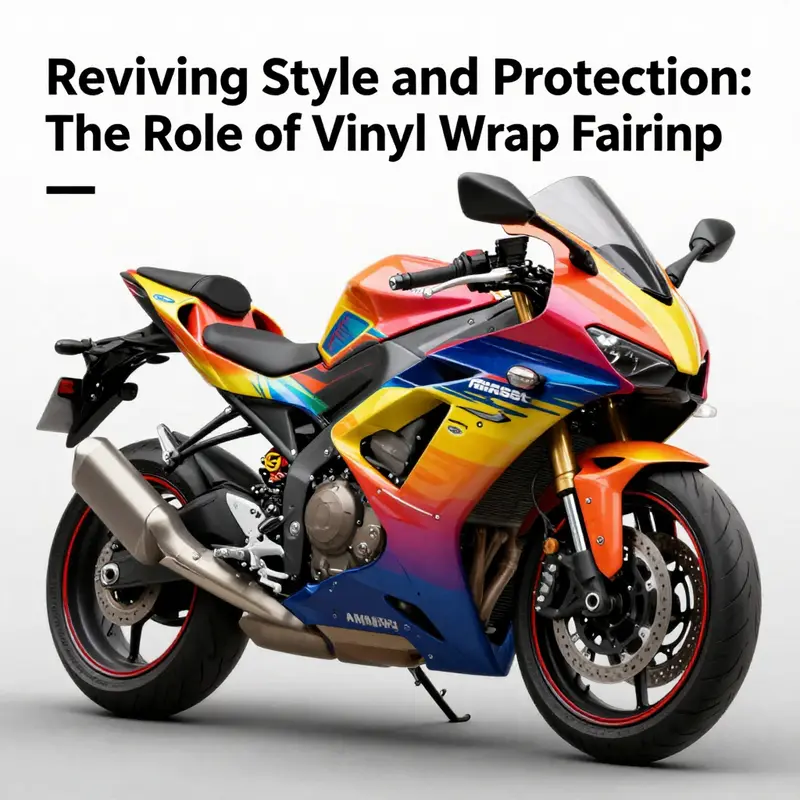
A motorcycle’s fairings do more than slice through wind; they carry personality, identity, and a first line of defense against the elements. When riders choose vinyl wraps for their fairings, they are making a decision that blends aesthetic creativity with practical armor. The visual payoff is immediate: color, texture, and patterns that can transform a bike from a machine built for speed into a moving statement. Yet the appeal runs deeper. A well-applied wrap acts as a protective layer, guarding original paint and composite substrates from sun, road debris, and the countless micro-abrasions that accumulate over miles of riding. In this sense, wrapping is both a design choice and a maintenance strategy, a combination that resonates with riders who want long-term value without surrendering their ability to refresh the look when the mood shifts. The dialogue between style and protection is not a trade-off; it is a synergistic relationship that leverages the best features of modern film technology while honoring the bike’s engineering and the rider’s personal aesthetic trajectory.
From a design perspective, vinyl wraps provide an expansive canvas that goes far beyond what traditional paint can offer without the permanence that often accompanies it. A wrapped fairing can be finished in matte or gloss textures, or it can imitate luxurious surfaces like carbon fiber, brushed metal, or even a bespoke metallic hue. The flexibility of wrap films allows a rider to experiment with color palettes and graphics that might be impractical or cost-prohibitive with a custom paint job. For riders who crave a distinctive look that stands out in the serpentine lines of a mountain pass or the tight, urban glide through traffic, wraps open a portfolio of creative potential. The result is not merely a color choice but a whole visual language—fluorescent accents that glow under streetlights, subtle tonal shifts that catch the eye as the bike moves, or a stealthy, high-gloss shield that reflects the road like a mirror when conditions allow. The opportunity to mix and match textures—matte body panels with gloss edges, or a central stripe that runs the length of the fairing—creates a layered sophistication you cannot easily replicate with paint. And because the film can be replaced incrementally, a rider can evolve the look without the cost and downtime of a full repaint.
But a wrap is more than eye candy. The protective dimension of vinyl is real and practical. It shields the original factory paint and the substrate materials from UV radiation, which can fade color and degrade surface integrity over time. Sun exposure can take a toll on plastics and composite surfaces, especially in regions with bright, long days and high heat. A well-chosen vinyl film forms a barrier that reduces the likelihood of color fading and surface chalking, preserving the finish under demanding riding conditions. Scratches—those inevitable marks from gravel, debris, or a fender-bender at a crowded track day—are absorbed by the flexible layer rather than the underlying layers, giving riders valuable time before damage penetrates to the base coat. While wraps are not indestructible, they offer a layer of sacrificial material that can be replaced more economically than repairing or repainting an entire panel. Minor impacts that would otherwise mar the finish can be mitigated by the wrapper’s slightly elastic surface, which helps to distribute energy and reduce localized damage. Environmental contaminants—from bird droppings to road grime and tar—are easier to remove when the surface is coated with a film designed to resist staining and aging. In this way, the wrap performs a protective function that keeps the bike looking newer, longer, and more resilient in the face of daily exposure and aggressive riding environments.
The technical core of any wrap lies in the film itself. Cast vinyl, widely regarded as the superior choice for motorcycle fairings, offers a blend of long-term durability and formability that calendared films struggle to match. Cast films are derived from a single, uniform layer that can stretch and mold around complex curves without kinking, tearing, or edge lifting. This characteristic is essential when dealing with the sweeping contours, deep recesses, and tight radii of modern fairings. The demand for precision on a sportbike—or a naked bike with aggressively styled lines—poses a challenge that only a film with exceptional flexibility and memory can meet. Cast vinyl excels in this role because it conforms to subtle bodywork details, maintains dimensional stability under heat, and adheres securely to a variety of substrates, including ABS plastics and composite panels commonly used in fairings. The longevity of cast vinyl is another practical consideration; when properly installed, these wraps are typically engineered to endure five to seven years of ordinary riding, exposure to weather, and routine maintenance. That horizon is compelling for riders who want a durable, low-maintenance solution that can survive daily use and occasional track days without the need for frequent re-wrapping.
The installation phase, however, is critical to realizing the full potential of a vinyl wrap. The most striking aesthetic outcome can be compromised by poor technique. Air bubbles, wrinkles, and premature delamination are not mere cosmetic concerns; they can undermine protective performance and compromise the wrap’s longevity. A successful wrap requires meticulous surface preparation: thorough cleaning, degreasing, and sometimes the removal of old coatings or decals to ensure optimal adhesion. Any dust speck or oil residue can create an invisible fault line that blooms under heat and sun, eventually leading to edge lifting or peel. This is particularly true on fairings with multi-panel junctions, ribbed textures, or intricate edge profiles where heat and pressure must be carefully controlled to coax the film into tight corners and around compound curves. Skilled installers use industry-standard techniques—precise squeegeeing to push out trapped air, strategic heat application to relax and shape the film, and careful edging to create a seamless transition from panel to panel. The human factor remains essential; even the best film cannot compensate for a rushed or careless application. The craft of wrapping sits at the intersection of material science and fine-tuned manual technique, where experience matters as much as the product itself.
Riders often weigh the costs and benefits against repainting or replacing fairings after damage, and vinyl wraps frequently emerge as the most cost-effective compromise. A wrap can provide a shield from minor abrasions that would otherwise require touch-ups or professional refinishing, while also offering a drastic aesthetic transformation that can be reversed. Reversibility is one of the wrap’s most appealing attributes: if the rider decides to return to stock look, or to switch to a different design, the film can be removed with less risk to the underlying paint than repainting would entail. This flexibility is particularly valuable for enthusiasts who lease bikes, participate in seasonal exhibitions, or simply like to refresh the appearance with changing trends or personal milestones. Of course, the decision to wrap should consider the fairing’s current condition. If there are deep cracks, significant damage, or compromised substrate integrity, wrapping might not be the optimal solution for that panel. In such cases, addressing structural issues prior to wrapping ensures the wrap adheres durably and performs as intended over time.
The stylistic possibilities extend beyond color. The film ecosystem has evolved to offer finishes that visually mimic more expensive or exotic surfaces, enabling riders to simulate carbon fiber textures, metallic sheens, or subtle gloss contrasts without the cost and rigidity of a true composite finish. A carbon-fiber appearance, for example, can convey a high-performance aesthetic while preserving the lightweight, replaceable nature of a vinyl layer. Matte finishes can temper glare and emphasize aggressive silhouette lines, while high-gloss surfaces can enhance saturation and depth of color under bright sun. For those who crave a more personal signature, custom graphics—racing stripes, abstract forms, or symbolic motifs—can be layered into the design with careful color matching and alignment. The ability to unify the entire fairing suite with a coherent motif helps create a rider’s visual narrative across different models or generations, something that is often far more challenging to achieve with factory paint schemes.
Aesthetics and protection converge most effectively when the installed wrap is crafted with automotive and motorcycle-specific film formulations. These films are designed to endure temperature fluctuations, chemical exposure from cleaning agents, and the shedding of road contaminants without degrading. They also tend to incorporate adhesives engineered for strong initial tack while retaining the ability to be repositioned during the installation phase, allowing technicians to optimize alignment before the final cure sets. Some grades of film even offer self-healing properties at modest temperatures, meaning micro-scratches and scuffs can reseal themselves over time, preserving a pristine surface without intervention. While such features add a layer of resilience, riders should still approach maintenance with care. Gentle washing with mild detergents, avoiding abrasive scrubbers, and rinsing away road grime promptly help preserve the film’s surface integrity and color vibrancy. Protective measures extend to storage conditions when a bike is not in use for extended periods; covering the bike or parking in shaded areas can reduce UV exposure and thermal cycling that might embrittle or destabilize edges over many seasons.
To anchor this discussion in the practical realities of riding, consider the case of a high-performance model that spends substantial time on weekends at mountain passes and on long highway slogs alike. Such a rider benefits from the wrap’s dual role: the vibrant, signature look while the bike is parked, and the resilient shield when the first mile of a twisty road is taken at the edge of grip. The patient, precise approach to installation is not just about appearance. It is about building a durable, long-term relationship between the rider, the bike, and the road. The wrap becomes part of the motorcycle’s ongoing story, evolving with the rider’s journeys and preferences without altering the core engineering or requiring invasive modifications to the fairing structure. In this frame, vinyl wraps are less about quick cosmetic updates and more about a considered, reversible upgrade—one that respects the bike’s original design while expanding its expressive potential.
For readers seeking real-world pathways to start exploring wraps, a practical way to approach the decision is to survey the available shapes and fairing configurations on the market. The wrap’s true test is how well it adapts to a bike’s curves, seams, and edges. Some sections demand aggressive heat and precise tension to avoid edge lift at compound angles; others require more gentle handling where the material must “lay down” to maintain a perfect surface without creating unsightly ripple patterns. The best results come when the selection of cast vinyl is matched with a skilled installer who understands the geometry of motorcycle fairings, the host materials in use, and the thermal dynamics that occur during riding. This alignment between material science and human expertise yields wraps that not only look stunning but also withstand weathering and daily wear for many seasons.
In shaping the broader narrative of how vinyl wraps influence motorcycle culture, it is worth considering how riders engage with the wrap as a form of identity verification. For some, the choice reflects personal heritage or a moment of triumph—colors and logos that echo a team’s spirit or a favorite riding region. For others, the wrap serves as a practical statement about ownership, maintenance discipline, and the willingness to invest in preserving the machine’s aesthetic integrity. The wrap becomes a portable, adaptable canvas that travels with the bike, allowing the rider to tell a story through color and texture that can be refreshed as life, riding style, or goals shift. The ability to alter the look without disassembling or repainting is a compelling advantage for enthusiasts who inhabit a culture of experimentation, customization, and continuous improvement.
As the wrap ecosystem matures, riders increasingly expect a balance between cinematic appearance and long-term performance. The best wraps deliver a stable, durable surface that resists fading under sunlight, resists chemical attack from cleaning agents, and holds fast against the occasional sprint through rain or a post-run wash. A wrap that maintains its luster and color accuracy over time reinforces the rider’s confidence in their investment. The materials science behind cast vinyl makes this possible by delivering sustained elasticity, strong adhesion, and reliable dimensional stability in the face of temperature fluctuations that accompany real-world riding. Crucially, the installation technique remains a gatekeeper to success. A wrap that looks flawless when first installed but peels after a few months under sun and heat tells a cautionary tale about preparation and workmanship. Therefore, the most meaningful wraps are those that integrate a thoughtful design process with a disciplined execution protocol, ensuring that every panel, edge, and crease serves the larger objective: to protect, to enhance, and to endure.
For readers who want to see a tunnel-view example of what thoughtful wrapping can achieve, the practical route is to examine how the fairing collections evolve in response to rider feedback and design trends. Even among motorcycles that share a common platform, the wrap can signal a different identity by swapping hues, textures, or graphic elements. The transformation is not simply skin-deep; it interacts with the bike’s lines, the stance of the chassis, and the rider’s own line through a corner. In this sense, vinyl wraps are a way to communicate riding philosophy as much as weathered performance data. They invite a dialogue between form and function, a conversation about how a machine meets the road and how a rider negotiates the space around them with confidence and flair.
If a reader wants to dip a toe into this world with a sense of the practical realities involved, they can begin by exploring the types of fairings that exist for popular platforms and the general approach professionals take when preparing surfaces and selecting films. An accessible path is to review collections that focus on the visuals and fitment of common fairing shapes, assessing how well a given wrap would align with a bike’s silhouette and how the chosen finish would respond to future performance needs or aesthetic shifts. For example, a rider looking to upgrade a standard sport-bike’s appearance and resiliency might start by analyzing whether a full-body wrap or a panel-specific approach best fits their riding schedule and maintenance habits. Discussions with experienced installers can illuminate the nuanced trade-offs between coverage, edge longevity, and wrap removal at a later date. The aim is not to simplify the process into a one-size-fits-all solution but to foster an informed, deliberate approach that recognizes the wrap as both protective envelope and expressive medium.
In sum, vinyl wraps for motorcycle fairings offer a compelling fusion of style and shield. They enable a rider to sculpt the bike’s personality while investing in a layer that helps manage exposure to the elements and the wear of daily use. Cast vinyl, with its superior conformability and durability, stands as the material of choice for shaping complex curves and ensuring long-term performance. The installation craft, surface preparation, and ongoing care determine how well the wrap fulfills its potential. When these elements align, the result is a wrapped fairing that looks tuned for speed and protected for the miles ahead—a device that communicates both a design sensibility and a commitment to preserving the machine for the long haul. For those who want a concrete entry point into this practice, exploring the options in a targeted fairing collection can offer practical insights into fitment and style, while considering the broader message about how riders relate to their machines. As the road unfolds, the wrap remains a capable companion, adapting to the rider’s journey and reinforcing the bond between rider and motorcycle through a durable, expressive, and reversible layer of color and texture.
External resource: For a deeper technical overview of how cast vinyl wraps behave on motorcycles and what to expect in terms of durability and installation practices, see https://www.motorcyclevinylpros.com/cast-vinyl-wrap-benefits.
Internal reference: When exploring specific fairing options and fitment through a curated selection, many riders start by looking at available Honda fairings collections to understand how a wrapped surface can complement a bike’s geometry and overall aesthetic. Honda fairings collection.
Form, Function, and Finish: Casting the Right Vinyl for Motorcycle Fairings
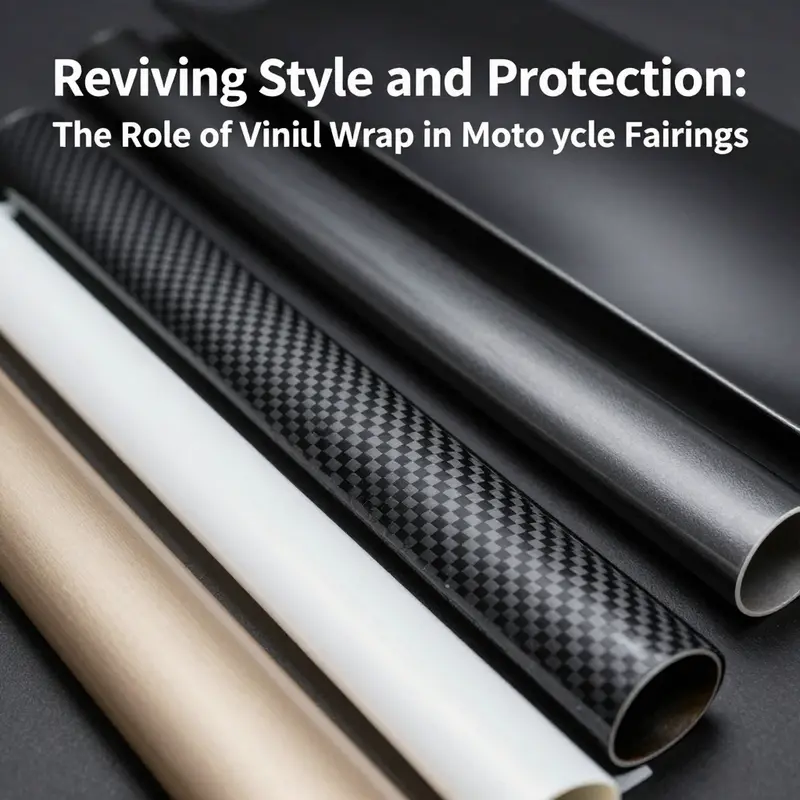
Applying vinyl wraps to motorcycle fairings is both a technical craft and an artistic practice. Riders who choose a wrap are balancing aesthetics, protection, and performance. The material you select sets the tone for how the design behaves on the bike, how it looks under sun and rain, and how well it stands up to the road’s daily punishment. Among the vinyl families, cast vinyl stands out when the surface presents complex curves, tight radii, and many edges. Its origin lies in a production method that yields a film that behaves more like a flexible skin than a rigid sheet. Understanding why cast vinyl often outperforms calendared vinyl on modern sport bikes requires looking at how each film is produced, how it moves when heated, and how it adheres to the painted and unpainted surfaces beneath. The choice is not only about color and texture; it is a decision about resilience, maintenance, and the long arc of a bike’s life in the elements. This is where the science of the wrap meets the art of riding, where precise heat, careful handling, and deliberate finishing strategies translate into a look that lasts and a protection that preserves value.
Cast vinyl is manufactured through a process that pours molten vinyl onto a release liner and allows it to cure in a controlled environment. This creates a film with a uniform molecular structure and an intrinsic softness that gives it remarkable flexibility. Calendared vinyl, by contrast, is formed by rolling and compressing layers of material. The mechanical difference might seem subtle, but it determines how the film behaves when you stretch it across a bike’s bodywork. For fairings, where air vents, scoops, fairing edges, and sharp contours prevail, that extra pliability becomes a practical necessity. Cast vinyl can relax into deep curves without introducing the fatigue cracks or edge lifting that calendared films may develop after repeated heating and cooling cycles. This is especially important on modern sport bikes that feature multi-plane surfaces, aggressive scoops, and tight joints where a stiff sheet would buckle or pull away.
In the field, that flexibility translates into clearer, more faithful graphics. Cast films hold fine details better, so a rider can insist on high-resolution logos, intricate patterns, or even photographic finishes that read as crisp under close inspection. The clarity matters because the fairing is a large, prominent surface. When a wrap is the color statement of a bike, any loss of edge sharpness or color saturation becomes a distraction. Cast vinyl’s visual fidelity is part of its practical appeal. Durability follows closely behind. The same molecular structure that endows it with stretch also provides robust UV resistance and enhanced abrasion resistance. The film resists the fading impact of long sun exposure and can tolerate temperature swings from cool mornings to afternoon heat without warping. It remains dimensionally stable, so once a panel is aligned and heated to settle into place, it tends to hold its geometry over years of riding.
That longevity matters because a wrap is a long-term investment. For many riders, the goal is to avoid repainting costly fairings after minor scuffs or rock chips while still enjoying the ability to refresh looks as trends or race liveries shift. Cast vinyl typically delivers a service life of five to seven years, and in some cases longer with high-end grades and careful maintenance. The exact lifespan depends on weather exposure, riding conditions, and the care given during installation and upkeep. In practical terms, a rider who treats the wrap as a long-term skin on the bike can pursue bold, high-impact graphics without compromising the underlying paint. The wrap acts as a shield against light scratches, UV weathering, and the micro-impacts of gravel and debris, while still allowing the original finish to be preserved underneath if the wrap is removed in the future. That preservation is a compelling argument for ownership models that emphasize resale value or the desire to keep the bike looking pristine for photos, shows, or sponsorship events.
The application process itself is where theory meets hands-on craft. Even among professionals, the consensus is that the most successful wraps begin with deliberate preparation and controlled application. The installer starts with a clean slate, literally. The surface must be thoroughly cleaned and degreased, removing waxes, oils, and any residues that could undermine adhesion. This is followed by a surface conditioning step that may include light sanding or scuffing in areas with existing texture or paint irregularities, enabling the adhesive to bond more securely. Priming is sometimes used on certain materials or problematic areas. The goal is to maximize the adhesive’s contact with the substrate while ensuring the surface remains receptive to the film’s micro-vortices of motion during application. Cast vinyl’s flow characteristics make the heat-driven repositioning phase more forgiving, but that does not mean the process can be rushed. A professional installer uses heat tools not as a blunt instrument but as a precise ally. Controlled heat relaxes the film, allowing it to cling to curves and contours. The mechanic’s aim is a seamless, bubble-free surface that reads as if the panel was originally molded with the wrap already in mind.
A crucial corollary to surface prep and heat shaping is the attention paid to edges and seams. Modern fairings are not flat panels but a mosaic of shapes that meet at sharp junctions and tight radii. Cast vinyl’s conformability helps it hug these transitions, but it also demands careful edge work. The installer will often lay a panel and use pinning and gentle elongation along the line of greatest curvature, then heat and squeegee to remove any entrapped air. The design must anticipate heat expansion near vents, radiator intakes, and exhaust outlets, with boundaries that do not over-stretch into high-stress zones where lifting could occur. In some workshops, final edge sealing is performed with a light primer or edge sealant that improves long-term adhesion, especially at the top and bottom edges that meet the wear of wind and road debris. The result is a uniform, glossy or matte finish that remains flush to the bodywork across all the curves and angles the fairing presents.
Finishes are not only about color. The aesthetic language of a wrap comes in matte, gloss, and specialty textures such as carbon fiber or brushed metal fibers. Cast vinyl is particularly well suited to these options because its surface can be engineered with a finish that reduces or enhances glare, adds texture to the hand, and better captures the play of light across a bike in motion. For some riders, this means a dynamic appearance that changes character as the bike moves through light conditions. For others, it means a subdued, stealth look that preserves the lines and form of the bike while signaling a strong visual identity. In practice, a wrap is frequently chosen not just for decoration but for an integrated design approach. The base color and finish interact with the bike’s existing graphics and the rider’s helmet and leathers, creating a holistic visual package that communicates power, speed, and personal style without a single variable appearing out of place.
A further dimension to material choice is the potential for self-healing properties in certain grades of premium cast vinyl. When lightly scratched, some films can recover small marks through the heat of normal sun exposure or the application of modest heat from a heat gun. This self-healing attribute enhances longevity by minimizing the visible impact of minor abrasions. It does not replace careful riding or routine maintenance, but it adds a layer of resilience that is especially valuable on race-inspired livery or intricate graphic work where a single flaw would be more conspicuous. It is important to note that not all cast vinyl carries this property, and the extent of self-healing can vary with thickness, adhesive system, and the film’s overall composition. A knowledgeable installer can help steer a rider toward the grade that best suits the expected environmental conditions and the preferred aesthetic finish.
From a practical standpoint, planning a wrap begins with understanding the fairing’s geometry and, crucially, the climate during installation. Heat and humidity levels can influence how the vinyl behaves, as can the cure characteristics of the adhesive. A skilled installer often schedules the wrap during mild, dry conditions when the film is most cooperative and the substrate is not prone to rapid temperature shifts. Once complete, the wrap should be allowed to cure in a controlled environment before exposure to rolling traffic or aggressive washing cycles. The post-installation phase matters just as much as the laydown, because improper curing can lead to lifted edges, micro-bubbles, or clouding in the finish. A few days of patience after application can yield a finish that looks and performs as intended for years to come.
Design considerations flow directly from the physics of wrapping and the rider’s goals. A high-contrast colorway can emphasize the bike’s silhouette, while transparent or translucent finishes can reveal underlying paint for a layered effect. The choice of pattern plays a critical role in how the wrap interacts with the bike’s form. Large, uninterrupted color fields on wide fairing surfaces can scream speed, but they also demand precise alignment of panels to avoid misregistration at seams. Detailed patterns and sponsor decals benefit from the cast vinyl’s ability to reproduce fine lines and micro-graphics. For high-performance bikes, keeping graphics legible under dynamic lighting is essential, especially in track environments where glare and shadow can distort recognition of sponsor logos. The ability of cast vinyl to maintain crisp lines ensures legibility remains intact during every mile of riding.
The practical decision to pursue a wrap often comes with a reckoning about costs and lifecycle. While a wrap can be a fraction of the cost of a full repaint or new fairings, it is not simply a one-time expense. Installation labor, surface preparation, and the chosen film grade all contribute to the final price. However, the return on that investment can be measured in several ways. First, there is the protection the wrap provides for the original paint, guarding against light scratches, sun damage, and minor impacts that would otherwise scratch or dull a clear coat. Second, there is the flexibility to refresh the bike’s look without permanent modification. A few years down the road, the wrap can be removed or replaced with a new design without subjecting the fairings to repainting processes that could alter the panel fit or the bike’s proportions. In this sense, the wrap becomes an adaptable, cost-efficient shield and a creative platform for expression.
For riders evaluating model compatibility, it helps to consider the widely varied shapes across popular fairing lines. While cast vinyl excels on curves and edges, some models with particularly aggressive contours or unusual panel junctions may benefit from a professional assessment before committing to a design. Those who want a concrete point of departure can explore listings for available fairings on major lines and see how they align with their aesthetic goals. For instance, riders who favor a complete fairing refresh often begin with options in a popular manufacturer family, accessible through the Honda fairings page. There, prospective buyers can gauge how a wrap would look across the full set of panels, including the tank cover and tail sections that complete the visual flow. The ability to simulate a wrap across an entire bike helps riders visualize the final appearance and anticipate any potential challenges at edges or vents. The practical takeaway is simple: the best wraps are the result of careful planning, a reliable substrate, a film with proven conformability, and installation expertise that respects the geometry of each panel.
A final note on maintenance and care rounds out the discussion. Cleanliness is a wrap’s first ally. Gentle washing with mild soap and a soft cloth protects the film’s surface and helps maintain its color and gloss. Abrasive cleaners or high-pressure jets can damage the film during routine maintenance, so a light touch is always wiser. The finish should be shielded from repeated abrasive contact with stiff brushes or aggressive scrubbing of grained textures, especially on matte finishes that can reveal micro-scratches more readily. Periodic inspection of the edges and seams is wise, as adhesives may begin to lift first at the most exposed junctions. If lifting occurs, professional reapplication or edge sealing is recommended rather than attempting a DIY fix that could compromise the entire surface. In the longer term, users who treat their wrap as a living part of the bike—carefully washing, avoiding harsh solvents, and scheduling occasional professional checkups—will enjoy a uniformly finished and protective skin that preserves the underlying fairing surfaces for years to come.
For riders who are planning a new look while preserving resale value, the choice of material is not merely about color or texture. It is a decision that shapes the bike’s performance story, how the rider experiences the machine, and how the bike ages in the elements. Cast vinyl stands out because it marries adaptability with durability, preserving imagery across a spectrum of forms, from sweeping fairing fronts to intricate side panels. Its precision in conforming to complex geometries means a more faithful reproduction of detailed artwork. Its aging profile offers predictable behavior under UV exposure and heat, helping keep color, gloss, and texture stable through the ride’s many miles. And because it can be removed with care, riders can refresh the appearance or revert to stock aesthetics later without the expense and risk of repainting. That combination of flexibility, longevity, and revise-ability makes cast vinyl a practical choice for the modern rider who wants both speed in presentation and resilience in protection.
Riders are encouraged to view wraps as a toolkit rather than a single finish. The toolkit includes the material type, the finish selected, and the installer’s approach to shaping and sealing. The conversation between rider, design, and technician should cover panel by panel expectations for fit, the planned sequence of installation, and the long-term care routine. When these elements align, the wrapped fairing becomes more than a surface to gaze upon; it becomes an integrated system that works with the bike’s aerodynamics, its vibrations, and its heat cycles. In a way, the wrap participates in the bike’s story as a dynamic, evolving layer that ages gracefully while maintaining the essence of the original design. The result is a ride that looks sharp, protects the investment beneath, and offers a durable platform for future creative exploration. For riders who want to explore practical starting points for a full fairing wrap, Honda fairings provide a clear reference frame that blends availability with compatibility across many modern models, as reflected on the Honda fairings collection page. Honda fairings.
External reference for further reading on the material science behind vinyl choices, including cast versus calendared compares, can be found at the following resource. Cast vs. Calendared Vinyl for Motorcycle Wraps: https://www.vinyl-graphics.com/blog/cast-vs-calendared-vinyl-for-motorcycle-wraps.
From Peel to Protect: The Art and Science of Installing and Maintaining Durable Vinyl Wraps on Motorcycle Fairings
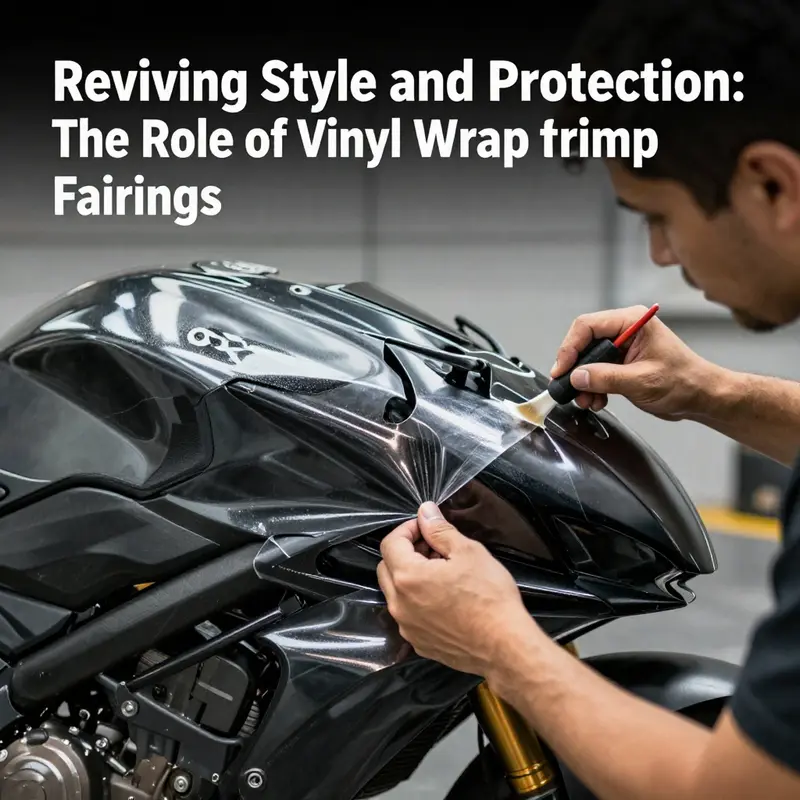
When a rider speaks about the look of a bike, the conversation often starts with color and texture, but the real conversation—the one that anchors longevity and value—happens at the skin where plastic meets film. Vinyl wrap is not merely a cosmetic layer; it is a protective skin that can hold up against time, heat, road grime, and the occasional tip of a luggage rack. The chapter you’re stepping into treats wrap installation and ongoing care as a single journey, one where technique, material choice, and disciplined maintenance converge to deliver durability. The aim is not to chase a flawless first day but to cultivate a finish that remains vibrant and secure for years. That requires an understanding of both the physics of conforming film to complex curves and the chemistry of adhesion that keeps it there through heat cycles, vibration, and UV exposure. It also requires a respect for what the rider asks from the wrap: not just a striking appearance, but a resilient, long-term shield that can be repaired, refreshed, or reimagined when the time comes.
A fundamental starting point is the material itself. Cast vinyl is widely regarded as the superior choice for motorcycle fairings because it offers superior stretch, better conformability to tight creases and deep contours, and a more durable, stable bond over years. Unlike calendared vinyl, which can be prone to edge lift and cracking when pressed into dramatic curvature, cast vinyl maintains elasticity, enabling smoother transitions along the narrow necks between fairing panels and around the radii of intricate air scoops. The practical consequence is not only a cleaner aesthetic on first install but a more resistant surface when the bike enjoys long rides that pass through dusty towns, coastal winds, and the occasional spray from passing traffic. A wrap designed for automotive or motorcycle use that emphasizes cast construction typically promises a lifespan in the five-to-seven-year range or beyond, provided installation standards are followed and the surface is properly prepared. This duration is more than a rough guide; it is a realistic horizon that informs how a rider might plan color refreshes, protective aging, or even a complete redesign later in the bike’s life cycle.
The promise of durability, however, rests on the foundation laid before the film touches the fairing. Surface preparation is the quiet hero of any wrap project. It begins with a meticulous cleansing that removes wax, silicone residues, and any microfilm of oil that can impede adhesion. Waxes and residues are a sure route to lifting or micro-wrinkles that become visible only after the bike is parked under sun. A dedicated prep solution, designed for automotive or motorcycle surfaces, works in concert with a thorough wipe-down to prime the surface for long-term bonding. Drying is equally important; even a small bead of moisture can create tiny pockets that trap air or dust, leading to blemishes under the film. In practice, this means wiping with clean, lint-free towels and allowing time for the surface to dry completely before application begins.
The installation itself demands a balance of precision, patience, and heat. The technique hinges on the controlled use of heat to soften the film so it can drape over the fairing’s curves without bunching or creating air pockets. A heat gun is not a heat source for the film alone; it is a shaping instrument that enables the installer to coax the vinyl around circular edges, under low-slope panels, and along tight radii where the surface might otherwise resist. The seasoned installer uses heat not as a quick fix but as a measured tool, applying just enough warmth to encourage the film to reflect the underlying topology without oversoftening and risking distortion. Keeping tension even and working from one edge toward the center helps to avert the classic culprits: air bubbles, wrinkles, and stubborn creases that stubbornly resist smoothing.
Material choice matters again in how the wrap behaves at the edges and seams. Deep contours such as braze lines, vent openings, and the junctions between panels demand extra care. It is these zones where the risk of edge lift is greatest, because edges can lift if the adhesive is compromised at the boundary or if the film is overstretched and then cooled. For durable performance, a professional installation that respects these constraints often yields a better long-term result than a DIY attempt. That said, skilled enthusiasts who work with high-quality materials and follow best practices can achieve excellent outcomes at home. The core requirement is not bravado but discipline: clean, dry surfaces; the right temperature; careful trimming; and the patience to rework stubborn angles until the film lies flat with no air trapped beneath the surface.
The durability conversation also tilts toward how a wrap ages once the adhesive is set. A well-applied wrap that uses a cast film with automotive-grade adhesive can weather routine exposure to sun, rain, and road salt while maintaining color fidelity and a strong bond. The typical expectation—five to seven years or longer—depends on the rider’s climate and the treatment of the bike. In temperate zones, where cycles of sun and rain are balanced, a wrap can remain faithful in gloss, texture, and color for a longer stretch. In harsher environments—extreme heat, intense UV exposure, or frequent pressure from sand and grit—the protective layer may show signs of color fading or subtle yellowing at the edges, even with self-healing options present in some grades. These are not failure signs but reminders that even durable vinyl ages and that proactive maintenance can slow the clock.
Maintenance begins the moment the wrap is fully cured. The primary rule is gentle cleaning. Mild soap and water are sufficient for most weekday washdowns, with microfiber cloths doing the heavy lifting on the finish rather than abrasive sponges that can mar the surface. Harsh chemicals—even those not designed for vinyl—can degrade the material or weaken the adhesive over time, especially if they seep into edge seams. For routine care, a regular cleansing rhythm provides a barrier against grime that, if left to accumulate, can dry into stubborn film and pull at the film’s perimeter as you wipe. A clean, dry surface is easier to inspect for early signs of edge lift or micro-scratches, and it allows the rider to notice any changes in finish that may indicate a need for touch-up or re-sealing in the future.
A proactive approach to UV exposure also matters. Parking in shade, or using a cover when idling in strong sun, minimizes color fade and adhesive breakdown that can occur with extended sun exposure. The wrap’s color may remain faithful, but the underlying plastic surface and the adhesive can still experience heat-induced changes. In some installations, riders opt for a vinyl-specific protectant spray—applied in light, even coats every few months—to enhance resistance to road grime, moisture, and minor abrasions. The choice to use a protectant should align with the film’s specifications and the adhesive’s tolerances; the goal is to maintain the film’s surface while letting the underlying clear coat, if present, stay intact and free of waxy residues that can impede later re-wrapping.
The maintenance routine, though simple on paper, becomes a discipline in practice. Regular washing not only preserves color and gloss but also reduces the risk that contaminants will act as micro-scratch agents. These micro-scratches, though often invisible on a glossy surface, can accumulate and create a dulling effect over time. The solution is straightforward: wash gently, dry thoroughly, and inspect. If a rider notices any edge lifting or a bubble that refuses to vanish with heat, it is a signal to consult a professional or to rework the affected area. Even in a well-executed DIY install, the edges are the most fragile components, and periodic checks are a hallmark of responsible wrap ownership.
A key point in the durability conversation is the balance between aesthetic confidence and practical repairability. A wrap can be peeled and replaced with new colorways or patterns, which makes the approach an attractive alternative to repainting or panel replacement. Yet this flexibility comes with the acknowledgment that the visual payoff is tied to how well the wrap adheres and how cleanly the film can be manipulated around each contour. The more complex the fairing geometry—around air intakes, bracket mounts, and the myriad curves of modern sportbike design—the more critical the installer’s skill becomes. In this respect the chapter shares an important truth: a durable wrap is not a one-time feat but a continuum of preparation, application, and mindful maintenance that sustains the bike’s personality and protection through time.
The social and technical ecosystem around wrap maintenance also matters. The rider who treats the bike like a living heirloom—keeping the fairings clean, avoiding aggressive scrubbing with rough tools, and scheduling professional checkups after extreme rides or accidents—will likely see fewer unexpected issues. The value of a professional installation shows up not only in the immediate finish but in the post-installation behavior of the wrap as it encounters the real world. The installer’s expertise translates into a smoother surface, better edge adhesion, and fewer recurring problems down the line. Even with DIY enthusiasm, the use of high-quality films and adherents, along with careful attention to surface prep and edge finishing, remains a strong predictor of long-term durability.
In the practical sense, a rider who plans ahead uses the wrap as a living design element. The wrap can reflect changing tastes, performance themes, or racing-inspired graphics while preserving the underlying fairing’s integrity. This is more than a cosmetic choice; it is a strategic approach to maintenance and repair that aligns with the lifecycle of the motorcycle. If a contour becomes nicked or a corner edge lifts due to a hit or impact, the wrap can often be repaired in place, preserving the rest of the surface and reducing downtime. This is where the conversation migrates from installation to ongoing stewardship. The wrap becomes a shield, a canvas, and a living layer that evolves with the rider’s journey.
To ground these ideas in a practical thread, consider the narrative of a rider who wants to explore a new color while preserving the bike’s protection. The journey begins with a clean slate: choose a durable cast vinyl designed for automotive applications, assess the fairing’s surface for smoothness, and engage a process that respects curves and tight radii. The application moves from alignment to heat-assisted conforming, from trimming to edge sealing. Once in place, the maintenance routine follows as a cadence: wash with mild soap, dry with a microfiber, protect the surface, monitor the edges, and plan periodic professional inspections as needed. This approach does not merely ensure durability; it ensures the wrap continues to reflect the owner’s taste and the rider’s confidence as the miles accumulate and the road ahead unfolds.
For readers seeking a reference on how contours and materials harmonize in practice, a glance at the broader ecosystem of fairings can provide useful context. For an accessible point of reference on fairing compatibility and design considerations, you can explore the Honda fairings collection. This resource illustrates how general shapes, panel lines, and mounting interfaces influence wrap strategy, from initial cleaning to final edge finishing. The aim is not to copy a specific install but to appreciate how design details shape the wrap’s behavior and longevity. See the Honda fairings collection here: Honda fairings collection.
The overarching message is clear: installation and maintenance are inseparable. The most durable vinyl wrap on a motorcycle fairing arises from deliberate preparation, thoughtful material selection, careful shaping, and a steady commitment to care after the wrap is in place. The result is a finish that remains faithful to its original intent, resisting the temptations of time while retaining the flexibility to adapt to new colors or patterns as the rider’s story evolves. A rider who embraces this integrated approach will discover that the wrap’s value extends beyond aesthetics. It becomes a shield against the elements, a keeper of resale value, and a canvas for personal expression that endures through every twist of the road. The ride, in other words, is as much about discipline as it is about design—the discipline to prepare, apply, and maintain with a respect for the material’s limits and a curiosity about its possibilities.
External resource for a broader, vendor-agnostic guide: https://www.vinyl101.com/how-to-vinyl-wrap-motorcycle-fairings/
Final thoughts
As a business owner in the motorcycle industry, understanding the comprehensive benefits of vinyl wrap for motorcycle fairings can set you apart in a competitive market. Not only does vinyl wrapping allow for remarkable aesthetic transformations, but it also offers protective solutions that can significantly extend the lifespan of fairings. Emphasizing quality materials like cast vinyl and ensuring proper installation can lead to high customer satisfaction and return business. By adopting vinyl wraps in your offerings, you can cater to the rising demand for personalization and protection among motorcycle enthusiasts. Embrace this modern solution and enrich the experience you offer to your clientele.