
Motorcycle fairings are more than just aesthetic enhancements; they are essential components that significantly improve rider comfort and safety. By reducing wind resistance, shielding against the elements, absorbing impacts, and enhancing the motorcycle’s sleek design, fairings play a multifaceted role. This guide will delve into the crucial functions of motorcycle fairings, including wind protection, environmental protection, impact absorption, aerodynamic benefits, and guidance for selecting the appropriate fairing type tailored to various riding styles, ensuring that business owners can understand the importance of these components in the motorcycle industry.
Wind Shields: How Motorcycle Fairings Protect Rider and Machine at Speed
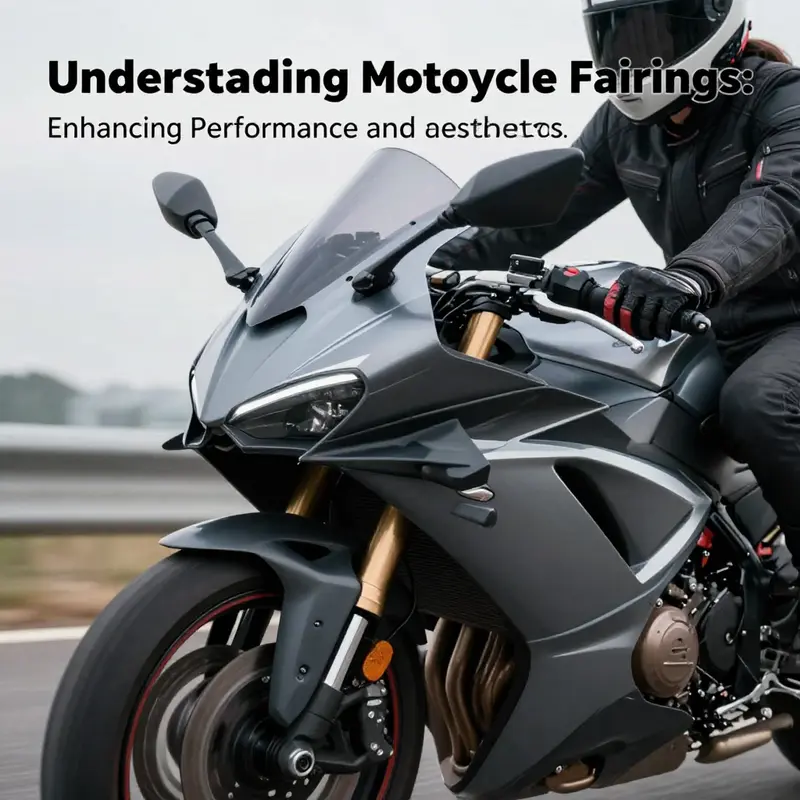
Wind is not just scenery on a ride; it is a moving force that interacts with the bike and rider, shaping comfort, control, and balance. The fairing is a carefully designed shell that acts as the first line of defense against that force. It channels air, smooths the path for rider and machine, and reduces buffet and noise. At speed the body becomes a blunt object through which air must pass, so protection matters for fatigue, posture, and line. A well built fairing lowers wind pressure on the torso and arms, reduces wind chill, and minimizes rearward push on the helmet that can disturb neck stance. Wind protection is a fundamental part of riding comfort and confidence for long hours.\n\nThe essence of aerodynamics is shaping incoming air into a smooth flow that wraps around the bike rather than slamming into the rider. The front profile, rake of panels, and windscreen curvature determine how air interacts with the rider and the bike. The windscreen height and angle affect line of sight and posture. A screen too low invites direct gusts; too high can force awkward posture and optical distortion at speed. Designers tune these elements so air accelerates cleanly over the silhouette, reducing turbulence and keeping the upper body aligned with the bike.\n\nFull fairings enclose the front and sides and provide the most wind shielding, creating a continuous air barrier around the cockpit and engine. Half or quarter fairings expose more area for lighter weight and easier maintenance, trading some wind protection for a more direct feel of wind on the torso and legs. The choice depends on riding style, climate, and tolerance for wind fatigue. Many riders appreciate adjustable windscreens to tailor airflow to seat position and helmet design.\n\nBeyond shelter, the fairing guides airflow to improve handling. Contoured side panels, air ducts, and small spoilers can influence how air reaches the helmet and how turbulence forms behind the windscreen. Some designs address wind-induced vibrations that can annoy at high speed. When airflow is well managed, rider fatigue is reduced and steering becomes crisper.\n\nWind protection also shields against rain, road spray, and debris. A well placed fairing helps keep the rider drier and preserves visibility by deflecting water from the instrument cluster and headlight. It also protects connectors from moisture and particles, reducing the chance of moisture-related issues and faults.\n\nIn a crash the fairing may absorb and distribute some energy. It is not armor, but a shield that can deflect or dissipate energy from low-speed slides or impacts, helping protect the headlamp, cluster, and engine cases. While not bought for crash protection alone, the repair cost advantage matters.\n\nAesthetics and branding matter too. The large surface area of a full fairing offers a canvas for lines that communicate speed and purpose. The design language also guides airflow, reduces drag, and supports stable behavior at speed. For riders who want choices, full, half, or quarter fairings let them balance wind protection with weight and maintenance.\n\nRiders often consider climate and riding conditions. A fairing system is a balance of drag reduction, wind pressure distribution, noise, and stability. At higher speeds the windscreen and its angle become paramount. A well-tuned fairing reduces buffeting and helmet wind noise, keeping posture calm. The choice between OEM or aftermarket often hinges on comfort versus weight and how the look aligns with goals.\n\nFor riders exploring options, catalogs and manufacturer lines can illustrate how fairings translate into daily comfort and performance. A practical sense of alignment between shapes, mounting points, and finish options helps maintain ergonomics and control through years of riding.\n\nIn sum, wind protection from fairings is a layered blend of design, function, and rider psychology. The best outcomes come when the shell is tuned to posture, speed range, and environment, delivering comfort without compromising control. Wind becomes a predictable factor to accommodate with confidence, keeping the rider connected to the bike and the machine ready to ride toward the next mile.\n\nExternal resources and further reading can provide additional context about fairing shapes and their impact on aerodynamics.\n
null

null
Energy-Wise Armor: How Motorcycle Fairings Absorb Impacts and Minimize Crash Damage
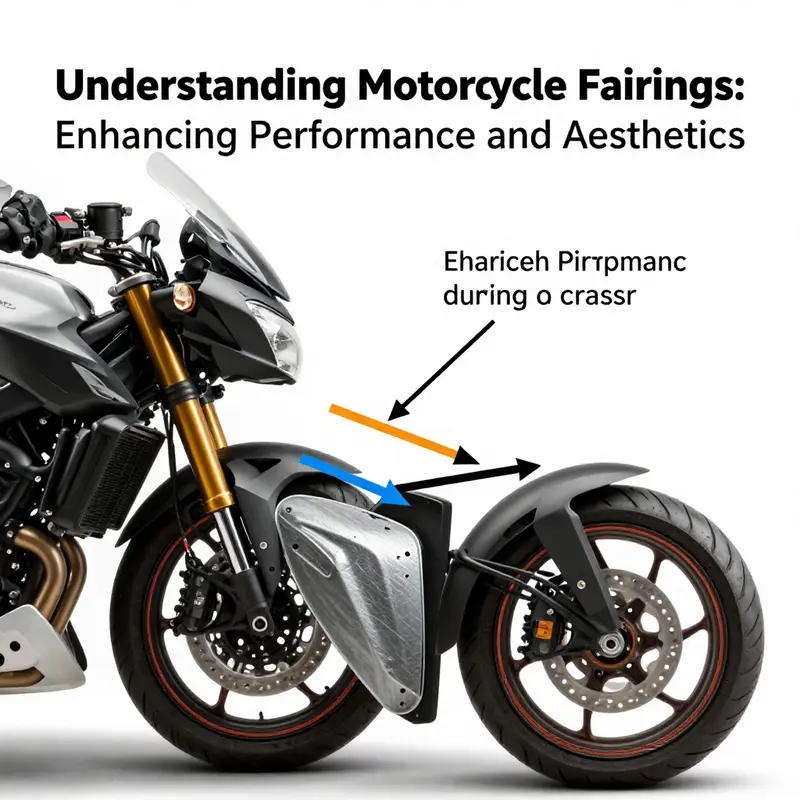
Fairings are often celebrated for their aesthetic lines and wind-cheating silhouette, yet their best-kept secret lies in how they handle energy when things go wrong. The protective shell surrounding a motorcycle is not just a shield against rain or a shield against the drag of speed. It is a carefully engineered interface that can influence how a crash unfolds, how impact energy moves through the bike, and how much danger a rider actually faces. In this sense, fairings function as energy managers. They are designed to deform, to catch and redistribute force, and to direct some of the shock away from the rider and the bike’s most vulnerable components. The idea echoes a broader engineering principle observed in safety equipment: controlled deformation can reduce peak forces and spread them over time and space, lessening the sting of impact. While helmet research often takes center stage in discussions about fall protection, the same physics—how material and structure respond when stressed—applies to fairings. A study in helmet technology, for instance, highlights that the way a material crumples or absorbs energy can dramatically change the outcome for a user. The takeaway is simple and powerful: energy absorption is not just about strength; it is about how a structure yields under load and where that energy goes when it gives way. This principle is one of the quiet strengths of modern motorcycle fairings.
From a rider’s perspective, the most visible benefit of fairings during a mishap is not always the first thing people notice. When a bike slides, the fairing panels are among the first parts to contact the ground or another obstacle. Their ability to deform in a predictable, controlled manner means they can absorb a share of the crash energy before it reaches more fragile components. This is not to say fairings are primary protective gear in the way a helmet is, but they contribute to the overall crashworthiness of the vehicle. The energy that would otherwise transfer directly into the engine casing, the instrument cluster, or the electrical harness is partially absorbed by the fairing’s outer layer and its internal structure, which are engineered to yield rather than snap. As a result, the rider’s immediate injury risk can be reduced, and the total damage to the bike can be limited. The effect is especially meaningful at low-speed crashes or falls, where momentum is insufficient to trigger the bike’s full inertial protection yet still enough to cause costly cosmetic and mechanical damage.
Material science lies at the heart of this capability. Modern fairings increasingly employ composite materials—fiberglass, carbon fiber, and advanced polymers—that combine high strength with excellent energy-absorption characteristics. Unlike a solid metal shell that might merely resist deformation, a well-designed composite can fracture and crumble in a controlled manner, dissipating energy through multiple crack paths and fiber matting rather than through a single brittle break. The art here is to balance stiffness with toughness: enough rigidity to guide airflow and protect underlying components at normal riding speeds, yet enough give to deform predictably during a crash. The layered approach often includes outer shells that take the initial scuffs and scapes, midlayers that help distribute forces, and internal foams or cores that cushion the impact. Each layer plays a role in turning a potentially sharp, localized energy spike into a series of gentler impulses that the frame and the rider can better withstand.
The concept of controlled deformation also has a broader safety resonance. In many safety-critical systems, the aim is to slow down the energy transfer gradually rather than trying to stop it abruptly. When a fairing yields in a premeditated fashion, the peak force transmitted to the rider’s body or to the engine internals can be reduced. This doesn’t minimize the need for protective equipment or robust chassis design, but it does extend the safety envelope. It is this synergy—between fairing design, material choice, and the rest of the motorcycle’s protection system—that makes modern fairings a meaningful contributor to rider safety. In this sense, the fairing becomes part of a holistic safety strategy, not a standalone gadget. The bodywork helps manage the energy flow, while the frame, subframes, and crumple zones elsewhere on the machine handle the remainder of the absorption task. The upshot is a motorcycle that can better survive a slide, with less damage to critical systems and lower repair costs after a fall.
Alongside the energy-dissipation role, fairings’ materials and geometry are chosen with crashworthiness in mind. The shift to advanced polymers and lightweight composites brings not only weight savings but also refined energy paths. A well-conceived fairing system can divert some damage away from essential components like the headlight housing or instrument cluster, shielding them from direct impact. This is particularly important in maintenance-heavy rides where exposure to road debris and off-road spray during bad weather can compound wear and risk. By absorbing energy through their own deformation, fairings take on a portion of the risk that would otherwise land on fast-moving internals and wiring harnesses. In that sense, fairings contribute to the survivability of the entire powertrain and electrical architecture by acting as a first line of defense.
Of course, the protective function must be understood in balance with other responsibilities. Fairings continue to be central to airflow management and aerodynamic efficiency. Their shape channels air to reduce buffeting at high speeds, which helps maintain stability and fuel efficiency. Aerodynamics and crashworthiness are not mutually exclusive goals; the most effective fairings optimize both. A streamlined surface minimizes wind loads while a controlled-deformation strategy minimizes energy transfer in a crash. When a rider takes a corner, accelerates out of a bend, or rides into a gusty stretch of highway, these two roles reinforce one another. A well-designed fairing keeps the rider comfortable by reducing wind chill and fatigue, and it also arrives at the crash with a structure that behaves in a forgiving, energy-redistributing way rather than a rigid, brittle form that would magnify impact forces.
The practical implications for riders are both economic and personal. Budgeting for protection often prompts questions about the type of fairings chosen—full, half, or quarter configurations—and how these choices affect safety and repair costs. Full fairings offer comprehensive coverage that can maximize energy absorption potential, but they require more careful maintenance and repair when damaged. Partial fairings may offer easier access for maintenance and upgrades, but their energy-dissipation opportunities are more limited. For riders who encounter a fairing failure in a crash, the consequences can be twofold: immediate safety considerations and longer-term maintenance expenses. If the outer shell fractures cleanly, it can still absorb some impact, but the risk of exposing valuable internals increases unless the crash energy is managed by deeper structural elements. This dynamic underscores why integration between fairing design and the chassis’s crash energy management is critical.
From a rider’s standpoint, this is not a call to replace helmets or armor, but a reminder that the bike’s exterior and the rider’s protective layer work together. When a crash occurs, the fairing’s initial deformation helps reduce looking into the worst-case scenario—less force transmitted to the rider, a lower likelihood of secondary collisions with exposed components, and a leaner profile of post-crash repairs. The practical takeaway is to view fairings as a protective, energy-managing system rather than purely cosmetic armor. A bike wrapped in well-engineered fairing panels represents a coordinated approach to safety, where wind protection and impact management harmonize with the frame and the rider’s gear.
For readers who want to see how current fairing lines translate into real options, there are collections that illustrate how form and function intersect. A representative example is the Yamaha fairings collection, which showcases the range of shapes and materials engineers are using to balance aerodynamics with energy absorption characteristics. See the Yamaha fairings collection for a sense of how modern styling aligns with engineering priorities in practice. https://www.summitfairings.com/collections/yamaha-fairings
As research into crashworthiness advances, the role of fairings in energy dissipation continues to grow in importance. While the helmet remains the primary personal safety device, the larger system—rider, bike, and protective panels—relies on careful energy management at every layer. Advances in material science, including multifunctional composites and smarter foam cores, promise to enhance how and where energy is absorbed during an impact. The ongoing dialogue between airflow optimization and impact protection is a reminder that even the most seemingly modest parts of a motorcycle can carry a heavy responsibility. The integration of these ideas into production designs means riders can enjoy better comfort at speed while benefitting from a safer, more crash-tolerant platform. For engineers and enthusiasts alike, the evolving story of fairings is a testament to how much protection can be tucked into a single shell when energy, geometry, and material science are aligned with the rider’s safety as the central goal.
External reference: https://www.sciencedirect.com/science/article/abs/pii/S0142961211003875
Sleek Shells of Speed: How Fairings Shape Aerodynamics and Style on Motorcycles

Fairings are the motorcycle’s external suit, the streamlined armor that meets the air as soon as the bike roars to life. They do not merely decorate a frame; they orchestrate how air flows around the rider and the machine, shaping performance, comfort, and perception. In the broad spectrum of motorcycle design, fairings fuse two seemingly opposing goals: to slice through the wind with minimal resistance and to present a surface that communicates speed, precision, and purpose. When you look past the glossy panels, you find a physics lesson in motion, a design manifesto, and a practical tool that affects every ride from casual Sunday routes to high-speed track sessions. The chalk lines of the fairing trace a history of engineering decisions about airflow, weight, access, and identity. In this chapter, we explore how that external shell achieves a balance between function and form, and why riders often connect their choice of fairings with both measurable performance gains and personal style statements.
From an aerodynamics standpoint, the core function of a fairing is to smooth the chaotic wake created by a moving machine and its rider. Air tends to resist, push, and tumble as it encounters the rider’s silhouette. A well-shaped fairing guides that air into a cleaner, more predictable path. The result is less drag, more stability at speed, and a reduction in wind buffeting that can fatigue the upper body and arms over long distances. The effect is subtle in everyday riding, yet when you add fast straights, sweeping highways, or track drills, the advantages accumulate. Reduced drag translates into better fuel efficiency and, crucially, more confident handling as the wind pressure on the rider’s torso and helmet diminishes. The rider’s position matters here. A fairing designed around a sport-leaning posture will optimize the interaction between wind, velocity, and center of pressure, keeping the bike melding with the rider rather than pulling away from them. The outcome is a bike that feels responsive and planted rather than fragile against an unseen gust.
Where aerodynamics meet daily riding, the conversation expands to comfort. Wind protection is not simply about keeping the torso dry or the helmet shielded from rain. It is about reducing wind shear—the changes in wind speed and direction that buffet the rider. Fairings mitigate this by directing the airflow along smooth curves that minimize abrupt transitions. In practice, this means quieter air around the chest and shoulders, less turbulence at helmet level, and fewer gusts that threaten to destabilize balance or posture during a corner exit or an overtaking maneuver. This kind of wind management matters more on longer rides, where fatigue compounds and concentration wavers. Riders may notice a sharper difference when the weather shifts—from mild to gusty or when heavy rain slicks the surface. In those moments the fairing becomes almost a second rider, absorbing the wind’s assault so the operator can focus on control, line, and throttle, rather than fighting the elements.
Beyond the rider’s comfort, fairings protect a suite of vital components that keep the machine reliable and legible to a rider’s eyes. Headlights, the instrument cluster, wiring looms, engine casings, and other exposed systems sit behind this protective shell. A well-integrated fairing can shield these parts from rain, road grit, and the occasional impact, reducing the likelihood of minor failures or cosmetic degradation that would force maintenance downtime. In the unfortunate event of a crash, a fairing is not merely cosmetic armor; it is an energy-dissipating surface that absorbs some of the impact energy and spreads it over a wider area. While it is not a substitute for protective gear or frame integrity, the fairing’s role in damage mitigation often translates into lower repair costs and shorter downtime, which matters to riders who rely on their machines for daily transport or race-day commitments.
Aesthetics, however, is not a trivial afterthought. The visual language of a fairing shapes how a motorcycle communicates speed, intent, and brand. The clean lines, the sweep of the panels, and the way the rider’s silhouette sits within the shell all contribute to first impressions and ongoing identity. A fairing’s shape can emphasize a bike’s aggressive character, a touring posture, or a minimalist, retro stance. Manufacturers lean into this with carefully contoured surfaces that evoke air movement even when the bike is at rest. The visual impact grows when the fairing size becomes a canvas for graphics, sponsor decals, or custom artwork. In professional racing and track days, large surface areas are deliberately designed to host sponsorships—graphics that read from a distance and reinforce the performance brand’s message. Even at street level, a well-executed fairing preserves the machine’s sculptural integrity, offering a cohesive silhouette that complements the rider’s gear and posture.
Riders often encounter a spectrum of fairing configurations, each presenting a different balance of protection, maintenance, and aesthetics. Full fairings provide the most wind protection and coverage for the engine and mechanicals. They also require more careful maintenance and can be heavier and more complex to service, but they deliver a sleek, uninterrupted profile that many riders equate with modern performance. Half and quarter fairings, by contrast, offer lighter weight, easier access for maintenance, and a more exposed chassis view. They still enhance aero efficiency, though not to the same extent as full shells, and they can contribute to a distinct, up-front look that fans of naked-bike aesthetics often prefer. Custom fairings add another dimension altogether, letting riders tailor lines and color schemes to fit a personal theme, a track program, or a community identity. The choice is not simply about looks; it is a calculated trade-off among wind protection, weight, heat management, and maintenance practicality.
The material and construction of fairings also influence aerodynamics and durability. Many shells employ resilient plastics that strike a balance between stiffness, impact absorption, and ease of manufacturing. The thicker panels and well-supported junctions help maintain a smooth external surface, which is essential for predictable airflow. In some circles, lighter composites such as carbon fiber are prized for high-end builds where every gram matters and the rider seeks a visual cue of performance. But even with high-performance materials, the aerodynamic behavior remains a function of shape, thickness distribution, and seam quality. A seamless surface reduces parasitic drag caused by gaps or misaligned panels, while tight radii and carefully chosen panel gaps help control airflow separation that can create wake turbulence that lingers behind the rider’s head. All these considerations—shape, fit, finish—are as critical as the materials themselves because they translate the theoretical gains of wind-tunneling into tangible, rideable benefits.
The design dialogue between form and function is not a one-size-fits-all equation. Riders who prioritize sport performance tend to embrace full fairings with aggressive contours to maximize shielded air behind the rider’s chest and to maintain a stable, low-drag profile at speed. Touring riders may opt for fairings that balance wind protection with easy maintenance and a more comfortable street-ride stance. The urban rider, sometimes drawn to a naked-bike look, may favor minimal fairings that preserve a sense of openness while still offering some air management. Each choice reshapes how the bike feels and behaves, not just in a lab or wind tunnel, but in real-world riding where road texture, weather, and traffic dynamics interact with air flow in unpredictable ways. That is why the decision often binds aero goals to personal taste and practical constraints.
For riders curious about how to translate these ideas into their own machines, consider exploring catalogs that reflect how fairings are conceived and implemented across different platforms. If you want to peek into a manufacturer’s approach to fairing design, the Honda fairings collection offers a clear view of how panels are shaped to channel air smoothly around the rider and engine. Honda fairings collection provides tangible examples of panel geometry, mounting philosophy, and finish options that illustrate the principles discussed here. The goal is to recognize that fairings are not mere coats of paint but functional systems that thread air, protection, and identity into a single, integrated silhouette.
Ultimately, the story of motorcycle fairings is a story of choices and consequences. Every curve, every seam, and every mounting point is part of a larger performance equation. The rider’s body position interacts with the shell to define how air is redirected, while the rider’s expectations—whether for comfort, speed, or a particular look—shape how aggressively those curves are pushed in the design process. A well-executed fairing does more than cut through wind. It curates the experience of riding: it reduces fatigue, it protects what matters, and it presents a visual language that signals intent. In that sense, fairings are both the science and the art of the modern motorcycle—a reminder that speed is as much about how a machine meets air as it is about how it roars down the road. The next chapters will continue this exploration by turning to the materials and maintenance realities that underwrite these systems, and by considering how riders balance performance with practicality when choosing what to install on their bikes. For now, the key takeaway is that fairings are multifunctional shells, shaping aerodynamics and styling in a way that helps a motorcycle feel faster, more capable, and more personally expressive on every ride.
External perspective and further reading can deepen this understanding. For a concise, real-world perspective on how fairings function in practice and the roles they play across different riding contexts, see this resource: https://www.bikeexif.com/2023/11/motorcycle-fairing-in-the-real-world-5-uses-youll-actually/.
Shape, Speed, and Style: Choosing the Right Fairings for Your Riding Style
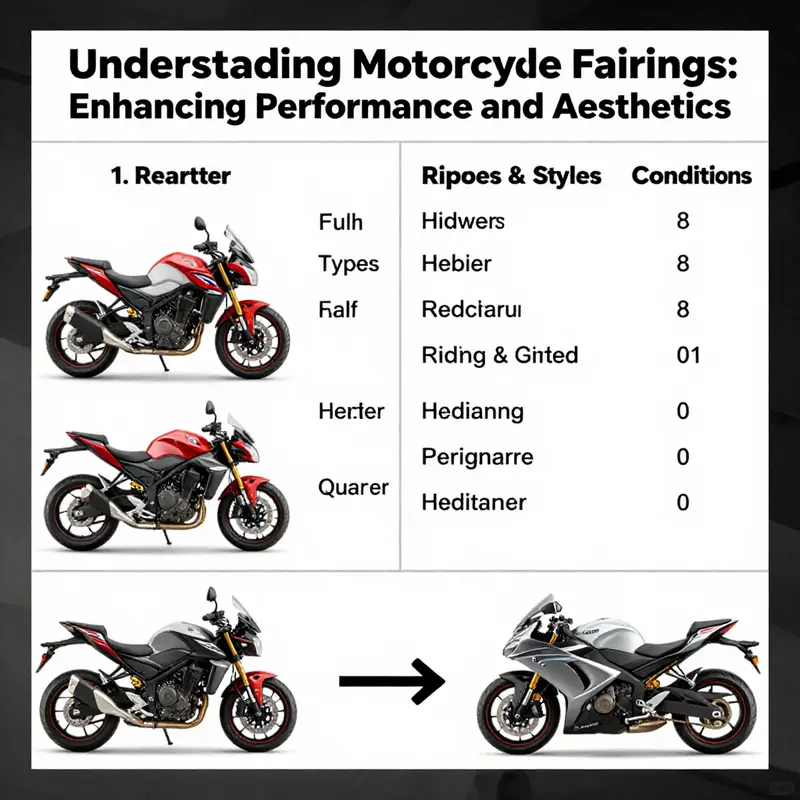
Fairings are more than just a glossy shell riding along the side of a motorcycle. They are an integrated part of how a bike behaves in the wind, how comfortable a rider remains after hours in the saddle, and how efficiently the machine slices the air to reach its potential. When you set out to choose fairings, you are balancing three core ideas: protection, performance, and personality. These ideas do not exist in isolation; they weave together with riding style, climate, road quality, and the rider’s willingness to maintain and repair after inevitable wear and tear. A thoughtful choice begins with a clear sense of where you ride most, how you ride, and what you want the bike to do for you on those rides. From there, the decision about full, half, or quarter fairings becomes a practical equation rather than a fashion statement, a math that glides from wind tunnel logic to a rider’s real-world comfort.
A full fairing is the strongest statement of wind management. It envelopes the front, sides, and often the engine, directing air in a way that minimizes buffeting at high speeds and shields the rider from the brunt of rain, bugs, and road spray. The payoff is unmistakable on long highway runs or sport-touring ambitions where a smooth, steady ride translates into reduced fatigue and better fuel economy. The caveat is equally clear: full fairings tend to be heavier and pricier to repair or replace if damaged in a fall. They also offer less direct wind protection for the rider’s legs and lower body, an aspect that can matter on cooler days or longer commutes where a wind belt around the knees becomes noticeable.
Half fairings strike a pragmatic balance. They provide a significant portion of the wind shield coverage while leaving more of the rider’s lower body exposed to the air. This setup often gives riders a more connected, tactile sense of the bike’s direction and air flow, which some appreciate for feedback during spirited riding through canyons or winding roads. Maintenance costs generally ease with half fairings, and they retain a strong aerodynamic profile without the heft of a full enclosure. For many riders who split time between daily commuting and weekend blasting through twisties, half fairings offer a dependable middle ground that respects both budget and performance needs.
Quarter fairings lean toward minimalism with an emphasis on aesthetics and weight savings. They deflect only a modest amount of air, dramatically changing the bike’s silhouette and how the air interacts with the rider’s torso. For café-racer-inspired builds, a quarter fairing can be the defining feature—accentuating a retro or aggressive look while preserving a light, nimble feel. However, the price is clear in wind exposure: if your minutes on the highway are plentiful or you frequently ride into cold or rain, a quarter fairing might leave you chasing warmth and comfort with extra gloves or layering.
Choosing among these options involves a simple, but not shallow, set of questions about the riding environment. If you spend long hours cruising at speed on open roads, comfort and fatigue resistance become primary. In this scenario, a full fairing’s wind shielding and streamlined silhouette can deliver real daily gains in rider stability and fuel efficiency. If your life splits between weekday commutes and weekend canyon runs, you want a system that handles both realms with grace. A half fairing often delivers that balance, letting the rider feel air flow and bike feedback while still offering meaningful protection from the elements. For those chasing a particular look or aiming to reclaim a lean, lightweight stance on the bike, a quarter fairing can transform the bike’s personality without surrendering all wind management to a large shell.
There is also the matter of climate and maintenance. In damp or cold climates, the wind chill effect is not a mere nuisance; it becomes a factor that can affect comfort, mood, and even muscle stiffness after a ride. Here the design choice translates into practical benefits: full fairings tend to extend the window of comfortable riding seasons in cooler places by curbing wind chill, while half or quarter fairings may require additional gear or staged layering. From a maintenance perspective, the complexity of the fairing’s attachment points, the materials used, and the potential for fastener corrosion or paint damage all influence total ownership cost. Simpler, modular pieces can be swapped or repaired with less downtime and expense, a meaningful consideration for riders who keep to a tight budget or a busy schedule.
Beyond comfort and cost, there is the performance dimension. Aerodynamics is a curious blend of science and sensation. A well-designed fairing reduces parasitic drag, directs air around the engine to support cooling and stability, and helps maintain a stable center of pressure as speed varies. The result can be a bike that feels more planted in high-speed straights, with crisper steering and reduced steering wobble. The same fairing, when poorly executed, can trap heat, create buffeting, or lift at the wrong frequency, undermining stability rather than enhancing it. This is why aesthetic appeal should not overshadow the fundamentals of fit, finish, and proper mounting. A sculpture might turn heads, but a well-fitted fairing system turns the bike into a better instrument of control.
Brand ecosystems and compatibility matter more than many assume. The majority of riders will find themselves drawn first to the look and then to how a fairing system integrates with existing components: the headlight assembly, the instrument cluster, the radiator and cooling lines, the wiring harness, and the aerodynamics of the bike’s overall silhouette. A compatible fairing line reduces the risk of gaps that catch air and create drag or turbulence. It also simplifies maintenance because a single manufacturer’s mounting points and hardware can be a more predictable path to repair or replacement.
Riding style is not merely a mood or preference; it is a practical lens through which fairings are evaluated. A sport-oriented rider who spends time on track days or aggressive street riding will likely value a full or a well-ventilated full- or semi-fairing setup for the wind protection and the reduced drag at high speed. Even in this context, some riders prefer a sport-touring approach that combines the aggressive contouring of a full fairing with the versatility of touring geometry. The rider who enjoys quiet, long road trips in comfort may lean toward a larger, more refined full fairing that channels air efficiently around the torso and limbs, reducing fatigue on multi-hour rides. On the other hand, a casual or urban rider who mainly navigates city streets or short commutes may be quite content with a half fairing; the reduced weight and simplified maintenance align with a practical, lower-cost ownership model.
Material choices also influence how you experience protection and maintenance. The most common fairings are constructed from durable plastics such as ABS or fiberglass composites, sometimes with carbon fiber elements on higher-end builds. The manufacturing process and the outer finish determine not only the aesthetic outcome but also how resilient the surface is to road debris and UV exposure. A tougher finish might resist scratches and chips during a day of riding, but it can add weight and cost. A lighter, more flexible plastic can absorb impact energy differently and might be easier to repair after a minor laydown. For riders who regularly encounter gravel, salt, or aggressive weather, the choice of material and the ease of returns or replacements should factor into the decision as much as the look and airflow characteristics.
The social and visual dimensions should not be ignored. Fairings shape how a bike communicates with the world. A complete, cohesive look that matches the bike’s profile can influence how confident a rider feels when launching into traffic or stopping at a café with the bike gleaming in the sun. This is part of why many riders are drawn to complete fairing kits that align with a specific chassis design rather than piecing together a mosaic of components. The large surface area of full fairings, in particular, serves as a canvas for branding and graphics when the ride is a platform for events or a display of personal taste. The option to customize, whether through color, texture, or mounted graphics, complements the rider’s identity and the bike’s narrative on the road.
When you are ready to search for the right fairing, consider how you ride, where you ride, and what you’re willing to invest in terms of time and money. If your aim is to optimize comfort and stability on long rides, a full fairing often delivers the best balance of protection and efficiency. For a dynamic, daily rider who wants a brisk wind-flow yet keeps lower-body exposure manageable, a half fairing is a practical middle ground. For those chasing a lean, visually aggressive silhouette—or a retro-inspired look—a quarter fairing can be a compelling choice while still supporting a spirited ride. In all cases, ensure compatibility with your bike’s existing hardware and plan for maintenance or replacement costs as part of the ownership equation.
To explore options that align with a particular chassis or aesthetic, a curated collection that focuses on fairings from a major manufacturer can provide a coherent baseline. For instance, a dedicated catalog category such as a Kawasaki fairings collection offers a coherent range of shapes, attachments, and styles designed to integrate with specific bike lines. This approach helps reduce guesswork and makes it easier to compare wind protection, weight, and mounting requirements across a consistent design language. If you’re curious about how a brand-aligned kit can transform a motorcycle’s profile and performance, you can browse options in that collection and assess fitment details, finish options, and replacement part availability. In practice, the right choice emerges from a blend of personal preference, riding context, and practical feasibility. A well-chosen fairing system not only improves comfort and performance but also enhances the bike’s character—turning a machine into a more capable partner on every road.
For riders who want to dig deeper into the practicalities of specific installations, situational testing, and repair considerations, a broader understanding of how wind and air flow interact with the bike during real-world riding is valuable. Aerodynamics is not just about smoothing air; it is about how air moves around the frame, under the belly, and around bold edges that meet the wind head-on. The takeaway is straightforward: match the fairing type to your riding life, respect the trade-offs, and plan for ongoing care. A fairing is not a one-and-done upgrade; it is a system that influences riding comfort, performance, and the long-term ownership experience.
External resource for deeper context: https://www.kawasaki.com/motorcycles/fairings/
Internal link for further options: Kawasaki fairings collection – a starting point to see how a brand-aligned suite can be organized for a seamless upgrade. This link helps readers visualize how different fairing configurations sit within a complete bike package and what trade-offs to expect in terms of weight, protection, and aesthetics. As always, individual fitment details matter, so verify compatibility with your exact model and year when exploring any catalog.
In the end, choosing the right fairing is less about chasing the latest trend and more about crafting a riding experience aligned with your days on the road. When you close the loop from environment and style to protection and performance, the decision becomes a straightforward path that honors the bike’s design and your personal comfort. The road awaits, and the right fairing helps you meet it with steadier wind, clearer focus, and a bike that feels like an extension of your intention rather than a passive shell surrounding you.
Final thoughts
Motorcycle fairings are indispensable for enhancing both the performance and safety of riders. They mitigate wind exposure, protect against environmental hazards, and offer structural benefits during impacts, while also providing a striking aesthetic appeal. Understanding the various advantages of fairings can aid business owners in making informed decisions regarding product offerings or modifications for performance and safety. Choosing the right type of fairing tailored to specific riding styles will ultimately ensure a superior riding experience.