
Introduction
For business owners in the motorcycle ecosystem, fairings are more than cosmetic shells. They are cost centers, performance enablers, and competitive differentiators. A fairing shapes aerodynamics, rider comfort, and the total cost of ownership, influencing fuel efficiency, maintenance, and aftermarket demand. This piece breaks down what a fairing is, how it works, what materials and construction choices drive weight and durability, and why market forces—geopolitics, supply chains, and consumer preferences—matter to your bottom line. The four chapters connect engineering fundamentals to business implications: aerodynamics and stability; rider protection and weather shielding; materials and weight considerations; and the broader market and economic context. Understanding these dimensions helps owners assess procurement, partnerships, and product strategy for safety, performance, and profitability.
Tables of Contents
Chapter 1: Fairings at Speed: How Winged Motorcycle Bodywork Shapes Aerodynamics, Comfort, and Performance
- Harnessing the Wind: Aerodynamics, Drag Reduction, and High-Speed Stability in Motorcycle Fairings
Chapter 2: What is the fairing on a motorcycle: Aerodynamics, Drag Reduction, and High-Speed Stability
- Air as an Ally: Downforce, Front-End Confidence, and Rider Safety at Speed
Chapter 3: What is the fairing on a motorcycle: Rider Protection, Weather Shielding, and Comfort
- Rider Guard, Weather Shield, and Comfort in Motion: How Technological Innovations Redefine Motorcycle Fairings and Rider Safety
Chapter 4: The Fairing as Form and Function: How Wind Shields, Rider Comfort, and Global Dynamics Shape Motorcycle Design
- What is the fairing on a motorcycle: Rider Protection, Weather Shielding, and Comfort — Economic, Geopolitical, and Societal Implications
Chapter 1: Fairings at Speed: How Winged Motorcycle Bodywork Shapes Aerodynamics, Comfort, and Performance
1. Harnessing the Wind: Aerodynamics, Drag Reduction, and High-Speed Stability in Motorcycle Fairings
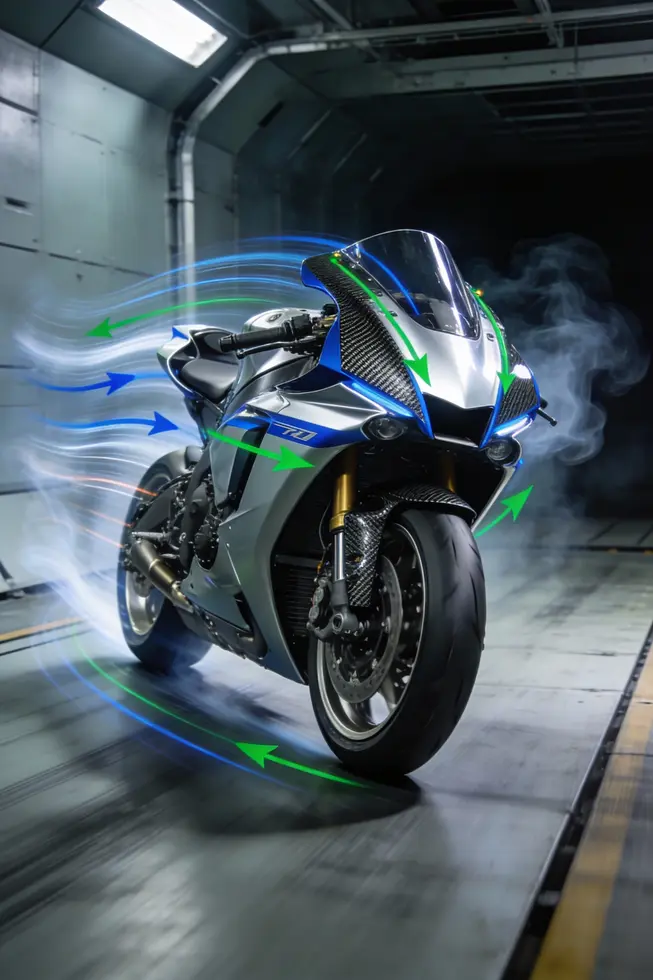
Wind is the invisible opponent a rider confronts the moment the bike leaves the stand. The fairing, a purposeful enclosure of plastics or composites, acts as a strategic buffer between rider and atmosphere. Its primary job is not merely cosmetic; it is to smooth the turbulent dance of air as the machine slices through it. When a motorcycle accelerates toward highway speeds, air is forced to part around the front, race along the sides, and swirl under and behind the chassis. Any irregularity in that flow can ripple into increased drag, flutter, and buffeting that fatigue the rider and sap performance. A well-designed fairing tames that flow, guiding air with precision so the bike remains poised, stable, and efficient. In practical terms, the fairing reduces aerodynamic drag by shaping the flow around both the machine and the rider, while also shaping the wake that trails behind the bike to keep the rear wheel planted and the steering responsive. The payoff is felt in less wind fatigue, more predictable handling, and better fuel economy at speed. This is not just about telling air where to go; it is about designing a surface that respects the boundaries of the rider’s body, the cooling needs of the engine, and the desire for a clean, cohesive silhouette that can endure the demands of high-speed riding.
Types of fairings reflect different priorities and riding scenarios. Full fairings, which typically cover from the headlight area down to a substantial belly pan and enclose much of the engine on both sides, are common on sport and race-oriented machines. They create a continuous, streamlined profile that minimizes cross-sectional area facing the wind, reducing drag and maintaining high-speed stability by smoothing airflow around the rider. In contrast, naked or partially faired motorcycles reveal more of the engine and frame, trading some aerodynamic efficiency for a lighter weight, easier maintenance, and a more exposed aesthetic. The choice between a full fairing and a minimal or no fairing hinges on how a rider balances performance needs with comfort, serviceability, and personal style. This spectrum—from minimal exposure to enveloping shell—embeds the broader philosophy of aerodynamics in motorcycle design: every surface and intersection becomes a potential source of drag or a lane for efficient flow, and every rider position interacts with that surface in a unique way. For a closer look at how different configurations shape aerodynamics and rider experience, see types of fairings on a motorcycle.
Beyond the obvious full versus partial distinctions, the design toolbox expands further beneath the bodywork. Belly fairings and undertail panels are functional additions that extend under the engine and along the underbelly of the bike. Their purpose is twofold: they sculpt the underbody airflow to reduce turbulent wake and tailor the air that escapes under the engine and between the chassis and the road. When air travels smoothly beneath the bike, it encounters fewer opportunities to rejoin the flow in a chaotic manner, which translates into less drag and more efficient propulsion. These lower elements also shield critical components from debris and heat while preserving a clean, cohesive look that complements the overall aero profile. The visual of a belly pan combined with undertail elements communicates a deliberate intention: to create a continuous aerodynamic narrative from the front wheel to the rear, where every line and seam contributes to the machine’s ability to carve through air with less resistance.
Material choice plays a significant role in both the performance and the life of a fairing. Historically, many fairings are manufactured from durable plastics that are relatively easy to shape and repair. In high-end builds or limited productions, carbon fiber composites offer a compelling advantage. Carbon fiber’s high strength-to-weight ratio provides a strength without adding excessive weight, a desirable trait for performance riding where every gram matters. Yet carbon fiber comes with caveats: higher cost and sensitivity to UV exposure mean it requires more careful maintenance and protective measures. The decision about material is never purely about weight; it is also about durability in sunlight, the ease of repair after a slide or a tip-in, and how the material ages under heat and environmental exposure. In a holistic aero approach, the material choice interacts with the fairing’s geometry: a stiffer, lighter skin can maintain cleaner lines at high speeds, preserving the intended airflow patterns and the stability they promote.
Winglets and spoilers are more than decorative add-ons; they are targeted tools for flow management at high speeds. When properly integrated, these features modify the direction and speed of the wake behind the rider, nudging air to adhere to the rear tire and increasing overall grip. The result is improved high-speed stability and better steering response, particularly in gusty conditions or when trailing a heavy wind. While the primary effect is aerodynamic efficiency, there is also a practical payoff: improved fuel economy on longer rides and more predictable handling when the throttle is wide open on a straight, open road. The concept mirrors airflow management principles seen in other high-speed fields, where shaping the boundary layer and controlling pressure across surfaces yields lower drag and steadier performance. In motorcycle aerodynamics, the analogy to pressure management is telling: by directing how air presses against the rider’s torso and how it evacuates around the bike’s rear, designers can reduce energy losses while maintaining comfort for longer sessions in the saddle.
The idea that wind can be guided rather than fought echoes across disciplines. For instance, experiments in cycling show that chest fairings can cut drag by reducing frontal overpressure and increasing rear suction, a principle that translates well to motorcycles in the sense that any protrusion or irregularity on the bodywork can disrupt the boundary layer and generate turbulence. While a motorcycle operates in a different scale and with a different rider position, the core physics—pressure distribution, flow separation, and wake management—remain consistent. This cross-domain insight reinforces a central truth of fairing design: the objective is to shepherd air into a smooth, continuous path that minimizes energy loss, reduces buffeting, and supports stable, confident cornering at speed. The fairing’s contour becomes a storytelling surface, where each curve is chosen to either deflect, bend, or guide air, turning potential drag into momentum rather than waste.
Practical considerations frame how aerodynamic ambitions are realized. A fairing must not only shape flow; it must do so while accommodating engine cooling, radiator placement, and electrical or electronic components hidden behind panels. A fairing that traps heat or obstructs airflow to vital components compromises performance just as surely as a surface that creates airflow separation would. Therefore, the integration of aerodynamics with mechanical access is essential. Maintenance access, the ability to replace damaged panels, and the ease of painting and finishing all factor into the final design. In that sense, the fairing becomes a system, not a single shape: it is the collective response of form, function, and serviceability. Riders who choose to tune their machines for track days or long-distance touring will weigh these factors differently, but the underlying physics remains the same: less drag yields faster speeds, lower energy loss, and a more efficient, enjoyable ride.
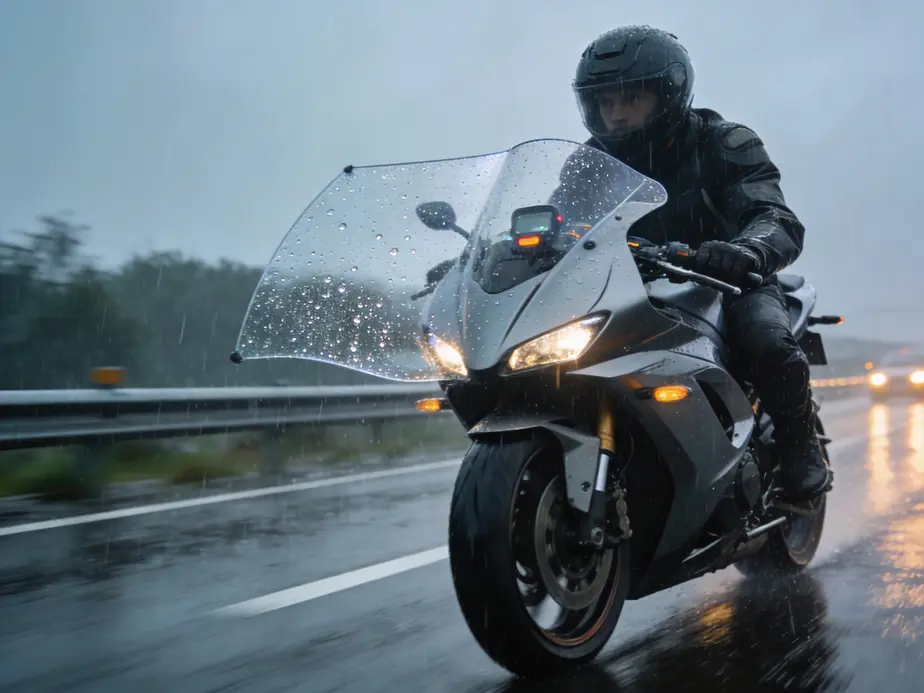
The aerodynamic merit of fairings is inseparable from rider experience. A well-proportioned fairing reduces wind pressure on the rider’s chest and arms, which translates into reduced fatigue over extended periods in the saddle. The wind is a constant companion on the open road; the fairing acts as a shield that moderates that relationship. Less wind fatigue means a rider can retain focus and form, maintaining a smoother riding line and better control at higher speeds. The design that optimizes flow around the rider’s torso also lessens the exposure to rain and weather elements, an ancillary but meaningful comfort factor that motivates riders to pursue consistent performance regardless of weather. In sum, the fairing is a central instrument for balancing drag reduction, high-speed stability, and rider comfort, with each design choice reverberating through the machine’s behavior at speed.
As riders seek ways to understand their machines more deeply, a clear picture emerges: fairings are not mere shells; they are aerodynamic instruments that translate physics into feel. The full fairing’s enclosure can materially alter the bike’s drag profile, while the lighter, more minimal fairings of naked bikes amplify nakedness and accessibility at the cost of some aerodynamic efficiency. Belly fairings and undertail panels tune the underbody flow for reduced drag and enhanced cleanliness of the chassis’s visible lines, while winglets and spoilers offer a refined means to push back on turbulence at the tail. Each choice—material, geometry, and extra aero aids—contributes to the bike’s overall performance envelope, from acceleration and top speed to stability in long, high-speed straights and in high-angle turns.
For readers who want to explore how different fairing configurations look and behave in practice, a deeper dive into the topic of fairing types can provide additional context and comparative insights. types of fairings on a motorcycle offers a detailed look at how different configurations influence air, rider exposure, and maintenance considerations. This broader perspective helps connect the theory of aerodynamics with the lived experience of riding, showing how the fairing acts as both a shield and a tool for optimizing performance. By understanding the spectrum—from minimal exposure to full envelopment—riders and builders can better align aerodynamic goals with riding style, climate, and intended use. In this way, the wind becomes not an adversary but a design partner, guiding decisions about shape, materials, and the integration of aero features that collectively advance speed, efficiency, and comfort on the open road.
Chapter 2: What is the fairing on a motorcycle: Aerodynamics, Drag Reduction, and High-Speed Stability
1. Air as an Ally: Downforce, Front-End Confidence, and Rider Safety at Speed
The race against wind is not merely about cutting drag; it is about shaping the air that moves past the machine and the rider in a way that supports control, predictability, and safety. A well-designed fairing does more than reduce resistance. It serves as an engineered interface between the bike and the atmosphere, steering air flow to press the chassis down where it matters most, while smoothing turbulence that can unsettle a rider at the edge of grip. At high speeds, these aerodynamic decisions become practical safety features. They translate into a steadier front end, steadier entry and exit from corners, and a more confident braking stance. In that sense, the fairing acts as an ally rather than a mere cosmetic shell, orchestrating forces that the rider must manage with throttle, steering input, and body position.
The core mechanism is the generation of downforce through carefully shaped surfaces and the strategic placement of airflow control elements. Downforce adds weight transfer where it matters most: it loads the front tire more firmly into the road during acceleration, braking, and mid-corner transitions. This isn’t about lifting the tire to the road; it’s about nudging the bike toward a stable equilibrium where the front wheel remains firmly planted, even as the bike pitches and yaw moments increase under aggressive riding. The benefit is immediate: improved front-end grip during heavy braking, more precise steering feedback, and a reduction in twitchiness that can accompany high-speed transitions. The rider senses a more predictable chassis response because the air pressure acting on the fairing helps dampen sudden pitch oscillations and vinyl-like gusts of wind that can momentarily destabilize the line.
A key element in achieving this stability is the inclusion of aero features such as winglets and spoilers that are integrated into the fairing design. These features work by scooping and directing turbulent air in targeted ways, rather than simply blocking it. By shaping the boundary layer and managing flow under and around the bike, winglets generate downforce that grows with speed. The effect is modest at lower velocities but becomes meaningful as highway speeds rise, contributing to front-end stability during acceleration and enabling the rider to brake harder with more confidence without fear of front-wheel lift. The overall result is a chassis that feels more planted, allowing the rider to focus on line and timing rather than fighting the bike’s tendency to lift its front under load or during abrupt changes in direction.
Vertical fins—the kind that extend upward around the fairing’s sides—play a complementary role. They help stabilize the bike in the mid-csector of a corner, where the interplay between yaw and roll can otherwise produce a nervous, wand-like feel. These vertical surfaces interact with the flow along the motorcycle’s sides, reducing crossflow and the onset of buffet that could disturb the rider’s feel. In concert with vertical elements, horizontal fins angled forward can actively push rearward downforce into the tail area during braking. That rearward loading helps manage the bike’s pitch, producing steadier deceleration without compromising tire contact. The combined effect is a finely tuned balance of loads that allows the rider to harness the bike’s speed rather than wrestle against aero-induced instability.
Aircraft-inspired thinking has long guided modern fairing design, but its practical implications for street and race motorcycles lie in how closely the rider can couple with the machine at limit speeds. When a bike accelerates toward warp-speed levels of airflow, the aerodynamic interface formed by the fairing becomes the primary conduit for energy exchange. The fairing’s shape dictates where air attaches and where it detaches, how much it wraps around the rider’s torso, and how much wind force is redirected away from sensitive areas. A rider pushing toward the limits of traction benefits from an air envelope that minimizes buffeting and wind pressure on the chest and shoulders. The result is less fatigue and more awareness of the bike’s behavior—an essential factor when every millimeter of steering input can shift a line through a corner.
The practical realities of this aero tuning extend beyond mere numbers. For riders who spend weekends chasing track times or days railing through mountain passes at speed, the sensation of downforce matters. They notice how much input is needed to maintain the same line as speed increases, how much the front brake can be leaned on before front-end chatter becomes a factor, and how quickly the rear end follows the load transfer under braking. In a well-tuned system, the rider feels a calm, almost measured response to aggressive inputs. The bike doesn’t surge or surge back; it collects momentum and continues in the chosen arc with a steady, predictable feel. That tactile feedback is the essence of rider safety in high-speed contexts: it reduces the chance of sudden, unexpected transitions that can catch a rider off guard.
These aero benefits are most pronounced on motorcycles designed with full or substantial fairings, where the air can be guided around the engine and underbody with minimal disruption. Full fairings create a continuous aero profile that minimizes the creation of unpredictable wake behind the bike. In turn, the rider experiences less gusty air currents and reduced buffeting, especially when crossing wind gusts or drafting behind another vehicle. The control afforded by a well-sealed air path means less need for abrupt corrections at the handlebars, a lower risk of late-phase overcorrections in corner exits, and a more controlled application of throttle through the apex. In practical terms, this translates to safer riding at higher speeds, where the margin for error is narrow and the consequence of a misjudged gust or a sharp wind cross can be severe.
Modern fairings also contribute to rider protection in weather and exposure. While the primary safety logic rests on stability, a fairing’s duty to shield the torso and arms from windblast reduces rider fatigue and helps maintain focus on the road ahead. The rider’s posture is preserved by the air’s smoothing effects, which means less energy is spent bracing against wind pressure over long commutes or endurance sessions. In this sense, the fairing’s protective function intersects with its stabilizing role. The rider can maintain consistent body position, keep the head up, and scan for hazards rather than fighting with the air around the torso and upper body. That combination of comfort and control is integral to safe riding at high speeds, where fatigue and compromised form can quickly erode a rider’s decision-making ability.
A word about the balance of benefits and trade-offs helps temper expectations. The gains in downforce and stability come with design complexity, added weight, and potential drag increases in non-ideal conditions. The aero performance is most effective in favorable yaw angles and at speeds where the wing-like elements can do their job without inducing harmful buffeting in the rider’s line of sight. In other words, fairings are not magical fix-alls. They are engineering compromises that optimize the air path for certain conditions, speeds, and riding styles. The rider’s skill, chassis setup, tire choice, and even track layout all influence how pronounced the aero advantages will be on any given machine. This is why factory teams invest heavily in wind tunnel testing and computational fluid dynamics to tailor fairing geometry to specific performance envelopes. For riders, the takeaway is simple: the most meaningful safety and stability improvements come from fairings that are integrated thoughtfully into the bike’s overall design and tuned to the rider’s intended use.
From a practical standpoint, the presence of fairing features that enhance downforce is particularly relevant for braking zones and acceleration out of corners. When deceleration loads the front wheel, the added aero grip helps maintain tire contact with the pavement, promoting a steadier entry into braking zones and more confident modulation of the front brake. As the bike slows and the rear shifts weight forward, the aero arrangement can preserve a consistent front-end feel, reducing the likelihood of a sudden front-end washout that enthusiasts fear at the limit. As speed rises again after a corner, the same downforce helps the front tire stay planted, allowing smoother throttle application and a more predictable power transfer to the rear wheel. This interplay of aerodynamic loading across different phases of a corner is a core reason riders value properly engineered fairings beyond their celebrated drag-reduction capabilities.
There is also a broader performance context to these design choices. The interaction between fairings and tire behavior, steering geometry, and suspension tuning creates a holistic system where aero loads influence, and are influenced by, the bike’s mechanical setup. A rider who learns to exploit aero downforce may adjust body position, lean angle, and line to maximize stability without forfeiting acceleration or corner speed. Conversely, a bike that relies too heavily on aerodynamics without corresponding mechanical balance can feel inert or heavy at the limits, requiring more physical input to keep it in check. The ideal scenario is a chassis where aero elements support, rather than supplant, rider control—where the air becomes a partner in motion, enabling smoother, safer, and more confident progression through high-speed sections.
For readers seeking a compact synthesis of these ideas, the overarching narrative is clear: fairings affect high-speed stability not just by shaving drag, but by shaping the air around and under the bike to create controlled downforce and reduced buffeting. They contribute to safer braking, more precise cornering, and a rider experience that is steadier and more predictable at the edges of grip. This is why aero-focused fairing designs are common in performance-oriented motorcycles and why aftermarket and factory developers continue to refine wing-like features for improved handling, not merely for show. If you imagine the bike as a kind of air-controlled instrument, the fairing is the carefully tuned bridge between wind and rider, enabling safer, more confident riding when the pace and the environment push the limits.
To deepen the appreciation of how fairings work across different configurations, readers can explore the broader discussion about fairing types and their effects on handling. Understanding how a full fairing versus a partial or naked setup alters airflow helps illuminate why some riders prioritize wind protection and stability in one riding context while others seek a lighter, more exposed feel for agility in another. For those curious about the spectrum of fairing configurations, this overview of types of fairings on a motorcycle provides a concise map of options and their typical outcomes. types of fairings on a motorcycle. This reference helps connect the aero principles described here with the practical realities of what riders actually choose for street, track, and highway riding.
In practice, achieving optimal high-speed stability and rider safety is less about chasing a single feature and more about harmonizing the entire aero package with the rider’s objectives. A well-integrated fairing design complements chassis geometry, weight distribution, and suspension dynamics, all tuned to the rider’s preferred riding style. It is a symphony of airflow management, not a singular note of drag reduction. When this harmony is achieved, the rider experiences a bike that feels more anchored at speed, steadier through gusts and rough pavement, and more confident in applying braking force without fear of front-end lift. The result is not just a faster bike, but a safer one—one that enables deliberate, controlled, and predictable action, even when the road demands a bold line and a bold pace. The fairing, in this sense, becomes a crucial partner in safety as much as a tool for speed.
Chapter 3: What is the fairing on a motorcycle: Rider Protection, Weather Shielding, and Comfort
1. Rider Guard, Weather Shield, and Comfort in Motion: How Technological Innovations Redefine Motorcycle Fairings and Rider Safety
A motorcycle fairing is more than a cosmetic shell. It is a carefully engineered assembly that cloaks the frame, the engine, and surrounding components to shape airflow, reduce drag, and shield the rider from the elements. At its core, a fairing serves a trio of intertwined purposes: it is an aerodynamic device, a rider protection system, and a weather management feature that enhances comfort over the long haul. This synthesis of function and form has driven the evolution of fairings from simple wind protection to sophisticated, sensor-fused structures that respond to speed, posture, and even weather signals. Understanding this evolution requires tracing how materials, geometry, and integration with other systems have changed the practical and experiential value of riding with a fairing.
To begin, it’s useful to draw a clear line around what a fairing encompasses. A typical OEM fairing consists of exterior panels—front nose, upper and lower cowls, side panels, and the rear tail section—plus ancillary elements such as radiator covers, fenders, and fork guards. These pieces, while sometimes treated as separate parts for maintenance or aftermarket replacement, are designed to work together as an integrated shield. The fairing’s primary aerodynamic role is to manage flow around the rider and engine, smoothing the path of air so that drag is lowered and stability is improved at speed. It also acts as a barrier against wind pressure, rain, road spray, and debris, turning what would be a weather-challenged experience into something more tolerable and controllable. Beyond physics, fairings carry an aesthetic logic; their shape, lines, and finish contribute to a bike’s overall character, signaling intent from the first glance.
The historical arc of fairings mirrors the pursuit of speed and comfort on two wheels. Early motorcycles relied on minimal coverage, prioritizing lightness and maneuverability. As speeds climbed and riding sessions lengthened, riders and designers experimented with more comprehensive coverage to curb wind fatigue and improve handling. The transition from bare frames to full or near-full shells brought with it new challenges: how to build a shell that could be smooth at high speeds without creating troublesome turbulence around rider corners or causing buffet at gusty crosswinds. The material conversation followed suit. Inexpensive, formable plastics such as ABS offered durability, paintability, and repairability for mass production. Fiberglass and other composites opened doors to lighter weights and more complex geometries, while carbon fiber—though costly—delivered high strength and stiffness with potential weight savings. The result is a spectrum of fairings that range from sport-oriented full shells to touring designs that emphasize weather sealing and comfort.
Today’s fairings sit at the intersection of several engineering domains. Aerodynamics is still central; Cd, CdA, and the interaction between the rider’s posture and the bike’s frontal area are measured in wind tunnels and refined through computational fluid dynamics. Yet the modern fairing must also accommodate cooling needs, sensor packages, near-invisible fasteners, and sometimes active aerodynamics. A touring or adventure design may integrate heated elements, defogging strategies, and sophisticated windscreen systems that adjust to rider height and posture. In sport and race contexts, emphasis often falls on minimizing wake, sculpting tight junctions, and choosing materials that resist crack growth under high-frequency vibration. The most advanced configurations may even deploy venting and duct layouts that influence engine temperatures without compromising aero performance. The broader takeaway is that a fairing today functions as a multidisciplinary platform rather than a single-purpose shell.
One practical way to appreciate how the fairing blends protection with performance is to consider how it interacts with rider position. The rider’s posture is not a fixed variable; it shifts as speed changes, as a rider slides forward or sits up, or as a taller windscreen is adjusted. The fairing must accommodate such changes without creating excessive buffeting or dramatic shifts in flow patterns that destabilize the bike. This leads to a core design principle: the geometry of the fairing should guide air smoothly around the rider and engine, supporting stable lift and downforce balance while ensuring that air around the cockpit remains comfortable and predictable. It also means paying attention to the transitions where the panels meet and at the points where the windscreen interfaces with the rider’s line of sight. When these interfaces are ill-conceived, the result can be noisy air pockets, abrupt pressure changes, and fatigue that detracts from the riding experience.
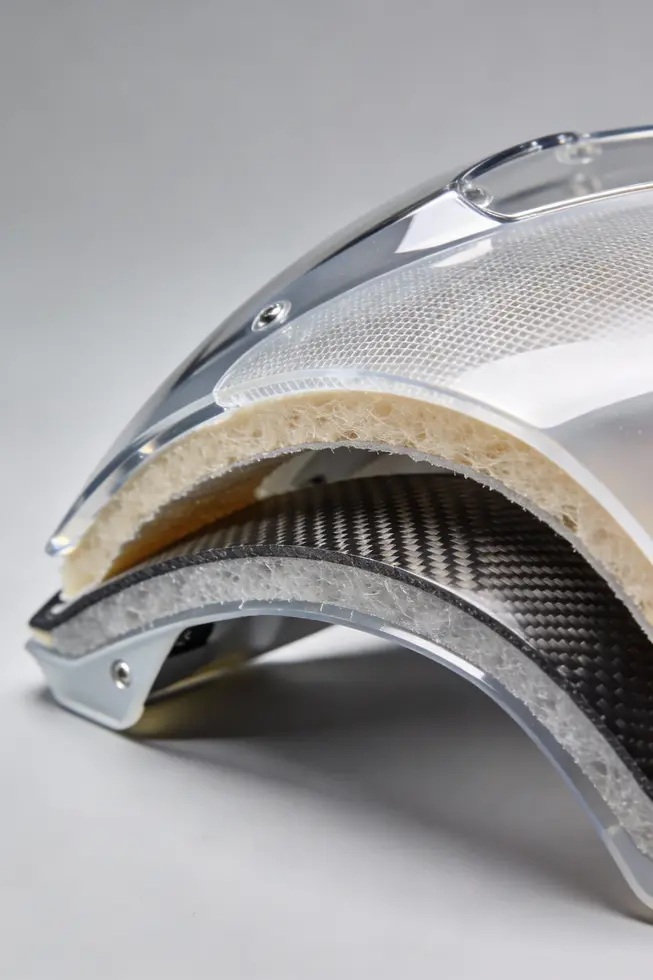
Material choice sits at the heart of how these design goals are realized. ABS plastics remain dominant in many mass-produced fairings due to their resilience to impact, UV stability, and ease of painting. Lightweight alternatives such as carbon fiber are favored in higher-performance builds for their strength-to-weight advantages, but repairability and cost push many riders toward reinforced composites rather than pure carbon. Fiberglass offers a middle ground, balancing weight and stiffness with cost considerations. In windshields, materials such as polycarbonate provide clear visibility and impact resistance, often with hard coatings to resist scratching. Advanced polymers, such as ASA blends, contribute UV resistance, maintaining color and gloss over years of exposure. The manufacturing methods—ranging from injection molding and thermoforming for standard shapes to hand lay-up and autoclave curing for composite shells—shape how the final product performs under load, how easily it can be repaired after a crash, and how well it tolerates repeated vibrational stress.
Beyond static protection, the fairing’s role in safety extends into how it handles energy during a crash. The fairing can influence load paths on impact, potentially altering injury exposure by deflecting debris and shaping how contact forces are transmitted to the rider. Some designs incorporate energy-absorbing fasteners or compliant mounting points to elevate this protective aspect. While an ideal fairing will not substitute for protective gear, its role in reducing secondary injuries and guiding impact energy is a meaningful part of overall rider safety.
The interplay between protection and comfort becomes most evident when we consider weather shielding. In cooler climates or long-distance rides, the fairing acts as a thermal moderator. It channels air around the torso, helping to reduce wind chill and, in some configurations, integrates vents or ducts that direct air toward or away from the rider. Defogging and anti-fog windscreen technologies are common on touring configurations, where humidity and temperature swings can obscure visibility at critical moments. Heated grips, and in some designs heated seats or seat sections, further extend riding season and comfort by maintaining warmth in wind-exposed zones. The goal is a controlled climate at the rider’s core, not a perfect bubble; the fairing should temper the wind’s effect without creating stifling heat or suffocating airflow.
Comfort is not just about warmth or dryness. Vibration, noise, and control ergonomics also hinge on fairing design. A well-fitted shell minimizes the transmission of engine and frame vibrations into the rider, while attentive junction design reduces wind noise and buffeting that can sap concentration on longer journeys. Ergonomic considerations include the fairing’s footprint and how it shapes the rider’s reach to handlebars, controls, and the instrument cluster. On a sport bike, the fairing emphasizes aero efficiency and cockpit tightness; on a touring machine, it prioritizes shielding a broader rider with smoother edges and larger windscreen-adjustment ranges. The ultimate measure is subjective comfort over hours of riding, but the objective cues—reduction in wind pressure at the chest, lower ride noise, and balanced thermal zones—provide a tangible frame for evaluating design choices.
Technological innovations are expanding the toolkit for fairing designers and riders alike. Active aerodynamics is moving from a niche feature to a strategic capability on select platforms. Movable flaps and winglets can alter flow separation and downforce with speed, helping maintain stability during aggressive acceleration or cornering. Adaptive surfaces that respond to temperature, vibrations, or electrical stimuli are exploring how small, rapid shape changes can fine-tune airflow without adding significant weight. Sensors embedded in or near the fairing—pressure, flow, accelerometers, and angular sensors—feed data into the bike’s control systems. This data can optimize wind management in concert with stability controls, potentially smoothing ride modes and enhancing rider confidence in variable conditions. The fusion of sensing with aerodynamics also opens doors to smarter rain and visibility management. If weather sensors detect moisture and approaching precipitation, the system might adjust ventilation and defog strategies to preserve visibility and comfort.
Alongside these active systems, simpler passive features remain essential. Venting strategies, radiative cooling considerations for engine temperatures, and the arrangement of panels to minimize turbulent wake all persist as core design concerns. The relationship between cooling and aerodynamics is particularly delicate: allowing too much ingress around the radiator can raise drag, while too little protection can starve the engine under hot riding conditions. Designers must balance these needs with the rider’s comfort and the bike’s handling characteristics. In this balance sheet, the fairing shifts from being a static cover to a responsive, integrated component of the motorcycle’s propulsion, stability, and weather-handling system.
Safety implications extend beyond crash energy management and into real-world riding scenarios. Fairings contribute to reducing wind fatigue that can compromise rider focus. They can also influence how riders perceive noise and buffeting, which in turn affects riding behavior. When a fairing performs as intended, a rider can maintain a more consistent posture, sustain lower energy expenditure at highway speeds, and keep a clearer line of sight. Conversely, poorly matched fairing geometry or misalignment after maintenance can reintroduce buffeting or wind pressure that erodes stamina and concentration. This is why accuracy in fitment, surface finishing, and sealing around joints matters not just for aesthetics but for the long-term safety and comfort of the ride.
All these considerations come with trade-offs. Heavier, multi-piece fairings can deliver better protection and stiffness, but at the cost of added weight and more complex maintenance. Conversely, minimalist or lightweight configurations improve agility and fuel economy but may expose the rider to more wind and weather. The art of fairing design, therefore, lies in achieving an optimal balance for a targeted riding experience. This means weighing the needs of a sport bike’s high-speed precision against a tourer’s weather resilience, or an adventure bike’s ruggedness against urban maneuverability. Each category asks different questions about mass distribution, mounting stiffness, panel access, and the durability of seals against water and dust ingress.
Standards and testing underpin this balancing act. Wind tunnel data and CFD models arrive before a single panel leaves a CAD workstation, ensuring predicted drag and flow behavior match the bike’s real-world behavior. Once prototypes exist, dynamic load testing evaluates the durability of mounting points and the resilience of surface joints under fatigue and impact conditions. In addition, acoustic testing and ride-quality assessments illuminate how fairing geometry interacts with wind noise and vibrations across a spectrum of speeds and rider sizes. The aim is to establish reliable performance metrics—drag coefficients, wake characteristics, noise levels, and comfort indices—that engineers can reference when refining or validating a design. While the specifics of testing may vary between manufacturers and research programs, the underlying ambition remains the same: to deliver a fairing that reliably protects, shields, and smooths the ride across a broad envelope of conditions.
When considering design across motorcycle genres, the fairing’s role expands beyond lean aerodynamics into context-driven ergonomics and utility. Sport bikes lean toward compact, highly optimized shells that minimize drag and foster high-speed stability. Touring designs favor larger, sealed wind deflectors, greater coverage, integrated heating, and refined airflow management to protect a broader range of rider sizes and weather scenarios. Adventure fairings emphasize modularity, ruggedness, and spill-safe junctions that can withstand off-road realities while still delivering adequate weather shielding. Naked and streetfighter styles, while often shunning full fairings, rely on smaller shields or strategically positioned panels that preserve a visceral feel and light weight without sacrificing essential wind protection. Across these categories, the design objective remains clear: to tailor the fairing’s presence to the riding narrative—how a rider uses the bike, where they ride, and what they expect from comfort and safety.
Looking ahead, future trends in fairing technology promise to blur the line between passive protection and active rider assistance. The continued development of lightweight, high-strength composites will expand the weight-saving envelope without compromising stiffness or crash resilience. Active aero systems could become more common on a wider range of models, delivering dynamic downforce and flow control that adapts to speed, posture, and weather. Smart materials and embedded sensing will weave the fairing into the bike’s broader ecosystem, feeding data to ride modes, stability controllers, and climate comfort systems. More important still is the potential for greater integration with rider safety technologies. Sensors embedded in the fairing may monitor rider position, collect impact data for crash analysis, and contribute to algorithmic decisions that enhance stability or preemptively adjust wind management to reduce buffeting during aggressive riding. In the end, these innovations anchor a future where the fairing is not just a shield to weather and wind but a sophisticated partner in safety, comfort, and performance.
If you want a concise entry point into the variety of fairing configurations that fuel these design decisions, a practical overview is available here. It offers a snapshot of full, half, modular, and naked forms, highlighting how each approach aligns with different riding needs and philosophies. This reference can illuminate how a single design principle—managing air around a rider—can be realized through diverse mechanical choices and materials. For readers who wish to explore this topic further within the broader ecosystem of motorcycle design, internal reading can point toward deeper analyses of how manufacturers balance aero efficiency with cooling, electronics integration, and repairability across generations of models.
In sum, the fairing on a motorcycle is not merely a cosmetic shell but a dynamic, multi-faceted system. It is the interface where aerodynamics, rider protection, weather shielding, and comfort converge. Through materials science, geometry, and increasingly sophisticated technology, fairings have evolved from simple wind deflectors into intelligent, integrated components that shape riding experience, safety, and performance. The craft lies in recognizing the rider’s needs, the bike’s purpose, and the roads that lie ahead, then translating those insights into a shell that performs reliably at highway speed, protects against the elements, and quietly supports the rider’s safety and comfort—all without becoming a burden to maintenance or a barrier to enjoyment.
Chapter 4: The Fairing as Form and Function: How Wind Shields, Rider Comfort, and Global Dynamics Shape Motorcycle Design
1. What is the fairing on a motorcycle: Rider Protection, Weather Shielding, and Comfort — Economic, Geopolitical, and Societal Implications
A motorcycle fairing is more than a cosmetic shell. It is a carefully engineered interface between rider, machine, and the air around them. When a rider leans into a sport bike, or settles into a long cross‑country tourer, the fairing works as an invisible partner, guiding airflow, shaping stability, and dialing in the rider’s experience from the first gust at highway speed to the last curve of a long day. Its value lies not only in how it looks but in how it behaves: reducing drag, directing wind away from the torso, shielding skin and fabric from rain and cold, and, in the hands of a well‑designed system, smoothing the ride so fatigue becomes a manageable companion rather than an outright obstacle. This chapter explores the fairing from the vantage point of rider protection, weather shielding, and comfort while moving outward to reveal the broader economic, geopolitical, and societal currents that flow through its production, deployment, and cultural life.
To understand the fairness of the fairing, it helps to picture the evolution of its forms. Full fairings envelop the engine and rider in a continuous shell, a design language that prioritizes aerodynamics and high‑speed stability. Half or street fairings retain more of the bike’s naked silhouette while still providing substantial wind deflection and weather protection. Race fairings push the envelope further, optimizing every contour for speed and clean airflow, often at the expense of ultimate rider comfort on long rides. These choices are not merely aesthetic; they reflect a deliberate negotiation between the rider’s need for shelter and the machine’s need to slice through air with minimal resistance. The materials underpinning these choices—polycarbonate plastics, glass composites, and increasingly carbon fiber—play a quiet but decisive role. Plastic fairings offer impact resistance, ductility, and ease of manufacture, while carbon fiber or other advanced composites promise reduced weight and enhanced stiffness but at higher costs. The material choice, in turn, feeds back into the bike’s overall performance envelope, influencing handling characteristics, fuel economy, and even repairability after a crash or a bad impact with debris.
Rider protection is the most immediate and intimate function of the fairing. When wind blasts directly at a rider, the body responds with muscle tension, altered posture, and breath dynamics that can accelerate fatigue. The fairing’s shielding effect is most evident at highway speeds, where a well‑tuned shell deflects the onslaught of air away from the chest and abdomen, diminishing the sensation of wind pressure and reducing the thermal shock that cold air can impose in cooler weather. Full fairings, in particular, form a cocoon around the upper body, guiding air along the sides and across the engine bay in a way that minimizes direct exposure to the rider. This is not merely about comfort; it translates into safer riding for longer periods. Reduced fatigue means steadier steering inputs, more accurate line choices, and a margin of safety when unexpected gusts or crosswinds arise. Beyond the rider, fairings protect critical components—the radiator, sensors, and wiring harness—from debris and weather intrusion, contributing to reliability and longevity. The design, therefore, has a twofold safety payoff: it softens the rider’s exposure while insulating mechanical systems that keep the motorcycle functional in variable conditions.
Weather shielding, the second pillar of the fairing’s mission, is a study in airflow management. A well‑shaped shell blocks rain and direct wind while creating a smoother, more predictable airflow pattern around the rider. Touring motorcycles frequently employ larger, more versatile fairings that can be adjusted or removed to suit changing conditions, offering a configurable balance between protection and openness. In climates where rain and cold are persistent, the fairing’s role becomes a practical feature that enables comfortable riding for longer seasons. Polycarbonate remains a common choice in touring and adventure configurations due to its durability, weather resistance, and ease of maintenance. It is also worth noting that the fit and finish of a fairing—how seamlessly the panels align, how well gaskets seal against wind noise, and how little you hear the air rushing past—contributes to the perceived quality and comfort of the ride. A damaged or ill‑fitted fairing can create turbulent wake, increasing wind intrusion rather than reducing it, which paradoxically worsens comfort and protection. Here, the engineering challenge is continuous: to produce form that remains protective and efficient across a spectrum of speeds and weather while avoiding the introduction of new, unwelcome sources of drag or noise.
Comfort completes the triad of rider experience that the fairing seeks to optimize. The psychological comfort of riding—knowing you are shielded from the weather and drawn into a steady, controlled airflow—often mirrors measurable benefits in temperature regulation, noise reduction, and even energy expenditure. Aerodynamic drag is a primary antagonist to comfort, especially on longer journeys. As drag decreases, the engine works more efficiently, fuel consumption improves, and the rider experiences less wind fatigue. The architecture of the cockpit—rake, windscreen height, and fairing geometry—interacts with the rider’s posture to determine how much of the torso is exposed to wind and how much is sheltered by the shell. In this sense, comfort is not only about the skin and weather but about the entire system: the rider’s position, the bike’s stance, and the air’s path around the machine. High‑end or race‑oriented fairings prioritize streamlined profiles and near‑zero drag targets. They are precise instruments in the language of speed, but they demand a tolerance for a stiffer, more direct wind rhythm that may fatigue a rider on daily commutes. By contrast, mid‑weight or touring fairings aim for a more forgiving balance—slightly higher drag relative to pure race designs but a more forgiving, quieter, and more predictable ride that supports longer hours in the saddle.
Material science underwrites these experiential differences. Traditional fairings rely on plastics that split the difference between lightness, impact resistance, and cost. Modern builds may incorporate carbon fiber skins or panels to shave weight while preserving strength. The weight savings matter not only for performance but for handling and energy efficiency. The rolling mass reduction contributes to improved acceleration, braking, and cornering behavior, especially when combined with an optimized frame and suspension geometry. Yet weight is not simply a bonus feature. Heavier fairings can increase unsprung mass when mounted near the wheel, potentially altering suspension dynamics and ride quality if not properly integrated. The meticulous alignment of mount points, brackets, and seals is part of the craft that transforms a sheet of plastic into an aerofoil that behaves like a unified ecosystem with the rest of the motorcycle.
Beyond the physics, the fairing sits at the crossroads of economics, geopolitics, and society. The economic dimension begins with cost and value. A fairing is a purchase that blends initial price, maintenance, and durability with potential gains in fuel efficiency and comfort. The claims about fuel savings are conditional, contingent on riding style, road conditions, and the bike’s overall efficiency. However, even conservative estimates of drag reduction suggest a meaningful cumulative impact over long distances and high speeds. The aftermarket ecosystem surrounding fairings—the availability of replacement parts, painted finishes, decals, and custom reshaping—adds another layer of value. Aesthetic customization, often pursued to reflect personal identity or brand loyalty, can elevate resale value and extend the life of a motorcycle by encouraging owners to keep their machines in better condition for longer. Maintenance costs arise from the need to repair or replace fairing panels after impacts, scratches, or cracks, and the labor involved in realigning and resealing panels to maintain aerodynamic performance and weather integrity.
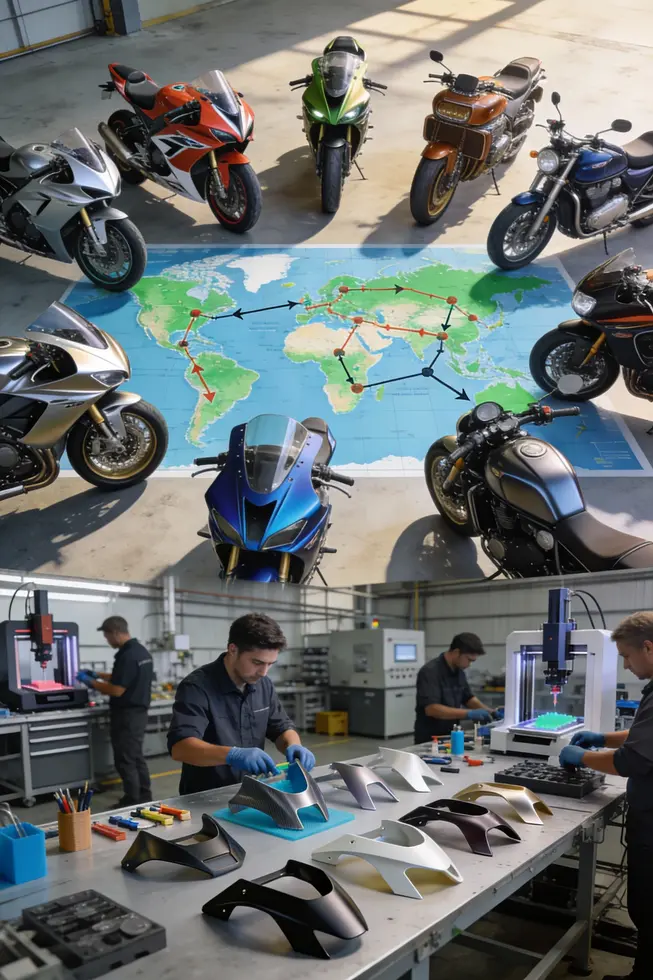
Geopolitically, the fairing and its components sit within a global network of supply chains. The materials—polycarbonate plastics, glass fibers, carbon fiber composites, and specialty polymers—are often sourced from diverse regions. Production hubs for these materials influence pricing, availability, and lead times. In times of geopolitical tension or trade disruption, access to raw materials or finished fairings can become intermittent, shifting consumer and manufacturer risk toward more localized or diversified sourcing strategies. Tariffs, exchange rates, and import regulations can all ripple through to sticker prices and repair costs. For motorcycle builders and enthusiasts, this geopolitical sensitivity translates into practical decisions: whether to source domestically where possible, to seek multi‑supplier strategies, or to favor designs that use more readily replaceable components. While these considerations may seem distant from the rider’s daily experience, they shape the affordability and accessibility of protective features that riders rely on in variable weather and varied road conditions.
Societal implications emerge from how fairings influence mobility, safety, and culture. By extending riding comfort and reliability into more weather‑varied environments, fairings help broaden the practical window for motorcycling as a mode of transport. This, in turn, supports safer urban and regional mobility by enabling riders to commute in rain or cooler seasons without insisting on a heavy, enclosed car alternative. The social diffusion of protective design features also feeds into a broader culture of rider safety and preparedness. Customization—color, texture, finish, and even structural modifications—creates communities around aesthetics and performance, reinforcing social bonds among riders who share a passion for the craft of fairing design. The cultural significance of fairings often extends beyond personal use; it contributes to identity, branding, and a sense of belonging within rider subcultures that value engineering, precision, and the expression of personal taste through the silhouette of a bike. In this sense, the fairing is not merely a component but a canvas for communal meaning and personal narrative.
The narrative around the fairing is not purely technical or commercial. There is a tension between protection and exposure, attack and shelter, performance and pragmatism. For some riders, the allure of a naked or streetfighter aesthetic, which minimizes or removes fairing coverage, calls into question the balance between wind protection and a certain visual and tactile clarity—the look of a machine that is unfettered by an outer shell. Yet even in such configurations, the underlying aerodynamic ideas persist: you cannot escape wind altogether; you only manage where it goes and how it feels. Fairing design embodies this negotiation, enabling riders to tailor air interaction to their preferences and riding goals. The best solutions integrate protection, weather shielding, and comfort into a coherent ecology that respects the rider’s needs and the machine’s capabilities. In other words, the fairing is a practical translator of physics into experience, a boundary object that makes high‑speed travel feasible, enjoyable, and safer in a world where wind, weather, and weathered asphalt are constants.
In closing, considering the fairing through these intertwined lenses—rider protection, weather shielding, and comfort—reveals a broader truth about motorcycle design. The fairing is a microcosm of how engineering, economics, geopolitics, and society collide and cooperate. It shows how a single component can influence daily practicality—whether a rider can safely and comfortably commute on a rainy morning—as well as longer arcs of industry strategy and urban mobility patterns. The fairing does not act in isolation; it is part of a larger choreography that includes engine tuning, chassis geometry, rider gear, road infrastructure, and the cultural value we place on personal mobility. The next layer of understanding invites us to consider how the fairing interacts with other protective systems—helmets, apparel, and accessories—and how innovations in materials science, manufacturing, and design thinking might reshape what riders come to expect from wind, weather, and comfort on two wheels. For readers curious about the specific taxonomy of fairing types and how each form changes the riding experience, further exploration into the types of fairings on a motorcycle provides a complementary perspective on how design choices translate into protection, weather resilience, and daily usability. types of fairings on a motorcycle
In sum, the fairing is a practical instrument of protection, a shield against the elements, and a vehicle for comfort and personal expression. Its economic, geopolitical, and societal dimensions remind us that even a seemingly small component sits at the nexus of global supply chains, market dynamics, and everyday riding cultures. A complete understanding of the fairing thus requires attention to the physics of airflow as well as the human and political forces that shape its production, adoption, and evolution. As riders continue to demand improvements—whether toward lighter materials, smarter aerodynamics, or more adaptable weather protection—the fairing will likely remain a focal point where engineering ambition meets the realities of global trade, personal safety, and urban life on two wheels.
Final thoughts
Fairings sit at the intersection of engineering discipline and business strategy. They influence performance metrics like drag, stability, and fuel efficiency while shaping rider experience, maintenance costs, and aftermarket demand. By aligning material selection, manufacturing methods, and market positioning with clear customer needs and global supply realities, business leaders can translate aerodynamic and protective advantages into measurable value. The four chapters together offer a framework: optimize aerodynamics to boost efficiency; prioritize rider protection to enhance retention and safety compliance; choose materials and construction that balance weight, cost, and durability; and understand the market and geopolitics that affect pricing, supply, and global competitiveness. A strategic approach to fairings can unlock product differentiation, cost optimization, and sustainable growth.
Ready to elevate your ride? Summit Fairings delivers premium, custom-fit fairings that blend style and durability. Whether you’re chasing speed or turning heads, we’ve got your bike covered. Don’t wait—transform your machine today. Click, customize, and ride with confidence. Your perfect fairing is just a few clicks away. Act now!
About us
We are one of the leading motorcycle fairing export sites, with over 3,000 styles across almost all motorcycle models. Buy from summitfairings.com, and pay 10-40% less than the prices on other sites. If you have any questions, we promise we will have your answer within six hours.