
Motorcycle fairings are essential components that enhance aesthetics and improve aerodynamics. For business owners involved in the motorcycle industry, understanding where to purchase these vital parts can impact both customer satisfaction and profit margins. This guide offers insights into multiple sourcing avenues. The first chapter will explore online marketplaces and B2B platforms that provide an expansive variety of motorcycle fairings. Next, we’ll dive into direct manufacturer sourcing to uncover potential cost benefits and quality assurance options. Finally, we’ll cover specialty retailers and fitment guides that ensure customers receive suitable fairings for their motorcycles. By the end of this article, you’ll be well-equipped to make informed purchasing decisions for your business.
Riding the Market: Navigating Online Marketplaces and B2B Platforms to Source Motorcycle Fairings

Every motorcycle owner eventually encounters the moment of choosing new fairings. The ride from a vague intent to a concrete purchase stretches across a landscape of online marketplaces, dedicated parts retailers, and wholesale platforms that connect buyers to manufacturers around the world. The juggling act is not just about grabbing the lowest price or the slickest design; it is about finding the right fit for the bike you ride, the budget you carry, and the timeline you must meet. In this chapter, the journey unfolds as a continuous thread that ties together model compatibility, material options, customization potential, and the practical realities of sourcing at scale or simply replacing a single panel. The goal is to illuminate how to navigate this terrain with clarity, so you can move from search to installation with confidence, avoiding common missteps while keeping your project moving forward.
To begin, think of the marketplace as a spectrum that stretches from consumer friendly sites to business oriented channels. On one end lies the broad online marketplaces where individual riders often start their quest. These platforms host a mix of OEM style and aftermarket fairings, and they typically provide user reviews, product specifications, and, crucially, fitment guides. The advantages are obvious: a wide catalog, visible feedback from other buyers, and the possibility to see how a specific fairing looks on a similar machine before committing. The downside, however, is that the sheer breadth can be overwhelming. Prices vary, and not every listing clearly states the exact mounting points or whether a panel set is designed for your specific year. You may also encounter inconsistent quality from listings that do not show close up photos of the attachment points or the inside of the panels. Fresh paint, thick gel coats, or poorly aligned seams can hide behind glossy product images, so diligence remains essential.
In the middle of the spectrum live the specialty shops and model focused retailers. These are the places where a rider can find fairings that are tailored to particular bikes or lines of performance upgrades. They often go beyond basic product pages by offering installation guides, mounting hardware compatibility notes, and sometimes visualizers that let you see how the fairing will look on your bike before you buy. A well curated catalog from a specialist can meaningfully reduce the risk of ordering the wrong part because the listing is built around the needs of a specific community. The emphasis is on accuracy, with detailed dimension data, mounting point diagrams, and notes about required tools. For someone who values clarity and a smoother path to installation, these sources can feel like a reliable workshop partner rather than a faceless catalog.
At the heart of the sourcing decision is compatibility. The most reliable way to minimize fitment issues is to search by exact make, model, and year. The motorcycle ecosystem evolves—rarely does a fairing designed for one generation fit another without changes to mounting points, belly pans, or instrument panel geometry. Some riders embrace universal or semi universal panels that promise a flexible fit, but these often require more custom fitting or trimming and can alter the appearance from the manufacturer’s original lines. A practical approach is to compile a short list of candidate listings that specify the bike, year, and sometimes even the submodel. If the listing is vague about fitment, the next best step is to contact the seller directly with precise details and request confirmation of mounting points and any required brackets or adapters. In many cases, the most cost effective path is to start with a model specific option before considering universal solutions, especially for a street bike that values both aerodynamics and aesthetics.
The sourcing ecosystem also includes large B2B platforms that connect buyers to factories and distributors. These venues shine when you are planning more than a single set or you are looking to customize the panels for a specific project. The benefit here is the potential for price advantages, flexible quantities, and direct factory sourcing, which can translate into better control over materials, colors, and finishes. The responsibility, of course, shifts toward due diligence. Wholesale sites sometimes aggregate listings from dozens of suppliers with varying quality, communication styles, and return policies. It becomes essential to verify supplier credibility, read recent feedback, and confirm the terms around samples and returns before committing significant funds. For orders that involve multiple colors or unique finishes, the opportunity to specify exact gloss levels, texture, or even a specific resin system makes B2B channels appealing. The key is to approach these platforms with a clear brief: exact model information, desired materials, finish, and a sense of your timeline and budget.
From a materials perspective, fairings can take several forms, and the choice affects not only the look but also fit, weight, and durability. ABS is common for aftermarket replacements because it balances cost and resilience, while fiberglass can offer a lighter weight in some configurations, at the expense of more demanding finishing work. Carbon fiber blends, when offered, provide a higher end aesthetic and strength-to-weight ratio but command higher prices and longer production times. Custom colorways and finishes add another layer of complexity. Some buyers want a precise color match to the existing paint job, which may require painted panels or color matched gel coats. Others aim for a raw or matte finish that highlights the engineering lines of the bike. Each material has its own set of preparation steps, from sanding and priming to sealing and painting. If you are ordering from a non domestic supplier, ensure that the material certification and resin content align with your local expectations for chemical compatibility and heat resistance. The last thing you want after many hours of assembly is a panel that warps or delaminates under heat or sun exposure because the resin or fiber layer did not meet the bike’s thermal demands.
As you narrow down your options, the practicalities of logistics begin to matter. The leading online marketplaces typically offer clear shipping terms and, in many cases, options to track shipments. For bulk or premium panels, factory direct sourcing may require considering international freight, incoterms, and import duties. The ratio of cost savings to shipping complexity often shifts as the order size increases. A single set of panels for a race bike, for example, may be more efficiently sourced through a specialty retailer with a domestic warehouse or a partner in your region than via a long sequence of international shipments. Packaging integrity matters too. Fairings are large, light, and fragile. The best suppliers use reinforced cartons, corner protectors, and moisture barriers. Before committing, request a copy of the packaging standard and ask about any past damage incidents along with how claims are handled. A small but meaningful detail, packaging quality reduces the risk of cosmetic defects at delivery and keeps installation timelines intact.
Turn now to the process side of the equation, and you will notice that the path to purchase is often iterative. Start with a short list of potential sources and request detailed specifications. The response should include precise fitment notes, mounting point diagrams, a clear breakdown of the hardware included, and if necessary, a list of compatible brackets or alternative mounting methods. If a listing mentions adapters or brackets, verify that those items are included or readily available as a separate purchase. Some buyers underestimate the importance of mounting hardware compatibility, and later discover that essential fasteners, spacers, or brackets are missing or incompatible with their subframe or fuel tank geometry. Likewise, compare panel counts and alignment with the bike’s original silhouette. A misalignment can produce drag, interference with the steering head, or interference with electronics covers. As with any purchase that sits on the boundary between form and function, a measured approach pays off, and a strong return policy becomes an invaluable fallback should the fitment prove problematic after the first attempt at installation.
When a project calls for something beyond standard replacements, the collaboration potential of a B2B platform becomes especially valuable. Suppliers who offer customization can tailor the panels to a variety of goals, from a more aggressive aerodynamics package to a softer, street-friendly finish. Custom requests might involve specific paint schemes, different laminate layers, or even alterations to the fairing geometry to increase clearance around aftermarket exhaust systems or upgraded radiators. In this context, the ability to communicate directly with the factory or a seasoned distributor becomes an asset. You can request samples, review finished photos, and compare the tactile feel of different materials before committing. The transparency of the process—open dialogue about lead times, production milestones, and quality checks—helps align expectations with reality and reduces the risk of surprises when the ship date approaches.
A further nuance is the role of reviews and fitment guides that help buyers gauge what has worked for others. Consumer feedback offers practical insights that go beyond the technical specs and can reveal the subtleties of real world installation. For example, a listing may claim a perfect fit for a specific year, but a handful of reviews might note that the panels required minor trimming or that the paint tended to fade in strong sun. Reading these observations, especially from riders who share similar bikes or riding conditions, can save hours of trial and error. At the same time, high quality listings often provide compatibility checkers or 3D visualization tools that simulate the appearance of the fairing on your bike. These tools can help you assess lines, gaps, and overall proportion before you place an order, offering a visual reassurance that complements the technical data.
In the broader process, there is a pragmatic rhythm to sourcing that is easy to overlook. An organized buyer creates a simple decision framework: what is the maximum acceptable lead time, what is the minimum acceptable finish quality, and what is the price per panel that makes sense for my project? If speed is paramount, many buyers will lean toward retailers with ready to ship stock and clear return policies, even if the price per panel is slightly higher. If the project can tolerate longer timelines, it becomes possible to negotiate for bulk pricing or color customization that would not be achievable with an off the shelf option. The key is to balance speed, cost, and quality in a way that aligns with the project goals rather than chasing a perfect fit that may never arrive on schedule.
In this landscape, the role of model specific pages cannot be understated. A model specific page serves not only as a catalog entry but as a compact knowledge base. It typically consolidates fitment notes, panel counts, mounting hardware requirements, and installation tips in a single place. Some pages go further by including a short installation video, a panel by panel diagram, and a FAQ addressing common issues that arise during mounting or repainting. The value of such a resource increases when you are navigating a complex model history, where different generations share a chassis but diverge in fairing geometry or access to electronics. The more transparent and complete the information, the more confident you can feel about placing a sizable order. And if you are exploring options for a classic model with a dedicated following, model specific catalogs become especially critical as they are often the most likely to carry the precise form and line the bike originally wore, or a faithful reproduction adapted for modern materials and finishes.
For readers who want a concrete starting point in the search, consider exploring a model focused collection that features a curated selection of panels designed for a specific bike family. You can browse these sections for an at a glance sense of available shapes, finishes, and compatibility. For example, a Honda focused collection can be a practical reference when you are evaluating a set that echoes the bike you own. When you land on a page that matches your ride, you will find a concise blend of color options, panel counts, and mounting notes, along with a clear map of which parts are included in the kit. This level of specificity reduces ambiguity and accelerates the decision process. And if you are curious about how a particular model’s fairings integrate with existing accessories, the page may also offer guidance on compatibility with common performance upgrades or bodywork add-ons. In short, model specific hubs are not merely shops; they are curated knowledge centers that translate technical fitment into actionable steps toward your final installation.
As you move toward finalizing a choice, you may find it helpful to anchor your approach with a tangible example of how a thoughtful sourcing decision can unfold. Suppose you are planning a single panel replacement for a mid generation model that had a well documented track record of fitment issues in earlier years. You would start by identifying a short list of potential listings that explicitly call out the precise year range. You would then compare the material choices and finish options from those listings, paying close attention to whether the manufacturer or distributor offers a paint ready or pre painted variant that matches the bike’s current color. You would examine the included hardware, determine whether adapters or brackets are necessary, and confirm whether the cost covers return shipping or restocking if the fit proves unsatisfactory. After receiving one or two samples or mockups, you would measure mounting points, verify alignment with the subframe, and test the hood clearance near the radiator or fuel tank. If all goes well, you would proceed with the main order, confident that the supplier has clear quality assurances, documented fitment data, and a transparent policy for issues that might arise after installation. The result is not merely a purchase; it is a practiced approach to sourcing that respects the bike as a living system and acknowledges the constraints of time, budget, and workmanship.
To bring the journey full circle, it is worth acknowledging the value of an integrated workflow. The most satisfying purchases flow from a well defined plan: a clear model and year, a measured understanding of finish and material options, and a disciplined evaluation of supplier credibility and return terms. It is a workflow that benefits from using a targeted model page when available, and from the broader catalog insights offered by general marketplaces when you are gathering comparative pricing or seeking a quick replacement. In all cases, the objective is the same: to secure a set of fairings that honors the bike’s lines, fits cleanly with existing components, and arrives with a path to installation that does not require a heroic amount of improvisation. When this balance is achieved, you can progress from planning to painting and from unboxing to proudly looking at the bike you have brought back to life.
For riders who want to dip their toes into model specific options without losing sight of broader market dynamics, a practical starting point is to explore a dedicated Honda fairings hub that aggregates model tuned panels, including widely used generations. This approach offers a quick route to compatible choices while still allowing you to compare material, finish, and price across a few trusted sources. If you are curious about Honda CBR series options, a dedicated collection can offer a degree of familiarity and reliable guidance through the complexity of fitment across years. In this case, you can use an internal reference like the Honda fairings collection to guide your exploration while you assess whether a single model family or a broader set of bikes will meet your needs in the near term. You can begin your exploration here: Honda fairings collection.
Ultimately, the decision of where to buy motorcycle fairings blends practical considerations with a touch of strategic thinking. You balance speed against quality, comfort against cost, and the certainty of a model specific fit against the flexibility of a universal approach. The online marketplaces provide breadth and community wisdom; B2B platforms offer potential cost savings and customization possibilities when the project calls for bigger scale or bespoke finishes. The informed buyer navigates by asking precise questions, requesting detailed specifications, and respecting the importance of fitment diagrams and mounting hardware lists. With due diligence, a buyer can secure high quality fairings that not only restore the bike’s silhouette but also stand up to the rigors of daily riding, track days, or weekend cruises. The search ends with a purchase that feels inevitable because the path was clear, the information transparent, and the expectations aligned with the realities of sourcing, manufacturing, and installation.
External resource for further reading and consumer insights: https://www.amazon.com/s?k=Motorcycle+Fairings
Factory-Direct Fairings: Sourcing High-Quality Motorcycle Bodywork Straight from the Makers

Choosing the right motorcycle fairings is more than a matter of color and style. It’s about reliability, compatibility, and the path you take to acquire them. In a world where riders increasingly expect factory level quality without the premium attached to traditional dealerships, sourcing directly from manufacturers presents a compelling option. This approach works best when you understand the landscape of available channels, the tradeoffs they bring, and the practical steps that turn a direct from maker promise into a smooth, well fitting installation on your bike. The modern market supports factory direct sales through several routes: platforms that connect buyers to manufacturers, direct storefronts run by the makers themselves, and a growing ecosystem of specialized shops that offer model specific fitment information. Each path has its own rhythm, costs, and risk profile, and the choice often comes down to your appetite for customization, your timeline, and how hands on you want to be with verification and logistics.
Direct from manufacturer sales tend to offer lower sticker prices and leaner lead times, provided you’re willing to coordinate more directly with the source. A typical example is a carbon fiber front fairing designed for a sport bike. In factory direct models, such items may be offered at a competitive per piece price with modest minimum order quantities, sometimes as low as a single unit. This is not a dream; it reflects how some makers reorganize distribution to appeal to individual riders who want retrofit parts that blend lightweight performance with a factory feel. The appeal is clear for riders chasing track day readiness or a street machine with a sharper look and reduced weight. Direct options promise access to high grade materials, consistent weave, and potential custom finishes that align with a build’s overall aesthetic.
Yet the direct path is not universal. The very advantage of removing intermediaries can introduce considerations that aren’t obvious when buying through familiar online marketplaces or brick and mortar retailers. When you buy straight from the manufacturer, you trade some convenience for more direct communication with the source. This means paying closer attention to details that might otherwise be handled by a middleman. Lead times can vary with production schedules, stock, and the scope of customization. Price breaks tied to MOQs are common, but MOQs are often designed to accommodate both bulk buyers and individual enthusiasts seeking one off pieces. The key is to understand what you’re willing to adjust—color, finish, or mounting points—and to align expectations with the manufacturer’s capabilities.
On the practical side, factory direct channels are typically navigated through maker owned storefronts or through platforms that advertise factory direct sales. These routes share a common foundation: they connect you directly to the source while preserving warranty terms, returns, and documentation of the transaction. Some listings are hybrid, with a product specification sheet, fitment notes, and pricing that reflects the absence of traditional dealer markup. The advantage is access to higher grade materials, precise tolerances, and, in many cases, customization options not available off the shelf through generic retailers.
To translate this into real world outcomes, consider the ecosystem of carbon fiber front fairings, prized for stiffness, light weight, and a race inspired look. When sourced directly from the maker, such parts emphasize weave integrity, resin systems, UV protection, and surface finish that can withstand track day abrasion and long term exposure. The model is simple: you pay for a piece designed for a specific motorcycle’s geometry, and you receive documentation that confirms material composition and compatibility with mounting hardware and existing bodywork. In a transparent direct to consumer arrangement, suppliers often publish technical data, installation guidance, and photos from multiple angles to help you assess fitment before you order. If you’re new to this approach, consider ordering a small quantity or a sample to evaluate weave, finish, and color match before committing to a full set.
Beyond material and design, price and logistics are important. Direct manufacturer pricing tends to reflect the absence of a dealer margin but you may need to cover shipping and, in some cases, duties if the maker is overseas. The economics can still favor buyers who need more than one piece or who plan to assemble a complete body kit rather than mix and match from multiple vendors. If a supplier advertises a modest MOQ, this is a signal that the channel is open to individuals, not just wholesale buyers. The trade off is the level of risk you’re willing to accept in terms of fitment assurance, return policy, and after sales support. In most cases, reputable factory direct operations manage these risks with clear documentation, credible warranty terms, and responsive customer service.
Finally, keep in mind the broader marketplace. Direct from maker channels sit alongside traditional retailers, and many riders find value in using both. You may begin with factory storefronts to verify fitment and warranty terms, then supplement with retailer backed options for immediate in stock pieces or to test fitment diagrams before committing to a finish. The combination forms a pragmatic spectrum along which most riders operate, letting you lock in core configuration through direct engagement while maintaining a safety net for logistics, color options, and hands on evaluation.
In closing, the core philosophy of factory direct fairings is straightforward: you gain access to material options, precise fitment, and a collaborative relationship with the maker. The tradeoffs—longer lead times, MOQs requiring upfront planning, and proactive communication—are offset by the potential for superior finish, tailored fit, and ongoing support as your project evolves. If you approach the purchase with a clear view of your bike’s exact make, model, and year—and you are honest about constraints and goals—factory direct fairings can become a durable, cohesive element of your bike’s identity, a partnership that carries the maker’s craftsmanship into every ride.
Choosing Motorcycle Fairings: A Practical Guide to Specialty Retailers and Fitment Tools
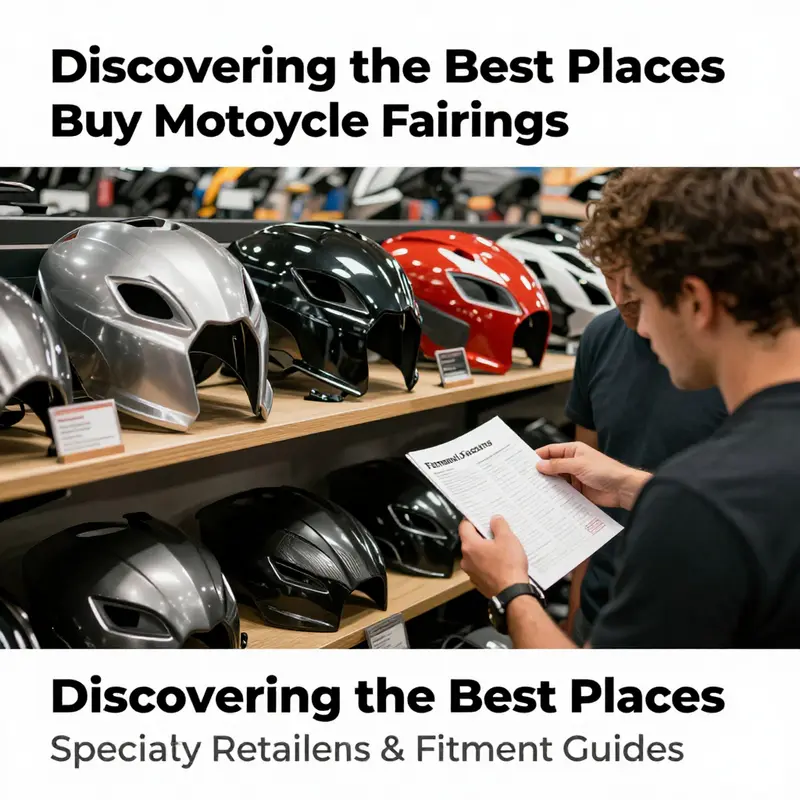
Selecting the right fairings goes beyond color or model numbers. This chapter guides you through how parts are sold, how they fit, and how to verify compatibility before you buy. It contrasts the breadth of marketplaces with the focused detail of specialty retailers, and walks through practical steps: confirm your bike’s exact year and model, use fitment guides, and review return policies. You’ll learn how to search effectively, interpret fit notes, and communicate with sellers to avoid costly mismatches. The goal is to secure fairings that fit your bike, finish consistently with the rest of the body, arrive in a reasonable timeframe, and come with a clear path for exchanges if needed.
Final thoughts
Finding the right motorcycle fairings is crucial for catering to your customers’ needs and enhancing their riding experiences. Online marketplaces offer broad selections and competitive pricing; sourcing directly from manufacturers can yield cost-effectiveness; and specialty retailers enhance the buying process with fitment guides and customer service. By employing a mix of these strategies, you can ensure your business not only meets customer demands but also thrives in a competitive market. Remember to assess quality, compatibility, and future trends as you make your purchasing decisions.