
Windshield systems for motorcycle fairings represent a confluence of safety, comfort, and design. As motorcycle enthusiasts seek greater performance and enhanced rides, understanding the intricate features of windshields is crucial for business owners looking to cater to this market. This article delves into the design features that optimize aerodynamics and rider protection, the materials influencing durability and style, and the performance impacts of these critical components. Each aspect plays a vital role in enhancing the overall riding experience, making it essential for businesses to grasp these concepts in order to meet customer demands effectively.
Aerodynamics in Focus: Design Features of Windshields Integrated into Motorcycle Fairings
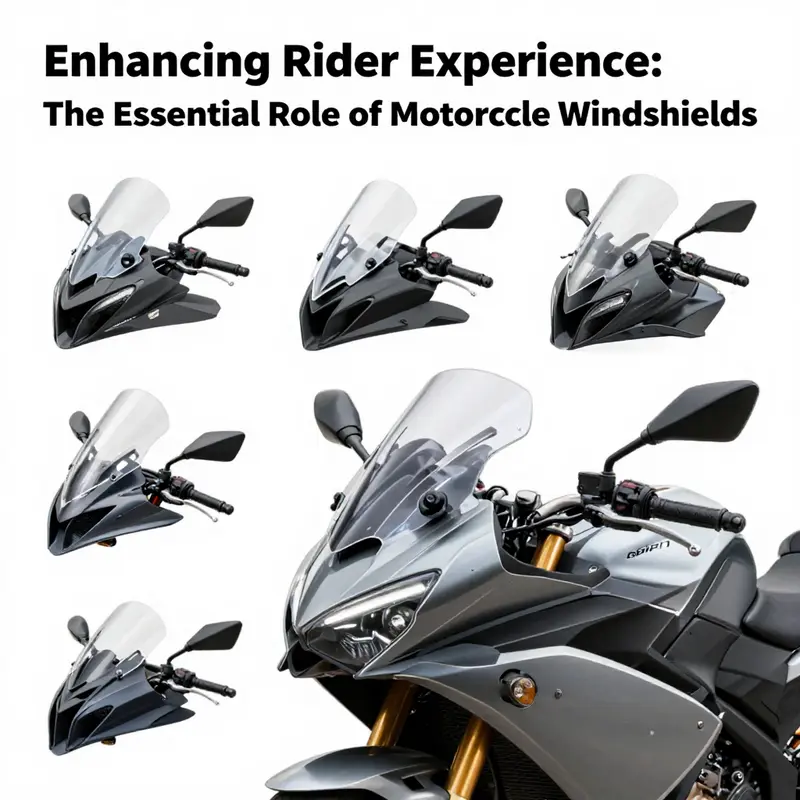
The windshield that rides atop a motorcycle fairing is more than a shield against wind and rain. In modern designs it is a carefully crafted interface where material science, fluid dynamics, rider ergonomics, and aesthetic intention converge. A windshield is not an isolated sheet of plastic or glass; it is a critical element that shapes the entire riding experience. When engineers design a windshield for a fairing, they do not simply ask how tall it should be or how clear the view through it can be. They ask how the shield will interact with the bike’s contour, how it will influence the air that flows around the rider, how it will respond to varying riding postures, and how it will endure the unpredictable pressures of weather, debris, and high-speed gusts. The result is a multi layered component that blends function with form, delivering protection, stability, and a visual cohesion that reflects the bike’s character while supporting the rider’s comfort across diverse conditions.
Material choice sets the foundation for durability and clarity. Windshields integrated into fairings are typically manufactured from high strength polymers such as polycarbonate or tempered glass, each offering distinct advantages. Polycarbonate is renowned for its impact resistance and resilience in the face of road debris, making it a go-to for riders who pace through urban streets and backcountry routes alike. Tempered glass, while heavier, can deliver exceptional optical clarity and scratch resistance for riders who place high value on long-term visibility. Regardless of the base material, most modern windshields incorporate protective UV coatings to shield the rider’s eyes from glare and to slow the aging of the panel itself. Anti reflective or anti-glare coatings further reduce the risk of fatigue on long rides, where the sun’s angle changes hour by hour and highway horizons can become blindingly bright. The choice between materials and coatings is seldom about a single metric; it is about balancing strength, weight, optical quality, and the rain of everyday riding with the rider’s expectations for a clear, non distorted view through the panel.
Beyond material choices, the performance envelope of a windshield is defined by its shape and the way it manipulates airflow. The most fundamental design principle is airflow management. A windshield does not merely block wind; it redirects it. The topography of the panel interacts with the bike’s fairing and the rider’s posture to create a complex flow field. In many modern configurations, windshields exploit a Venturi-like effect where the air speeds over the crown of the shield, creating a localized low pressure that draws fast-moving air away from the rider. This principle allows for effective wind protection without increasing the shield’s height to a level that would compromise visibility or compromise the bike’s lines. A taller shield might provide more frontal protection, but it can introduce more drag, increased buffeting on the rider’s helmet, and a visual end to the clean silhouette of the fairing. By contrast, a well designed curved or contoured shield uses the geometry of the upper fairing to shape the air as it flows downstream, preserving stability and reducing noise. The result is a calmer ride even at highway speeds, where the balance between a low profile appearance and genuine wind protection is often the decisive factor in rider satisfaction.
One contemporary approach to airflow is the integration of features that disrupt chaotic patterns in the wake of the bike. Aerodynamic spoilers, vortex generators, and carefully sculpted side edges can influence how air separates from the shield and how it re attaches downstream. These features do not merely tame buffeting; they can also contribute to a broader sense of stability as the rider’s head and upper torso remain shielded from direct wind pressure. Importantly, such features can be tuned to suit different riding contexts. A sport oriented rider who leans forward in a crouched posture may require a more aggressive streamlining to seal the upper wind corridor, while a touring rider seeking long distance comfort may benefit from a design that emphasizes smooth, low noise airflow across a broader range of speeds. In this way, windshields become dynamic partners in the bike’s overall aerodynamics, not static accessories.
The geometry of the windshield plays a central role in how a rider perceives the space ahead and how the bike negotiates at speed. Rectangular designs are straightforward and provide broad frontal coverage, effective at blocking direct wind and rain for urban commutes and shorter rides. They offer a simple visual profile and a predictable air cushion at lower speeds. Curved or arc shaped windshields, by contrast, excel at guiding airflow along a gentler curvature that reduces turbulence as speed climbs. These curved profiles can align with the fairing’s contour to promote a smoother wake, which translates into lower wind noise and less vibration transferred to the rider’s helmet. The choice between these geometries is rarely about one objective alone. It is about how the shape integrates with the bike’s silhouette, how it interacts with different rider heights and postures, and how it maintains a sense of proportion with the fairing itself. In high speed riding, the presence of a carefully contoured windshield can feel invisible in one sense, because the air flow is predictable and the rider remains buffered and secure; in another sense the shield becomes a quiet engineer of comfort, quietly shaping the ride so fatigue does not arrive too soon.
Height adjustability is another critical dimension of windshield design. Riders vary widely in stature, seating position, and preferred riding gear. A windshield that is easily adjustable allows the rider to tailor protection to personal preference and to changing weather conditions. An adjustable system can be operated without tools, enabling shifts in the shield’s apex height or tilt angle to optimize the balance between visibility and wind protection. The practical value of adjustability grows with long tours that span urban centers, highway straightaways, and mountain passes, where wind patterns and rider posture shift as the day unfolds. When designers conceive modular or adjustable windshields, they imagine a panel that remains rigid and stable under load while offering predictable kinematic performance. The mechanism must resist inadvertent movement from wind gusts or the roughness of road surfaces while maintaining a secure seal against water and debris. In this way, adjustability translates into real-world adaptability, enabling riders to preserve an optimal line of sight and a comfortable wind environment across a spectrum of scenarios.
Modularity and compatibility anchor the practical side of windshield design. Most windshields crafted for integrated fairings are built with compatibility in mind, aiming to fit a range of factory or aftermarket fairings with secure mounting points and standardized interfaces. The modular approach helps riders upgrade or swap windshields as fashion or function dictates, without compromising the structural integrity of the bodywork or the bike’s aerodynamic coherence. A windshield designed for modular compatibility is often accompanied by a precise fit profile, a set of mounting brackets and hardware that preserve alignment across a range of models, and a design that respects the fairing’s lines. The idea is to deliver a seamless integration that looks like it belongs to the bike from the moment of first sight, while offering the practical benefit of easy customization. For riders who value both form and function, modular compatibility is not a cosmetic afterthought but a central design criterion that honors the idea that riding is a personal experience that evolves over time.
Finish and aesthetics also matter as they influence visibility, glare, and mood on the road. In addition to the clear protection of the rider’s field of view, windshields may feature tinted or smoked finishes. These are not mere stylistic flourishes; they can reduce sun glare, help the rider maintain focus during bright days, and contribute to the overall color story of the bike. The visual continuity between the windshield and the fairing reinforces the sense that the two components belong to a single system. Durable coatings protect against UV radiation and environmental exposure, helping the shield resist yellowing or clouding, which would degrade sightlines and diminish the rider’s confidence. Aesthetics, in this context, are a careful balancing act between transparency, tint level, and the perceived depth of the windscreen as it merges with the bike’s profile. When done well, the windshield complements the fairing’s sculpture rather than competing with it, allowing the whole assembly to speak with one coherent design language.
The windshield is also a crucial touchpoint for rider comfort in relation to posture. The rider’s line of sight, helmet position, and seating posture are all part of the wind environment that the windshield helps shape. A design that recognizes and respects this relationship can reduce head and neck strain, decrease wind fatigue, and lower the likelihood of helmet buffeting that disrupts situational awareness. The wind path interacts with the rider’s upper body, shoulders, and arms, and these interactions change as posture shifts during acceleration, braking, or cornering. A well engineered windshield helps create a shallow, stable air pocket in front of the torso while directing more air away from the helmet, a subtle but meaningful enhancement to both comfort and concentration. In practice, this means windshields are not just passive barriers but active contributors to rider well being, influencing how long a rider can stay in an attentive, relaxed state during a journey.
In terms of maintenance and lifecycle, the windshield’s design must anticipate the realities of roading. Exposure to UV light, rain, sand, and grit can degrade coatings and subtly alter clarity over time, particularly at the edges where stress concentrations can arise. Good design anticipates this by selecting materials and coatings that resist abrasion and yellowing, while maintaining a surface that is easy to clean. The edge geometry matters here as well; a well finished edge reduces the likelihood of micro cracks propagating from impacts, and a properly sealed joint with the fairing helps prevent water ingress. Maintenance becomes part of the riding routine; regular cleaning with appropriate solutions and careful inspection after stone impacts or rough conditions helps extend the life of the shield. A windshield designed for longevity considers not only the materials and coatings but also how riders will interact with it over thousands of miles, including how often they might replace or upgrade to accommodate new riding styles, weather patterns, or personal preferences.
From a manufacturing and testing perspective, windshields in modern fairing systems are developed with a clear eye toward repeatable performance across a wide range of conditions. The production path often begins with material selection, followed by the shaping process that yields the final curvature or straight lines. Rigorous testing, which may include wind tunnel evaluation or computational fluid dynamics simulations, checks for lift, drag, buffeting, and parachuting tendencies at various speeds and angles. The results inform the shaping choices, the thickness of the panel, and the position of any vents or cutouts intended to guide airflow. In practice, achieving a seamless integration requires meticulous attention to tolerances, mounting geometry, and finish quality. The end product is a shield that feels like a natural extension of the bike, responding predictably to the rider’s inputs and the road’s challenges while maintaining the clean lines that define the fairing’s silhouette.
The windshield’s role in the broader ecosystem of the motorcycle is not merely protective. It is integral to the bike’s overall aerodynamic strategy, satisfying the rider’s need for comfort, visibility, and control. The rider gains a sense of confidence when the air flow feels predictable rather than chaotic, when the windshield achieves a balance between shielding and openness, and when the look of the shield harmonizes with the bike’s design language. As riders become more discerning about their equipment, the windshield becomes an area where form and function are not competing priorities but mutually reinforcing decisions. This is the essence of design features in windshield systems: they translate complex aerodynamic theory into tangible benefits that riders can feel as they lean into a bend, weave through traffic, and press on toward distant horizons. The resulting experience is not simply safer or more comfortable; it is more engaging, inviting riders to spend more time in the saddle with less distraction and greater focus on the ride ahead.
For readers who want to explore the broader ecosystem of fairing options and how windshields fit within it, consider exploring the Yamaha fairings collection. This resource offers a window into how windshields are designed to harmonize with a range of fairings, highlighting compatibility and aesthetic cohesion that mirror the principles described above. Yamaha fairings collection.
External resource: For further context on sourcing and supplier options for windshields compatible with motorcycle fairings, see Alibaba’s windshield for motorcycle fairing search page. https://www.alibaba.com/trade/search?fsb=y&IndexArea=product_en&CatId=&SearchText=windshield+for+motorcycle+fairing
Under Shield and Stream: The Materials That Define Windshields for Motorcycle Fairings
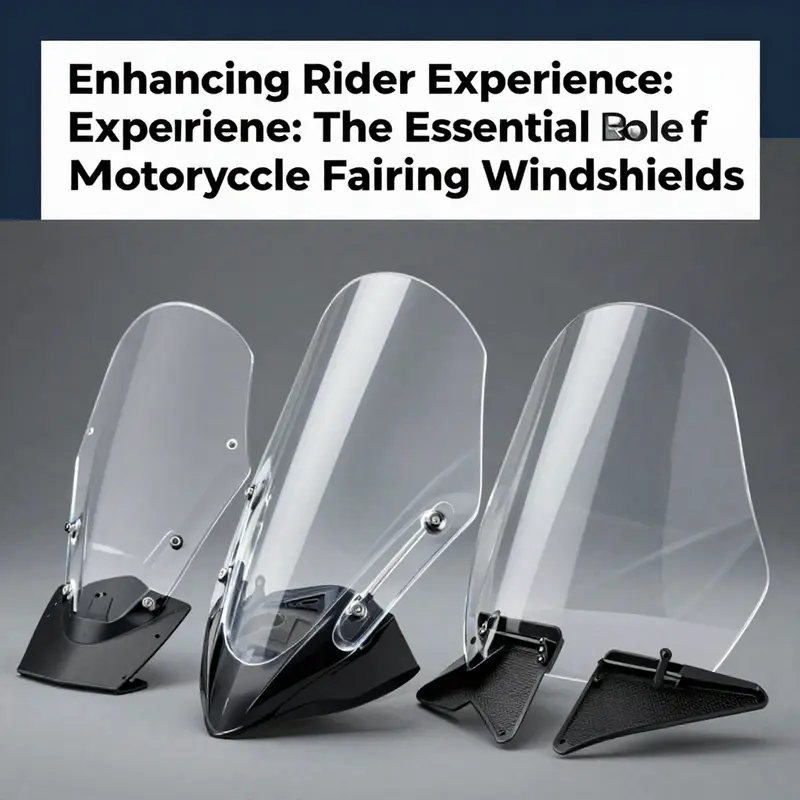
The windshield that sits within a motorcycle’s fairing is more than a simple pane of plastic. It is a carefully engineered barrier between rider and the relentless forces of open-air travel. In high-speed riding, the difference between calm and harsh buffeting, between a fatigue-free stance and a strain-filled ride, often hinges on the material chosen for this crucial shield. The selection process blends aerodynamics, visibility, impact safety, weight, durability, and cost into a single practical decision. When designers and riders talk about windshields, they are really discussing a compromise that must perform across a broad spectrum of conditions: a scorching desert headwind, a sudden rain squall at highway speeds, a muddy trail kicked up by a passing vehicle, or a high-G slipstream that pushes the rider into the tailwind’s grip. Amid all these demands, the material itself becomes the first line of response—shaping how cleanly the air flows around the rider, how clearly the rider sees the road ahead, and how quickly a damaged panel can be replaced or upgraded after a mishap.
Among the plastics and composites used for windshields, a handful of materials dominate the modern market because they strike a careful balance among safety, weight, cost, and service life. Polycarbonate stands at the forefront as the default choice for many high-performance and mid-range windshields. It earns that position not by accident, but through a combination of robustness and adaptability. Polycarbonate can shrug off impacts that would shatter ordinary glass, and it does so without adding much weight to the bike. It is a material whose toughness is often described in terms of impact resistance that exceeds glass by an order of magnitude or more. In practical terms, a polycarbonate windshield can withstand the kind of accidental hits from stones or debris that would crack or fracture a glass alternative. This resilience translates into longer reliable service in harsh riding environments and reduces the risk of a sudden, dangerous failure on the road.
But strength alone does not complete the picture. Polycarbonate also offers the opportunity for precise shaping. The material can be thermoformed into the curved, aerodynamically tuned forms essential for minimizing turbulence and buffeting at speed. A well-shaped PC windshield works with the rider’s position, the fairing’s geometry, and the bike’s overall aerodynamics to channel air in a way that smooths the flow over the helmet and torso. UV stability is a practical concern, because prolonged exposure to sunlight can cause materials to yellow or become brittle over time. High-quality polycarbonate windshields are often treated with anti-UV coatings or hard coats that resist yellowing and scratching. With proper care and a robust coating, the clarity of a polycarbonate shield can remain dependable for five to six years or longer in many riding environments. The result is a durable, relatively light, and optically reliable component that supports long-distance comfort and safety, particularly in sport and adventure contexts where riders demand both agility and resilience.
Acrylic, or PMMA, is the next major player in windshield materials. PMMA is prized for its optical clarity. It can deliver an exceptionally clean, distortion-free view that some riders feel is superior to polycarbonate when the goal is maximum clarity at the rider’s line of sight. Acrylic also tends to be lighter than glass and can be molded into precise shapes that preserve a wide field of vision without introducing the slight yellowing that untreated glass might exhibit after years in the sun. Yet PMMA has a lower impact resistance than polycarbonate. It is less forgiving in the face of sharp impacts and tends to crack or chip when subjected to strong blows—conditions that can occur if debris strikes the windshield at speed. Scratching is another practical concern with PMMA; while hard coats exist, the surface can show wear or minor distortions over time if it is not properly protected. For riders who prize optical fidelity above all else and who mostly ride in conditions where the windshield is unlikely to take direct hits, acrylic remains an attractive option. The trade-off centers on durability versus pristine visibility: PMMA offers superb clarity but at a cost to resilience when compared with polycarbonate.
PVC, or polyvinyl chloride, represents a more budget-conscious option in some windscreen lines. It offers excellent toughness and a degree of flexibility that can absorb minor impacts without cracking. PVC windshields can be particularly resilient in environments where the panel might be subjected to bending stresses or repeated flexing due to mounting or the rider’s posture. However, the optical performance of PVC generally ranks below PC and PMMA. The material’s clarity can be compromised under UV exposure, and it tends to yellow or degrade with prolonged sun and heat. For riders who prioritize cost and durability under demanding but not extreme optical conditions, PVC can be a viable choice, especially for entry-level or off-road-focused windshields where flexibility and impact absorption are at a premium rather than absolute clarity.
PET, or polyethylene terephthalate, offers another cost-to-performance option. PET windshields tend to be lightweight and exhibit respectable strength, with good resistance to deformation. They are not as impact-resistant as polycarbonate, but they often strike a middle ground: better clarity and warmth of light transmission than PVC, with lower overall cost than premium PC windshields. PET can be a sensible choice for touring bikes or adventure setups where a balance of weight, visibility, and price matters, and where riders do not routinely subject the shield to the most extreme stones or debris on the road. In practice, PET windshields can provide dependable performance in everyday riding and moderate long-range use, exemplifying how material selection often comes down to the rider’s particular risk profile and budget.
Some windshields—primarily those designed for full fairing systems or off-road-spec bikes—may incorporate glass fiber-reinforced plastics (GRP) to enhance structural rigidity. GRP contributes stiffness and the ability to maintain the shape of a complex fairing, particularly when integrated into a larger shell that must withstand high-speed gusts and vibration. In standalone windshields, however, GRP is less common, because it adds weight and can complicate the manufacturing process. The general trend in windshield technology remains dominated by plastics, with the bundled benefits of weight savings, impact resistance, and ease of shaping, while occasional fiberglass-reinforced composites offer a niche for certain fairing architectures where rigidity is paramount.
tempered glass is a historical counterpart that is still found in some retrofitted or specialty panels, though it is far less favored today for motorcycle windshields. Tempered glass provides excellent optics, but its heavier weight and tendency to shatter into large, dangerous shards upon impact make it an unattractive choice for most modern performance applications. The safety risk and potential for catastrophic failure in a high-speed crash make tempered glass a less practical option in contemporary windshields. This shift away from glass reflects a broader design philosophy: prioritize materials that can deform to absorb energy, resist catastrophic failure, and remain functional after impact rather than relying on a brittle, high-energy response.
Beyond the raw material properties, the performance of a windshield depends heavily on surface treatments and coatings. Anti-scratch hard coatings are often applied to polycarbonate and acrylic to preserve clarity during week after week of use, especially in environments where road grit or branches are likely to impact the panel. Anti-fog and anti-static coatings can improve visibility in humid or cold weather, while UV stabilizers reduce yellowing and degradation. The durability of color and tinting is equally important, particularly for riders who prefer tinted windshields to reduce glare without compromising the rider’s field of view. All these surface treatments interact with the base material: a polycarbonate shield with a robust UV and scratch-resistant coating can outperform a bare PMMA pane in a wide range of real-world conditions, even if PMMA has the edge in raw optical clarity. When a rider chooses between materials, the coating strategy—along with the base resin—becomes a central part of the decision.
The choice of material also maps onto the riding style and the type of bike being used. Sport bikes, with aggressive riding positions and higher wind pressures on the rider’s head and chest, often benefit from smaller, more streamlined windshields. In these cases, the priority is a sharp balance of minimal buffeting and clear visibility, and polycarbonate’s blend of strength, lightness, and formability makes it a common pick. Touring motorcycles, which are designed for long-distance comfort, typically employ larger windshields that must shield the rider from wind across a broad range of speeds and weather conditions. Here, thick, well-supported polycarbonate or PMMA shields with robust coatings can provide extended protection without significantly increasing weight. Adventure and dual-sport bikes demand versatility: windshields that can be height-adjusted or modular to adapt to open terrain or forest trails. Polycarbonate’s resilience, coupled with compatible adjustability mechanisms, often yields better performance in these dynamic settings, while PMMA’s clarity remains valuable for riders in open country or desert landscapes where visibility is paramount.
Material choice also interacts with production realities and maintenance practices. Polycarbonate and acrylic windshields are often manufactured via thermoforming, a process that allows designers to craft precise curves and edges that align with a rider’s seating position and the bike’s fairing geometry. The manufacturing tolerances must be tight, because even small misalignments can create buffeting or introduce new noise paths around the rider’s helmet. The coatings applied to these panels must survive heat from the sun and resist washing detergents or cleaning agents that riders may use after trips. Durability, therefore, is not only a function of the resin but also of the coating system and the adhesive interface with the fairing. Retrofitting or upgrading windshields becomes a question of compatibility with mounting hardware, gasket materials, and the surrounding fairing design. Some riders prefer removable windshields that can be swapped quickly to accommodate weather or riding style, and this preference reinforces the need for stable, durable interface systems that protect the edge continuity of the panel while maintaining a reliable seal against water ingress and wind noise.
From a practical perspective, the performance of a windshield is ultimately judged by how well it preserves vision, reduces fatigue, and remains serviceable through a bike’s life. Polycarbonate’s high-impact resistance offers a robust safety margin that is highly valued by riders who frequently encounter debris on highways or gravel stretches. Acrylic’s optical purity remains appealing for those who prize crystal-clear views, especially in good lighting, while PET and PVC provide economical alternatives that still meet everyday expectations for many riders. The real-world decision often comes down to a rider’s risk tolerance, budget, and the specific demands of their riding environment. It is common for enthusiasts to consider upgrading windshields as part of a broader fairing refresh, particularly when a panel begins to show micro-scratches, yellowing, or a noticeable drift in clarity. In such moments, selecting a replacement is less about chasing the latest brand trend and more about aligning the shield’s material properties with riding goals, expected endurance, and maintenance willingness.
For readers seeking further context or options, a practical way to explore is to browse a broad catalog of fairing components that includes a variety of windshields designed for different machines and mounting configurations. A representative catalog page can provide a sense of how the different materials and thicknesses translate to real-world performance. If you are exploring a specific motorcycle platform, you might also refer to resources that curate fairing assemblies and related components. For example, a page dedicated to fairings and related bodywork can offer insight into how a windshield integrates with the larger fairing structure and how mounting hardware and edge finishes influence longevity and aerodynamics. More context about fairing components and their compatibility with a range of motorcycle models can be found on a vendor resource that organizes parts by bike family, making it easier to compare how the windshield interacts with the rest of the bodywork. This approach helps ensure that the selected material and design choice harmonize with the fairing’s contours, mounting points, and protective goals, while also supporting future upgrades and replacements. As you navigate these considerations, stay mindful of the rider’s posture, visibility requirements, and the climate and terrain that dominate your riding life.
Internal resource for further reading and option exploration: a practical gateway to model-specific fairings and related components can be found at Yamaha fairings collection. This collection provides an array of fairing configurations that illustrate how windshields are integrated with the overall bodywork to optimize airflow and rider protection. The linked resource offers context on how different fairing shapes influence wind behavior, which, in turn, informs material choices and coating strategies for windshields. See: Yamaha fairings collection.
In sum, the material used for a motorcycle windshield is less about a single standout property and more about a calibrated mix of strength, optical clarity, weight, and cost that aligns with the bike’s intended use. Polycarbonate remains the workhorse for performance and durability in demanding riding conditions, while PMMA offers unmatched clarity where visibility is paramount. PVC and PET fill niches related to cost and balance, and GRP or, rarely, tempered glass, represent specialized cases where structural rigidity or historical design constraints dictate their use. Coatings, coatings, and coatings again play a central supporting role by preserving surface integrity and visual peace of mind over time. The rider’s choice—driven by speed, distance, terrain, and personal tolerance for maintenance—ultimately determines which material will wear the crown when the wind begins to blow. The windshield, then, is not merely a shield but a tuned interface between rider, machine, and environment, built from materials that honor the dynamic dialogue between aerodynamics and visibility on two wheels.
External resource: https://www.alibaba.com/trade/search?fsb=y&IndexArea=product_en&CatId=&SearchText=windshield+for+motorcycle+fairing
How a Fairing Windshield Shapes Speed, Stability, and Rider Comfort
How a Fairing Windshield Shapes Speed, Stability, and Rider Comfort
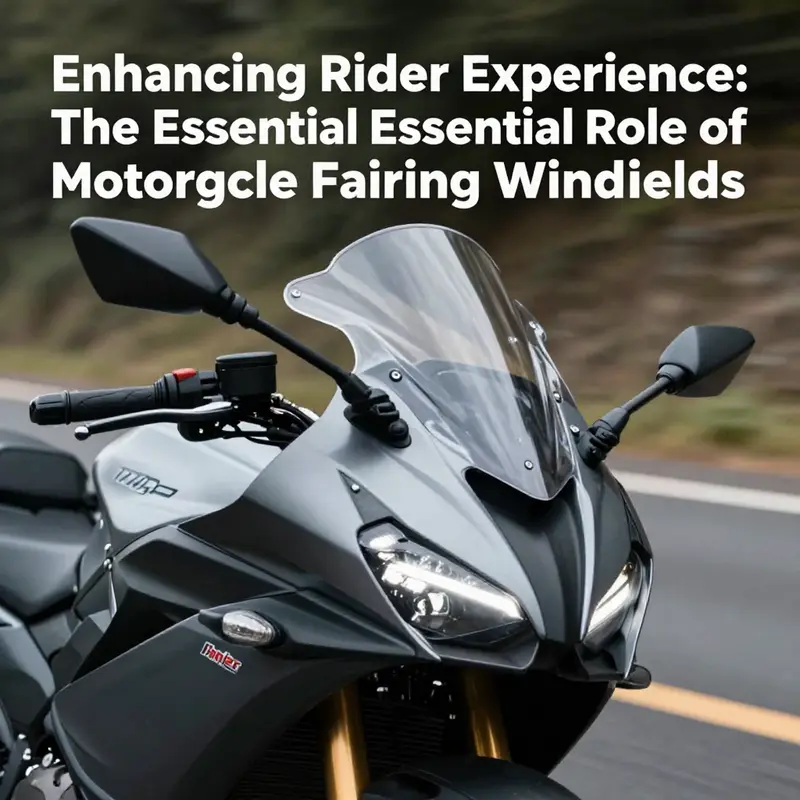
A motorcycle fairing windshield is far more than a transparent shield; it is a primary aerodynamic tool that determines how air meets the motorcycle and the rider. When designed and integrated well, it reduces drag, tames turbulence, and converts chaotic airflow into predictable forces that the chassis and rider can handle. Poorly chosen or improperly fitted windshields do the opposite: they create buffeting, increase rider fatigue, and can subtly undermine handling at higher speeds. This chapter examines how windshield geometry, material choices, mounting integration, and rider posture combine to shape performance and comfort, and it explains practical trade-offs riders and designers must weigh when selecting or tuning a windshield for a fairing.
Airflow around a motorcycle is complex. The rider forms a moving obstruction that disturbs the incoming stream of air and splits it into regions of high and low pressure. The fairing and windshield act as the first intelligent surface that redirects this split flow. Height, rake, and curvature determine whether the airflow glides smoothly over the rider’s helmet and shoulders or separates and reattaches in ways that cause oscillations. At moderate speeds, small variations in the windshield’s lip or contour make little perceived difference. At sustained high speeds, however, subtle geometric changes create measurable differences in drag and stability. Riders who chase fuel efficiency, top speed, or long-distance comfort therefore benefit most from windshields designed with careful attention to profile and angle.
Drag reduction is the headline benefit. A streamlined trajectory over the fairing reduces the frontal pressure on the motorcycle and rider, lowering the force that the engine must overcome. Wind tunnel testing and computational fluid dynamics both show that smoother transitions and controlled redirection of airflow reduce the pressure differential between the front and rear of the bike. Lower drag improves top speed for a given power output and raises fuel economy across steady-state cruising. But it is not just about minimizing projected frontal area. The windshield must also manage the quality of the wake behind the rider, because an unstable wake can feed back as buffeting. A windshield that trims the wake and reduces turbulent energy close to the rider’s helmet reduces sustained aero loads and results in less rider fatigue.
Turbulence control and buffeting mitigation are at the heart of rider comfort. Buffeting occurs when separated flow reattaches in an unsteady manner or when vortices shed from the edges of the fairing interact with the rider. The windshield’s curvature and the angle relative to oncoming air dictate where flow separation happens and, crucially, whether that separation is stable. A gently curved windshield that guides air smoothly over the helmet will delay separation and shrink the turbulent wake. Conversely, a windshield with sharp edges or an aggressive angle can create strong vortex shedding, producing cyclical pressure fluctuations experienced as buffeting. The effect is most noticeable at speeds where the natural frequency of the rider or helmet resonates with the shedding frequency; comfortable cruising speeds and long highway stints are where gains from a well-designed windshield are felt most.
Integration of the windshield with the fairing and the rest of the motorcycle is a structural and dynamic consideration. When a windshield is structurally tied into a full fairing, the assembly can add torsional stiffness and help channel airflow in predictable ways. Full fairings with integrated windshields generally offer the best aerodynamic continuity, presenting a single, smooth surface to the airflow and minimizing joints where turbulence can form. Quarter fairings, which leave the lower bodywork exposed, strike a compromise. They reduce frontal area and offer easier maintenance access, but their interrupted surfaces can produce secondary flow features that increase turbulence downstream. Designers therefore select full or quarter fairings based on intended use: track-focused bikes favor minimal frontal profile and precise airflow control, while touring bikes favor coverage and comfort.
Material choice is practical and performance-driven. Acrylic (PMMA) and polycarbonate dominate windshield fabrication. Acrylic provides optical clarity and resists surface scratches reasonably well; it is rigid and holds shape under load. Polycarbonate, however, offers superior impact resistance and toughness. Modern polycarbonate formulations include UV stabilizers and hard coatings that resist abrasion. From a performance perspective, material stiffness matters because a flexible windshield can deform under aerodynamic loads, changing its effective shape and angle at speed. Deformation can alter the designed flow path, introducing unintended turbulence or reducing protective coverage. That is why thicker or stiffer materials are preferred for race and high-speed applications, while lighter, slightly more flexible designs may appear on adventure or off-road models where impact resistance and modularity are prioritized.
Adjustability and modularity affect both ergonomics and aerodynamic tuning. Adjustable windshields let riders change height and rake to match riding posture, load, or wind conditions. Raising the shield can direct airflow over a taller rider or during cold, wet conditions, while lowering it reduces frontal area for sportier handling. Modular systems, with quick-release fittings, offer the ability to swap shapes depending on the mission—track days call for minimal obstruction and maximal aero loading on the rider’s torso, while long tours benefit from the larger wind protection. Adjustable systems must be robustly mounted; loose fittings introduce vibration and micro-movements that increase noise and can degrade the aerodynamic performance they aim to tune.
Testing methods reveal how windshield design translates to measurable performance. Wind tunnel experiments allow controlled study of pressure distributions, drag coefficients, and flow visualization around different windshield profiles. They quantify how small changes in curvature or lip geometry alter drag and the size of turbulent wake zones. Computational fluid dynamics extends this work by allowing designers to iterate shapes quickly and explore rider position variations. Field testing, however, accounts for rider variability and transient maneuvers. Together, these methods show that a windshield optimized for a crouched race posture may underperform for an upright touring rider. Mounting position relative to the rider’s helmet matters as much as absolute height: a windshield that places the flow detachment point behind the helmet markedly reduces buffeting because the rider is sitting in smoother, more laminar air.
Handling implications emerge from how the windshield affects pressure distribution across the bike. At speed, pressure gradients contribute to both lift and downforce on different parts of the motorcycle. An incorrectly sized or placed windshield can cause pitch moments that lighten or load the front wheel, subtly changing steering feel and stability. Designers work to balance these moments so that the windshield complements the fairing’s role in generating consistent aerodynamic loads. Sudden crosswinds are another challenge: tall windshields increase the side area exposed to lateral gusts, amplifying yawing moments. Some modern designs incorporate spoilers or deflectors to break these lateral forces into more benign distributions, reducing the suddenness of yaw and helping the rider maintain a steady line.
Noise and vibration link closely to perceived comfort but often receive less attention than raw drag numbers. Wind noise is generated by turbulent eddies interacting with the helmet and rider’s shoulders. A shield that smooths the flow reduces these eddies and lowers perceived noise. Vibrations transmitted through the mounting points can also create annoying tonal noises. Rigid mounts, vibration-damping bushings, and well-fitted seals help isolate the windshield and keep aero-acoustic characteristics favorable. Noise reduction improves the ability to hear engine cues and environmental sounds, which is a safety plus on long rides.
Durability and safety intersect with performance. Impact resistance is essential in environments where debris or stones are common. Polycarbonate’s toughness makes it attractive for adventure and commuter bikes that face unpredictable terrain. Designers must also consider scratch resistance. A heavily scratched windshield scatters light, increasing glare and reducing visibility, which directly undermines rider safety. Coatings that improve hardness while maintaining clarity add weight and cost but are worthwhile for riders spending hours at speed.
Retrofit and compatibility issues are practical realities for many riders. Aftermarket windshields offer opportunities to upgrade aerodynamics or comfort, but improper fitment risks creating new aerodynamic faults. The mounting geometry must match the fairing so that the windshield aligns with existing flow lines. Quick-release and modular brackets ease installation but must maintain precise alignment; sloppiness here leads to gaps that generate vortex shedding. When choosing a retrofit windshield, riders should consider the fairing design they are matching. For those with sport-oriented machines, matching the original sleek profile preserves handling. For touring setups, moving to a larger windshield often improves comfort but raises crosswind sensitivity.
Fine-tuning a windshield’s performance is a blend of science and rider-specific adjustments. Small angle changes—measured in degrees—can shift where the flow detaches and how it reattaches. Riders can experiment with spacer shims, risers, or deflectors to tune the wake. A common tactic is to add a small spoiler or lip to the windshield’s upper edge to split and dampen vortex formation. Another is to fit lower deflectors that guide air under the helmet when buffeting originates from the lower edge. These adjustments do not radically alter drag but can produce substantial improvements in comfort and perceived stability.
Real-world examples underline how windshield choices reflect intended use. Sport bikes often use low, aggressively raked windshields that blend smoothly with tight fairings. These shapes favor slipstreaming the rider into the fairing at track speeds. Touring motorcycles employ taller, often adjustable windshields to shield the rider from prolonged head and torso loading during cross-country rides. Adventure bikes commonly include modular, height-adjustable screens that prioritize impact resistance, modularity for trail riding, and the ability to quickly remove or lower the shield when off-road conditions demand clear sightlines.
Maintenance and long-term care influence how well a windshield performs over time. Regular cleaning with non-abrasive solutions preserves optical clarity and reduces micro-scratches that diffuse light. Periodic inspection of mounting hardware prevents loosening that might otherwise create noise or misalignment. When minor surface scratches do occur, polished restorations can restore clarity, but deep gouges reduce both visibility and aerodynamic predictability. For riders who expect to maintain aerodynamic performance over the long term, investing in durable coatings and careful handling pays off.
Choosing the right windshield is a test of purpose: what matters most is the mission profile. If the priority is long-distance comfort and low fatigue, prioritize larger, adjustable windshields with smooth curvature and strong mounts. If the goal is top speed and minimal drag, choose smaller, highly contoured screens that reduce frontal area and support a tucked riding posture. For mixed use or adventure riding, focus on impact-resistant materials and modular mounting that allow rapid adaptation.
A final practical note: when selecting replacement or upgraded windshields, pay attention to fitment data and compatibility with your fairing. For riders of specific models who need parts and fairing components, the collection of Honda CBR1000RR fairings (2012–2016) illustrates how model-specific fairing geometry drives windshield choice and fitment options: https://www.summitfairings.com/collections/honda-cbr1000rr-fairings-2012-2016
For those interested in the deeper aerodynamic research that quantifies how windshield shape and rider position affect performance, the experimental wind-tunnel study provides a technical foundation and measurable findings: https://doi.org/10.1016/j.jweia.2021.103547
Understanding how a windshield interacts with a motorcycle’s fairing reveals why this single component exerts such a strong influence over speed, stability, and comfort. It is not merely a transparent screen; it is an aerodynamic tool. Proper selection, precise integration, and thoughtful adjustment turn that tool into a performance asset that rewards riders with reduced fatigue, improved fuel economy, and steadier handling at speed.
Final thoughts
Understanding the multifaceted role of windshields in motorcycle fairings is essential for business owners in the motorcycle industry. By prioritizing design features that optimize aerodynamics, utilizing high-quality materials for durability, and recognizing their significant impact on performance, businesses can better serve their customers. This holistic comprehension empowers owners to make informed choices about product offerings, ultimately enhancing rider safety and satisfaction. Adapting strategies based on these insights will not only improve product quality but also build lasting relationships with the motorcycle riding community.