
Motorcycle racing fairings are not just aesthetic elements; they are critical components that impact speed, safety, and rider experience on the track. For business owners in the racing industry, understanding the intricate relationship between fairings and performance can enhance product offerings and customer satisfaction. This article delves into the aerodynamics that minimize drag, the high-strength materials that provide durability, safety features that protect both riders and machines, and branding opportunities that come with these sophisticated components. Each chapter will unravel the complexities of motorcycle racing fairings, painting a comprehensive picture for businesses looking to elevate their products and services in the competitive racing market.
The Silent Edge: How Aerodynamics and Materials Shape Motorcycle Racing Fairings
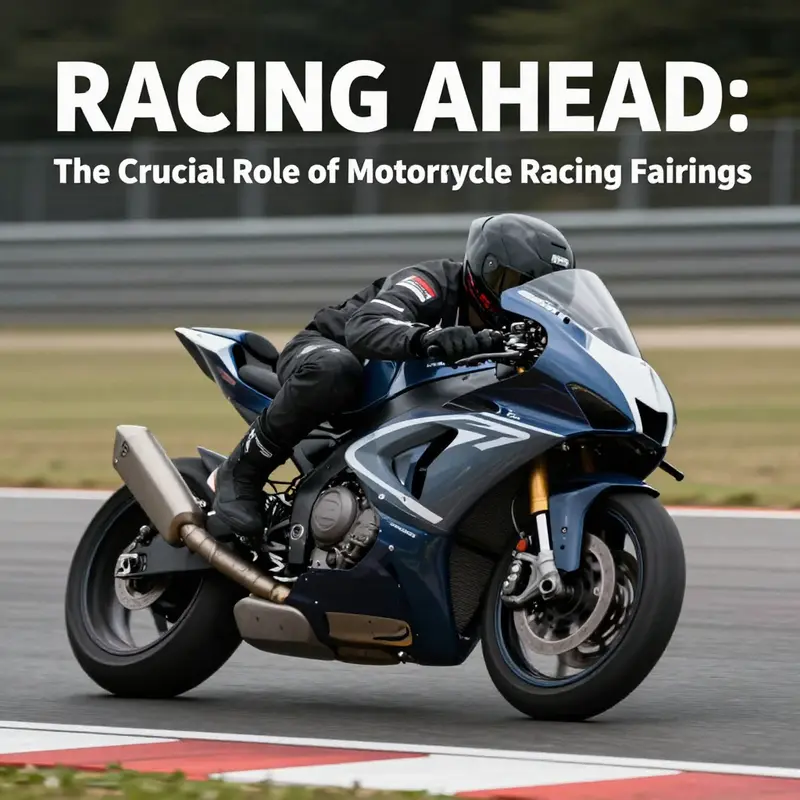
Every racing motorcycle carries a hidden dialogue with the air. The fairing, a carefully sculpted shell, translates that conversation into speed, stability, and endurance. In a sport where margins are measured in tenths of seconds, the aerodynamic performance of the fairing becomes a decisive factor. It is not only about slicing through the air; it is about shaping the rider’s experience, managing heat, protecting critical systems, and even providing a canvas for sponsorship that keeps teams funded across long seasons. The modern race fairing does more than cover the bike. It is a precision tool engineered to coax the air into behaving, to coax the machine into behaving as well, and to do so without sacrificing rider confidence or safety.
The essence of a race fairing lies in drag reduction and flow control. Drag is the thief of speed; it saps energy from the engine and gnaws at the top-end potential of a bike. Yet drag is not a single number on a sheet of data. It is a complex signpost that tells us how air interacts with the bike and rider across a range of yaw angles, speeds, and surface textures. A well-designed fairing smooths the path of airflow from the leading edge across the bodywork and around the rider. It seeks a laminar passage where possible and carefully manages the boundary layer so that turbulent wake remains small and coherent. The result is a bike that cuts through air with less resistance, requires less engine power to achieve the same speed, and returns energy reserves for acceleration out of turns.
This engineering work begins long before a single test on the track. Designers rely on computational fluid dynamics (CFD) and wind tunnel testing to predict how every contour will influence airflow. CFD allows engineers to explore a vast space of geometries—vaselike fronts, curved shoulders, and fine vents—without building a single physical model. Wind tunnels confirm or challenge those simulations, revealing how the fairing behaves with real-world factors such as surface roughness, temperature, and the rider’s body position. The fairing’s surface is a delicate balance: sharp, clean lines to guide airflow, but with enough curvature to maintain pressure distribution around the engine and wheels. Each change, even a few millimeters of height or a revised duct shape, can shift the wake behind the bike, affecting grip and stability through high-speed corners and braking zones.
The materials chosen for racing fairings play a pivotal role in this delicate balance. Lightweight composites, particularly carbon fiber, have become standard because they combine strength and stiffness with a favorable strength-to-weight ratio. Reducing mass anywhere on the bike improves the power-to-weight ratio, which translates into quicker acceleration, sharper steering response, and lower suspension loads. But weight savings are never the sole criterion. The stiffness and vibration characteristics of the fairing influence aero performance and rider comfort. A shell that deforms under load can disrupt the smooth airflow that high-speed stability demands. Advanced composites also grant designers the freedom to realize complex shapes that achieve both aerodynamic efficiency and parts protection for the vulnerable engine, radiator, and wiring harness assemblies.
The fairing’s role in protection is integral to its aerodynamic function. At speed, wind and debris can threaten engine cooling, electrical systems, and cooling ducts. A race fairing is engineered to shield these components from debris while maintaining an open, efficient pathway for air to pass over the radiator and through vents designed to manage heat. Engine temperature management becomes a careful choreography; vents and ducts must be positioned to draw heat away from hot zones without creating disruptive turbulent regions that undermine the bike’s overall stability. In a high-speed straightaway, the fairing’s contributions to thermal management can be as consequential as its drag reduction, because overheating has a direct impact on power output and engine longevity, especially on circuit types that push continuous high-RPM operation.
Beyond raw drag figures, the integration of fairings with other aerodynamic elements marks a progression toward more holistic performance. Winglets, air deflectors, and underbody panels are not mere adornments; they reshape the wake behind the motorcycle. In practice, these components can reduce low-speed flow separation in the slipstream and generate a controllable downforce that improves tire contact with the track. Although the magnitude of downforce on a motorcycle is smaller than on a car, even modest improvements in rear grip can improve corner exit speeds and line fidelity. The engineering challenge is in balancing downforce with the air needed to cool the engine and avoid destabilizing the front wheel during late braking. The result is a nuanced, interdependent system where every component—fairing, deflector, winglet—contributes to a coherent aerodynamic strategy.
Aesthetic considerations and branding are interwoven with the technical demands. The large surface area of a full race fairing provides a prominent space for team identity, sponsors, and color schemes designed for legibility at speed and distance. The visual identity must not compromise aerodynamic steps in the design, so the canvas becomes a deliberate extension of the bike’s functional profile. This combination—performance-first engineering paired with the visibility of a sponsorship logotype—helps explain why fairings are so often a team’s most recognizable and versatile asset on the track.
In practice, teams increasingly view fairings as modular platforms. A given race may demand tweaks to airflow channels, cooling solutions, or duct positioning as the circuit demands shift across a season. This approach supports adaptability without requiring a complete redesign each time. Such modular thinking also underlines why the design process is iterative: a change that yields slight aerodynamic gains or improved cooling can ripple through the entire performance envelope, affecting acceleration, top speed, braking efficiency, and ride feel. The ability to iterate rapidly is essential when teams must prepare for diverse tracks—high-speed ovals, medium-speed corners, and tight, technical sections alike—where the drag, lift, and wake conditions can vary dramatically.
The riding position itself is a crucial variable in the aerodynamic equation. A rider who crouches low and forward reduces frontal area and can dramatically lower drag, but this posture also interacts with fairing geometry and the bike’s overall balance. Manufacturers and teams practice rider-position optimization in tandem with fairing design, ensuring the rider’s harness and seating posture align with the fairing’s airflow paths. The result is not only a faster profile but a more controllable aerodynamic environment that can help riders sustain corner speed and maintain consistent lap times through the most demanding sections of a circuit. In this sense, the rider becomes a dynamic part of the fairing’s aerodynamic system rather than a separate variable.
To illustrate the lifecycle of a modern racing fairing, consider the path from concept to competition. Conceptual sketches evolve into CFD models, which yield virtual flow visualizations and potential stress analyses. Prototypes emerge in carbon fiber and composite forms, tested in wind tunnels and on track. Feedback from riders and engineers informs subsequent redesign loops, with each cycle refining surface smoothness, vent placement, and connection interfaces to the chassis. The process embodies a philosophy of precision: small, deliberate changes can yield measurable performance dividends, particularly when they harmonize with the bike’s suspension geometry, tire choice, and power delivery characteristics. In this ecosystem, the fairing becomes a living part of the motorcycle’s performance ecosystem.
For readers seeking concrete examples of how these principles manifest on the track, the fairing surfaces act as both protection and performance enablers. Their shapes must withstand contact with air, track debris, and occasional low-speed tumbles while preserving structural integrity. They also function as practical heat management channels, guiding cooling air through ducts that feed radiators and engine bays. The materials’ rigidity ensures that the surface remains faithful to its designed contour under loads produced by high-speed vibration and rider input. In every respect, the fairing embodies a balance between mechanical resilience, aerodynamic fidelity, and rider comfort, a balance that defines modern sportbike racing at the highest levels.
As theory meets practice, the value of a well-crafted fairing becomes clear. Small modifications to the contour, ducting, or venting can yield improvements in stability, cornering grip, and even throttle response at top speed. The best designs anticipate how airflow interacts with the tire contact patch, suspension, and rider weight transfer, weaving together a smooth gradient of pressures that keeps the bike planted through transitions. The end result is a machine that feels connected to the air, almost as if it is an extension of the track itself, precisely where engineers want it: where drag is minimized, cooling remains effective, and the rider can exploit every advantage the aerodynamics can offer.
On the practical side, teams often rely on established fairing families or modular kits to maintain consistency across seasons and evolving regulations. A well-chosen fairing system can streamline spare-part inventories, simplify crash repairs, and speed up post-race turnarounds. But even with a standardized approach, the design mind remains active, seeking subtle refinements that push the envelope of what is possible within current materials and manufacturing techniques. The result is a narrative of continuous improvement, where each generation of fairing contributes to a broader understanding of how air and machine harmonize at velocity.
For readers who want to explore more about how fairings can be approached from a practical standpoint, a deeper look into manufacturer collections provides useful context. In particular, the Honda fairings collection offers a broad spectrum of configurations that demonstrate how shape, venting, and assembly interfaces are managed in a real-world setting. Honda fairings illustrate how modular components fit together on a typical race platform, shedding light on the balance between standardized parts and bespoke tuning that teams rely upon to optimize performance across different tracks and conditions.
Looking ahead, the trajectory of motorcycle racing fairings will continue to be shaped by advances in materials science and computational methods. The push toward lighter, stiffer, and more thermally efficient composites will push aerodynamic design further toward integrated cooling solutions and more refined wake management. The goal remains constant: to convert the air’s resistance from a drag force into a predictable, manageable element that supports faster speeds, steadier handling, and longer reliability under race conditions. When these elements come together, the rider experiences a whisper-quiet but very real sense of confidence—an awareness that the machine and the air are working in concert rather than at cross purposes. In that sense, the fairing is not merely a cover; it is the quiet strategist that makes speed sustainable on the world’s most demanding circuits.
External resource for further technical overview: https://www.motorcycle-accident-lawyer.com/motorcycle-racing-fairings-aerodynamics-performance/
Layered Frontiers: The Materials That Shape Motorcycle Racing Fairings
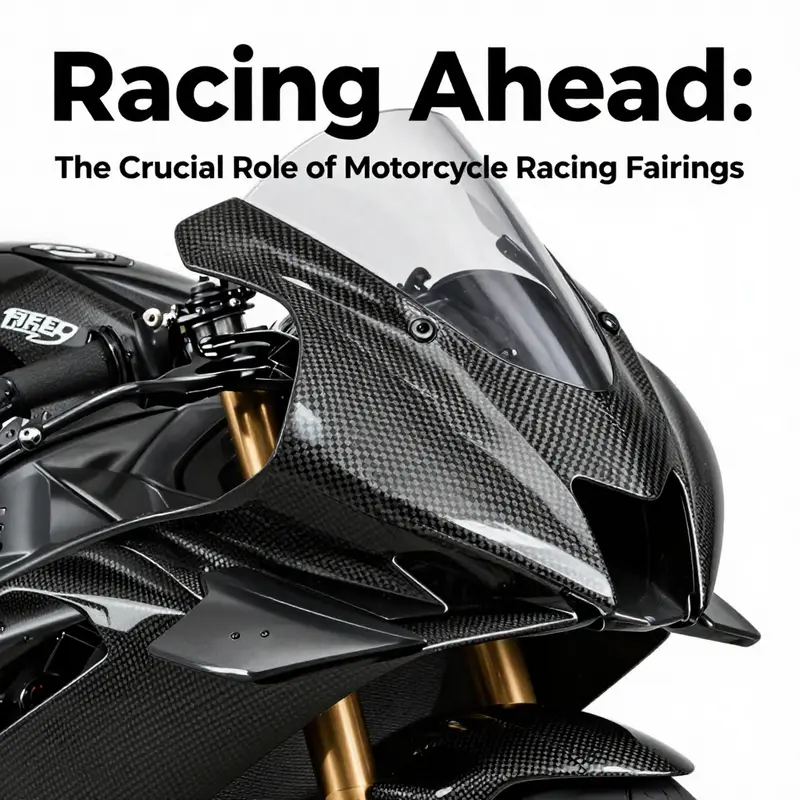
The fairing of a racing motorcycle is more than a glossy shell. It is the result of careful material science, engineering judgment, and an intimate dialogue between speed, safety, and control. In the extreme environment of a track, where air carries energy and temperatures climb under the skin of a machine, the choice of material governs not only how quickly a bike can slice through the atmosphere but how it behaves when pushed to the limit. The chapter that follows traces the layered realities of racing fairings, moving beyond the surface to reveal how different materials balance strength, weight, and aerodynamics in pursuit of an optimized whole. It is a story of trade-offs, innovation, and the practical demands of competition, where every gram saved and every stiff fiber contributes to better handling, cooler engines, and cleaner crashes.
At the heart of modern racing fairings lies carbon fiber, the premium option that has become almost synonymous with high-performance aerodynamics. Carbon fiber’s appeal rests on a remarkable strength-to-weight ratio and a stiffness that survives the aggressive shaping required on a race bike. In wind, any flex in the shell can disrupt smooth airflow, reintroduce drag, and raise the workload on the engine. Carbon fiber’s anisotropic properties—its strength along the fiber direction far outstrips that in perpendicular directions—allow designers to tune stiffness where it matters most: along the leading edges to resist denting, across panels to prevent flutter, and at the junctions where forces concentrate during lean angles and high-speed maneuvers. Yet carbon is not a magic solution. Its benefits come with higher material costs, more demanding manufacturing processes, and repair considerations that can extend downtime after a crash.
The practical reality of track racing demands a balanced approach. Glass fiber, or fiberglass, occupies a middle ground between performance and price. FRP fairings can deliver sufficient rigidity and resilience at a fraction of the carbon price tag. The stiffness of fiberglass, while appreciable, falls short of carbon’s. Still, in many competitive scenarios, fiberglass provides adequate load-bearing capacity for the fairing without the same susceptibility to cost escalation. FRP keeps production times shorter and repairs more straightforward, which matters when teams churn through spare parts during a race weekend. The choice between carbon and fiberglass is rarely about a single metric; it is an assessment of how weight, speed, budget, and serviceability intersect on a particular machine and a particular circuit.
Thermoplastics such as polycarbonate and ABS plastics contribute another layer of practicality to this material mosaic. Polycarbonate offers high impact resistance and clarity, a combination that becomes valuable when windshields or observation panels are part of the design. ABS brings toughness and ease of molding into complex shapes, enabling rapid prototyping and iteration during development. Thermoplastics can be more forgiving in crash scenarios, absorbing energy through localized deformation and often allowing quicker field repairs. They may not match the stiffness of carbon or the overall rigidity of reinforced fiberglass, but their affordability and repair friendliness make them attractive for prototypes, development builds, or budget-conscious race programs.
Composite materials, which blend carbon or fiberglass fibers with epoxy or polyester resins, occupy a broad middle ground that designers exploit to tune performance precisely. Resin-infused carbon or fiberglass composites can provide enhanced rigidity and environmental resistance without fully scaling up to the cost of solid carbon fiber layups. The resin system matters as much as the fiber itself. Epoxy resins, prized for their strong adhesion and temperature stability, help maintain panel integrity under heat and moisture stress. Polyester systems, while more economical, may be challenged by long-term environmental exposure. The interplay of fibers and resins shapes not only the mechanical properties but the thermal characteristics of the fairing, influencing how heat moves through the shell and into surrounding components.
In practice, the material choice is inseparable from manufacturing realities. Carbon fiber fairings typically begin with a carefully designed layup, where fabric plies are oriented to maximize strength along anticipated load paths. The layup must consider the shape’s curvature, the edge thickness, and the potential for delamination under impact. Wet layup and prepreg processes, often followed by autoclave curing, yield high-integrity parts with excellent surface finish and dimensional stability. Autoclave cycles combine heat and pressure to consolidate resin and fibers, reducing voids and improving the uniformity of composite panels. The result is a panel that resists aerodynamic distortion and maintains its profile at blistering speeds. But autoclave curing also raises costs and production time, a factor teams weigh against the performance payoff.
Fiberglass-based fairings, by contrast, exploit simpler, more forgiving manufacturing routes. Hand layups or resin transfer molding can deliver panels with good impact resistance and stiffness without the expense of an autoclave. Repairs tend to be more straightforward, with the possibility of field fixes that keep a race weekend on track. When budgeting, teams often reserve carbon for the most critical surfaces—the high-load midsections and areas that interact most directly with the slipstream—while using fiberglass on less critical panels or on development builds where speed to track matters most. The same logic applies to thermoplastics: their ease of molding and potential for rapid iteration makes them ideal for prototypes, where experimental shapes can be tested quickly and cheaply.
Designing with these materials also means thinking about heat and moisture management. Heat is the silent test for any fairing. Engines and radiators generate considerable heat, and the fairing must facilitate airflow that removes heat without producing unnecessary drag. Carbon fiber, with its low mass and high stiffness, can contribute to a more aerodynamically efficient shell while maintaining structural integrity under high-speed gusts. Resin-infused composites help in heat management by offering stable thermal properties, reducing the risk of resin softening or delamination at elevated temperatures. Thermoplastics, although heavier, can offer advantages in heat tolerance when properly engineered, and their ease of recycling or reshaping is appealing from a sustainability standpoint.
Another subtle but critical factor is how the material interacts with the rider and the track surface during a crash. Racing fairings are not merely cosmetic shields; they are energy-absorbing barriers designed to reduce damage to expensive internals and to protect the rider. Carbon fiber, while exceptionally strong, can be brittle near impact zones if not properly engineered, which means careful layup design and protective overlays are essential. FRP panels can absorb energy through matrix deformation but may crack under certain impact patterns. In some designs, thermoplastics absorb and distribute energy more evenly, reducing the chance of catastrophic failure. In all cases, the outer shell must also resist debris and heat transfer into the engine bay, a balance achieved through a combination of material selection and structural reinforcement.
The aesthetic and branding role of the fairing is not to be overlooked. A smooth, continuous surface makes airflow easier to manage and reduces turbulence that can degrade acceleration and cornering stability. This is where material choice intersects with surface engineering. A carbon fiber layup can be finished to a nearly mirror-smooth surface, ready for paint or clear coating that withstands track chemicals and UV exposure. Glass fiber panels can carry vibrant graphics with durability, while thermoplastic shells can be vacuum-formed to create complex, aerodynamic contours with relatively low tooling costs. Designers also consider how the shell’s stiffness interacts with fasteners, mounting points, and seals, because any flex or gap can allow boundary-layer separation that undermines both performance and rider confidence.
If one looks at the broader spectrum of materials, it becomes clear that the choice is not a single material versus another. It is a hierarchy of options aligned with circuit demands, budget constraints, and development goals. For teams chasing the highest possible performance, a predominantly carbon fiber shell, augmented by strategically placed fiberglass reinforcements and protected by energy-absorbing overlays, might be the baseline. For others, a lighter fiberglass core, reinforced at critical load paths and capped with a thermoplastic surface, can deliver a practical, dependable solution. In all cases, composites must be designed with repairability in mind. A damaged panel is not simply a cosmetic issue; it can alter aerodynamics and heat management if left unchecked, so the ability to repair or replace quickly on race day becomes part of the material strategy.
The human dimension of material choice also surfaces in the way teams source and fabricate fairings. The manufacturing ecosystem ranges from in-house composite labs to specialized fabrication houses, each with its own capabilities. Close collaboration between aerodynamicists, materials engineers, and fabricators is essential to translate a theoretical performance gain into a real-world advantage. This collaboration is also about reliability. A panel that performs well in wind tunnel tests but fails in the rough-and-tumble conditions of a live race adds risk without value. Consequently, the best solutions blend empirical testing with practical manufacturing realities, ensuring that the materials chosen not only perform on paper but endure the rigors of track life. The end result is a fairing that supports sustainable speeds, predictable handling, and faster service during race weekends.
As a practical note, the selection of materials often aligns with a brand’s broader approach to engineering and rider safety. A major manufacturer’s fairings, for instance, demonstrate how a well-integrated material strategy translates into a cohesive package: aerodynamic stability, energy management, and maintainable repair protocols, all tailored to the bike’s geometry and the demands of modern circuits. The relationship between form and function here is direct. The most successful fairings emerge from a disciplined synthesis of materials science, manufacturing capability, and the strategic needs of the team. Yet the core idea remains simple: lighter, stiffer surfaces shape how a bike cuts through air, how heat moves away from critical parts, and how resilient the machine remains during the unpredictable moments that occur on every lap.
For readers seeking a real-world glimpse into how these principles manifest on the track, consider exploring a manufacturer’s fairings catalog as a reference point for material and construction choices. This resource shows how different surfaces and modules are combined to deliver a coherent whole. The catalog also provides a window into how teams approach development, from early thermoplastic prototypes to advanced carbon fiber shells that define the boundary between speed and safety. It is a reminder that while the raw power of an engine grabs attention, the quiet work of material science under the fairing quietly governs how fast, how long, and how safely that power can be harnessed.
In sum, the materials used in motorcycle racing fairings are rarely a single miracle solution. They form a carefully chosen ecosystem where carbon fiber’s lightness and stiffness meet fiberglass’s durability, where thermoplastics enable rapid iteration, and where composites blend the properties of both worlds. The best designs respect not only the physics of airflow but the practicalities of track life: heat management, crash energy absorption, repairability, and manufacturability. When these elements align, the fairing becomes a living part of the bike’s performance story—one that helps a rider keep the bike planted on the edge of adhesion, spreads the season-long fatigue that accumulates on long circuits, and preserves the machine’s core integrity when the pace reaches its most fearless peak.
Internal link reference for practical exploration: Yamaha fairings collection
External resource for deeper standardization and materials context: https://www.mic.org
null
null
Between Speed and Signage: The Dual Craft of Motorcycle Racing Fairings
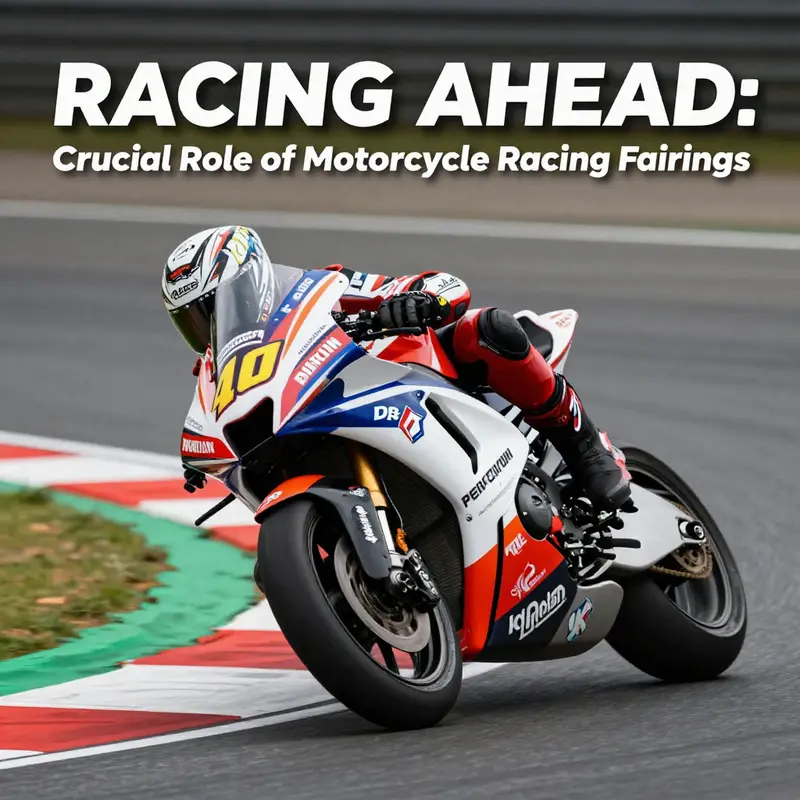
In the fast lanes of motorcycle racing, the fairing is more than a stylish shell. It is the aerodynamic skin that unlocks potential, guides air, and shields critical systems at speeds where every gram and every contour matters. A fairing is not merely cosmetic; it is a carefully tuned component that translates energy into controlled motion. The best designs blend physics with purpose, shaping the flow around the bike and the rider so that drag is minimized, stability is enhanced, and heat stays within a manageable envelope. This chapter explores how fairings fuse performance engineering with branding ambitions, creating a surface that accelerates on the clock and communicates a team’s story to millions of viewers. The discussion keeps its eye on the core idea that form follows function, yet the surface also serves as a canvas for identity in a sport where visibility is as valuable as velocity.
Materials are the first gatekeepers of performance. Modern race fairings pull from a small but potent kit of options—carbon fiber for strength and lightness, fiberglass for resilient, midweight performance, and high grade ABS for versatile shaping and durability. Each material carries a tradeoff: carbon fiber delivers impressive stiffness and mass reduction but demands meticulous handling and repair, while fiberglass and ABS provide robustness and easier mid season replacements. The overarching goal is to shave weight without sacrificing structural integrity. When a shell sheds even a few grams, the power-to-weight ratio tilts in favor of quicker acceleration, sharper cornering, and more efficient braking. The rider perceives these gains as a more responsive steering feel and a more agile transition between line choices, especially on circuits that demand rapid direction changes at high speed. The engineering teams anticipate how these benefits accrue over a lap, and the improvements compound as tire grip, chassis flex, and aero balance harmonize under fatigue and heat.
A crucial dimension of performance is how the fairing negotiates the air around both machine and rider. Aerodynamic integration begins with the smoothness of the outer surface and extends into the internal routing of air to heat exchangers and radiators. The aim is to keep engine temperatures stable under maximum workload, avoiding heat soak that can erode power and throttle response. Thoughtful contouring also reduces unwanted turbulence that could feed back toward the rider, easing breathing and reducing fatigue in long sessions or endurance events. The underbody and midsection become as important as the visible shape, with channels and ducts orchestrated to manage boundary layer effects and to keep the wake behind the bike as calm as possible. In combination, these design choices yield a more predictable, linear response to rider input. The rider can push harder with confidence because the machine remains tractable through high-speed straights and late-brake corners alike.
Protection sits alongside performance as a fundamental responsibility of the fairing. In the event of a slide or a fall, the shell acts as an energy absorbing barrier that disperses forces and shields critical systems, including the engine, wiring harness, and delicate radiators. The goal is not victory through weight alone but sustainability—protecting the bike so teams can return to competition with minimal downtime. A well conceived shell distributes impact across a larger area and minimizes localized damage that would otherwise require expensive repairs or extensive part replacement. The protective function also intersects with durability: the shell must endure repeated track use, exposure to debris, and the harsher conditions of wet or hot racing environments. Balancing these needs with aero performance requires an integrated approach, where stiffness, impact resistance, and weight are tuned in concert rather than individually optimized.
The rider experience is deeply intertwined with the fairing’s ergonomic and thermal characteristics. A streamlined profile can reduce wind pressure on the torso and shoulders, easing muscular tension and prolonging focus during a race or a long practice day. Efficient heat management around the rider and cockpit areas can lessen fatigue and improve breathing dynamics, which matters when lap times tighten toward the end of a session. The rider’s posture—the angle of the torso, the tuck position, and the knee grip—interacts with the fairing’s geometry to shape the overall feel of the machine. Designers rely on wind tunnel testing, computational fluid dynamics simulations, and real-world testing to converge on a shape that yields both aerodynamic efficiency and human comfort. The result is not a single ideal profile but a carefully calibrated range of forms that perform across a spectrum of speeds and lean angles.
Beyond the mechanical and ergonomic considerations, fairings have a distinct cultural and commercial dimension. The large, uninterrupted surface area on every side offers a prominent stage for branding. The color, line work, and sponsor placements are not afterthoughts but integral to the design, crafted to remain legible and impactful in fast-moving footage and high-definition broadcasts. A well executed livery communicates lineage, values, and performance ethos at a glance. The branding strategy is designed to withstand the rigors of racing media—from on-board cameras and pit side photos to social media clips and highlight reels. Visual identity on a fairing is part storytelling, part marketing, and part legacy; it can elevate a team’s recognition and embed a color pattern and silhouette in the public imagination as reliably as any mechanical statistic.
A clean, legible design often achieves this without sacrificing aero performance. Designers seek a balance where sponsorship logos fit within the curvature and curvature within the logo constraints, ensuring that decals do not disrupt the airflow or degrade laminar conditions at the surface. The modern workflow treats decals as an integrated element of the resin and layup process, protecting legibility while preserving surface smoothness. The outcome is a surface that remains sharp and recognizable under dynamic race conditions, even as the machine slices through air at extreme velocities. In this sense, the fairing becomes a hybrid of engineering and graphic design; a single component supports speed and publicity alike, reinforcing a team’s competitive narrative with every corner and straightaway.
The lifecycle of a fairing highlights how performance and branding operate in tandem over a season. Materials demand careful handling, and the shell’s integrity depends on inspection regimes, patching techniques, and scheduled replacements. Carbon fiber, with its exceptional stiffness, requires precise repair methods to restore strength after minor impacts, while fiberglass or ABS may be repaired with patches that preserve the fairing’s geometry without compromising aero performance. Maintenance decisions influence the bike’s downtime and the predictability of mechanical behavior across sessions. Teams weigh the tradeoffs between ultimate stiffness and repairability, how surface gloss will hold up in sun and rain, and how easily a shell can be replaced or modified for new sponsorship schemes or regulatory updates. This is a practical system where engineering choices ripple into daily race operations, affecting everything from pit stop timing to sponsorship visibility on camera.
The relationship between performance and branding is not accidental but deliberate. When a team selects materials and crafts a livery, it is shaping how a product narrative travels from the track to fans watching on tablets and televisions around the world. The fairing becomes a moving billboard that also carries a performance promise: the idea that speed and reliability can co-exist with aesthetic coherence. The most compelling designs respect heritage while signaling intent for the upcoming season, delivering a message of continuity and progress in a single, high-speed frame. Designers understand that a bold color block or a clean, high-contrast graphic can cut through the visual noise of a crowded field, ensuring sponsor logos and team marks are visible at key broadcast moments. This is why the fairing is often treated as a strategic asset, not merely a component to be replaced after a mishap or a redesign.
For readers curious about how a catalog of designs translates into field performance, the internal Yamaha fairings collection offers a tangible example of how form and function are fused in practice. The library demonstrates how a surface can be shaped for optimal airflow while accommodating branding elements and the realities of team logistics. Yamaha fairings collection illustrates how a single shell can serve as a platform for both aerodynamic refinement and sponsor storytelling, enabling rapid iteration while maintaining consistency across a season or a hierarchy of racing events. The link serves as a concrete reminder that fairing design is part of a larger ecosystem—one that couples engineering discipline with commercial strategy and media reach.
Looking further ahead, the fairing field is poised to leverage advances in materials science and smart design. Emerging composites, recycled carbon fiber, and adaptive structures could allow skins to respond to temperature or load in real time, tweaking stiffness or airflow patterns as circuits demand. Flexible interior channels might adjust to evolving cooling needs without changing the outer profile, while future graphic methods could maintain sponsor visibility even as the bike moves through extreme angles and wind conditions. This convergence of performance science and branding strategy suggests that fairings will remain central to how teams win races and how fans experience the sport. They will continue to be a dynamic interface where speed, safety, and storytelling merge into a single, tangible artifact.
For a deeper dive into composition and industry use, see the external resource that surveys how these shells are crafted and applied in various competitive contexts. External resource on fairing composition
Final thoughts
Understanding motorcycle racing fairings extends beyond their visual appeal; it encompasses vital aspects that affect speed, safety, and branding in the racing industry. From the aerodynamic designs that enhance performance to the advanced materials that ensure durability, fairings are essential for any competitive bike. They not only protect key components during intense racing but also serve as an important platform for sponsorship and marketing. As a business owner, recognizing the significance of these elements can allow for informed decisions in product offerings and engagements with customers, ensuring that both performance and aesthetics are catered to on the racetrack.