
The UK boasts a rich heritage of classic motorcycles that evoke nostalgia, passion, and craftsmanship. Integral to these machines are classic motorcycle fairings, which not only enhance aesthetics but also contribute to performance and rider comfort. As the market for vintage bike restoration surges, understanding the diverse types and applications of these fairings becomes increasingly crucial for business owners in the motorcycle industry. Furthermore, the complex landscape of manufacturing and supply chain dynamics holds significant implications for sourcing authentic components. This article delves into the market overview, types and applications, and the intricacies of manufacturing and supplying classic motorcycle fairings in the UK, offering valuable insights for business owners aiming to thrive in this vibrant niche.
The Resurgent Market for Classic Motorcycle Fairings in the UK: Demand, Supply Chains, and Craftsmanship
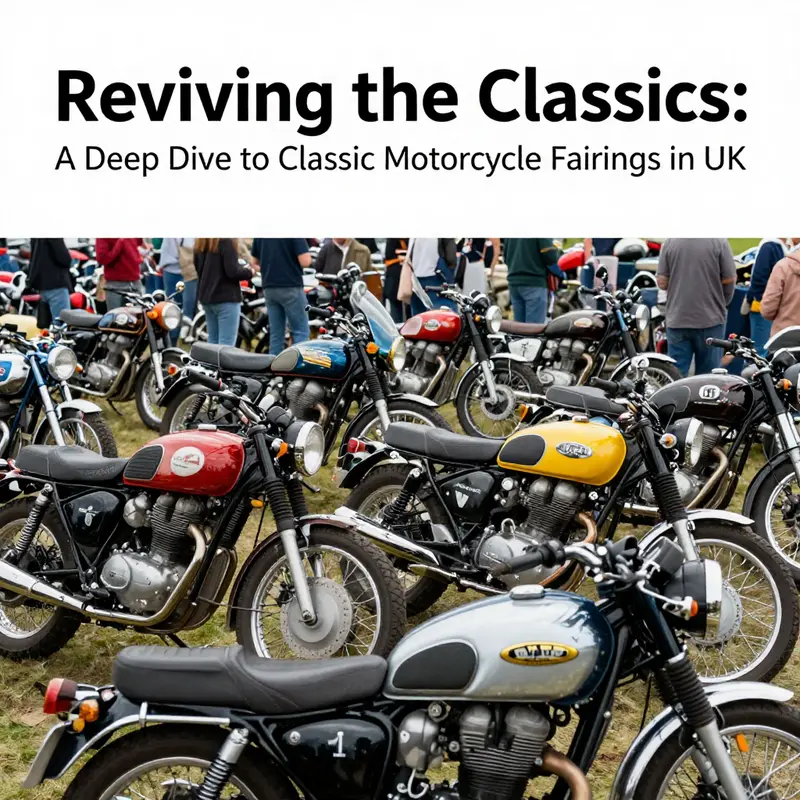
The Resurgent Market for Classic Motorcycle Fairings in the UK: Demand, Supply Chains, and Craftsmanship
The market for classic motorcycle fairings in the United Kingdom has reclaimed a visible place within the wider motorcycling community. What began as a niche pursuit for a handful of restorers and collectors has broadened into a lively scene where authenticity, performance, and aesthetics intersect. Enthusiasts now look beyond mere functionality: fairings are chosen to restore original lines, enhance aerodynamics, and express personal taste. This chapter weaves together the forces shaping demand, the realities of sourcing and manufacturing, and the craftsmanship that turns raw components into faithful period-correct finishes.
Collectors and riders drive the market through an appetite for authenticity. Many owners of classic British, European, and Japanese motorcycles aim to retain original silhouettes that defined models from the 1970s through the 1990s. That means seeking fairings that match factory curves, fastening points, and surface finishes. The desire is not limited to complete panels. Small hardware—panel clips, threaded nuts, and period-correct stainless fixings—matters as much as a flawless front cowl. Components that adhere to original equipment manufacturer tolerances are prized because they reduce fitting time and preserve structural alignment. For a restorer, a correctly threaded clip nut or a splice in a wiring harness can be the difference between a tidy, sympathetic rebuild and a long, improvisational project.
Alongside authenticity, stylistic trends boost interest. Retro-inspired bikes and modern classics have rekindled appreciation for half and full fairings as defining elements of a model’s character. Full fairings continue to attract riders who favour wind protection and aerodynamic cleanliness, often referencing sport models where the bodywork wraps the front and sides to reduce drag and shelter road debris. Half fairings appeal to those who want a balance of protection and connection to the machine—covering the upper front while leaving the lower engine exposed. Both styles now feature in show builds, track-day restorations, and everyday rides, which expands the customer base beyond traditional collectors.
Community dynamics amplify demand. Local clubs, online forums, and regional workshops form a support network that shares techniques, sources, and standards. Experienced restorers advise on correct paint profiles, original fastener types, and wiring routes. Custom builders contribute creative reinterpretations that often spur renewed interest in period aesthetics. This peer-driven ecosystem encourages new entrants to the hobby and makes it easier to convert curiosity into projects. It also fosters a market for specialist suppliers who can deliver period-correct parts at scale or in small runs, depending on the build.
The UK supply side reflects this bifurcation between boutique craftsmanship and distribution. Domestic suppliers often focus on small-batch runs, precision hardware, and curated kits that fit popular classic models. These suppliers emphasize material choices like UV-resistant ABS, properly gauged fiberglass, and corrosion-resistant stainless fastenings—materials selected to match the feel of the original parts while improving longevity. Many also provide tailored wiring harnesses that reproduce original circuits with modern insulation and connector standards, enabling safer restorations without altering the bike’s electrical behaviour.
At the same time, broader manufacturing and tooling live within international supply chains. Advanced molding, cost efficiencies, and access to specialty resins influence the sourcing decisions of UK distributors. Guangdong and neighbouring provinces remain key production regions thanks to skilled ABS and fiberglass fabrication, high-capacity tooling, and efficient export logistics. These areas can achieve consistent surface finishes, durable UV coatings, and tight dimensional control required to replicate intricate fairing geometry. Other manufacturing hubs, known for precision mold-making, support complex panel designs that must match factory tolerance—especially where fairings interface with frames, headstocks, and mounting towers.
For UK distributors, striking the right blend of local service and international manufacturing creates an optimal offering. They coordinate production schedules, set quality benchmarks, and oversee shipping and compliance. This model lets small businesses supply accurate, cost-effective parts while concentrating on customer care and technical support. It also allows professional shops and DIY restorers to choose from a spectrum of options: reproduction fairings with modern materials, remanufactured panels with period profiles, and a selection of fasteners and harnesses that fit original routing paths.
Quality control is central. When panels must align with headlight buckets, fairing stays, or aftermarket forks, any deviation leads to fitment headaches. To mitigate this, distributors often require pre-production samples, dimensional drawings, and material certifications. They insist on corrosion-resistant stainless steel fixings and period-correct hardware finishes. Where possible, they source clip nuts and threaded fasteners designed to match historic thread patterns and panel thicknesses. These details cut down on modification work and preserve an original-style finish.
The endurance of the market also depends on accessibility. Restoration projects thrive when parts are easy to identify and procure. Clear compatibility charts, photographic fit guides, and wiring diagrams shrink uncertainty. Suppliers that invest in expansive online catalogues and compatibility tools lower barriers for less-experienced restorers. For riders who value convenience, pre-assembled wiring harnesses and labeled fixings drastically reduce hours spent tracing circuits or hunting for obscure clips. This accessibility helps convert a latent interest in classic styling into actual purchases and completed projects.
Sustainability and material longevity have become more prominent in purchasing decisions. Modern coatings resist fading and cracking while matching the tones of factory paint. UV-stable plastics and improved fiberglass layups lengthen the life of reproduction fairings. Stainless-steel hardware and improved electroplating prevent corrosive pitting that historically afflicted older parts. These upgrades appeal to owners who intend to ride their restored machines regularly, not just display them. The choice to ride vintage bikes in contemporary traffic makes reliability and safety priorities, which in turn influences the selection of materials and suppliers.
Pricing dynamics reflect the specialized nature of the market. Authentic, small-batch reproduction pieces tend to command premium pricing because they require tooling expertise, strict quality checks, and careful finishing work. Conversely, large-volume runs from overseas production lines can offer cost savings but sometimes require more local fitting and finishing. Many restorers accept a trade-off: pay a bit more for a precision-fit kit or save by sourcing a lower-cost panel and investing time in adjustments and paint. The market supports both approaches, allowing builders to tailor their budgets to the intended outcome—show-quality restoration or rider-focused refurbishment.
Distribution and logistics are important considerations for businesses serving the UK market. Efficient shipping, customs handling, and packaging that prevents transit damage are non-negotiable. Some overseas suppliers now offer turnkey solutions including compliant labeling and documentation, reducing administrative overhead for UK importers. This streamlines time-to-market for popular kits and ensures that parts arrive ready for finishing and assembly. The ability to scale orders also benefits restoration shops that need replacement panels quickly to complete customer commissions.
Innovation is subtle but present. Manufacturers and distributors experiment with hybrid approaches: panels made from modern polymer blends that mimic original flex characteristics, improved mounting bushings that reduce vibration, and pre-molded reinforcements that increase structural resilience. Wiring harnesses are produced with modern insulation but routed and labeled to match historical layouts, preserving both function and authenticity. These incremental improvements increase the durability of restorations without compromising period-correct appearance.
The future of the market is tied to several converging trends. A growing pool of younger riders attracted to retro aesthetics expands the customer base. Meanwhile, experienced restorers continue to push standards higher, expecting accurate reproductions and high-quality fastenings. Suppliers who can combine meticulous quality control, clear compatibility information, and reliable logistics will maintain competitive advantages. The capacity to offer both complete fairing kits and the small hardware that ties them together will remain a differentiator—because a single missing clip or an improper nut can stall months of work.
For anyone planning a restoration or a custom build, understanding this market helps in making practical decisions. Expect to choose between reproduction panels that arrive ready to finish and lower-cost options requiring local modification. Factor in the availability of period-correct fixings, the quality of wiring harnesses, and the supplier’s reputation for dimensional accuracy. Where possible, prioritize suppliers that provide clear fit guides and that support returns or replacements when fitment issues arise. Engaging with community resources, workshops, and specialist retailers will shorten the learning curve and help locate the specific components needed for popular models.
For further reading on broader motorcycle market trends that shape this segment, refer to the UK market forecast and consumer preferences resource. For suppliers and parts collections focused on specific marques, the Yamaha fairings collection is a practical place to begin exploring available panels and compatibility notes: Yamaha fairings collection.
External market data: https://www.statista.com/outlook/200000000000/motorcycles/united-kingdom
Wind, Heritage, and Form: The Living Craft of UK Classic Motorcycle Fairings

The story of classic motorcycle fairings in the United Kingdom is a story written in wind and steel, glass fiber, and the patient labor of builders who understand that a shell is more than a shield. In Britain, fairings have always been more than aerodynamic features; they are carriers of identity, a visual language that speaks to a rider’s temperament as much as to physics. The café racer and the scrambler, two of the most enduring silhouettes to emerge from the British riding scene, use fairings not only to slice through air but to translate history into metal and resin. When a fairing is rightly fitted, it feels as if the entire machine has learned to lean into the wind with a rider who has chosen clarity over compromise. This is the heart of the UK’s classic fairing culture: a synthesis of performance, style, and a community that values authenticity as a spiritual as well as a mechanical virtue.
In the current market, the UK remains a hub for enthusiasts seeking period-correct hardware and the precision engineering that makes restorations credible. The emphasis here is twofold. First, there is the practical demand for components that secure, seal, and protect without betraying the bike’s late-20th-century character. Second, there is the question of how to source parts that faithfully reflect the original specifications while offering modern durability. This duality shapes how fairings are designed, manufactured, and distributed across the islands and beyond. A restoration project often begins with a vision of the bike as it was, then moves toward a plan that respects that vision while leveraging contemporary materials and methods to ensure longevity. In this space, the UK has cultivated suppliers who understands both the physics of wind and the subtleties of British aesthetic.”
The fairing, in its simplest terms, is a carefully shaped shield. Yet in the British context, it functions as a narrative cue, a clue about the rider who chooses a certain silhouette over another. The full fairing, which envelopes the front and sides of a machine, is more than a protection against rain and road spray. It is an aerodynamic instrument that can transform high-speed stability and reduce fatigue over long miles. For riders who seek highway cruising or occasional track days, a full fairing promises both comfort and a sense of purpose. By contrast, the half fairing—often a nose cone or a light upper cover—preserves a more open, tactile connection to the bike. It invites a sense of maneuverability and lightness, inviting riders to feel the road while still enjoying a degree of shelter. This balance between enclosure and exposure has always appealed to the UK’s café racer ethic, where speed was never merely about acceleration but about a dialogue between rider, machine, and environment.
In practice, the types cohere with the British bike’s own personality. Clip-on or banana fairings, those slim, forward-leaning shells that tuck close to the handlebars, were born from a desire to adopt a lower, more aggressive riding posture. They echo a period when endurance and speed in road racing fused with street sensibility, producing machines that looked as if they were prepared to sprint down a quarter-mile and then glide with composure along a seaside promenade. Modern reinterpretations keep the silhouette but update the materials—from traditional fiberglass to lighter composites like carbon fiber—preserving the line while improving durability and resilience. The value of this evolution lies in how well a modern rider can reproduce the classic look without sacrificing the practical benefits of current manufacturing technology. Materials science, with its UV-stable coatings and tuned resin systems, allows the iconic shapes to endure decades of sun, rain, and road grit while retaining the crisp edges and shallow radii that define late-60s and early-70s styling.
Half-fairings, or nose cones, have their own quiet charm. They suit scrambler-inspired builds that celebrate rugged versatility as much as vintage aesthetics. The nose cone can introduce a hint of café racer drama without committing to a full enclosure, enabling a lighter steering feel and greater visual openness. In many UK projects, these elements are chosen to preserve a bike’s original chassis identity, while still offering a shield against gusty winds and road spray on open roads. The result is a look that remains faithful to the era’s ethos—pragmatic, expressive, and unmistakably British in its sensibilities. The interplay between form and function here is a reminder that style in classic motorcycling has always been a pragmatic affair: a statement about how a rider intends to meet the road, not merely how a bike should appear in a showroom.
The UK’s distinctive riding culture has, over time, shaped how fairings are sourced and installed. A robust network of distributors and restoration specialists has grown around the need to maintain period accuracy while offering the reliability of modern supply chains. This is not about mass-market replication; it is about precision, provenance, and a shared reverence for the way a bike aged into legend. In practical terms, that translates into parts that are dimensionally faithful to original equipment, with tolerances that ensure correct mounting points and fitment. It also means reliable fasteners and fixings that resemble the hardware seen on the bikes when new, even as the components themselves age and evolve. The care is in the details: the way a panel meets a frame, the alignment of mounting tabs, the finish on a painted surface, and the way a seam catches the light at the riding position. These subtleties accumulate to determine whether a restoration truly captures the bike’s spirit.
For practitioners, the process begins with reconciling the bike’s history with contemporary engineering. UK shops and workshops bring a long memory of classic designs to bear on present-day requirements. Wiring harnesses, stainless steel fixings, and hardware designed to match the original drawings may appear routine, yet they matter profoundly. When fasteners are chosen to echo OEM specifications, they contribute to an authenticity that educated observers notice and enthusiasts celebrate. The result is a restoration or a build that feels intentional, as if the rider’s experience was anticipated by the factory and reinforced by skilled modern craftsmanship. The goal is not to pretend that nothing has changed; it is to honor how past and present can coexist through careful material choices, accurate geometries, and meticulous assembly.
As designers and builders in the UK look to the future, the global nature of production remains a critical factor. The fairing, while quintessentially British in tone, is often the product of a collaboration that spans continents. Modern fairings frequently rely on ABS plastic, fiberglass, and UV-resistant coatings produced in large-scale facilities abroad. Guangdong Province and Zhejiang—regions well known for their capabilities in molding, finishing, and precision tooling—provide the infrastructure to produce complex, aerodynamically shaped shells with tight tolerances. Guangdong’s capacity for ABS and fiberglass composites, along with its coating expertise, supports both original equipment and faithful replicas. Zhejiang’s mold-making prowess enables the intricate forms that define modern versions of classic silhouettes, delivering consistent quality across multiple production runs. The scale and efficiency of these supply chains allow UK distributors and restoration houses to access period-accurate shapes, while offering durability and service life that late-model bikes demand.
This international dimension does not erase local expertise. On the contrary, it complements it. UK-based distributors curate a spectrum of components—ranging from rugged, period-appropriate fasteners to complete fairing panels—that meet the exacting expectations of enthusiasts who care about shape, surface, and fit as much as history. For restorations, the aim is to replace like-for-like parts wherever possible, then to refine and preserve wherever necessary. When a panel aligns with the original geometry, when a seam sits cleanly against the frame, when the paint captures the hue and glaze of a particular era, a restoration achieves an almost forensic fidelity. That fidelity matters because it allows a rider to experience the bike as it was in the moment of its first, formative ride—an encounter that becomes part of the bike’s ongoing story rather than a static museum piece.
In this ecosystem, the mathematical elegance of fairing design meets the artistry of restoration. Engineers and hobbyists alike appreciate how a small change in contour can alter handling at speed. A broader, more open line around the headstock can reduce head-wind effects, while a tighter radiused edge can improve the bike’s steering response in tighter curves. These are not abstractions; they are the practical consequences of design choices that riders experience when they lean into a turn or catch a crosswind off a country lane. The British road network, with its patchwork of long straights and sharp bends, has always favored fairings that balance air management with a rider’s ability to sense the bike’s attitude. In this context, the fairing becomes a rider’s ally, not merely a cosmetic accessory.
The chapters of a restoration often unfold in the workshop, where a rider or restorer-in-residence reads the bike’s story from its lines and planes. The first consideration is the bike’s lineage: what era does the design reflect, and which features remain essential to a faithful reproduction? Then comes the question of what compromises are acceptable for daily use. A café racer might be set up for weekend rides with occasional track days, while a scrambler might demand durability and ease of maintenance on mixed terrain. The fairing’s role in these aspirations is central. It supports sustained comfort on longer journeys, adds a layer of weather protection, and contributes a silhouette that makes the bike instantly recognizable as part of a continuing British tradition. These considerations underscore why many builders refer to fairings not as purely functional shells but as storytelling devices—each contour an angle of memory, each mounting point a promise of continuity.
In the UK, the practicalities of sourcing also shape how stories are told through fairings. The market favors authenticity and fit, and this can influence the choice between a full fairing and a more restrained half-fairing approach. Some builders prefer to source bespoke fairing kits tailored to a specific model, a practice that blends historical accuracy with modern engineering. Bespoke kits let the builder tailor the geometry, the mounting points, and even the weight distribution to suit a rider’s preferences, while still preserving the lines that define the bike. The craft of blending old and new becomes a kind of conversation between the bike’s original designers and the modern hand that assembles, paints, and aligns each piece. The result is a machine that respects its origins while being reliable for contemporary use and comfortable for longer rides.
For readers who want a path into this world, it helps to understand how a fairing project might begin and how the pieces come together. The process often starts with a careful assessment of compatibility and fitment. A worker will measure mounting points, verify panel geometry, and consider the interplay of handlebars, instruments, and bodywork. The goal is not simply to mount a pretty shell but to ensure the rider can enjoy the bike without compromise. This means allowances for weather, vibration, and daily use. It also means an attention to finish—how the paint, decals, and textures age together under sun and rain. The result is a machine that reads as a continuum of the brand’s history and the rider’s personal narrative, rather than a static replica. Such outcomes require patience, a respect for traditional forms, and a willingness to embrace modern materials and manufacturing processes when they preserve or enhance legibility of the original design.
Across these considerations, one simple truth holds: the UK’s classic fairing culture thrives not on novelty but on a disciplined fidelity to what made those bikes special. The café racer’s lean, purposeful line, with its compact windscreen and slim upper bodywork, speaks of late-night workshops and street races that were less about spectacle than about a rider’s will to push a machine toward a personal frontier. Scrambler-inspired builds, with their higher fenders and rugged feel, celebrate versatility and independence, translating rugged street credibility into a fairing aesthetic that looks equally at home on a muddy rural lane as it does on a polished showroom floor. In both cases, the fairing is a stage for performance and personality, a shape that tells a story of rider and road, time and place. And in an era where restoration can feel like time travel, those stories matter as much as any technical specification.
For enthusiasts seeking direct engagement with the classic fairing world, an accessible anchor is the broader ecosystem of parts and fittings that keep these bikes rideable and relevant. UK-based distributors focus on a full spectrum of needs: securing hardware that mirrors original layouts, wiring harnesses designed for vintage electrical systems, and stainless steel fixings that resist corrosion while maintaining the bike’s period-appropriate appearance. The emphasis on precision and authenticity helps ensure that a rider who wants to recreate the look of a certain era will also experience the ride quality those machines offered when they were new. In this sense, the UK market acts as a custodian of a living tradition, supporting both the restoration of cherished machines and the creation of new builds that remain faithful to the historical arc while meeting modern expectations for safety and reliability.
In the end, the chapter of classic fairings in the UK is not a solitary tale of shells and screws. It is a collaborative practice that blends design history, material science, and the hands-on skills of restorers, fabricators, and riders. The result is a living tradition, a continuity of craft that travels across borders—from Guangdong’s tooling to Zhejiang’s molds, from the workshop bench to winding country roads, and back into glossy magazine pages and online showrooms. The fairing emerges as a quiet protagonist, shaping not only aerodynamic behavior but the very way a rider experiences the wind, the curve of a road, and the memory of a motorcycle’s youth. As long as riders seek a tangible link to the past, the UK will remain a home for classic fairings—where form respects function, and function honors tradition, while the road continues to invite new interpretations of an enduring silhouette.
For readers who want to explore the practical aspects of this world further, a concise route into the current market and its most relevant resources is to consider a gateway that aligns with the bike’s era and the builder’s intent. Yamaha fairings offers a sense of how a modern distributor presents period-inspired shapes alongside contemporary engineering insights. This approach demonstrates how the right fairing can be both faithful to a historic line and fully functional for today’s riding conditions, a balance that mirrors the broader themes of this chapter. It is a reminder that the craft of fairings remains a dynamic dialogue between past and present, between the road’s weather and the rider’s hands, and between the metal’s memory and the human desire to shape it anew.
As a closing note for this chapter, consider the broader context of UK classic fairings as a living practice rather than a dated homage. The material choices—ABS, fiberglass, carbon composites—are not merely about weight or stiffness; they are statements about how a community preserves its technical culture while engaging with globalization. The large-scale manufacturing networks that support these parts do not erase the British character. Instead, they enable a more faithful replication of cherished shapes, with the durability required for regular riding. This is how a fairing’s narrative persists: through careful curation, skilled fabrication, and a shared affection for the ensemble that makes a vintage motorcycle feel both historic and imminently usable on today’s roads. The road continues, and with it, the fairing’s story—evolving, practical, and forever resonant with a rider’s sense of purpose and place.
External resource: https://www.bikeandbike.co.uk/2024/07/17/ducati-scrambler-cr24i-rr24i-concept-uk-launch/
null
null
Final thoughts
As the classic motorcycle scene continues to flourish in the UK, the importance of quality motorcycle fairings cannot be overstated. They play a pivotal role in restoring the beauty and performance of vintage bikes, ensuring that the legacies of these machines endure. For business owners, understanding the market dynamics, various types of fairings, and the complexities of their manufacturing and supply chain offers a foundation for successful engagement in this niche market. By focusing on authenticity and high-quality components, businesses can cater to the dedicated enthusiasts who seek to preserve the heritage of their beloved machines.